
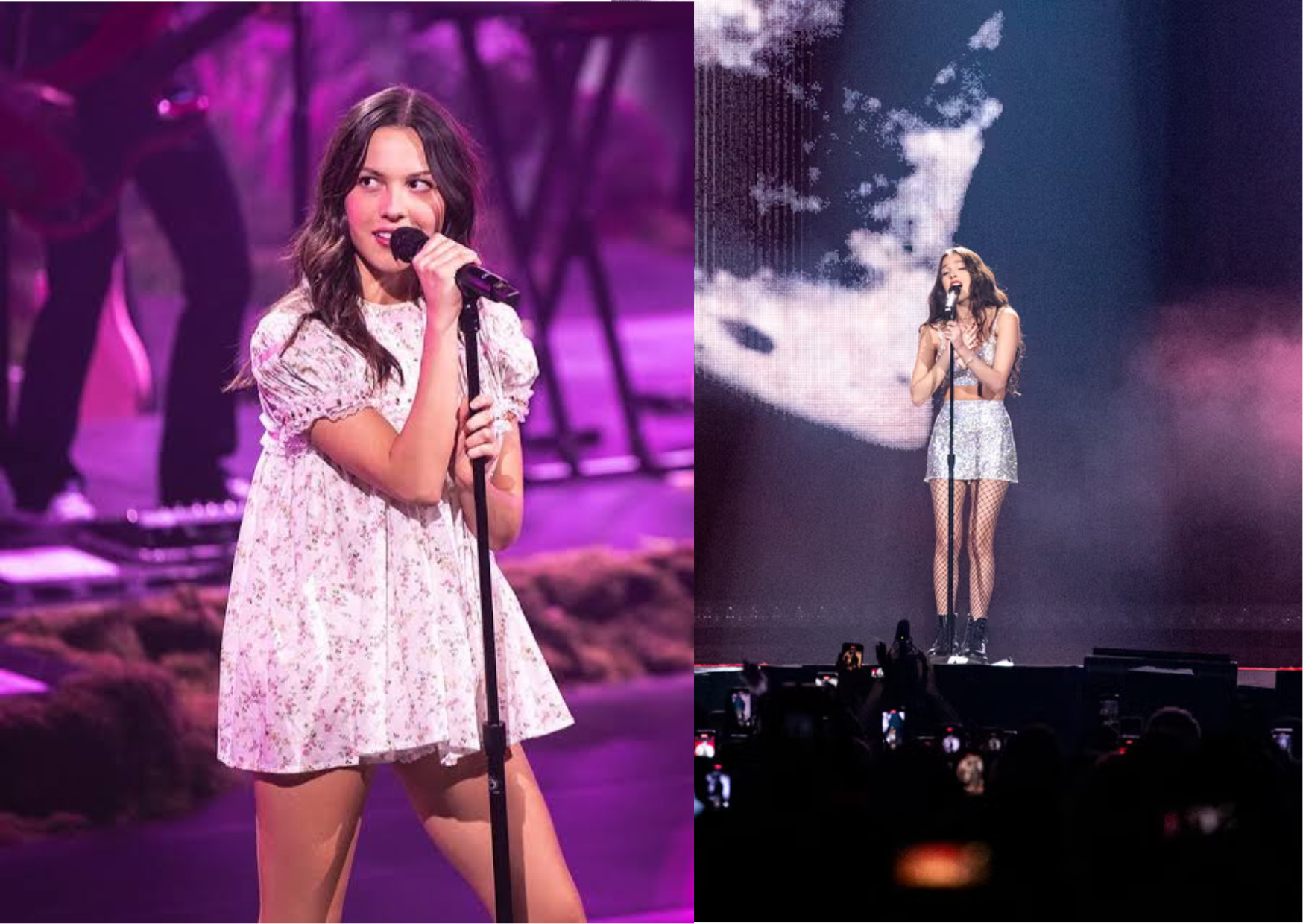
Photo: Olivia Rodrigo performing her new album live in Barcelona
Credit: Getty Images
A few months ago, Olivia Rodrigo released her new album “You seem Pretty sad for a girl so in love”, which came with a complete rebrand of her music and style. Instead of focusing on the grungy, men suck attitude, she replaced it with a more romantic approach. Half of the album consists of love songs (“for a girl so in love”) and the other half is sad songs (“You seem pretty sad”). With the rebrand, her style also got a new look. Swapping her grungy two pieces and body suits for flowy, girly babydoll style dresses, with heavy combat boots and tights inspired by 90s musical icons.
When Olivia swapped her signature sparkling bodysuits for babydoll dresses the conversation around her clothes shifted. Comments followed on how the “childlike” fashion she was wearing (like babydoll dresses) infantilizes and sexualizes her and young girls. To which she responded:
“I didn’t think I looked sexy in that at all. I was like, ‘This is so cool. I feel like I look like Kathleen Hanna or Courtney Love,’ all these people who are my heroes.”
Olivia Rodrigo
These comments took a lot away from her new release and lead the attention to something negative in its place. It’s important to question how can a double standard exist when the clothing being sexualised wasn’t designed to be sexual in the first place? And the history of the dress is the best place to begin.
The word babydoll, for starters became popular on par with the release of the 1950s film directed by Elia Kazan, in which the main character sported a “babydoll” style dress. The idea of putting “Baby” in front of a word invokes a sense of cuteness, innocence or hyper femininity, also seen in the 90s band the Spice Girls, in which the smallest and “cutest” member is named “Baby Spice”. But while the name does share cute connotations and sweet endearments, it can also be heavily sexualised when looked at through a lens of relationships, and somehow managing to sexualise something innocent.
The idea of babydoll dresses isn’t an individual sexualisation, we can also look into similarly named things. Things that are associated with cute childlike styles, one that comes to mind is Baby Spice from the 90s band spice girls. The 90s was the time we saw a transition between the babydoll style as nightwear to daywear, but it was also the time it started to become sexualised BECAUSE it was originally nightwear.
The babydoll style was originally created by Sylvia Pedlar in 1942, due to the shortage of fabric during World War II. The design included a shorter upper bodice and an empire waistline, as it was not invented to be nightwear not an everyday piece of clothing, so it didn’t have the same structure as a dress or cinched top and pants. It didn’t follow the ideal body type of the time period, because it wasn’t designed to be worn out the house. Originally, it was simply called a nightgown or a negligee, but after the release of the film “Babydoll” in 1956, the garment took on the name babydoll, which Pedlar was not a fan of.
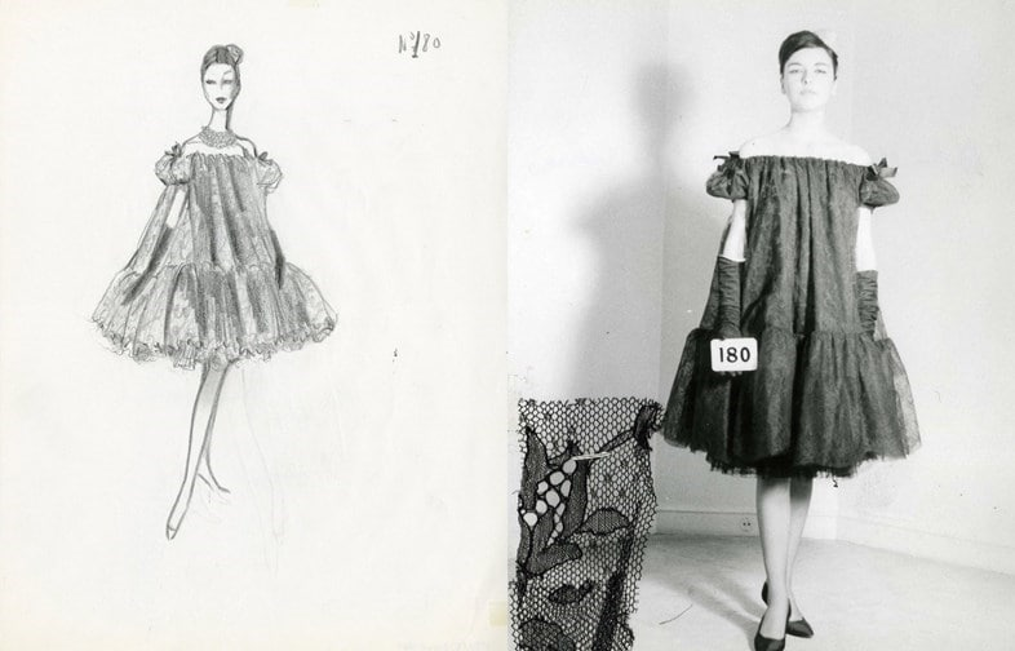
Photo: Vintage images of the original style of babydoll (street wear)
From the late 1950s to the 70s, there was a change in fashion when it came to babydoll nightgowns/dresses. In 1957, Spanish haute couture designer Cristobal Balenciaga adapted the silhouette into high fashioned, waistless dresses that soon became much more than a piece of nightwear. With the 60s came the mod style that revolutionised the babydoll dress, following icons like Twiggy who took the dress into street fashion, and is now heavily associated with fashion of the 1960s. Similarly in the 1970s, the dress was popular but changed to remove the waist creating a new type of babydoll dress, keeping the A-line shape of the dress but removing the waistline completely, initially starting a rebellion of hyper feminine fashion by opposing traditional and ideal body shapes of women in the late 1970s. To be fair, it was the decade freedom and feminism, after all.
The rebellion was skipped over in the 1980s, and the babydoll wasn’t nearly as popular due to the popularity of the hourglass figure, which the dress didn’t align with. It wasn’t until the 90s came around those Musical icons like Courtney Love and Kathleen Hannah paired the dainty, “hyper feminine” dresses with torn and patterned tights, heavy combat boots and grungy makeup, in a look that became known as kinderwhore. The style emerged in the early 1990s and combined pieces coded as sweet and childlike, such as babydoll dresses, Peter Pan collars, ribbons and slips, with smudged lipstick and ripped tights. The clash was deliberate. The musicians challenging and subverting what femininity could look like post 1980 refashioned expectations of what “feminine” could be, as well as brining the soon to be popularised (in the late 1990s) grunge style of music, clothing and makeup.
Video: Women can’t win
Credit: Charli Chats
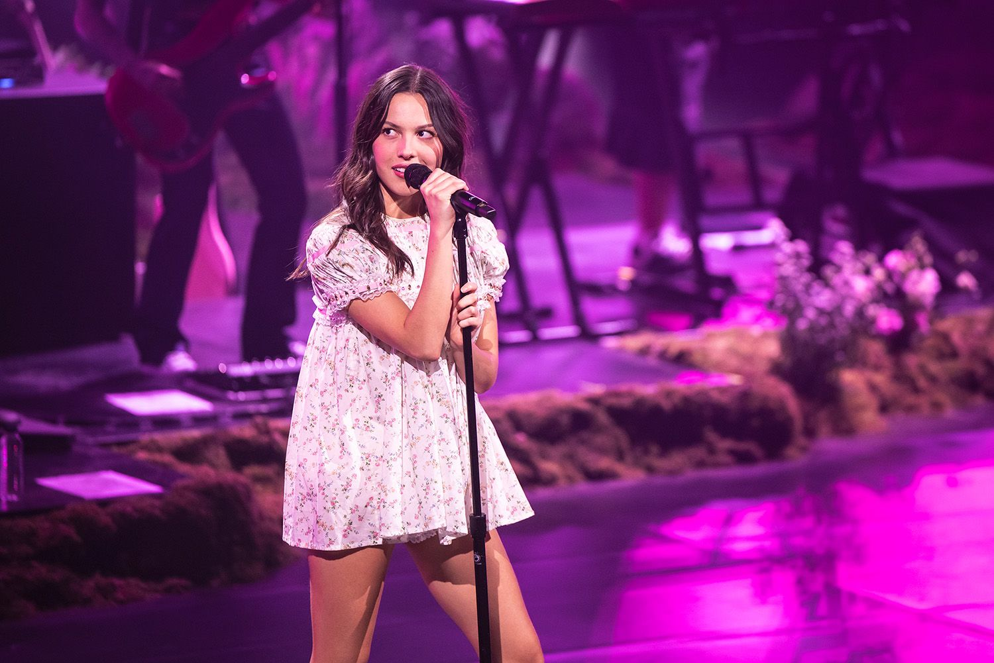
Which brings us back round to Olivia’s rebrand of the babydoll dress styled with big boots and a grungy look. The styling is reminiscent of those 90s icons, which Olivia mentioned inspired her new style and look. But instead of the reveal of her new look at Spotify’s Billions Club Live in early 2026 and the music video of the first single of her new album sparked comments of her somehow, as a fully grown woman, sexualising and infantilising herself and young girls by simply wearing a different type of dress. All the discourse was followed by the annoyance of such a double standard when her brand was once booty shorts and small tops.
However, the significance of this styling goes beyond simply bringing back a 90s trend. By combining traditionally feminine silhouettes with heavier, more masculine-coded accessories, these artists challenge the idea that femininity has to look a certain way. A babydoll dress might traditionally be associated with delicacy, innocence and sweetness, but when paired with combat boots and dark makeup, it becomes something entirely different. It can be romantic without being submissive, feminine without being conventional, and playful without necessarily being sexual.
The dress arguably has no reason to be sexualised, unless you look into a wider scope. Other musicians, like Sabrina Carpenter also rock babydoll style clothing. She wears a babydoll style nightgown/cover up, normally over a lingerie style bodysuit, which does contradict the previously mentioned controversy, but the difference between Olivia and Sabrina is the fact that the somewhat “sexual” vibes of Sabrina’s outfits are a PART of her marketing. Her rebrand after her early music career is cheeky, romantic and unapologetically horny, with her fashion aligning and somehow not receiving any kind of backlash because it’s “who she is”. But somehow the fuller coverage babydoll style Olivia wears are more sexual than when she used to come on stage, basically only in a sparkly bra. Olivia styling of the dress shouldn’t be sexualised. Sure, the babydoll-style dress is popular in children’s fashion, but it has also become modern as a new style (stemming from Sabrina Carpenter) in both tops and dresses. Nothing Olivia was wearing made it sexual; only people’s opinions and eyes made it into something it wasn’t.
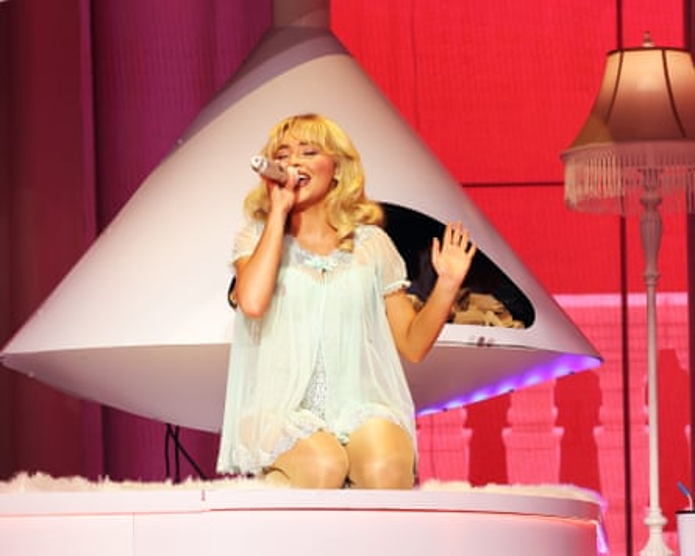
Photo: Sabrina Carpenter performing in a more traditional style of babydoll on tour
Credit: Getty Images
From Sylvia Pedlar’s original design to the grunge-inspired revival in the 1990s, the babydoll dress has repeatedly been reinvented, changing with each decade and time period. It’s most recent revival through Olivia Rodrigo highlights how fashion is not simply about what someone wears, but how audiences choose to interpret it and what they do with said opinions.
Female popstars are constantly challenging traditional expectations (much like the song from Olivias newest album) of femininity by embracing rebellion, romance or even sometimes being unapologetically sexy (thank you Sabrina Carpenter, we all say). While Sabrina Carpenter uses lingerie-inspired styling to compliment her cheeky pop persona, Rodrigo draws on alternative influences of musicians like Courtney Love. Both examples highlight the way that female pop icons are changing the way femininity is viewed, while simultaneously keeping some parts of femininity from the past.
Even the name “babydoll” carries connotations that women may not be able to escape, but the most we can do is embrace the hyper-femineity it may bring. From the nightwear that inspired the original dress to the smallest “babiest” Spice Girl, the word has always been long associated with innocence and being “feminine”, yet the word continues to be interpreted and changed as the years go on. Perhaps the problem isn’t whether or not a babydoll dress is innocent or provocative, but why it was even thought to be so in the first place. It’s only pyjamas after all.
Video: First appearance of the album and Oliva in a babydoll dress
In alignment with my article, Also read the one below with similar ideas and content!
 Joleen Jublee
 claire
 Jonte Siegel