

The split toe isn’t some designer whim. Tabi socks have been worn in Japan since the Muromachi period, specifically because thonged sandals like zori and geta need somewhere for the strap to sit; the split gives the big toe something to grip for balance.
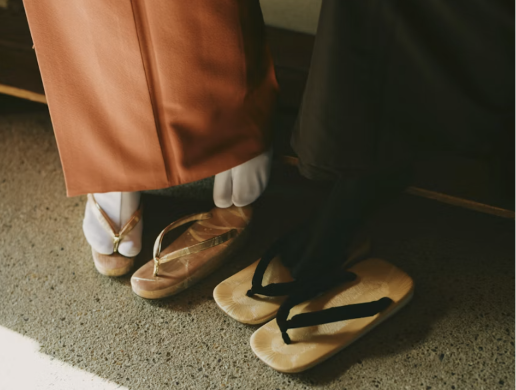
It’s a solved problem, six hundred years old, still worn today. So the real headline of Maison Margiela’s Tabi isn’t “shoe that changed footwear.” It’s “a shoe that already existed, now sold for roughly £820 a pair,” worn this spring by everyone from street-style regulars to Zendaya. Margiela’s design notes presumably read: step one, do nothing; step two, charge £820.
Even fashion critics say the quiet part out loud:
“It’s the hoof shoe on Facebook.” – Kim Russell, fashion critic, via Fashionista
Here’s the bit that actually bothers me: nobody at Margiela invented anything. They took a centuries-old, functional design, put a Paris address on the label, and let a room full of people who’ve never worn a zori in their life decide it was “editorial.” I’ve stared at this shoe trying to find the £820 worth of innovation, and I cannot locate it, because there isn’t any. The innovation occurred 500 years before the fashion house existed.
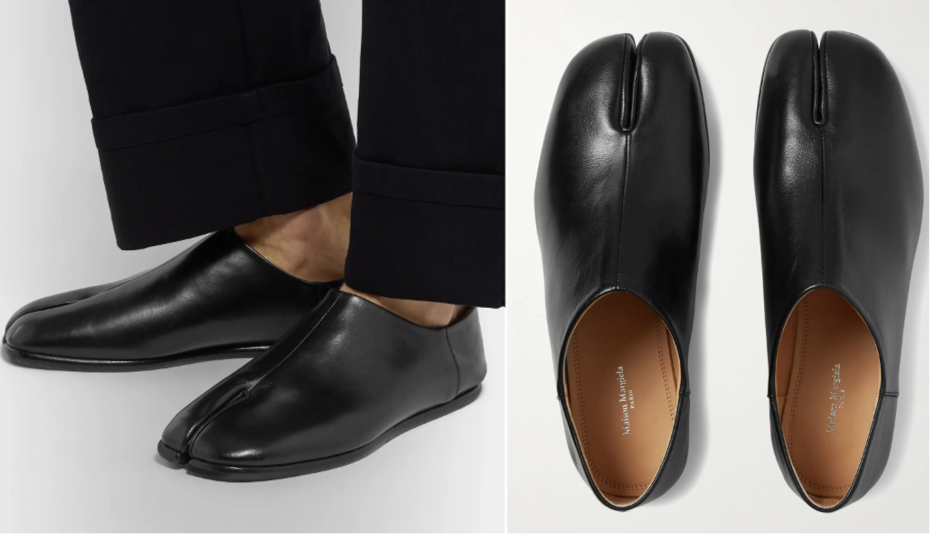
And to be clear, my issue isn’t with the people buying them; wear your Tabis proudly, that’s not the point. My issue is with an industry that can take something with a real history and real purpose, strip out the “why,” keep only the “what it looks like,” and sell it back as originality. Nobody at Margiela had to argue the shoe was clever. Calling it “spring’s must-have shoe” is doing a lot of work to avoid the sentence “here’s a shoe that’s existed since the 1400s.”
Here’s my actual hot take: if a £22 pair from ASOS and an £820 pair from maison are built the same way, for the same reason a Japanese sandal-wearer has understood for centuries, the extra £798 was never paying for design. For that price you could fly to Japan, buy the real thing, and still have money left for the flight home. The Paris version was paying for the privilege of being told it was invented in Paris.
 Debbie Choo
  Bethany Miguel
  Tarkyn Sharples
Interesting take. As someone who was studying fashion at the time these were big, I can safely say no one there knew anything about these shoes being like Tabi socks. However, none of us were Japanese. I had initially assumed they, if anything, were like those toe socks I’ve seen that go around each toe. Do you think Margiela’s designers knew the shoe was like Tabi socks when designing it, or do you think it was an oversight that they thought was original, but actually wasn’t?