
With Love & Deepspace, we focus on female desire. However, can an interactive relationship provide evidence that women can take control in relationships?
Envision a handsome man gazing upwards at you. His eyes follow all your movements. The man is hurt and defenseless, with you as his sole caretaker. As you reach out to caress his face, you watch him react, leaning in.
But as you slowly grow accustomed to being in charge, he suddenly reverses the roles.
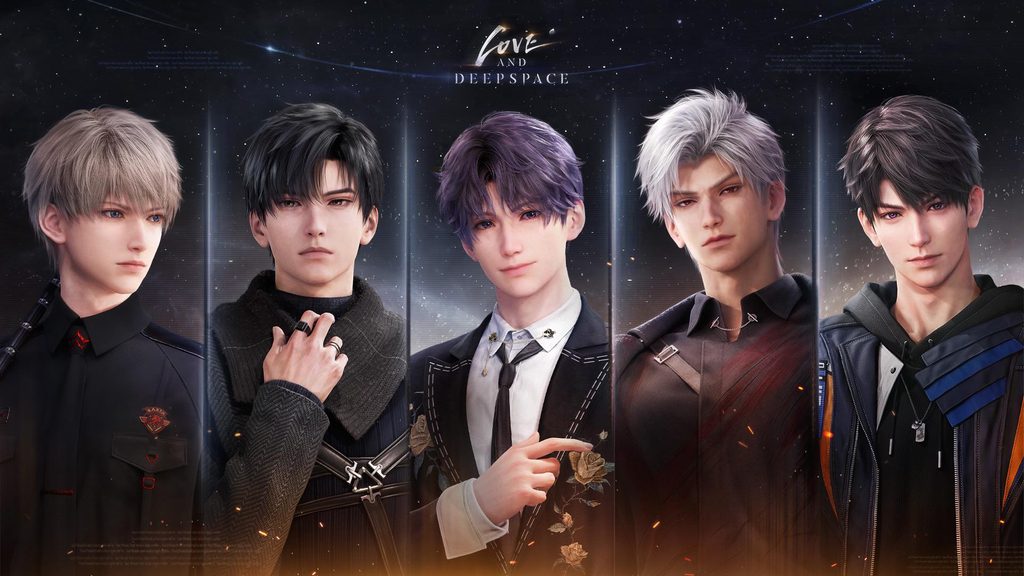
This is Love and Deepspace, a new mobile-based romance game with male characters that blur the lines between fiction and reality.
In 2024, Love and Deepspace launched as a 3D Otome game, where players take on the role of a female protagonist who navigates a futuristic world and builds relationships with attractive male lovers. Using both first-person and interactive methods (encounters), players do not merely view romance develop – they are encouraged to be part of it themselves.
It is no surprise why there is such an attraction to this game. The male characters developed within are charming, attentive, and everything a woman may desire in a man.
However, behind the pleasant facial expressions and the romantic dialogue, there lies a much larger question: Does Love and Deepspace truly make a difference in the way women experience desire in media, or has it simply provided another method of packaging and selling it?
Women can turn the tables!
Women have been gazed upon by the rest of society for centuries. Think back to those lingering camera shots of a woman’s body, and the countless movie characters that were much more interested in what they looked like rather than anything they said.
Laura Mulvey, a film theorist, wrote an article back in 1975 about this matter. She explained through her theory of the male gaze how most conventional cinema depicts men as active viewers, whereas women are viewed as passive objects of visual pleasure.
It is not merely that women are pleasingly attractive on screen. It is about whose desires are being represented.
In Love and Deepspace, it appears the traditional roles have been turned upside down.
Men in Love and Deepspace appear to be intentionally created with characteristics appealing towards female players. Their physical appearance, voice, and even the little ways they express affection all tie in to create a delightful image intended to elicit female attention. Rather than women being displayed to capture male interest, now it is men that are being visually represented as the female fantasy.
Now, is flipping the tables sufficient to counteract the male gaze?
No, it is not.
Rather, it gives women the ability to experience romance from their own viewpoint rather than being subject to another person’s fantasies, creating a fresh and new experience for female players around the world.
And that is what makes Love and Deepspace so fascinating.
When she makes the first move
The first example of this type of “player-controlled” development is Xavier’s 5-star memory, Heartstring Symphony.
This is a relationship that develops in the kindled level through an interactive experience with the female player character who cares for Xavier when he is hurt. As the initial intent of her care grows into something that is more intimate, the player uses the touchscreen interface to tap on Xavier’s facial area (cheeks), neck and upper torso. As you watch his responses to these touches, you will see what I believe is a very enjoyable experience in terms of enjoying Xavier romantically.
This experience represents a reversal of traditional romantic expectations; i.e., men typically do the pursuing of women. However, once again this experience does not last long, as Xavier ultimately reverses the physical position of the two characters and becomes the more aggressive pursuer.
Is the female gaze completely eliminated at this point? No. It is possible for a woman to enjoy a romantic pursuit without having control over all aspects of the process. At times, simply being pursued or admired/surprised by someone else can be a source of enjoyment.
Heartstring Symphony is so interesting because the entire interaction was developed using the female player’s perspective, regardless of whether she initiated a romantic encounter or responded to it.
There is one aspect of this experience that is worthy of question, however. Every single touch, every single response to those touches, and every romantic development in this memory was determined by the game developers prior to your participation in this experience. Therefore, how much of this romance belongs to you?
Your romance story, written by someone else
For many people who enjoy interactive romance games, one of their most attractive features are the feelings of importance and personalisation they get from choosing what happens next in their story.
By allowing you to choose characters to connect with (and even allowing you to engage with them via touchscreen) versus watching a romance-based drama, the sense of belonging or connection is enhanced for many users.
However, as important as it may be for a user to have some level of input/control over their experience, having some type of “participation” vs. control does not always equate to the same thing.
In her 2019 study, Sarah Stang examines ways in which developers allow gamers to experience making choices within their games yet still limit players to only the possible outcomes the developer had already scripted.
It seems obvious when thinking about this topic. Although a gamer has the opportunity to choose one of three different dialogue options in a game, they did not actually write that dialogue. Similarly, although a gamer playing Heartstring Symphony has the ability to interact with Xavier, they have no power to alter how the romantic interaction will ultimately conclude.
As such, even though the gamer is the primary character of the story, they are not the author.
That begs the question: Does that reduce the value of the overall gaming experience?
Many people would agree that readers don’t expect to influence the conclusion of a romance novel to find enjoyment in reading that book. At times, our appreciation for an artistically designed fantasy is derived directly from the beauty of its design.
Perhaps the female gaze doesn’t require giving females total control to provide women with meaningful experiences. There is certainly a distinction between not being given a voice vs. being willing to enter another person’s story. Ultimately, what we really want to know is whether Love and DeepSpace provides new types of romantic experiences for women – regardless of whether or not women are allowed to create/alter those experiences themselves.
The price of Love
While on holiday in Kuala Lumpur, I chanced upon an unexpected sight while strolling along Bukit Bintang. A large crowd stood at the crossing watching the huge LED screens above.
It wasn’t a movie star showing up or a premiere. It was a Love & Deepspace character, Sylus.
The crowds had gathered because fans were waiting for a special billboard screening of the game. Some were taking photos, and some were collecting free items made by other fans. There was no denying the excitement. Part of that excitement included a redeemable code given out at the event, letting players unlock a Memory of their choice for free.
This experience reminded me just how widely the appeal of Love & Deepspace goes beyond a mobile phone screen. While fans aren’t merely playing the game, they’re creating events, celebrating fictional characters and forming communities based on these same fictional characters. In fact, billboard screenings are now considered part of the game’s culture.
As great as it would be if all the Memories in Love & Deepspace were so easy to come by. They aren’t.
Part of this fantasy has a price tag.
Money.

Players use Memories within the ‘wish’ system to access additional stories and experiences, such as more intimate encounters and exclusive character interactions. “Heartstring symphony” is one of several five-star Memories available. Unlike purchasing a romance novel, players are never assured which Memory (five-star or otherwise) they’ll get from using the ‘wish’ system. Players can attempt to acquire Memories using randomised drawings for each wish they place. Therefore, acquiring a specific five-star Memory may require attempting to do so multiple times.
What makes this particularly interesting is that players are able to choose who they Love in Love & Deepspace. However, acquiring some of those romantic moments may rely on chance, limited-time offers, and how many in-game resources players are willing to invest.
Additionally, as players form attachment to their favourite characters, the allure of that additional content increases accordingly.
In their 2023 study, An-Di Gong and Yi-Ting Huang observed and concluded that there was a significant relationship between female players’ romantic parasocial relationships with Otome characters and their willingness to pay more money in-game.
In short, when female players develop emotional attachments to fictional characters in a game, it increases their likelihood to purchase additional content.
Of course, this doesn’t mean that every female player who falls for Xavier will spend all her money on him. Nor does this diminish their authentic appreciation of the game. The fans I met in KL are evidence that the game can generate legitimate enthusiasm and community beyond monetised features.
However, what this illustrates is how closely female desire and commercial interests can merge together.
The Female Gaze – and Those in Control
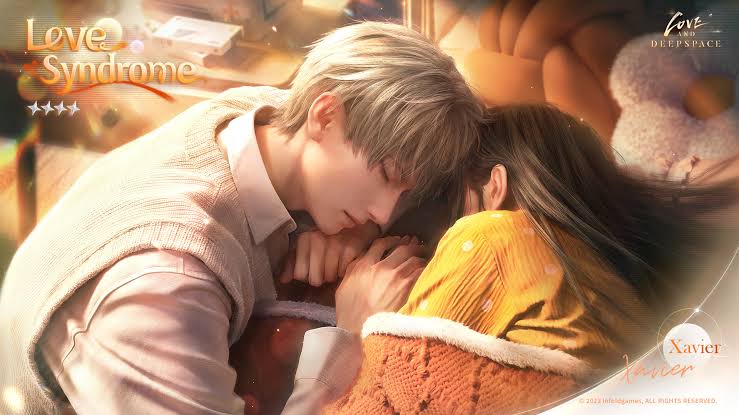
Xavier looks at you. He responds to your touch, giving you an undeniable feeling of being the centre of all his attention.
For a second or two, the romance seems entirely yours.
Maybe even emotionally, it is.
Love and Deepspace provides one thing that is very significant: a place for women to enjoy romantic desire, initiate romantic relationships, and experience closeness/intimacy through their eyes.
But there is so much more to the female gaze than just placing good-looking men on a screen. It’s about who has the final say in creating the experience; who gets to determine what options are available to the player, and who will get to profit from the player’s emotional investment.
Even though Love and Deepspace centres around female desire, the player still does not have the ability to create her own storylines. Instead, they are presented with scripted romantic encounters. And in addition to that, many of these romantic experiences (or rewards) are connected to collectible systems.
This doesn’t mean the pleasure is any less real. This simply means that while you are being the centre of a fantasy, you aren’t ultimately in charge of it.
Women are now being allowed to look, desire, and be a part of things. However, when another person writes the romance and sets the price, how much of that fantasy do they really get to keep?
 claire
 Jonte Siegel
 Karissa Pereira