
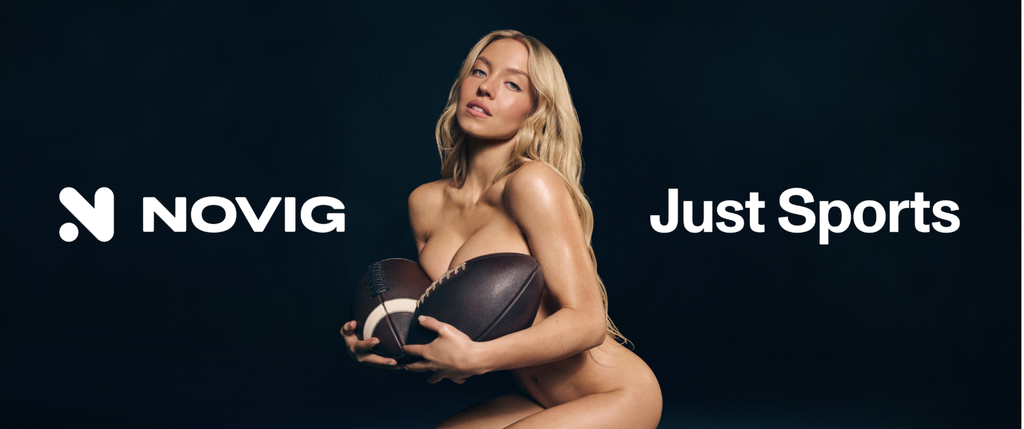
Sydney Sweeney’s Novig campaign has people talking. But what does its version of “just sports” leave out?
A football becomes a cover-up. Sydney Sweeney appears nude or partly dressed, with sports equipment covering her body. The advertisement keeps returning to the idea of “just sports”, but it is her appearance that makes the campaign stand out. That is also what made some females athletes question what, exactly, it was celebrating.
Released on 9th September 2026, the campaign promotes Novig, a sports-prediction platform where users trade on sporting outcomes. The idea is simple: the platform focuses entirely on sport, so Sweeney is dressed in sports equipment. It is meant to be playful. For the women who compete in those sports, however, the joke did not land that way.
For me, this is what makes the debate worth discussing. Sweeney can choose how she presents herself, but we can still question what a company does with that image. When does female empowerment become sexual objectification?
Why the athletes spoke up
“I can’t describe how infuriated I feel when I watch this,” Olympic swimmer Ariarne Titmus wrote on Instagram, according to Associated Press reporting. As the Guardian reported, she questioned why women’s bodies were still being monetised and women’s sport sexualised.
British sprinter Amy Hunt responded after a race by pointing to the effort behind competing: ‘Muscles, hard work, sweat, blood, tears.” The Associated Press report also described gymnast Gracie Kramer’s frustration with a sport where women have struggled to be recognised for their abilities rather than their bodies. She shared images of female athletes training in response.
I understand their frustration because the campaign borrows the look of sport without giving much attention to the women doing it. The equipment is there, but their training and achievements are missing. A celebrity can promote a sports platform, of course. Still, this particular approach makes a woman’s appearance more important to the advertisement than anything she can do in sport
“It’s not anything personal against that actress. It’s more about the intention.” – Amy Hunt
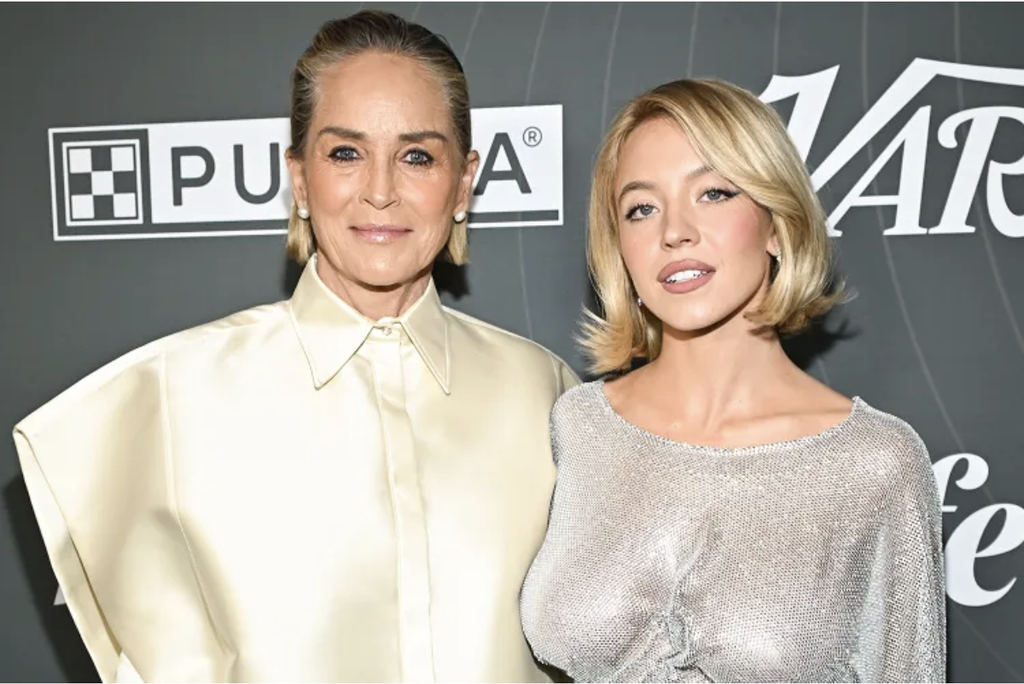
The criticism also reached Hollywood. Speaking to PEOPLE at Variety’s Power of Women event, actress Sharon Stone said Sweeney should “take responsibility” for her actions, while explaining that judging her personally was not Stone’s role. Instead, she wanted to support female sporting champions. “We can’t denigrate women’s sports to get men’s attention so they can gamble,” she said.
For me, Stone’s point brings the discussion back to respect. Women’s representation involves deciding whose work deserves attention, as well as what an advertisement looks like. By speaking about female champions, she gave the conversation somewhere to go beyond another argument about Sweeney’s body. That seems more useful than turning the whole thing into a celebrity popularity contest.
Claims that other celebrities avoided Sweeney to escape backlash need more care. A missed photo or a quiet social media account cannot show what someone believes. Without a public statement or reliable reporting explaining the decision, I would not treat distance as proof of support for women’s representation. Silence is not exactly a press release.
There is also a difference between challenging a campaign and inviting people to hate the woman in it. Stone’s comments leave room for that distinction. We can ask public figures to consider the messages they promote while keeping the criticism focused on their decisions. Supporting women in sport should give athletes more space to be heard, rather than making personal attacks the main event.
Her choice and the message it sells
Sweeney chose to take part, and that matters. Novig identifies her as a strategic partner and equity holder, meaning she has financial interest in the company. She also told Complex she had been involved in creative discussions from the beginning.
“The campaign was about embracing a fun idea,” she said in Novig’s announcement.
Women should be able to enjoy their appearance and decide how to show their bodies. Treating Sweeney as someone with no say in the campaign would ignore her involvement. At the same time, I do not think choosing an advertisement automatically makes its message empowering. She can feel confident about showering her body while company uses that image to sell something.
Choosing to show your body is about having control over your own decisions. Being shown mainly as a body is about what viewers are encouraged to notice. Using sexual imagery to sell a product adds another purpose: getting people interested in a business. These things can happen together, but agreeing to one does not answer every question about others.
This is where representation matters. It means how women are shown, including the roles they are given and the qualities audiences are encouraged to value. Sexual objectification happens when a women is treated mainly as a body to look at, with little attention to who she is beyond her appearance.
Media scholar Rosalind Gill’s research on advertising helps explain why confidence does not settle this issue. Gill examines advertisements that show women as independent and sexually confident while questioning whether they really challenge older expectations about women’s looks. An advertisement can give a woman a confident role and still depend on familiar beauty standards to attract attention.
Why the magazine pictures are different
As the Associated Press reported, Sweeney shared covers from ESPN The Magazine’s Body Issue amid the criticism. It brings up a reasonable question: if female athletes can pose nude, why is her campaign a problem?
For me, the difference is what the pictures help us understand about the person. ESPN described its Body Issue as an exploration of athletic bodies, with interviews that connected the photographs to sporting experience. The body could be shown as something that makes performance possible, including the different shapes and sizes that succeed in different sports.
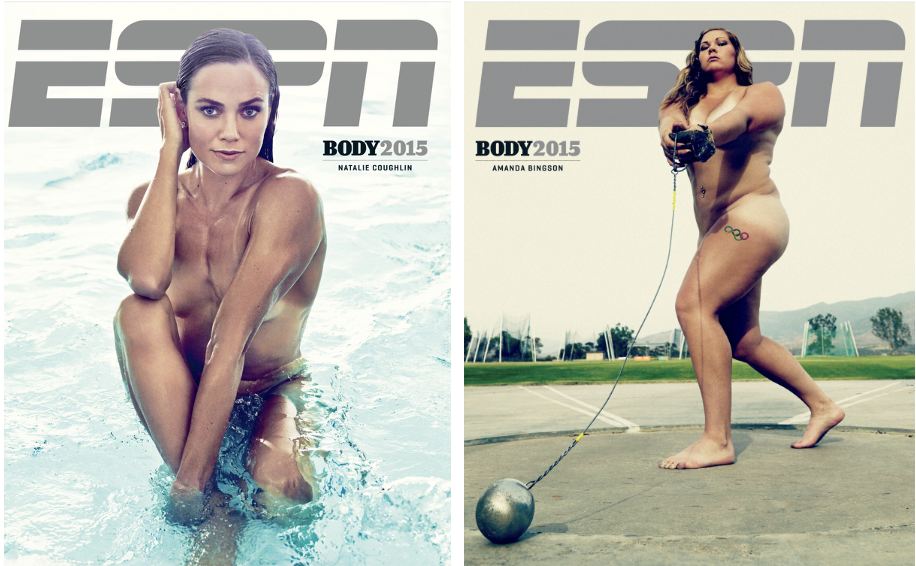
“As a sports fan, I love the differences in body types,” swimmer Natalie Coughin said in ESPN’s announcement.
On these covers, Amanda Bingson’s hammer connects her pose to an activity, while Natalie Coughlin’s pool setting creates a sporting context. I would still read them alongside the athletes’ words. A photograph cannot explain an entire career, but the interview can give readers something more to remember than the pose.
That does not mean every nude athlete photograph is empowering. In a a 2021 study by Elizabeth Daniels and colleagues, 563 US College students viewed different images of female athletes. Pictures combining sexualisation and sporting performance received more positive overall evaluations than sexualised pictures, but less positive evaluations than pictures focused on sporting performance.
A familiar kind of attention
This is not the first time Sweeney has been at the centre of an advertising debate. American eagle’s 2025 “Great Jeans” campaign played on “jeans” and “genes”, leading to arguments about beauty standards and racial meaning. The unit blog’s “Great Jeans or Great Genes” article explored why audience read more into it than a clothing promotion.
The two campaigns raised different concerns. American Eagle’s wording brought up questions about genetics and exclusion, while Novig’s imagery gas drawn criticism about women in sports marketing. What feels familiar is how the argument itself gives the brand more attention. People who would never use the product can still end up sharing its advertisement.
There is a risk in turning these campaigns into one long argument about Sweeney herself. Then the conversation becomes about whether people like her. I find the comparison more useful when it stays focused on the brands: how they use her public image, what their slogans suggest, and what they want audience to do next.
When the backlash becomes part of the campaign
For my generation, an advertisement rarely arrives on its own. The original clip, someone criticizing it and another person defending it can appear in the same scroll. This is why rage-bait marketing belongs in the discussion.
That does not prove Novig planned the backlash. However, the campaign clearly travelled Creative Bloq reported that its Instagram reel passed 37 million views in four days. The same report described Powerade’s responding “Never Just Sports” campaign, which featured women performing sport. Even the response gave another company a chance to benefit from the debate.
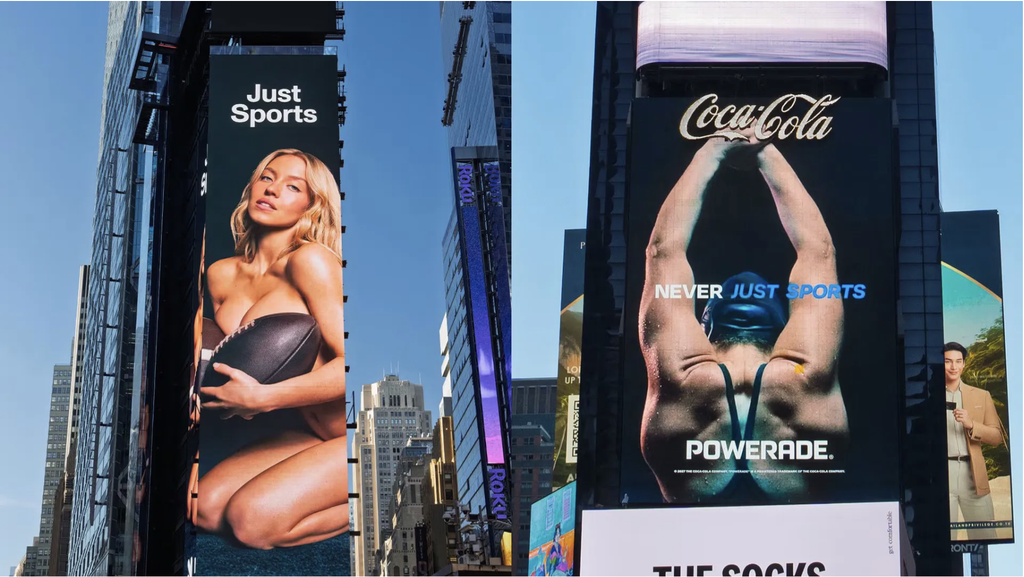
Views do not automatically mean people trust a brand or want to use its product. They do show how criticism can keep a campaign visible, even when the people sharing it disagree with its message.
To me, the problem is how easily women’s bodies become a shortcut for getting attention. Blaming sweeney for reversing feminism makes the issue too personal and lets the company’s decisions receive less attention. Her right to choose should be respected, but that should not stop us from asking why sports platform made her appearance its main attraction.
A stronger campaign could show women competing or enjoying sport as fans. It could still be stylish, funny and worth sharing. I do not think the only choices are a sexual joke or a boring advertisement. The challenge is to make women interesting for more than how they look. A company selling sport has plenty of material to work with.
If the promise is “just sports”, women’s sporting achievements should be worth showing too.
 Joleen Jublee
 claire
 Jonte Siegel