
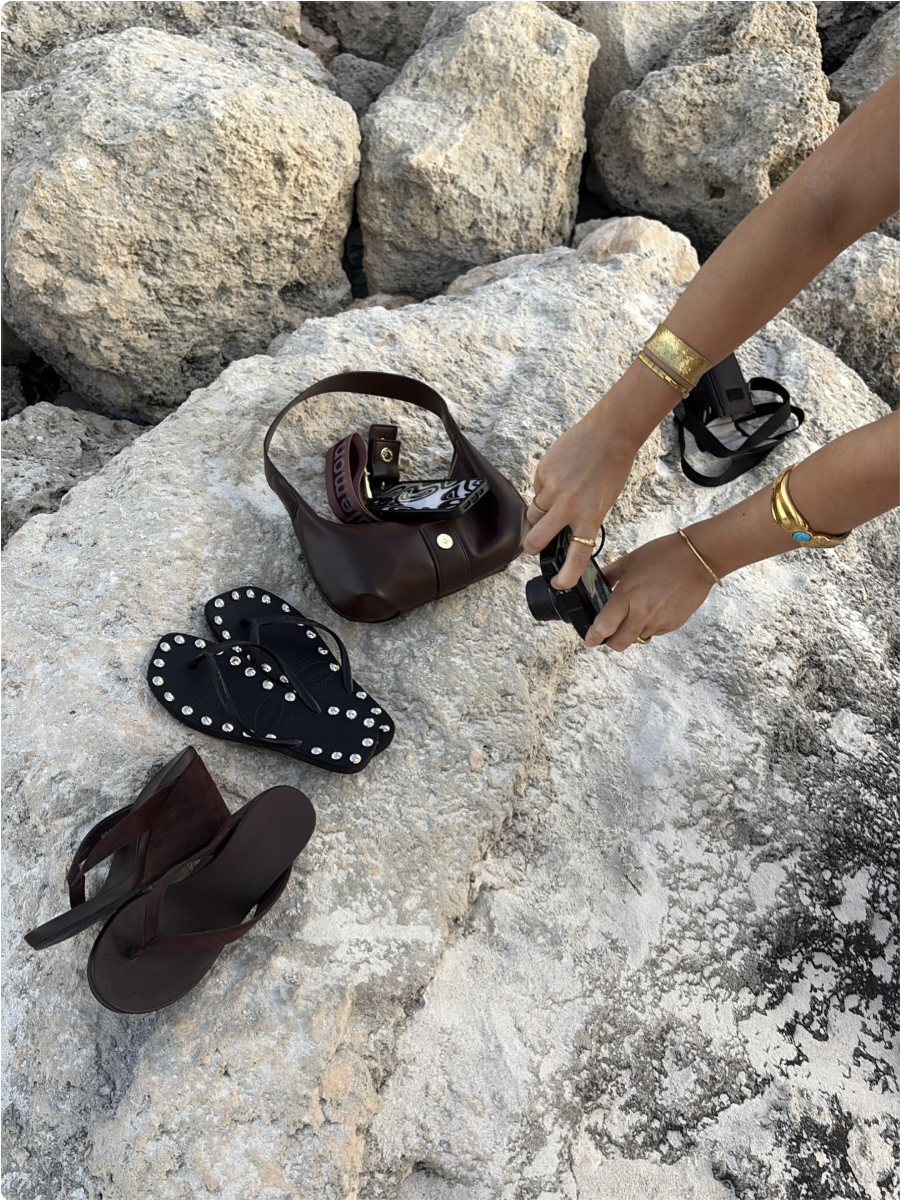
We stopped trying to look perfect on Instagram and TikTok. Now we’re trying to look like we aren’t trying at all.
Scroll through Instagram for five minutes and count how many posts are trying not to look like posts. There’s the photo dump: a blurry mirror selfie, half a coffee, a sunset taken through a car window, a receipt for some reason. On TikTok there’s the “Get Ready With Me” where someone does their makeup and talks about their week, and the “Day in My Life” that follows a person from their alarm going off to their skincare routine at night. Nothing is posed. Nothing matches. That’s the point.
If you were on Instagram in the mid-2010s, you’ll remember how different it used to feel. Feeds were planned like mood boards. Everyone had a filter they were loyal to, every photo sat neatly in a grid, and posting something unedited felt a bit like leaving the house in your pyjamas. The goal was to look perfect, and nobody really pretended otherwise.
So it’s tempting to read the newer, messier content as a sign that social media has finally become more honest. But I’m not so sure. A photo dump might look random, yet someone still sat there deciding which ten photos made the cut and which forty didn’t. A Day in My Life might feel unfiltered, but the creator is still choosing what we see and what stays off camera. That raises the question I want to explore here: has the pressure to appear authentic on Instagram and TikTok actually made us more real, or has it just created a new kind of performance? My argument is the second one. We haven’t stopped performing online. We’ve shifted from performing perfection to performing authenticity.
It’s worth saying that “performance” here doesn’t mean lying. Long before Instagram existed, the sociologist Erving Goffman argued in The Presentation of Self in Everyday Life (1959) that everyday social life works a bit like a stage. We all manage the impression we give to other people, whether it’s at a job interview or a family dinner, and we behave differently “front stage” in front of an audience than we do “backstage” when no one is watching. Social media just makes that audience much bigger and much more permanent. What I’m interested in is how the GRWM and the photo dump try to blur that line, by inviting us into the backstage while still being, in a way, a front-stage performance.
What “real” looks like now
The photo dump is probably the clearest example of this shift. Writing for Refinery29, Serena Smith describes it as a carousel of unrelated images and links its popularity to lockdown, when there were fewer big moments to post and people started noticing smaller, everyday ones instead. Even so, one of the people Smith interviews admits that everyone, including her, still picks the nicer pictures for their dumps. Trend forecaster Olivia Yallop puts it even more directly in the same piece: “Even the appearance of artlessness is an effect in and of itself.”
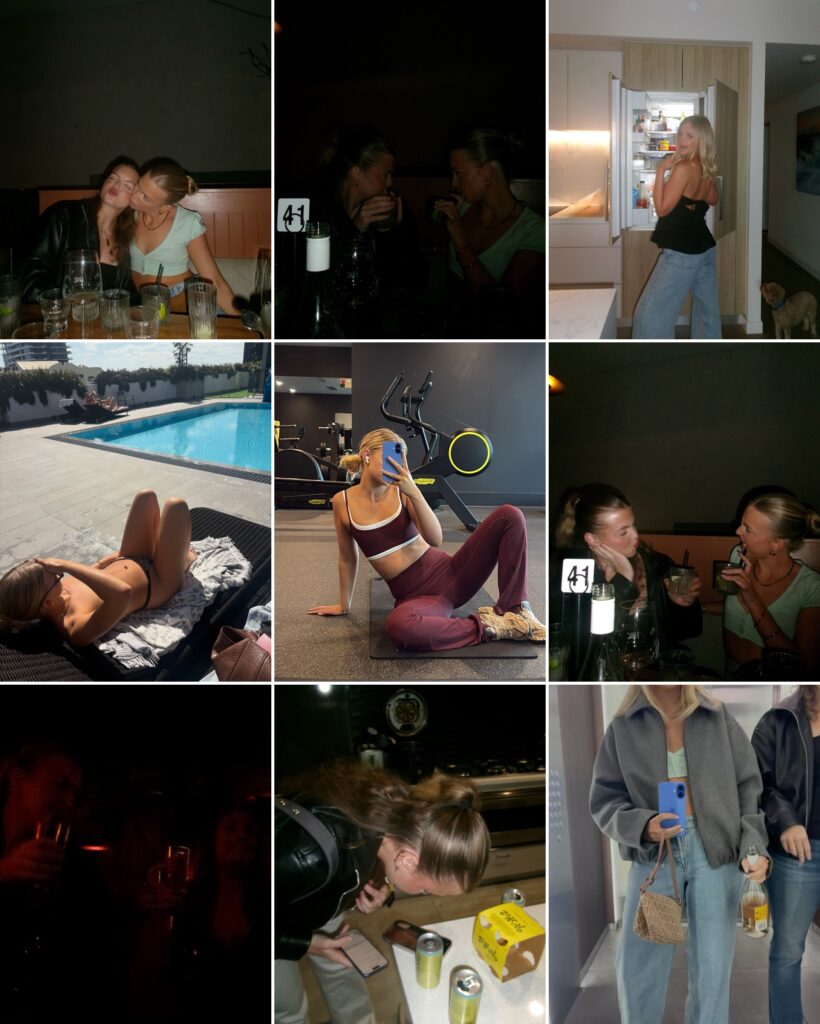
That line stuck with me because it describes something you can now see across both apps. “Real” content has developed its own aesthetic, and it’s just as recognisable as the old filtered one. Flash photography, grainy film-style shots, messy bedrooms in the background, captions written in lowercase, GRWMs filmed at an angle that is casual but somehow still flattering. None of these things are accidents anymore. They are signals, and audiences have learnt to read them as signs that someone is being genuine.
Interestingly, what counts as authentic isn’t the same everywhere. In a comparative study of BeReal and TikTok, Brazilian researchers Guarese and Montardo (2025) found that the two platforms frame authenticity in quite different ways. For BeReal, authenticity is tied to sincerity and vulnerability. For TikTok, it is linked more to originality and creativity. In other words, being “real” doesn’t have one fixed meaning. It is partly shaped by the platform you’re posting on and what that platform rewards. So even imperfection, which is supposed to be the opposite of an aesthetic, ends up becoming one.
The work behind looking effortless
If this kind of content is curated, the next question is how much effort goes into it. Researchers have been looking at this for a while, and two ideas are especially useful here.
The first is Crystal Abidin’s concept of “calibrated amateurism.” In her 2017 study of family influencers on YouTube and Instagram, Abidin noticed that alongside the sponsored, more commercial posts, these families shared a lot of “filler” content: everyday routines, small domestic moments, footage that looked unplanned. She argues this wasn’t as spontaneous as it seemed. Calibrated amateurism describes content that is deliberately made to look raw and amateur, whether or not the person creating it really is an amateur. The amateur look is the product.
What makes this idea so relevant now is that Abidin was writing about professional influencers, but the same logic has spread to ordinary users. You don’t need a brand deal to think carefully about how casual your Instagram story looks. A GRWM still involves setting up a phone, getting the lighting right, filming more than you need and cutting it down later. A Day in My Life video might show a “normal” Tuesday, but someone has decided that the shot of matcha being poured goes in and the hour spent answering emails doesn’t.
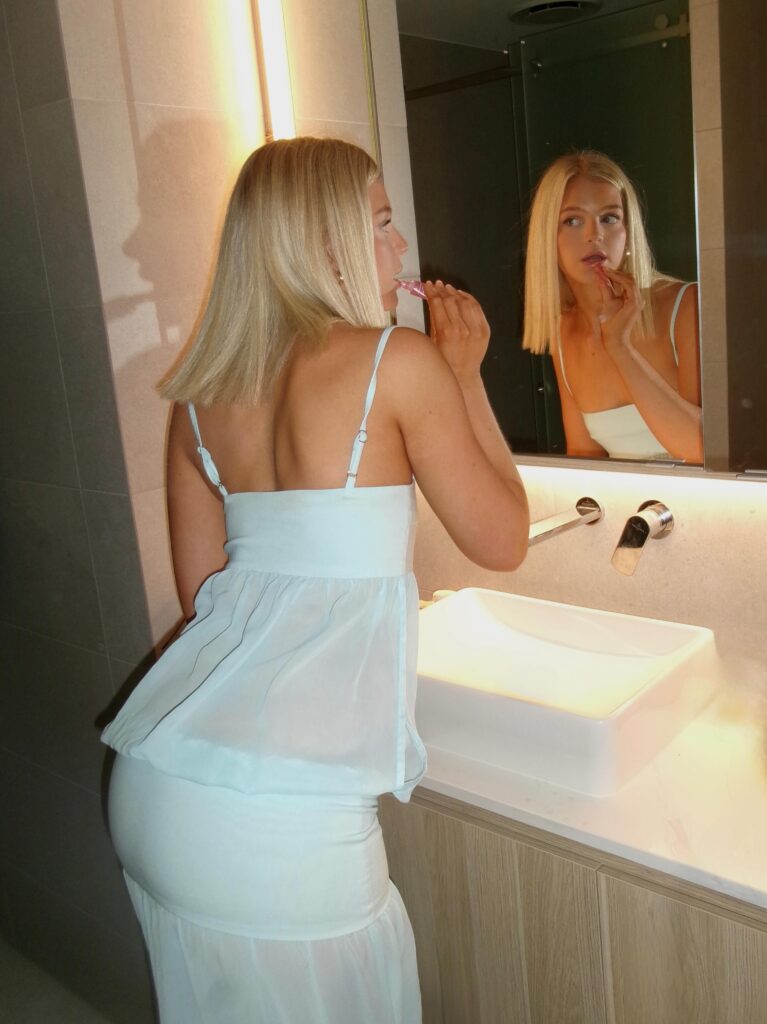
The second idea comes from Maares, Banjac and Hanusch (2021), who studied how Instagram micro-bloggers and ordinary users think about authenticity. They describe something they call authenticity labour: the work people put into performing and presenting themselves as genuine. One of the more interesting findings is that as micro-bloggers become more successful, the “ordinary” appeal that attracted followers in the first place can start to lose credibility, so they have to work harder to keep seeming relatable. The study also found that producers and audiences mostly agree on what makes someone seem authentic, but they don’t always agree on visuals. Producers saw editing as a way to perform authenticity, while audiences were more sceptical of it and tended to see video as more genuine.
I think that last point helps explain the move towards GRWMs and Day in My Life content. If audiences trust video more than an edited photo, it makes sense that people would shift to formats that look less produced. But that doesn’t mean less work is happening. Put Abidin and Maares et al. side by side and the pattern is pretty clear: making content look effortless can take a lot of effort.
When authenticity becomes another expectation
There’s another layer to this. Once audiences start valuing authenticity, it stops being just a quality someone has and becomes something they’re expected to show. A 2026 systematic review by Celik and colleagues, which looked at 138 peer-reviewed studies on influencer authenticity, calls this the “authenticity paradox”: the conflict that happens when influencers try to turn their genuine self-presentation into something commercial. The authors also point out that more recent research finds no overall engagement benefit from being seen as authentic, which suggests audiences may be getting better at noticing when “realness” is part of a strategy.
Influencers are the most obvious example, but I’d argue the same pressure reaches regular users too. Posting a heavily edited photo now risks looking try-hard. Posting nothing makes you invisible. So the safest option becomes content that looks casual but is still flattering, which is exactly what the photo dump and the GRWM provide.
BeReal is a really useful comparison here, because it was designed to take the performance out of social media altogether. The French app launched in 2020 and blew up a couple of years later, marketing itself as the opposite of Instagram. Once a day, at a random time, every user gets a notification and has two minutes to post a photo from both their front and back cameras. No filters, no editing, no time to stage anything. In theory, it should be the most authentic platform out there.
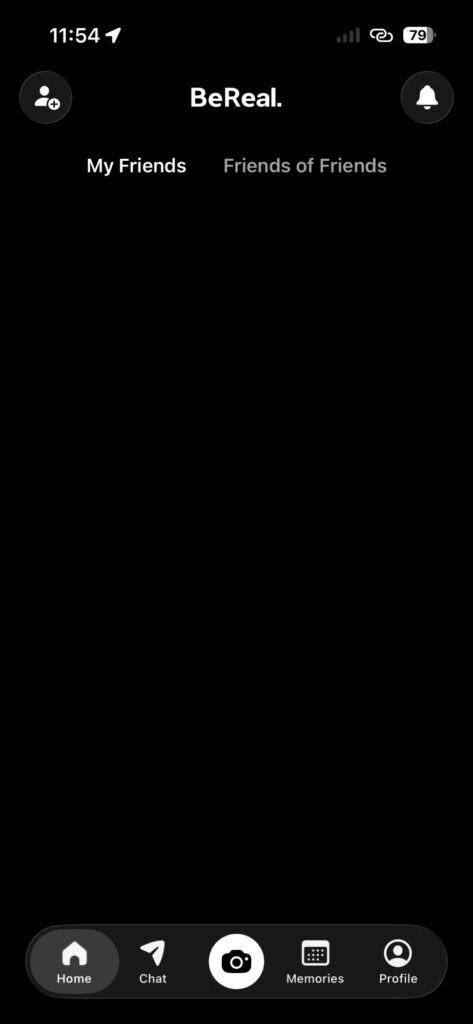
In practice, it didn’t quite work like that. Reddy and Kumar (2024) interviewed young adults about how they used BeReal and found they understood authenticity in two different ways: as spontaneous, in-the-moment interaction, and as a fuller, more complete picture of who they are. The app’s design supported the first much more than the second. Pinch et al. (2024) found that users bought into BeReal’s idea of realness, believing posts should look effortless, and some judged others as fake when they didn’t post on time. So even on an app built around spontaneity, people were still managing how they came across. They were just following a different set of rules.
What happened next is just as telling. Thomas and Talbot (2026) surveyed 333 people about why they started and stopped using BeReal, and found a pattern of enthusiasm, then scepticism, then eventual disinterest. Participants liked that the app helped them stay connected with friends and worked as a kind of digital diary. But they grew cynical about how authentic it really was, especially as more people started staging their posts and the app added more features. BeReal’s decline suggests that removing filters and editing tools doesn’t remove self-presentation. People will find a way to perform within whatever limits a platform sets.
The performance has changed, not disappeared
So, back to the blurry mirror selfie and the half-drunk coffee. I don’t think this content is fake, and I don’t think the people posting it are being dishonest. A lot of it is genuinely fun, and a GRWM can feel more personal and more relatable than a perfectly lit grid ever did. The research doesn’t really suggest that authenticity and performance are opposites either. If anything, it shows they’ve always existed together, which is exactly what Goffman was getting at more than sixty years ago. Every post involves some kind of choice, and choosing how to present yourself isn’t the same as being fake.
Where it gets more complicated is when “being real” turns into another standard we feel we have to meet. If a perfect grid was exhausting because it demanded constant polish, the casual aesthetic can be exhausting in its own way, because now the effort has to be invisible too. It’s one thing to edit a photo. It’s another to edit a photo so it looks like you didn’t.
What has changed is what we’re performing. In the 2010s, Instagram was about looking polished, aspirational and perfect. Now, the ideal is to look casual, relatable, a bit imperfect and, above all, effortless. As Abidin’s calibrated amateurism and Maares et al.’s authenticity labour both show, that effortlessness often takes real thought and real work. And as BeReal’s rise and fall suggests, even a platform built to strip that work away couldn’t stop people from caring how they came across.
To answer my original question, the pressure to appear authentic on Instagram and TikTok hasn’t removed performance from social media. It has created a new version of it. We used to try to look perfect online. Now, more and more, we’re trying to look like we aren’t trying at all.
References
Abidin, C. (2017). #familygoals: Family influencers, calibrated amateurism, and justifying young digital labor. Social Media + Society, 3(2). https://doi.org/10.1177/2056305117707191
Celik, F., Ibrahim, B., Polat, E., Moulard, J., & Akbulut, M. (2026). Influencer authenticity in marketing: A systematic literature review and future research agenda. International Journal of Consumer Studies, 50(5), Article e70258. https://doi.org/10.1111/ijcs.70258
Goffman, E. (1959). The presentation of self in everyday life. Anchor Books.
Guarese, L. C., & Montardo, S. P. (2025). Autenticidade em plataformas digitais: Estudo comparativo entre BeReal e TikTok [Authenticity on digital platforms: A comparative study of BeReal and TikTok]. Galáxia (São Paulo), 50, Article e68483. https://doi.org/10.1590/1982-2553202568483
Maares, P., Banjac, S., & Hanusch, F. (2021). The labour of visual authenticity on social media: Exploring producers’ and audiences’ perceptions on Instagram. Poetics, 84, Article 101502. https://doi.org/10.1016/j.poetic.2020.101502
Pinch, A., Fiers, F., Birnholtz, J., Fisher, J., & Reilly, B. (2024). “Is it time for me to be authentic?”: Understanding, performing, and evaluating authenticity on BeReal. New Media & Society, 27(11), 6315–6333. https://doi.org/10.1177/14614448241267731
Reddy, A., & Kumar, P. C. (2024). ‘A teaspoon of authenticity’: Exploring how young adults BeReal on social media. In Proceedings of the CHI Conference on Human Factors in Computing Systems (pp. 1–14). ACM. https://doi.org/10.1145/3613904.3642690
Smith, S. (2021, February 18). How Instagram’s ‘photo dump’ trend finds the beauty in lockdown life. Refinery29. https://www.refinery29.com/en-gb/instagram-photo-dump-trend
Thomas, L., & Talbot, C. V. (2026). The rise and fall of BeReal: Values of and motivations for (dis)engagement with authenticity-promoting social media. New Media & Society, 28(10), 5684–5708. https://doi.org/10.1177/14614448251393921
 Jessica Goff
 somewhatdamaged
 Fynn Thompson