
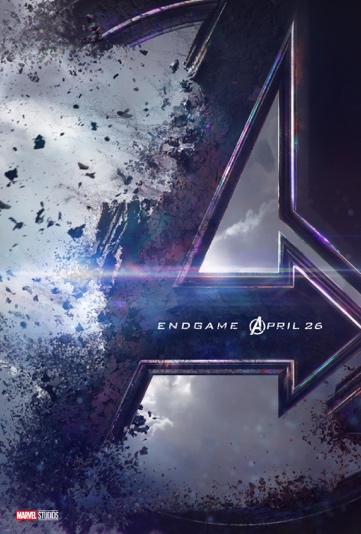
Image Source: Marvel Studios Official Poster
After ten years of development, Avengers: Endgame finally achieved a narrative and commercial crescendo in April 2019, something that modern Hollywood had long thought was unachievable. With a global box office total of $2.79 billion, the movie was both a triumph and an example of Marvel Studios careful ten-year character development. From Tony Starks smug beginnings in a cave to his self-sacrificing farewell, viewers have followed distinct, natural character arcs over 22 movies. It was the pinnacle of the shared cinematic universe.
Beneath the historic victory, however, was an unsustainable standard. The Marvel Cinematic Universe (MCU) experiences an unprecedented financial and cultural decline in the years after Endgame. The once unbeatable franchise saw its cultural dominance decline due to fragmented multiversal narratives, a relentless flood of streaming content, and considerable media debate about “superhero fatigue”.
With Robert Downey Jrs high profile comeback as Victor Von Doom in Avengers: Doomsday serving as the centrepiece of the studios major course correction, Marvel Studios is currently at a crossroads. Does Hollywood need to rediscover the fundamental idea of slow, character first storytelling, or is nostalgia-driven event casting sufficient to revive a collapsed empire?
The streaming paradox: when world building turns into “homework”
One must consider business restructuring rather than just creative failure in order to comprehend Marvel’s post Endgame slump. Marvel Studios was given the responsibility of supporting. A worldwide streaming service in addition to its well-established theatrical lineup after Disney+ launched in late 2019. An unparalleled increase in production ensured, in just two years, Phase 4 created more hours of content than Phases 1 through 3 combined over 10 years, driving up costs and scaling back long term theatrical release windows.
The audience franchise relationship was drastically changed by this shift. Transmedia storytelling is only successful when individual entries strike a balance between interconnected world building and standalone accessibility, as media scholar Derek Johnson points out in Media Franchises: Creative License and Collaboration in the Culture Industries. When volume overrides focus, the narrative thread begins to rip.
The MCU increasingly forced fans to consume dozens of hours of television in order to follow a two-hour theatrical release, as opposed to providing confined, captivating chapters. This tendency was referred to by industry analysts as “homework viewing”. Casual listeners felt burdened by required homework rather than welcomed into a vibrant world.
At the same time, the series replaced intricate multiversal dynamics with realistic human stakes. Death loses its finality and personal stakes disappear when alternate timelines, variable versions, and limitless reboot buttons are introduced into a story. According to market surveys in Bloomberg Businessweek, audience fatigue was brought primarily by narrative saturation and waning emotional commitment rather than a sudden dislike of superheroes.
This disconnect was evident in the box office. According to Fortune, films like The Marvels experienced historic box office troubles as a result of steep opening weekend drop offs and erratic theatre yields for releases that had previously guaranteed automatic $1 billion return. The brand was no longer unbreakable.
Case Study: the RDJ comeback and event casting mechanisms
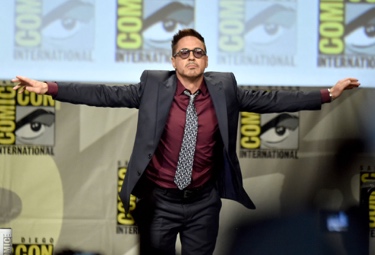
Image Source: HuffPost / San Diego Comic-Con Coverage
Marvel Studios unveiled what was supposed to be its ultimate trump card in July 2024. Robert Downey Jr. introduced himself as the actor casted to play the iconic villain Victor Von Doom in Avengers: Doomsday while standing on the Hall H stage at San Diego Comic Con, surrounded by masked characters wearing green cloaks.
When the hall exploded, it quickly went viral on social media. Beneath the show, however, is a key turning point. Through multiversal manoeuvring, Downey Jr., whose portrayal of Tony Stark anchored the franchise’s original golden period, was making a comeback as a totally new enemy rather than Iron Man, signalling a bold shift in character management.
Ryan Lizardi contends in his cultural analysis Mediated Nostalgia: Individual Memory and Contemporary Mass Media that “legacy casting” is a common tactic used by contemporary entertainment brands to avoid the drawn-out challenging process of character creation. Studios are able to create instant expectation by utilising pre-existing emotional memory. When talking about his choice to rejoin the MCU, Downey Jr. said, “Let’s mix it up”.
The Multiverse Era mostly depends on event driven announcements, alternate timelines, and legacy casting to create excitement, whereas the Infinity Saga developed audience attachment over ten years of character development with lasting effects and solid causes. The organic character development that first gave Iron Man’s 2019 departure significance cannot be permanently replaced by stunt casting, though it can pique viewers interest in the near term.
Recalibration of the Industry: The “Quality Over Quantity” Mandate
Marvel Studios has started a purposeful operational retreat after realising the limitations of unending growth and evaluating executive feedback on audience burnout. In order to prioritise quality above quantity, executive leadership issued a formal directive to shorten release timelines and cap output.
The macroeconomic change in post streaming Hollywood is reflected in this course correction, which is not occurring in a vacuum. Media companies invested hundreds of millions of dollars in content volume during the height of the streaming wars, believing that subscriber acquisition would surpass traditional box office figures. The financial risk became intolerable as production expenditures surged above $200 million per project, forcing budget cuts and broader studio realignments.
Two fundamental changed are involved in the studios recalibration:
- Production Showdown: To provide creative teams more time for development and postproduction, fewer Disney+ series and theatrical productions are released each year.
- Recentering Grounded Narratives: Concentrating on limited, street level storylines where character choices have definite, lasted consequences rather than abstract cosmic threats.
Marvel wants to bring back the feeling of scarcity through reduced project frequency, aiming to restore the high cultural demand that once characterised each theatrical release.
Conclusion: Rebuilding Emotional Stakes
The post Endgame Marvel story serves as a warning to contemporary blockbuster producers. It proves that even the most successful media property in history cannot replace real character connection with multiversal gimmicks or volume with depth.
Marvel Studios is at a critical juncture as Avengers: Doomsday draws near, both creative wise and organisationally. Legacy returns and multiversal methods can rekindle discussion, but they are insufficient to keep a universe going. The MCU must keep in mind the lesson learned from its own heyday in order to restore its empire: genuine spectacle is measured in the human hearts that drive the story, not in infinite dimensions.
 Kyra
 Jordey Petersen
 Montana K