

I can’t scroll through my Instagram or TikTok feeds nowadays without seeing videos from people in long-distance relationships (LDRs). Sometimes, it’s couples participating in cute trends, like counting down the days until their reunion. Other times, it’s the inescapable and endless sponsored content for relationship apps such as Locket, which are designed to make couples feel connected despite being physically apart.

Even pop star Dua Lipa has experienced the challenges of long-distance love. During her Radical Optimism world tour, her demanding schedule meant spending extended periods away from her now-husband, actor Callum Turner. In an interview reported by Sheikh (2026) for The News International, Lipa revealed that long distance “does get easier with time, but it never stops being hard.” She also shared her belief that separation can strengthen a relationship, explaining that “it can feel even stronger when you don’t get to see each other all the time” (Sheikh 2026).

It seems like everyone is doing long distance these days, even pop stars. In an increasingly globalised world, where careers, education and travel can take partners across continents, technology has made maintaining these relationships more possible than ever. So why does the stigma surrounding long-distance relationships persist?
I believe technology can facilitate intimacy in LDRs, provided couples actively use it to overcome the barriers of physical separation. However, technology cannot simply manufacture closeness. Its value depends on how couples communicate, establish shared rituals and give their digital interactions personal meaning.
Distance Makes the Heart Grow Fonder
Technology has transformed long-distance relationships by allowing couples to maintain regular communication without being physically together. In “Utilization of Social Media in Strengthening Communication in Long Distance Relationships”, Gutzmann (2018) observes that “social media has been essential in the building of intimate relationships among individuals despite geographical distance.” The study also found that “all of the interviewees felt strongly that social media and technology had a positive influence on their relationship and allowed them to connect to one another with ease.”
These findings suggest that physical proximity is not the only way to maintain emotional closeness. Video calls, messages and shared digital experiences allow couples to remain involved in one another’s lives, even when separated by thousands of kilometres. Gutzmann (2018) further reports that participants felt “the benefits associated with their relationship and the love they shared for their partner outweighed the difficulties and challenges they faced.” Although this qualitative research reflects participants’ experiences rather than proving that technology improves every relationship, it challenges the assumption that geographical distance necessarily weakens romantic connection.
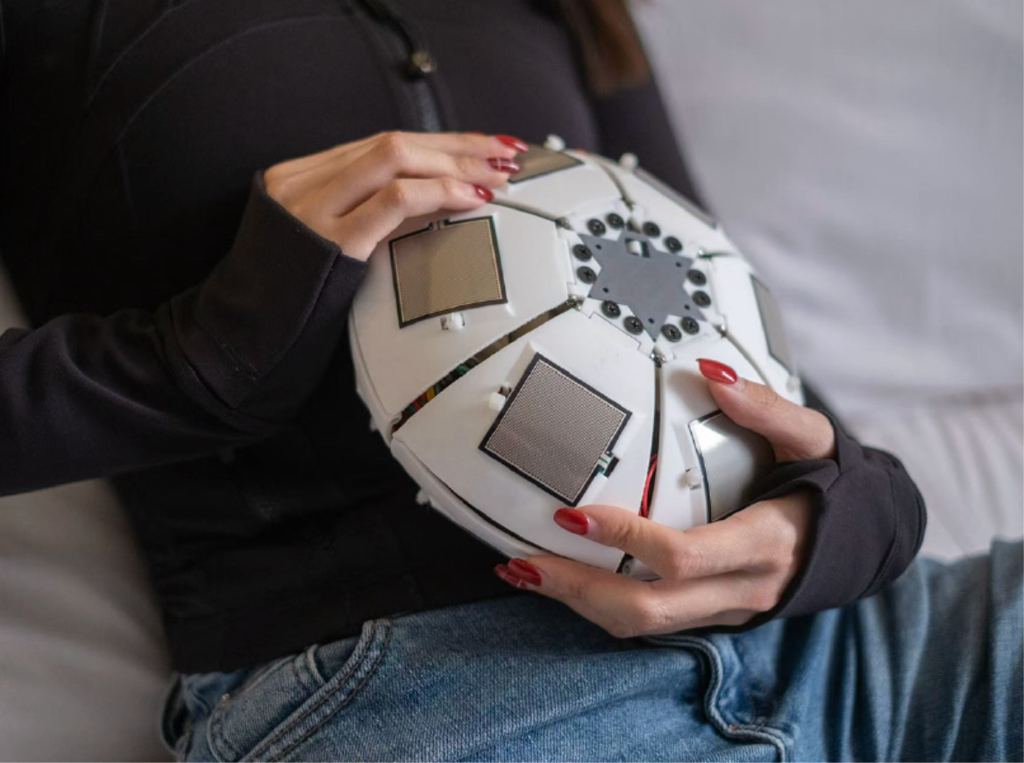
Emerging technologies are also exploring ways to address the absence of physical touch. Mengshi et al. (2026), in ““Our Secret Language”: Co-Creating and Ritualizing Affective Haptics in Long-Distance Relationships”, acknowledge that “long-distance relationships struggle to sustain intimacy without physical touch.” Their research explores how couples, given haptic technology, develop personalised haptic interactions. Some even develop “idiosyncratic tactile codes” intelligible only to them, akin to inside jokes built on shared history (Mengshi et al. 2026). This demonstrates how digital experiences can take on emotional significance when couples shape them together. While haptic technology cannot fully reproduce the warmth of an embrace, it can provide a completely new way to express affection.
Out of Sight, Out of Mind
However, the argument that distance makes the heart grow fonder overlooks the difficulties of being apart.
Krapf (2018), in “Moving in or Breaking Up? The Role of Distance in the Development of Romantic Relationships”, highlights the relationship between physical proximity and intimacy, noting that couples experience “less closeness and intimacy with each other when they are apart.” This presents a significant limitation to digital communication: being able to contact someone is not the same as sharing their physical presence.
Furthermore, technology can sometimes intensify the insecurities it is meant to ease. Billedo, Kerkhof and Finkenauer (2015) in “The Use of Social Networking Sites for Relationship Maintenance in Long-Distance and Geographically Close Romantic Relationships” found that participants in LDRs used social networking sites more for partner surveillance and experienced higher levels of social networking site jealousy. Rather than building trust, constant access to a partner’s online presence can encourage suspicion and cause tension to build up. Technology is therefore not inherently intimate or reassuring. Its effects depend on whether couples use it to nurture trust or attempt to control one another.
While research shows that technology can both strengthen and undermine long-distance relationships, I believe its impact ultimately depends on how couples choose to use it.
Social Media: Friend or Foe?

Social media has created a new narrative around what successful long-distance relationships should look like. Scrolling through TikTok, it is easy to encounter couples sharing elaborate reunion videos and matching routines. While these moments can be sweet and reassuring, they also present what Kim (2025) describes as “a carefully curated, filtered version of someone’s reality” in “The “Relationship Goals” Trap.” Boeckxstaens et al. (2025) published “Achieving #Relationshipgoals”, a study which investigated the relationship between idealised romantic content and young adults’ relationship outcomes. They found that “exposure to positively-biased portrayals was negatively associated with relationship satisfaction.”
For couples already navigating the difficulties of distance, these idealised positive portrayals can become an unfair benchmark. A relationship without daily video calls, elaborate surprises or constant public declarations of affection may appear less meaningful by comparison. Yet the most intimate moments for another couple may be a partner remembering an insignificant detail, listening after a stressful day or sending a comforting message. No relationship is identical.
Relationship apps can also make intimacy feel overly quantified through streaks, milestones, countdowns and notifications. This constant and calculated form of communication takes away from intimacy. Technology is most valuable when it is used as a tool in a couple’s relationship, rather than dictating what that relationship should look like.
Snapchat streaks will work for some couples, but not for others.
The Intimacy of Everyday Communication
Despite these drawbacks, technology is capable of helping couples develop stronger communication habits, particularly when they use it to share the ordinary details of their lives.
Social media platforms such as Snapchat and Locket allow partners to exchange spontaneous photographs and brief updates without needing to schedule an entire conversation. In “Staying Close From Afar”, Motea Al-aqab (2025) explains that “social media allows for more interactive and creative ways to bond,” citing Locket and Instagram livestreaming as examples.
These small interactions may appear insignificant, but intimacy often develops through the accumulation of everyday moments.
In “The Digital Age: Long-Distance Relationships”, Wilde (2013) explains that “part of intimacy involves knowing the details of the other person’s daily life, big and small, because you’re that important to each other.” Sharing a photograph of a morning coffee, complaining about a difficult day or sending a simple video can help partners remain involved in each other’s worlds.
This is where technology’s real potential lies. It gives couples opportunities to demonstrate attention and care throughout the day, even when they cannot be physically present. The intimacy comes not from the platform itself, but from the willingness to share, listen and remain interested in each other’s lives.
Relationships are Built on Rituals, Even Digital Ones
Beyond everyday communication, technology can help couples establish shared rituals that provide consistency and familiarity. These might include watching a television show together, calling before bed or creating a shared playlist. Such routines give couples experiences to anticipate and grow comfortable with, even when they cannot physically share a space.
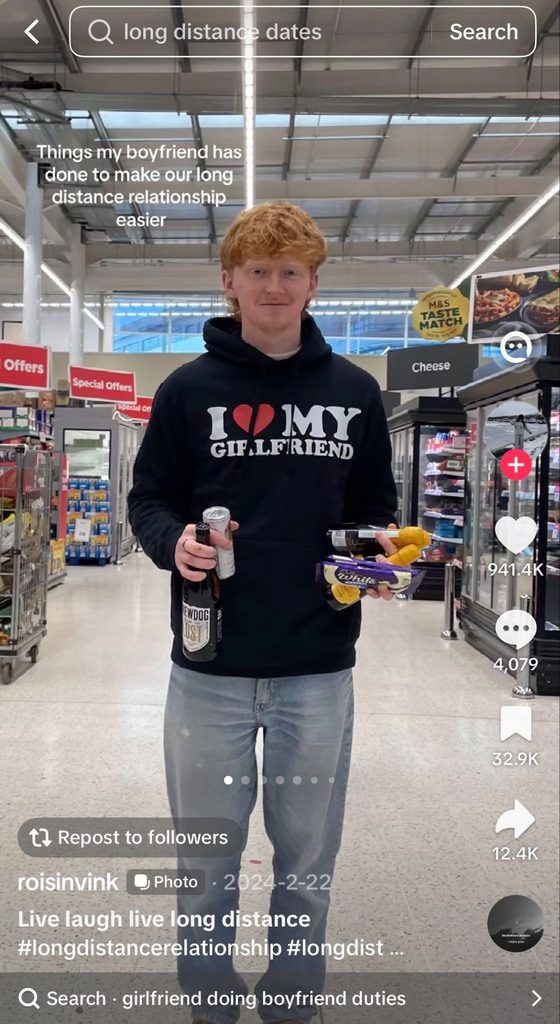
Kondo (n.d.), in “Building Rituals As a Couple”, states that relationships are “built on rituals.” In long-distance relationships, these rituals can be particularly valuable because they create a sense of continuity across otherwise separate lives. Callum Turner’s approach to long distance with Dua Lipa, as reported by Mitchell (2025) for Body and Soul, reflects this idea. The article describes how couples can “build small rituals: nightly check-ins, joint playlists, matching Saturday coffees… little gestures that say we’re in this, even when you’re 800 kilometres apart.” Rather than relying solely on spontaneous communication, couples establish small, dependable moments that reinforce their commitment to one another.
Mengshi et al.’s (2026) research into affective haptics offers another example of how these rituals can develop. Their finding that couples create personalised “tactile codes” suggests that technology can support forms of communication that become uniquely meaningful over time. The significance of these interactions is not simply the sensation itself, but the shared history and emotional associations attached to it.
Technology can therefore support intimacy not by replacing the relationship’s physical elements, but by creating new ways for couples to express their connection.
Does Distance Really Make the Heart Grow Fonder?

So, can technology replace intimacy in long-distance couples? Not entirely. Physical separation creates genuine challenges, and no amount of messaging or video calling can perfectly reproduce the experience of being together. Technology can also introduce new pressures, from unrealistic expectations about what a successful relationship should look like to social media induced jealousy.
However, this does not mean intimacy disappears when couples are apart. Research suggests that social media can support communication, while emerging haptic technologies demonstrate how couples can create new forms of shared touch and ritual. These tools become meaningful when partners use them intentionally, rather than relying on technology alone to sustain their connection.
LDR content continues to dominate social media feeds, and relationships like Dua Lipa and Callum Turner’s are thriving, proving that technology can help keep true love alive.
 Megan Anne
 Yang Wu
 Liz Farnfield