
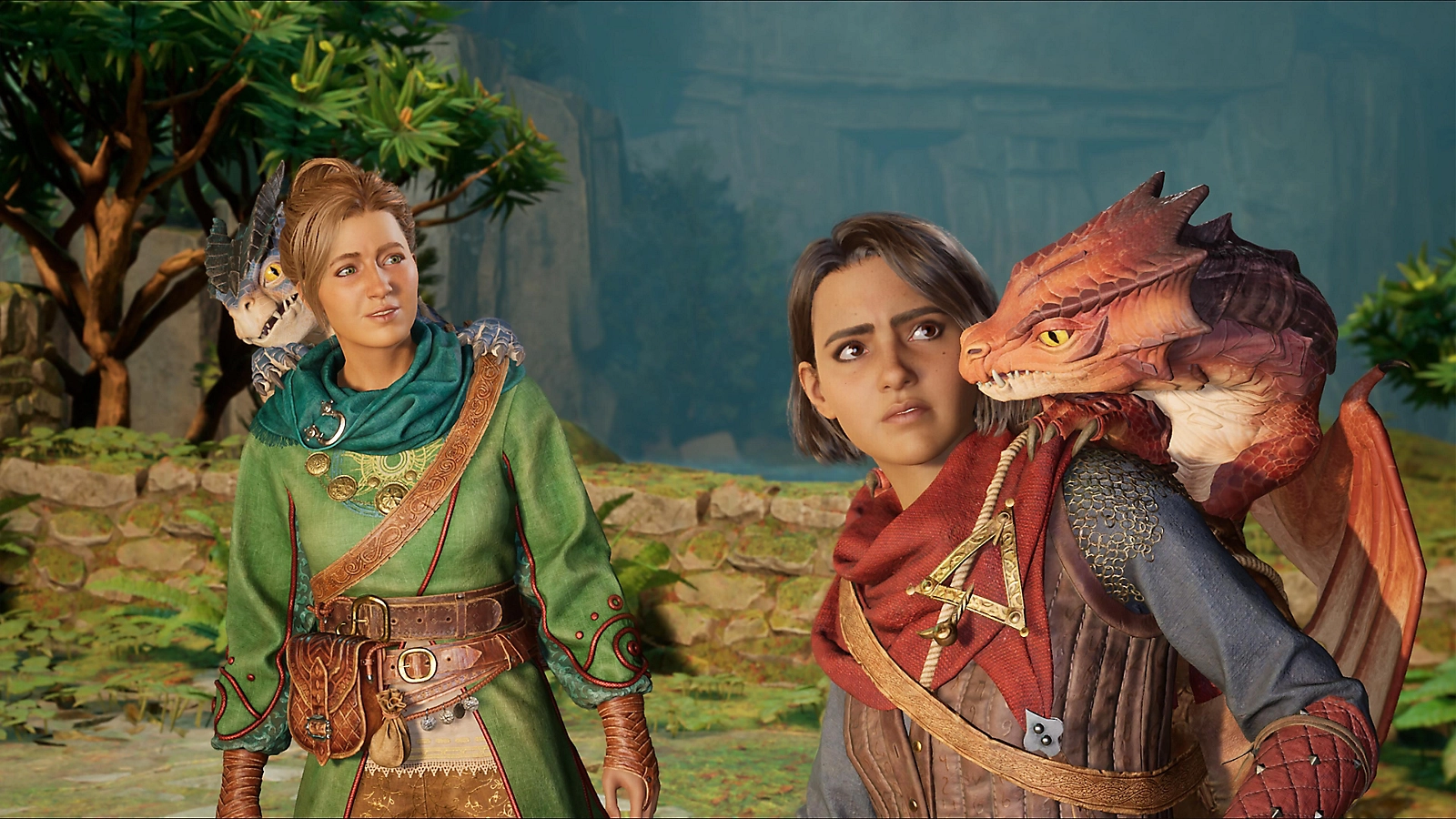
I’m sure if you’ve been on social media for the past few weeks, you may have seen the new co-op couch game, ‘A Big Walk’. In the gaming community, there have been overwhelmingly positive reviews of the game’s design choices. The biggest challenge in this game is having to working together to complete puzzles and make discoveries.
So then how did this mandatory cooperation come into play? Wouldn’t it be better to give the user the option to play solo or with friends?
Although it has recently come into the spotlight, Hazelight Studios, led by Josef Fares, explores this idea of mandatory gameplay in each of their released games.
Before we delve further into the game’s stylistic choices and how the studio uses features that have taken gamers by storm, let’s travel back to the 90s.
When we think of games in general, we may typically think of multiplayer games. Board games, card games, and even sports games. Typically, if not always, they require at least one other player to complete the game (other than solitaire, obviously). Let’s use Uno as an example, a card game that has over 800 different types of card games and spin-offs (wow!). Uno is a multiplayer game that supports 2-10 players; it is a fun, family game that is a great example of a mandatory multiplayer game.
Since the development of web platforms and online gaming, the Uno video game was officially released in 2006 for Xbox users. This advancement turned the traditional game of mandatory in-person multiplayer communication into online gaming, which allowed players to play alone. Release after release, studios designed games that either played multiplayer or solo; sometimes, their only option was to play on their own.
So how did Hazelight Studios change this trend of optional gameplay and transform gaming back to its roots of mandatory gameplay through its game design?
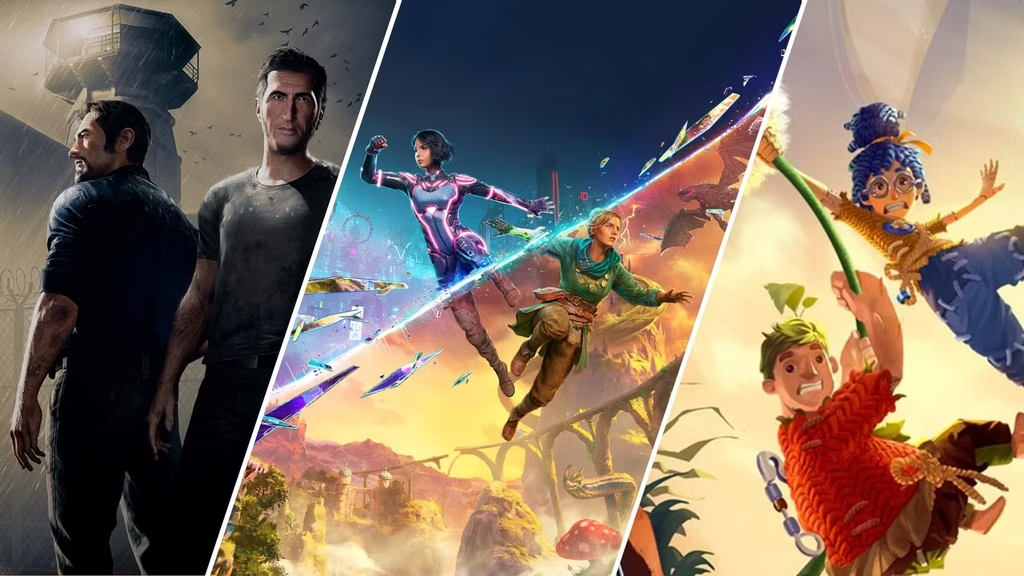
Unlike traditional gameplay, which is primarily single-player, Hazelight Studios’ central design philosophy is to create games that two players complete together. Josef Fares founded the studio in 2014 and released A Way Out in 2018, which became the first co-op-only, split-screen action-adventure of its kind. Later, it released It Takes Two in 2021 and Split Fiction in 2025.
Researchers Lim and Reeves (2010) developed the idea that ‘competition and cooperation are two basic models of social interaction, not only in real life, but also in videogames, and these modes create different cognitive and emotional experiences’. We compare this to Hazelight Studios, which creates games that require cooperation with another player rather than PvP gameplay. You are playing as characters who have the same end goal: to complete missions and solve puzzles along the way. Researchers also concluded that, in their study, players exhibited greater psychological arousal around playable controlled characters than NPCs (non-playable characters). Hazelight Studios demonstrates this directly by featuring only playable characters, thereby enhancing player enjoyment and engagement.
Another perspective on how games are developed now can be found in the work of researchers Sidji, Smith & Rogerson (2024). We see in many newly released games that the use of AI assistants is becoming more normalised, with players being replaced by bots. This article conducted a study investigating how Artificial Intelligence affects teamwork, communication and relationships in cooperative games. They concluded that ‘the presence of the AI challenged many players’ understanding of the “spirit of the game”. Furthermore, the presence of the AI assistants weakened social connections between human teammates. This highlights the importance of human interaction, as demonstrated by Hazelight Studios. Focusing on Split Fiction, the game prioritises genuine social connections, reinforcing these values in an ever-growing gaming industry driven by Artificial Intelligence.
When discussing any game, a framework that helps designers examine user experience is Hunicke’s MDA framework (2004). The Mechanics, Dynamics, and Aesthetics are extremely important in every game, and Hazelight Studios was able to mimic this to near perfection from my perspective. The MDA framework helps to explain how they are so effective in creating this user experience.
Let’s use Split Fiction as an example. The mechanics of the game are simple; you need two people to complete the game. This can either be played split-screen or online using a friend’s pass. You play as either Mio or Zoe and work in tandem to complete cooperative puzzles, challenges and combat.
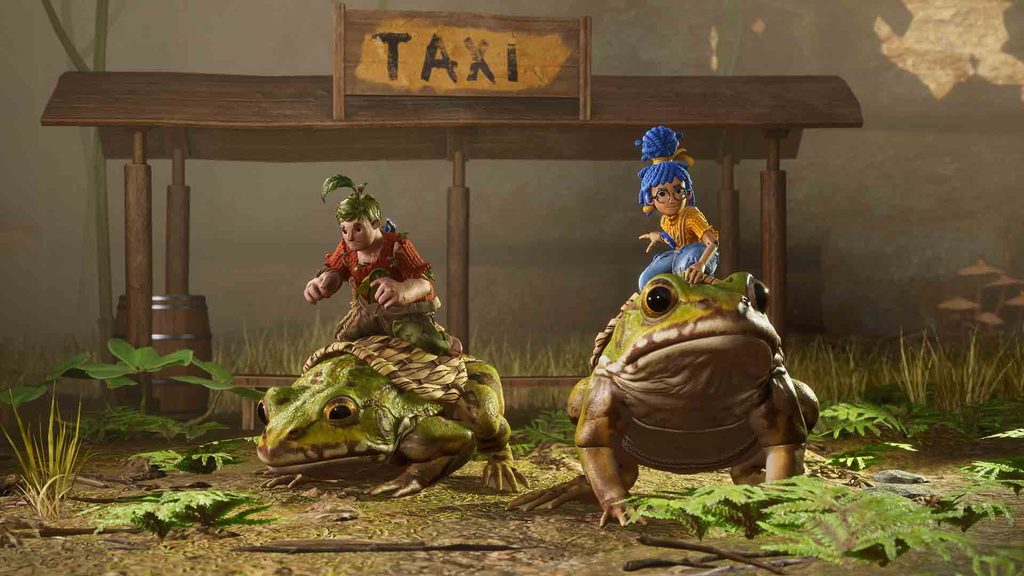
The dynamics of the game describe how players interact with these mechanics, for example, how the players interact with each other to solve the puzzles. Coordination is extremely important for timing movements and, at times, for relying on other players’ ability to progress forward.
The aesthetics are all about how the game makes the player feel, the emotional response a game can evoke from a player. In most games, we see satisfaction from successfully completing the game as the biggest achievement. What makes Split Fiction different from most is being able to achieve this win with someone to share it with. The fast-paced adventure can also bring excitement and overall enjoyment when solving puzzles together. Another important and quite central idea is having to try over and over and over again. These challenges aren’t easy, and for first-time players, they can be frustrating. However, the relief and build-up when completing it afterwards can make it all worth it.
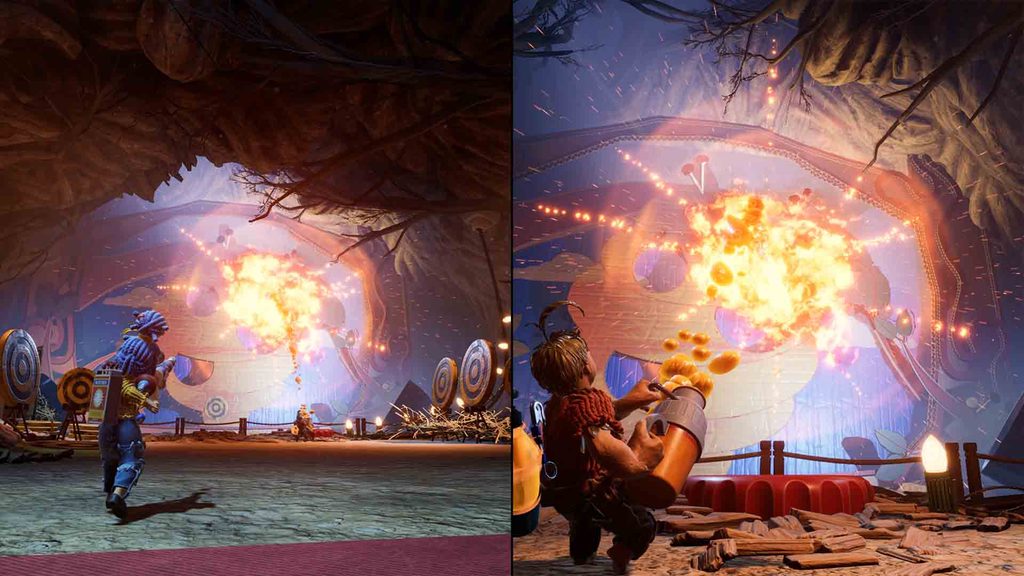
Contrary to what I have been discussing, I’m actually not much of a gamer myself (gaming community, don’t be mad!). I don’t spend hours on games, but when a game comes out that receives praise for its game design, I can’t help myself. When It Takes Two was released in 2021, it quickly received rave reviews across social media. Understandably, this was enough to make me want to play.
Fast-forward to 2025, when Split Fiction was released. Another great game that had all the multiplayer features I enjoyed. After this game, I had been transported back into this realm of multiplayer storyline games. I needed more. I went back and played A Way Out. This game was renowned for one of the craziest plot twist endings in gaming history.
I had completed all of Hazelight Studios’ games except Brothers – A Tale of Two Sons, released in 2013 (which, as I write this, I am thinking of going back and playing). I had entered a world of amazing storyline writing, graphics, and game design. Nothing I have played, or will play in the future, will compare to the pure euphoria I felt playing those games.
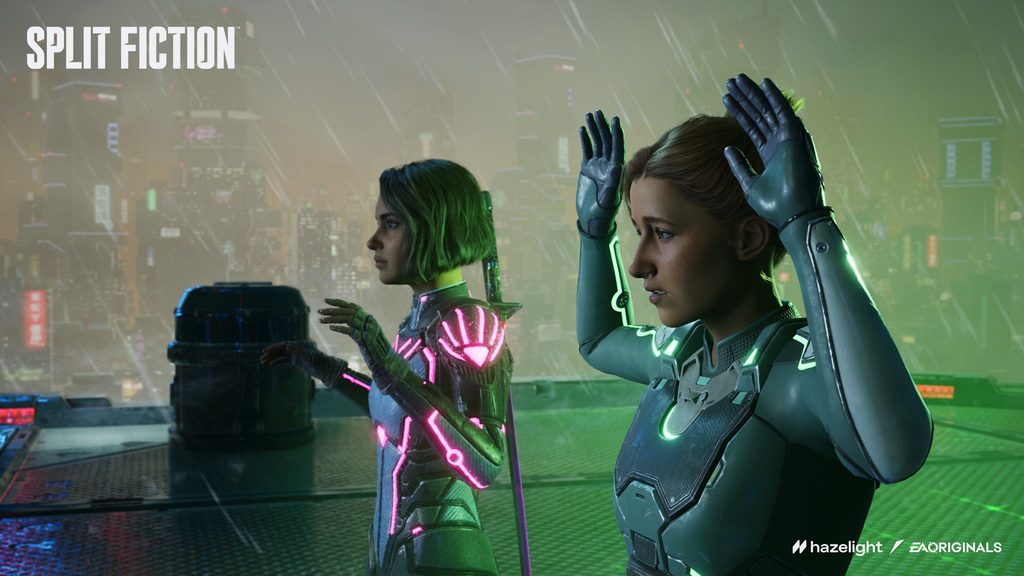
For me, the graphics, soundtrack, dialogue, and overall feel of all these games were nothing I had seen before. Not trying to put Hazelight Studios above every other game ever created, but I’d say they’re up there. But the biggest thing for me was how Hazelight was able to transform games into mandatory gameplay without an AI companion, and how successful it became. In digital media today, it is almost expected that you can play a game for hours on end to keep yourself entertained and stimulated. Jesper Juul (2009) explores these hardcore gamers and describes the scale as: “Newbies should play at least until midnight; advanced gamers need not sleep at all. On weekends, [hardcore players] must stay at their monitors non-stop.’’ So I think that’s what I love so much about Hazelight’s games; there are no expectations. You can’t ‘grind’ for hours on end; if you do try to do this, then the game will be over in a day, and there’s nothing to enjoy.
Players can take their time, relax when able to and get excited when the time comes. There’s such a perfect mix of beautiful game design, storyline and overall technique. I think more games need to have this cooperation be mandatory. A Big Walk described at the start is an example of this. To me, video games are something that should be enjoyed and shared. Some games can get away with the solo-only option, but I would like to see more multiplayer games in the future.
Hazelight Studios has proven that mandatory multiplayer games can actually be enjoyable, and maybe even more enjoyable than playing by yourself. Whilst I explored scholars and their theories about games, there’s much more research out there and much more that can be conducted. The future of games relies on its audience; the user experience is what designers keep in mind when creating a game. Replacing players with AI is also a central idea. Although it takes away the worry of having to find someone else to play with, it also ruins the gameplay. The ability to play and experience a game with someone else is something I hope every newly released game will take into consideration.
 Megan Anne
 Yang Wu
 Lillian Ninyett