
Making new romantic connections isn’t limited to meeting people through mutual friends, university, or social events. For many young people today, finding a potential partner can be as simple as downloading a dating app and swiping right. More than 350 million people worldwide use dating apps today, with platforms including Tinder, Hinge and Bumble all offering convenient access to potential partners outside of their usual social circle.
However, having more options doesn’t mean finding a genuine connection is any easier. A 2024 Tinder study surveying 8,000 people aged 18 to 34 found that 91 per cent of men, and 94 per cent of women believed dating was more difficult than ever. While dating apps have increased dating pools and made discovering people more convenient, there are clear frustrations among users. These frustrations include endless swiping, ghosting and superficial interactions, and raise the question of whether more matches lead to genuine connections. Looking offline, local run clubs and community events offer opportunities for people to meet face to face.
More matches, more opportunity
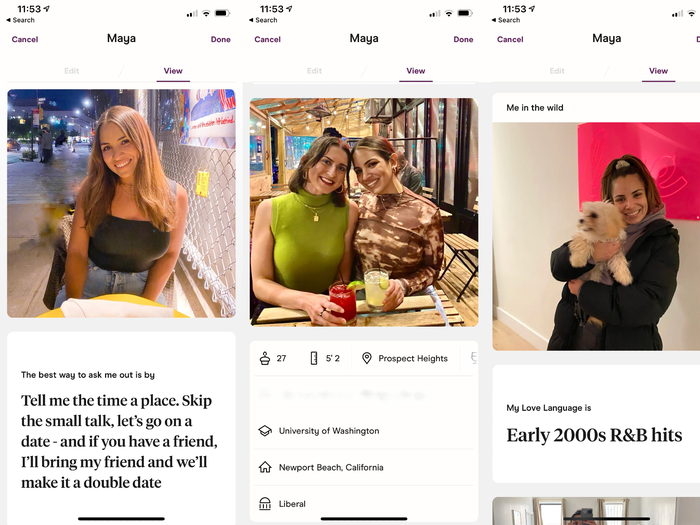
Dating apps have made meeting potential partners easier, giving users an opportunity to connect with people outside of their social circles. Platforms such as Tinder use location-based matching, allowing users to browse profiles of people and swipe right if interested, and left if not. Hinge, on the other hand, encourages users to interact with photos and prompts about their personality and interests. According to Relationships Australia, almost one in four Australians under 44 met their partner online, highlighting how common online dating is among young Australians.
The fatigue behind the swipe
While dating apps have made meeting people easier, having more options doesn’t necessarily translate into genuine connections. Swiping starts as something new and exciting, with endless profiles to swipe through and the anticipation of finding a partner. This doesn’t last long. What starts off as fun and exciting quickly becomes repetitive and frustrating as matches and conversations fail to develop into anything more than a right swipe or like.
A study on dating app use cites an estimate that the average Tinder user swipes through 140 profiles a day, highlighting the large number of potential partners users can interact with. With endless profiles to swipe through, users can fall into a pattern of making quick judgments based on photos, rather than getting to know the person. When two people match on a dating app, it doesn’t mean a conversation will start or will develop into anything. Messages can get left on read and ignored, and what seemed like a promising connection can be gone without an explanation. This behaviour, often referred to as ‘ghosting’, is when someone suddenly stops responding without giving a reason. According to Pam Rutledge, people often ghost to avoid uncomfortable conversations or to tell someone they aren’t interested anymore, leaving people feeling rejected or confused. The combination of constantly swiping, meaningless conversations, and being ghosted can leave users feeling as if they are wasting their time.
“The sheer volume of potential matches on dating apps can be overwhelming,” therapist Sophia Cress told The Guardian.
Therapist Sophia Cress explains that having too many options can encourage people to keep searching for someone better, rather than investing time in getting to know someone. While dating apps make finding people easier, this constant search can make the process of finding someone more difficult and exhausting.
A 2024 study following dating app users over three months found participants experienced burnout over time. Liesel Sharabi, a researcher at Arizona State University, told the BBC that users can become stuck in a cycle of browsing profiles, starting conversations and going on dates that lead nowhere. For some users, this repeated cycle can lead to users experiencing ‘dating app fatigue’ as their time and effort spent doesn’t result in a genuine connection. Over time, the excitement of finding someone new can quickly disappear and turn into frustration as it starts to feel like a waste of time.
Social media creator Melissa Divaris Thompson shares her perspective on searching for the perfect partner. Video: TikTok.
Finding connection offline
Today, dating apps are central to the dating world. However, they aren’t the only way to meet new people and find a potential partner. After endless swiping, shallow conversations and disappointing matches, some young Australians are looking for genuine connections offline. Run clubs and community events all offer opportunities to meet new people face to face without relying on a screen. Run clubs in particular have gained attention as a way to socialise with new people who share similar interests in fitness.
In an August 2026 article published by news.com.au, Sydney woman Emily Baxter said she met her partner through a Sydney run club after getting frustrated with dating apps.
“They were often underwhelming, and there was not much consistency behind them,” she told news.com.au. It started as a casual conversation after a run and then developed into a romantic connection. While people may find connections at run clubs, they aren’t necessarily for people looking for a partner. Many participants attend with their friends and socialise within their friendship group. Run clubs main purpose isn’t for specifically for finding romantic partners, but they still offer opportunities to meet people through shared interests.
Perth-based community group Cold Nips brings people together for early morning ocean swims, creating a place for people to socialise and meet new people. The group’s mission is to promote mental health and wellbeing through community, connection and shared experiences. Meeting people through these events means people can get to know one another through natural conversations, unlike dating apps where first impressions are based on appearance and short prompts. These events also take away the pressure of dating, as people can enjoy themselves and make friends instead of actively searching for a romantic partner.
Researcher Liesel Sharabi told the BBC that dating apps shouldn’t be the only way people try to meet someone. She says exploring other ways to meet people can take the pressure off online dating. While these events may or may not lead to a romantic connection, they offer a positive environment to meet someone naturally.
Today, dating apps have changed the way young people approach dating and form romantic relationships, giving them access to a larger pool of potential partners outside of their normal social circles. However, having more options doesn’t mean finding a connection is any easier. Dating apps offer convenience and more opportunities to meet people, but endless swiping, ghosting and conversations that lead nowhere leave users feeling frustrated with the whole process. Some young users are now exploring alternative ways to meet potential partners naturally through run clubs and community events. These events offer opportunities to meet people and develop connections face to face.
Dating apps have changed how people meet, but building a strong connection takes more than swiping right on someone’s profile or getting a match.
Sources
Blake, K., Portingale, J., Giles, S., Griffiths, S., & Krug, I. (2022). Dating app usage and motivations for dating app usage are associated with increased disordered eating. Journal of Eating Disorders, 10, Article 186. https://pubmed.ncbi.nlm.nih.gov/36443873/
Bumble. (2026). Understanding ghosting in online dating. Bumble. https://support.bumble.com/hc/en-us/articles/34991790973341-Understanding-ghosting-in-online-dating
Cold Nips (2026). Cold Nips. https://www.coldnips.com.au/
Curry, D. (2026). Dating app revenue and usage statistics. Business of Apps. https://www.businessofapps.com/data/dating-app-market/
Germain, T. (2026) Are you stuck in the dating app burnout cycle? BBC. https://www.bbc.com/future/article/20260526-its-not-just-you-dating-apps-have-a-burnout-problem
Phares, E. (2025). Dating statistics and facts. Forbes Health. https://www.forbes.com/health/dating/dating-statistics/
Relationships Australia. (2023). The rise of online dating and open relationships. Relationships Australia
Rutledge, P. (2023). Ghosting: How to deal with digital disconnects in dating. Fielding Graduate University. https://www.fielding.edu/ghosting-how-to-deal-with-digital-disconnects-in-dating/
Amoils, G (2026) Sydney Run Club organiser reveals couples who met on the run. News.com.au. https://www.news.com.au/lifestyle/fitness/exercise/why-aussie-singles-are-ditching-dating-apps-to-find-love-at-run-clubs/news-story/3a74deb33407528bae7867c2048db93e
Yong, S. (2024) Flirt, reflect, delete: Seven tips to tackle dating app fatigue. The Guardian. https://www.theguardian.com/wellness/2024/feb/12/dating-app-fatigue-tips
Zhou, Y. (2023) The benefits and dangers of online dating apps. Canadian Journal of Family and Youth, 15(2), 54–62. https://www.researchgate.net/publication/366786260_The_Benefits_and_Dangers_of_Online_Dating_Apps
 Oliver BF
 Montana Puckeridge
 Miles Norris