
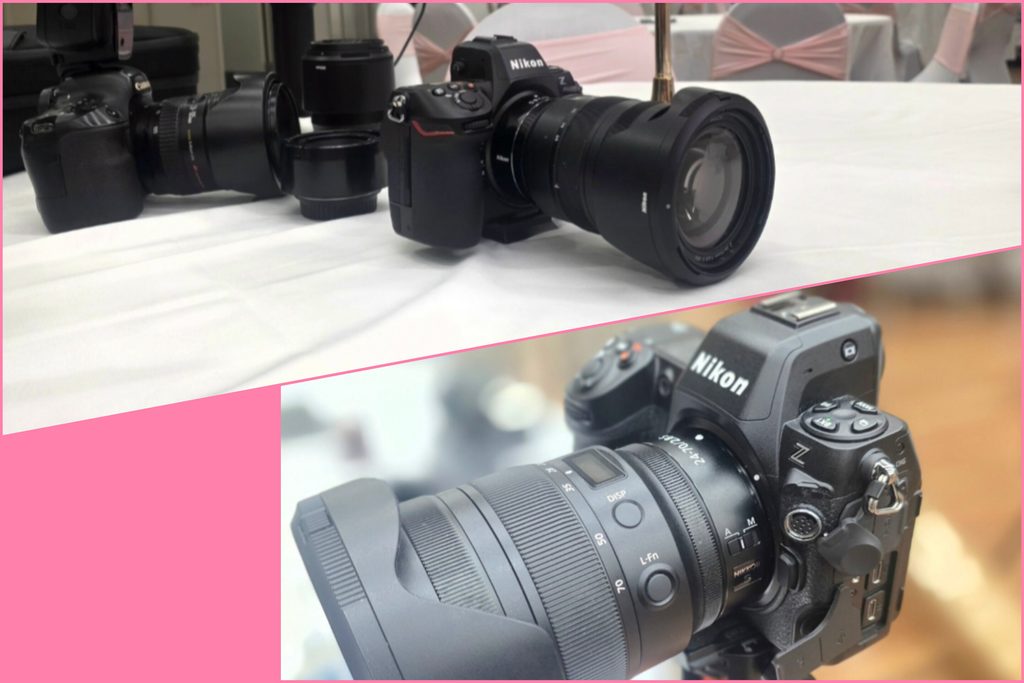
The camera bag belonged to the client, but finding out what was inside made me nervous. I had been hired to shoot video at an event in Perth, and when the client offered to let me use his own gear, I said yes. Inside was a Nikon Z8, two premium f/1.2 lenses and a professional tripod. Seeing that level of high-end equipment in his personal kit made my mind race. It felt like a silent test to see if I could handle it. But then he admitted he didn’t know how to use any of them. I had never used a Nikon system before, but within 15 minutes I became familiar enough with the controls to get started. The work went smoothly.
What stayed with me was how differently we approached the equipment. He owned a setup I would hesitate to buy, even as a master’s student in screen arts. Yet for the recent documentary, I chose to shoot on a smartphone. That choice made me curious to understand how gear choices shape the filmmaking process. How do smartphones differ for professional directors and student filmmakers? The answer lies beyond the device itself. Creative goals, access to equipment, and production support shape both the decision to use a phone and what filmmakers can achieve with it. By examining professional productions alongside my own experience. I don’t just think about what a phone can shoot, but what filmmakers need around it.
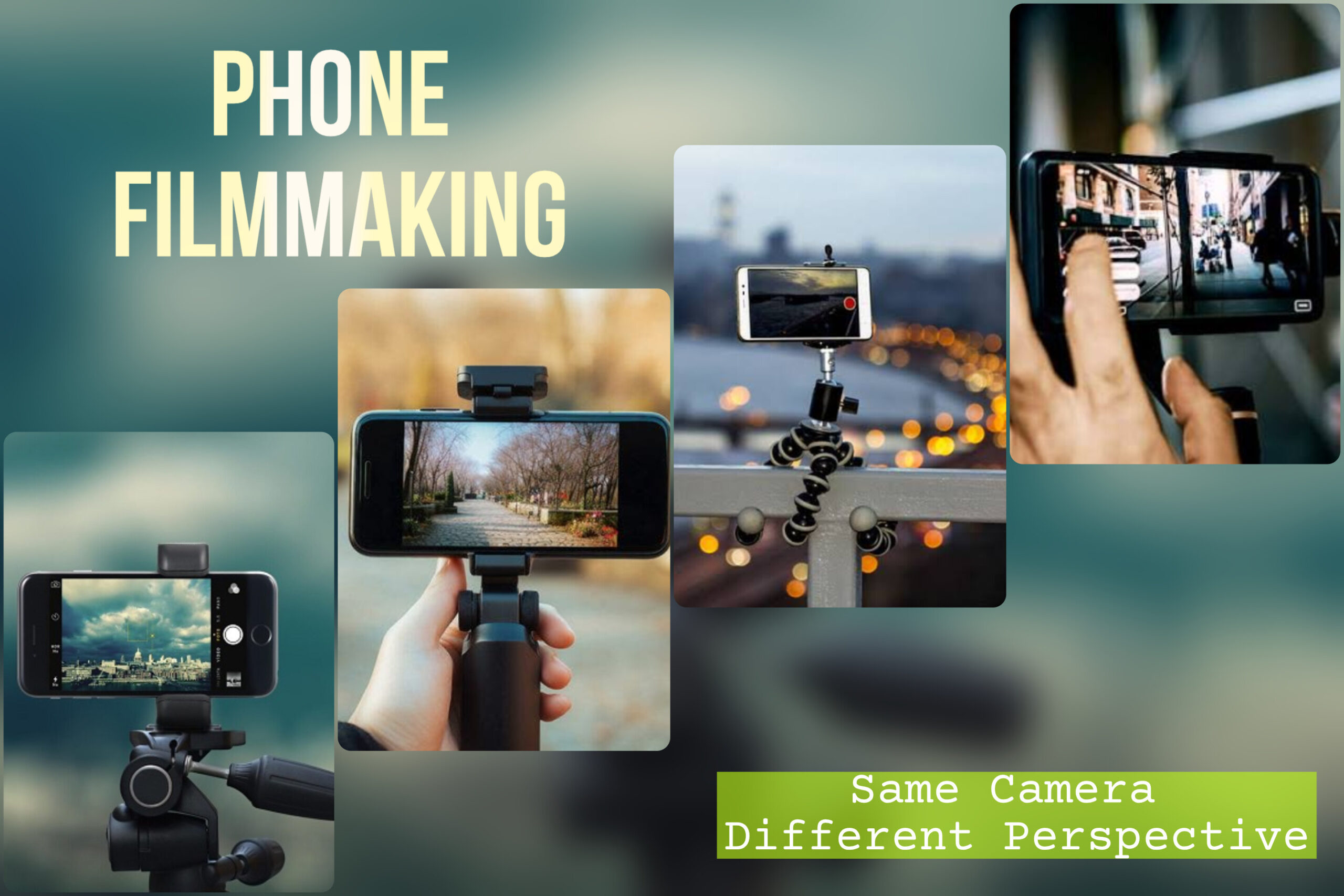
Smartphone filmmaking is growing and is no longer limited to small experiments. Nowadays, it is a part of production. In August 2026, the industry publication Before & After published a technical breakdown of iPhone filmmaking, 28 Years Later, showing how the phone is established in professional workflows. This kind of detailed coverage was once reserved for film made on cinema cameras. At the same time, phone applications such as Blackmagic Camera now offer Manual control over frame rate, shutter speed, and ISO, which once required professional gear. Many phones even have a built-in pro camera version, which allows users to control every aspect manually. All these changes show that smartphones are much more than just simple recording devices. They have created creative ideas and made production tools much more accessible. Despite that, we need to figure out why someone chooses a phone and what kind of support they need.
“Mobile media, mobility, mobile creative arts and mobile communication have significantly shaped the way we live, work, and tell stories” – Schleser & Sills-Jones, 2026, p. 1
For professional directors, choosing a smartphone as a first camera is not about saving money. In 2025, Danny Boyle released a sequel to the zombie world he created back in 2002; he shot many of the scenes on an iPhone 15 Pro Max. This choice was not made because the production could not afford cinema, nor as a stunt. The visual goal of 28 Years Later was to show a remote place that looked untouched for decades. He wanted the freedom to move quickly through remote countryside. The phone was chosen for its mobility and size. Yet the phone was not working alone. The film had a budget of around US$75 million and used multiple phones fitted with aluminium cages and lens adapters to make them work like professional cameras. The team also used additional cameras and drones and built custom rigs that could hold up to 20 phones at once. Smartphones didn’t replace the traditional system. It just became part of it.

Boyle is not alone. Steven Soderbergh, an Oscar-winning director, had access to any camera he wanted, but shot the movie Unsane on an iPhone 7 Plus using the Filmic Pro app and completed the shoot in roughly two weeks. This was an intentional choice to use a phone, which helped him with speed and spontaneity. For professionals, a smartphone is just an option among many. They can choose a phone or a cinema camera, depending on the conditions and story settings. Their budget, team and rigs can turn the phone into creative tools as they like. For filmmakers without those resources, the decision can look very different.
Not every professional filmmaker has access to the resources Boyle has. For those working with smaller budgets, a smartphone can be a real chance. For example, Sean Baker’s Tangerine was shot on three iPhone 5s with a budget of about US$100,000. a small amount by Hollywood standards. He said the decision was based on what the production could afford. The team built the filmmaking setup around those financial limits using an $8 app, FILMIC Pro, and a few accessories. His small team found a way to make it serve the film, rather than accepting the phone’s limitations. The phone also helped inexperienced actors to feel more comfortable while filming. Rather than working against the film, it helped to shape the atmosphere and brought creative benefits, and the film became a hit at the Sundance Film Festival.
“I couldn’t shoot on the higher-end cameras. I was almost stuck with the lower-end cameras like a DSLR, but even that would have added three crew members and we couldn’t afford them. We began the search for alternatives and one of those was the iPhone”- Sean Baker
In Perth, Get Smart! is a smartphone category of the WA made Film Festival and Western Australia’s only smartphone filmmaking competition. It welcomes students, the general public, and established filmmakers. Its goal is to give a chance to make a short film without expensive equipment or a large budget. For someone unable to buy a professional camera kit, it offers opportunities and prizes that motivate them to make a short film with a phone. It happens every year, and lots of people participate and enjoy the competition. Perth filmmaker Clayton Mitchell shows how this works in practice. A singer and writer before he turned to film, Mitchell made his first smartphone short movie, Carl’s club, which won the audience choice award at the Perth Horror Film Festival in 2025. He just submitted Doom and Groom this year and now preparing My Dinner with Bazza for next year’s Get Smart! Category.
The real difference comes down to available resources, not professional status. A well-funded production may use smartphones to expand creative options, whereas a smaller production with fewer resources uses them to open the door into the film industry. Students fall at the far end of this range; they face the same financial limits as independent filmmakers, but with less experience, less access to equipment, and more doubt about whether a phone is good enough.
For students, the barrier to making a film is not only financial. In my experience, many film students carry a lot of pressure to make every project look perfect. When you are paying for an expensive degree, shooting on a phone can feel like a step backwards, and there is a fear of what friends, teachers, and audiences might think. There is always a question mark: is phone filmmaking professional? Combined with tight budgets, this pressure can stop people before they start. I felt this pressure myself while making my documentary, which was also a unit assignment. The university does lend professional equipment for assignments, but borrowing it requires paperwork, and the gear is usually available for only 24 hours. My participants had different schedules, so after filming one person, the next might not be free for another ten days. I chose a smartphone because it was more flexible and let me film whenever my participants were available. Even so, I always worried that the phone would not meet the quality standard. My documentary explored the impact of ageing, and my participants were real retired people. The phone made a difference here too. It felt more familiar and less intimidating than a large camera setup, which helped my participants speak naturally and share their stories without feeling uncomfortable, much like Baker’s first-time actors on Tangerine.
“Without decent lighting, night footage or indoor shots can easily look grainy and a bit low-budget… Otherwise, be sure to bring extra lights if you want it all to look consistently nice.” – Clayton Mitchell
Still, the phone was not alone. I added a DJI Action 6 for extra angles and lighting for interviews, a Hollyland microphone for clean sound, and some drone shots. Even then, I faced problems with changing daylight, and post-production took longer than expected. I am not the only one facing these limits. Mitchell found his iPhone storage filled up in the middle of the shoot. And like me, he learned that good results depend on what you bring with the phone.
Even on a budget, a phone will need supporting gear. Baker has said he could not have made Tangerine without an anamorphic adapter and a stabiliser. Software also adds another cost, as Schlesar and Sills-Jones (2026) note that when Filmic Pro moved to a subscription model, it upset the smartphone filmmaking community. and popular editing apps such as CapCut now place many features behind monthly plans, where even a single premium effect or template can lock a project to export. A phone shoot is not free, but it is still far cheaper and more flexible than a full camera setup. However, none of this is a reason to feel ashamed about shooting on a phone. Baker, who shot with three iPhones, went on to win four Academy Awards for Anora in 2025. My documentary received good feedback from my teacher, and most viewers did not realise it had been shot on a phone. Yet smartphones are not an equal option. Schleser and Sills-Jones point out that even though smartphones make it easier to start making films, not everyone has equal access to the technology. Even so, the phone most people already have is a far smaller hurdle than a full camera kit. It can remove much of the cost and access barrier, but it cannot replace the skills every filmmaker needs.
When I think back to that client’s camera bag, the lesson seems much clearer now. He owned a professional kit but could not use it. Because I knew what ISO, shutter speed, aperture, and colour temperature do, figuring out the buttons quickly was not a big deal. The value was never only in the equipment. The same is true for smartphones. For professional directors like Boyle and Soderbergh, the phone is a creative choice among the available options. For filmmakers with fewer resources such as independent directors and students, it is often the most realistic way to begin. The real difference is not professional status, but access to gear, money and support. Students should have no reason to feel ashamed of starting with a phone. If Boyle and Soderbergh can choose it, and Baker can start with it and later win Oscars, it is certainly not a compromise. But it is also not a complete solution either. Without skill and the right supporting gear, its capabilities are limited. As Mitchell says, “there is no real excuse for not getting started”. A phone gives students an immediate way to practice their craft and protect their creative vision.
 Jessica Goff
 somewhatdamaged
 Fynn Thompson