

On September 25th, it was reported the English football team Manchester City were found guilty of 114 charges (Ornstein, 2026)1. The most major of which was breaching the Premier League’s financial regulations, including about £900million worth of ‘sham’ payments (Premier League, 2026)2. This brought the discussion of the league’s financial regulations to the forefront of debate; Are the rules unfair? Who do they benefit? Arguments surrounding these rules tend to revolve around how they impact other clubs in the league, and stem from the logic of integrity, merit, and the idea that money is not an indicator of ‘hard work’. However, the Premier League is not an entertainment source confined to the borders of England, it has dedicated fanbases that span globally, making it the richest league in the world (Football Earnings, 2026)3. This means what happens in this league wholly impacts the world’s most popular sport, and it raises concerns about ‘sportswashing,’ financial disparities, and the homogenization of footballing culture and development. Financial regulations in the Premier League are a contentious topic and are often argued for with ideas of fairness and merit, however, due to the power of the Premier League globally, factors of global dominance and diversity in football should be considered more in these arguments.
- Estimated 1.87 billion people in 2024 interacting with EPL content weekly (Premier League, 2024)4.
- 8 EPL clubs make up the 25 richest football clubs in the world (Football Earnings, 2026).
The Premier League’s global influence can be credited to its widespread commercialization, broadcast deals, and competitivity compared to other leagues (Sinclair, 2025)5. With broadcast and club revenue far higher than the rest of the world, the Premier League’s financial power is unequal to the rest of the world. However, these clubs can’t spend whatever they want.
“The Premier League is the UK’s greatest soft power export,” Wilson (2026)6.
Being a soft-power commodity, it is no wonder states such as Quatar, the UAE, and Saudi Arabia have had leaders in their countries purchase football clubs to influence their global image. This is ‘sportswashing’ (Frommer, n.d.)7. In Manchester City’s case, they were bought by Sheikh Mansour, UAE royal and politician, and almost infinite funding. With the league’s regulations, however, they had to find less-than-legal workarounds to spend it. Primarily in place to stop lower-earning clubs from spending beyond their means, the league’s financial regulations mean over three years, clubs cannot spend over £105million beyond their earnings (Arena Scope, 2026)8. A club’s owners cannot simply inject their own money into the club, as this would not account for the club’s earnings. Instead, they can earn through things like commercial deals, player sales, and ticket sales.
This leads to the argument against these regulations; how can clubs who earn less ever hope to compete with rich clubs without rule breaches? Newcastle United was bought by Saudi Arabian owners, whom have more spendable money than any other club in the world, yet they are unlikely to win the league because they have to sell their best players (O’Rourke, 2026)9. On the other hand, big clubs like Manchester United and Tottenham perform poorly year-on-out and still purchase players for over £100million because they have a big following (Olley, 2026)10. It is argued the rules, “penalize clubs for ambition, while protecting those who are already established,” (LA Premier League, 2026)11.
The argument for why these rules are necessary stems from the same place as those who argue against them. Why should a club be successful just because they have more money? With no regulations, clubs owned by nation states can spend hundreds of millions on any kind of player they want, blowing smaller clubs out of the water and ruining any kind of competitivity in the league. A primary example of this is Qatari-owned PSG in the French Ligue 1 (Lemarie, 2025)12, who have won 12 titles since their acquisition in 2011. Regulations are needed, and are consistently evolving, but what is rarely considered in these discussions are the impact they have on the rest of the world.
As previously stated, the financial dominance of the Premier League compared to the rest of the world is staggering. Using Manchester City as an example, they were bought by the Abhu Dhabi United group in 2008 and since transformed from a low-level team into an 8-time league winning side. Everyone who pays any attention to football knows Haaland, Rodri, Aguero, DeBruyne, and so on. It’s become a global brand. Slater (2026)13 stated the Premier League is “the must-have sector.” In seeing the success of Manchester City and PSG without adhering to financial limits, other investors would be incentivized to do the same. Without regulations, the divide between the Premier League and the rest of the world would grow further. But what would the impact of this divide be?
Brazil – An Example of Financial Impact in World Football:
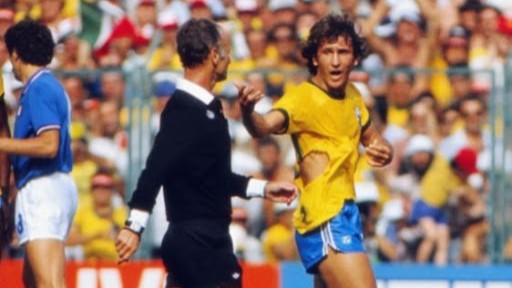
Already with the Premier League’s financial dominance, other countries and their leagues are falling behind. The average top-flight English club can afford the biggest transfer fees and pay the biggest salaries, causing other leagues to lose good players and become less competitive (Sinclair, 2025). Brazil’s Football evolution can help estimate and provide clarity on how financial issues can impact football.
Historically, Brazil was one of the best footballing countries in the world, famous for their fans and playstyle. Now, Brazilian football is in crisis, unable to remain firm in their identity, with a national team struggling against the well-developed European tactics that neutralize their most creative players (Reed, 2026)14. Financial mismanagement has seen the quality of their local league reduced as their best players move to Europe, particularly England, in search of better wages. This has caused interest in Brazil’s local league to decline (Gordon and Helal, 2001)15. If the Premier League were to remove their financial regulations, allowing far more investment from ultra-wealthy owners, the quality of all other leagues would fall further behind the Premier League, seeing all their best players move to England. This would not only see ramifications on finances of other countries’ leagues, but also their stylistic and cultural identities.
Like most other countries, local Brazilian clubs invest in and develop young players. Santos and Flamengo are where superstars Pele, Neymar, and Vini Junior were developed. Unlike Pele, who continued to play for his local club from 1956 to 1971, new players like Raphinha, Estevao and Martinelli moved to England young. These players developed distinctly European playstyles, with positional focus over the flair and technique Brazil was known for (Chakraborty, 2025)16. Pele was part of the legendary Brazilian side that used ‘joga bonito’ (The Beautiful Game) to drastically change how the world played. Joga bonito was a technical and creative style that contrasted with the standard passing and tackling in football at the time (Britannica, n.d.)17.
Now, Brazil’s playing style has fallen behind, unable to compete against the strong tactics of many European countries who neutralize their most creative players. There is a key issue here: If the tactics developed in richer leagues dominate other countries, those tactics become the universal ‘way to play football.’ In today’s landscape, Pele and the Brazilian teams of the past couldn’t have had the same stylistic impact they had due to the disparity in football development and quality in these countries, which is at its core, a result of financing.
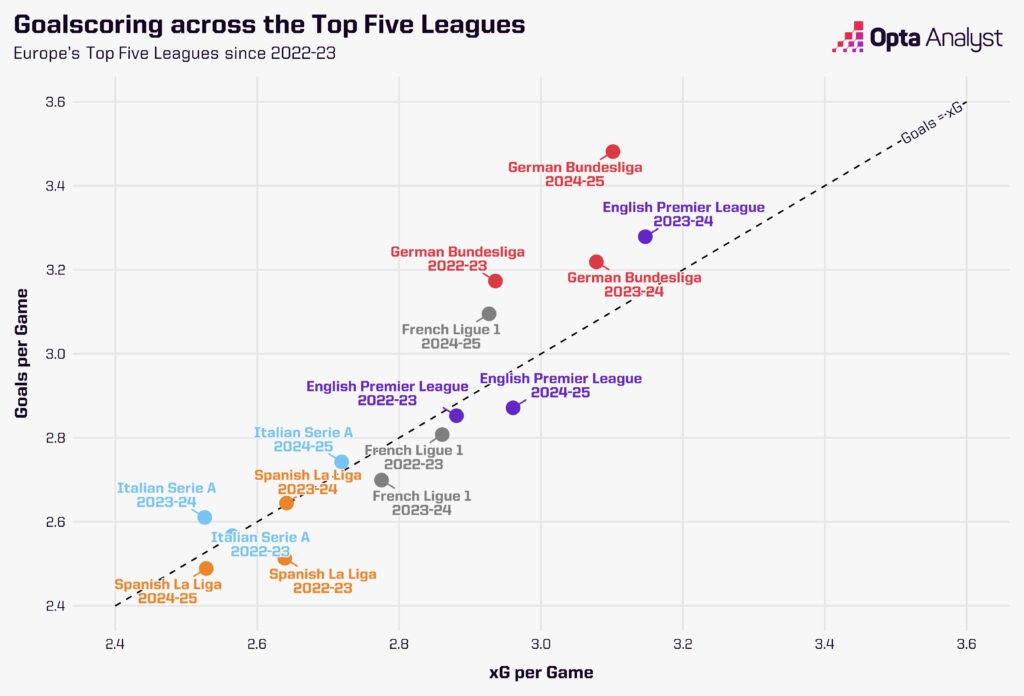
Spanish football is often associated with fluidity and technicality; Italian football is associated with a strong defense; German football is attacking and counterattacks (Benson, 2024)18. What if, in 50 years, none of these leagues have their own distinct style because the English league has become so dominant? Football has been historically developed by a mix of influences, including Brazil’s joga bonito, Germany’s pressing, and Italy’s defensive determination. Without the influence of styles that were able to develop externally, football could have been completely different.
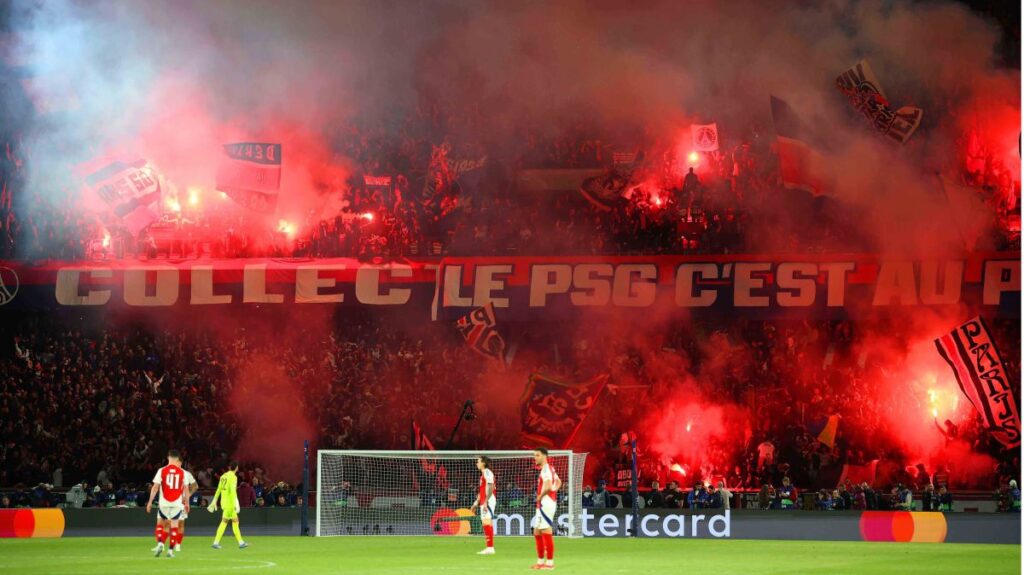
Another global impact could be cultural homogenization. Football fandom is a representation of local identity. In Brazil, football has historically been seen ass ‘The National Passion’ and has contributed to the country’s national imagery with passionate and colourful fans (Gordon and Helal, 2001). As Brazilian fans start to lose interest in their own league, looking elsewhere for entertainment, cultural ramifications must be considered. Western cultures often dominate and standardize global experiences through media, which leads to cultural homogenization (Lucky, 2025)19. Lucky (2025) states interplay between globalization and cultural homogenization contributes to “the erosion or transformation of local identities.” When the same leading force is driving football viewership and representation globally, a leading fan culture is set. As the relationship between a country’s culture and football fandom can be intertwined in many circumstances, the idea of the Premier League becoming the global ‘standard’ could alter the unique traditions, songs, emotional background, and activism of football fans in different countries.
Most arguments surrounding the Premier League’s financial regulations revolve around other teams in the league, but it is evident there are more factors in play. The Brazil example shows that without financial competitivity, a footballing country can lose its best players, lose fan interest, lose the development it needs to remain competitive, and, to a degree, influence its cultural or national identity. As the Premier League grows more dominant globally, the clubs, playing style, and fan culture of the league may become the global standard. With a lack of financial regulation, heavy investment from ultra-wealthy sources could see the league’s financial disparity grow to disproportionate levels. When considering arguments regarding the Premier League’s financial regulations, the impact on football globally needs to be considered.
- Ornstein, David. 2026. “Manchester City Found Guilty on Almost All Premier League Charges Relating to Financial Breaches.” The Athletic, September 25. https://www.nytimes.com/athletic/7049721/2026/09/25/manchester-city-charges-verdict-premier-league/ ↩︎
- Premier League. 2026. “Premier League Statement: Manchester City FC.” Premier League, September 29. https://www.premierleague.com/en/news/4727779/premier-league-statement-manchester-city-fc/ ↩︎
- Football Earnings. 2026. “Richest Football Leagues in the World (2026 Ranking).” Football Earnings, June. https://footballearnings.com/rankings/richest-football-leagues-in-the-world-2026-ranking/ ↩︎
- Premier League. 2024. “The Numbers That Show This Has Been a Season Like No Other.” Premier League, May 19. https://www.premierleague.com/en/news/4016793 ↩︎
- Sinclair, Chris. 2025. “Why the Premier League Is the Richest League in the World – And How It Makes Its Money.” International Business Times, October 10. https://www.ibtimes.co.uk/why-premier-league-richest-league-world-how-it-makes-its-money-1747252 ↩︎
- Wilson, Jonathan. 2026. “Why we’re stuck with a Premier League in the clutches of the global mega-rich.” The Guardian, October 11. https://www.theguardian.com/football/2026/oct/10/why-premier-league-in-clutches-of-global-mega-rich ↩︎
- Frommer, Fred. n.d. “Sportswashing.” Britannica. https://www.britannica.com/money/sportwashing ↩︎
- Arena Scope. 2026. “Premier League Financial Rules: 2026/27.” Arena Scope, September 30. https://arenascope.live/guides/premier-league-financial-rules-2026-27-psr-vs-scr-explained?i=2 ↩︎
- O’Rourke, Pete. 2026. “Newcastle Forced Into £170m Firesale as New Financial Concerns Confirmed.” Football Insider, July 3. https://www.footballinsider247.com/newcastle-united/newcastle-forced-into-170m-firesale-as-new-financial-concerns-confirmed ↩︎
- Olley, James. 2026. “Spurs Spent £380m This Summer, but De Zerbi & Co. Can’t Buy Mentality.” ESPN, August 29. https://www.espn.co.uk/football/story/_/id/49765222/tottenham-hotspur-spent-380-million-transfers-summer-roberto-de-zerbi-cant-buy-mentality ↩︎
- LA Premier League. 2026. “The Premier League’s Financial Farce: Why FFP Must Be Torn Down.” LA Premier League, August 21. https://lapremierleague.com/article/premier-league-financial-farce-system-torn-down-20260821-4 ↩︎
- Lemarie, Alexandre. 2025. “PSG Clinches Another French Football Title, Extending Dominance Over Ligue 1.” Le Monde, April 5. https://www.lemonde.fr/en/sports/article/2025/04/05/psg-clinches-another-french-football-title-extending-dominance-over-ligue-1_6739876_9.html ↩︎
- Slater, Matt. 2026. “Why are so many English football clubs on the market?” The Athletic, September 17. https://www.nytimes.com/athletic/7577968/2026/09/17/premier-league-championship-for-sale-market-clubs-analysis/ ↩︎
- Reed, Jonathan. 2026. “Brazil’s World Cup Crash: Performance Decline, Tactical Failures, and The Road to 2028.” World Today Journal, July 6. https://world-today-journal.com/brazils-world-cup-crash-performance-decline-tactical-failures-and-the-road-to-2028/ ↩︎
- Gordon, Cesar, Ronaldo Helal. 2001. “The Crisis of Brazilian Football: Perspectives for the Twenty-First Century.” The International Journal of the History of Sport 18(3):139-158. https://doi.org/10.1080/714001590 ↩︎
- Chakraborty, Sumit. 2025. “The Crisis in Brazilian Football: Challenges and Solutions.” Footy Times, April 3. https://footytimes.com/crisis-in-brazilian-football/ ↩︎
- Britannica. n.d. “Pele.” Britannica. https://www.britannica.com/biography/Pele-Brazilian-football-player ↩︎
- Benson, Ryan. 2024. “How Do Playing Styles Change Across the Top European Leagues?” Opta, October 18. https://theanalyst.com/articles/playing-styles-top-five-european-leagues-stats ↩︎
- Lucky, Atukunda. 2025. “Globalization and Cultural Homogenization.” International Digital Organization for Scientific Research 11(2): 7-12.https://doi.org/10.59298/IDOSRJAH/2025/1111712 ↩︎
 Megan Anne
 Yang Wu
 Liz Farnfield