
By Rashmila Karki
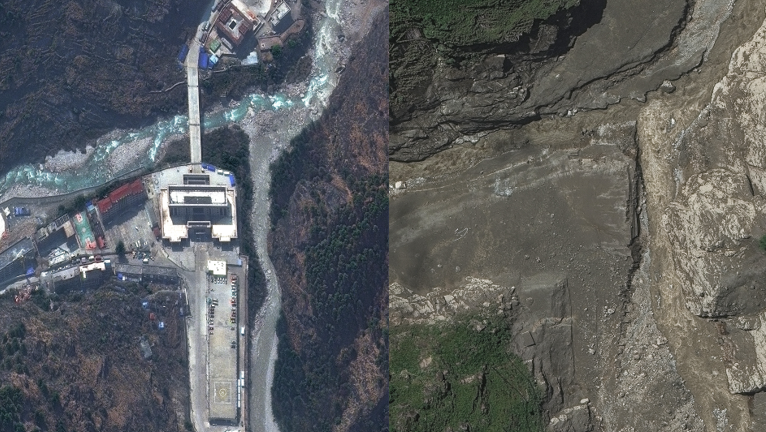
Image: CNN, 2026
In times of disaster, social media serves as a vital medium to circulate the information. People use social media to find details about the condition of the disaster-stricken areas, damaged roads, rescue operations and even to locate the missing relatives. But after the devastating floods struck Bhotekoshi river system of Nepal on 26 August, social media turned into a source of confusion. Along with genuine photos and videos, there was a flow of recycled footage and AI- generated content presented as real throughout the social media platforms like TikTok and Facebook.
The problem surfaced soon after the disaster. The Kathmandu Post reported that the social media platforms were full of dramatic videos claiming to show the damage caused by the floods. Some of the videos circulated showed the disasters from previous events in other countries, some from the flood that struck the same place last year while others had been manipulated using artificial intelligence. The rapid spread of the misleading information complicated the information environment for the families affected by flood, especially for the families searching for the missing relatives.
ABC Religion & Ethics explains that misinformation after disaster is not new but the Nepal flood show how generative AI is making problems more difficult in an already complicated environment. As the disaster happened unexpectedly and there was no clear information about the cause, it created an information vacuum. During this uncertainty, people shared recycled footage, misleading claims and AI-generated images and videos making it harder for people to understand what is happening in reality and what is fabricated content spreading misinformation.
When Real Footage Becomes Misleading
One example involved a video that claimed to show Home Minister Sudan Gurung inside a tunnel for rescue. The Kathmandu Post reported that the video was actually from a tunnel rescue conducted in Uttarakhand, India. The video was genuine, but it was not related to Nepal floods. The video later spread across Facebook, TikTok and X as if it represented the situation in Nepal.
Another video claimed to depict a glacial lake outburst flood in Nepal. ABC Religion & Ethics found that the footage was actually from Columbia Glacier in Alaska. This shows that misinformation does not always mean making a completely fake video. At times, real footage is just provided with false location or context. When the same video is shared across multiple social media platforms, people may believe it is genuine without checking its authenticity.
TikTok and AI Add Additional Challenges
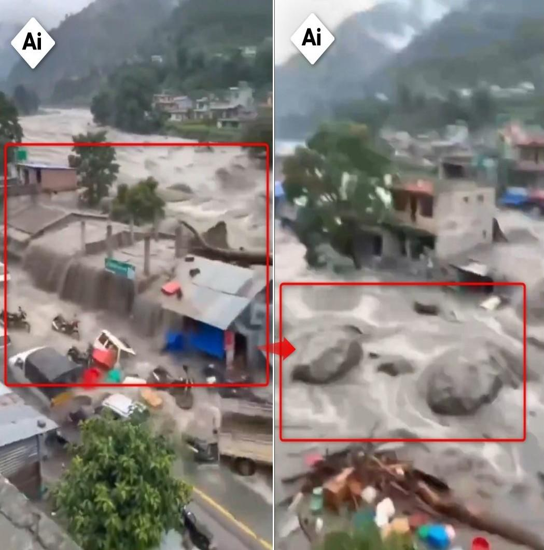
Image: AFP Fact Check, 2026
TikTok has also played a role in circulating false and misleading content.The Straits Times reported that one TikTok post used AI-generated images of four Singaporeans reported missing after the Nepal floods. The post received more than 150,000 views before it was removed. It combined real photographs with AI-generated images, making the fake content harder for users to recognize.
AI-generated videos were also shared on other platforms. The Kathmandu Post reported that one flood video on X received more than seven million views before it was assessed as highly likely to be AI-generated. Another video showing a bridge collapsing into floodwaters was also identified as AI-generated.
A fake image or video can look real enough to convince people, especially when the content is quickly scrolled through the social media platforms. People may share the content without actually verifying if the content is real or misleading.
The Real Impact of Misinformation
Misinformation during a disaster can cause real problems. Families looking for missing relatives may come across false photos or videos and become more confused or worried. People can also be given the wrong information about damaged roads, rescue operations or places where help is available.
The Nepal government has also raised concerns about the spread of misleading content. The Kathmandu Post reported that officials asked Meta and TikTok to remove graphic content, AI-generated videos, misleading posts and fake QR codes. The government also wanted social media platforms to respond more quickly to harmful content.
Think Before You Share
The Nepal floods show that social media can be both helpful and harmful during a disaster. It can help people get important information quickly, but it can also spread false information just as quickly. Before sharing a video or photo, users should check where it originally came from, whether the date and location are correct and whether reliable news organisations or fact-checkers have confirmed it.
When a disaster happens, people naturally want information as quickly as possible. But sharing something without checking it can add to the confusion. Taking a few moments to verify a post before sharing it can help stop misinformation from spreading and make social media a more useful source of information during a crisis.
References
Dudraj, D. (2026, August 31). In disaster aftermath, Nepal battles a flood of misinformation. The Kathmandu Post. https://kathmandupost.com/national/2026/08/31/in-disaster-aftermath-nepal-battles-a-flood-of-misinformation
Haghani, M. (2026, September 2). Misinformation often follows major disasters — the Nepal flood shows what happens when you add AI. ABC Religion & Ethics. https://www.abc.net.au/religion/milad-haghani-ai-misinformation-conspiracies-after-nepal-flood/107106120
Sun, D. (2026, September 4). TikTok removes AI images of Singaporeans missing in Nepal floods for spreading misinformation. The Straits Times. https://www.straitstimes.com/singapore/courts-crime/tiktok-removes-ai-images-of-sporeans-missing-in-nepal-floods-for-spreading-misinformation
 Kyra
 Imogen
 Jordey Petersen

