
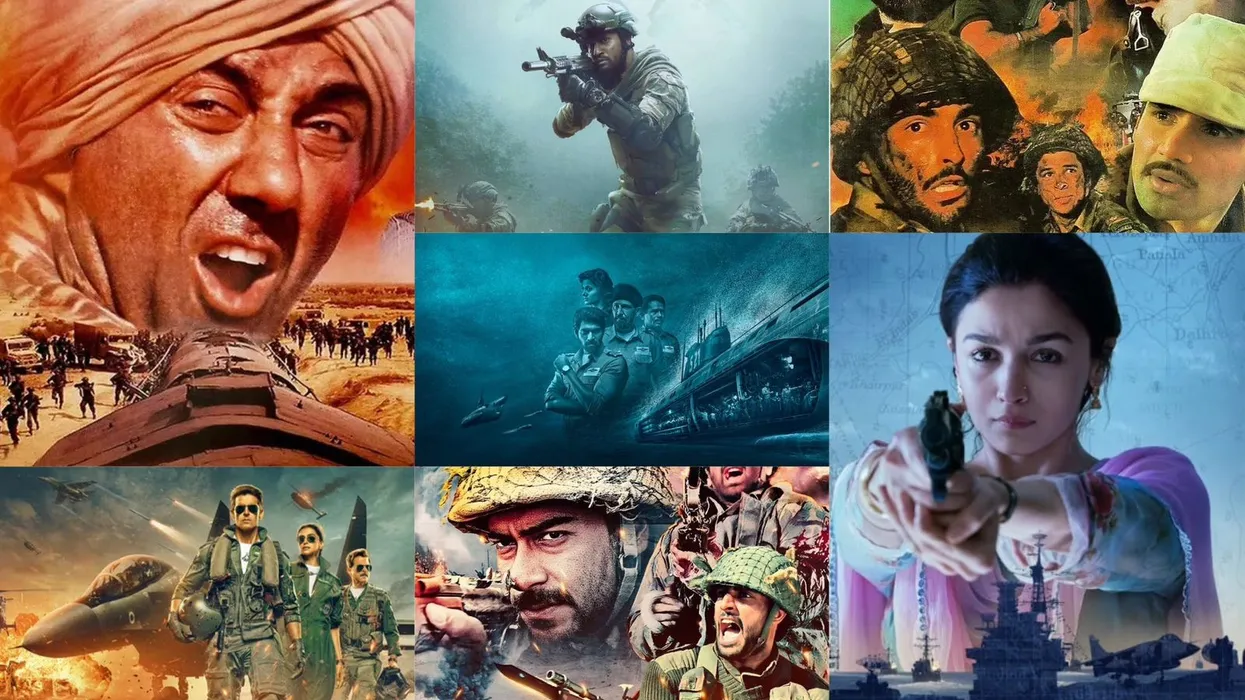
Somewhere across the border lies a national threat that needs stopping. On screen, a brave Indian soldier crosses several lines to achieve his goal during a high-stakes mission. The audience knows where their loyalties lie, for the danger comes from none other than…Pakistan.
A story everybody knows. A few lines which can be used to describe the plot of…um, let’s just say more than one movie.
In contemporary Hindi cinema, Pakistan has repeatedly appeared as a military adversary, a shadowy intelligence network or the source of a threat to Indian security. These movies draw on a real-life, deeply sensitive political history, and most of the time the narrative is controlled by the more than just the need for filmmakers to be creative.
Everybody knows India and Pakistan have a history of conflict. It would explain why that conflict so often leads to a recycled cinematic plot: India or Hindus as the underdog; the righteous hero, Pakistan or Muslims as the dangerous other, and the Radcliffe Line as the border between good and evil.
But why has there been an upsurge lately in this specific formula? And what does it mean for the relationship between entertainment, politics, and the real people who are represented on screen?
A border as a plot device
Since the Partition of British India in 1947, India and Pakistan have experienced wars — mostly over territorial disputes and recurring political tensions — which have had a great influence on the stories we know about their relations. In both countries, people are huge on entertainment and media consumption, most of which comes from Bollywood; one of the biggest film industries in the world.
Cinema can turn complicated histories into experiences that hit emotionally. In this way, a border becomes more than a geographical division. It can be used to represent belonging, love, danger, and sacrifice amongst others. Research by Kumar and Raghuvanshi (2023) suggests that films do in fact have an impact on popular understandings of national identity and political opinions of the general public.
Every story needs a villain, but why the same villain in every story?
The recent upsurge in military and espionage narratives makes this pattern more prominent, with films such as Uri: The Surgical Strike (2019), Mission Majnu (2023), and Alpha (2026). All three place Indian agents at the centre of missions involving threats from Pakistan, and the audience is encouraged to experience geopolitical conflict through the heroes’ courage and sacrifice.


In Mission Majnu, an Indian intelligence agent operates undercover in Pakistan to investigate its nuclear weapons programme. In their 2025 study of the film, Karmakar and Catterall argue that the movie’s narrative encodes a nationalist message, presenting the patriotism of Indian intelligence agents alongside an “othering” of Pakistan. They also explore how the film links national loyalty with personal sacrifice and technological achievement (Karmakar & Catterall, 2025).
Now of course, such stories can be powerful. Spy thrillers utilise adrenaline, secrecy, and high stakes, and real-life inspiration can catalyse that foundation for a proper dramatic narrative. However, the genre also makes it easy to reduce an entire country to a source of threats. The audience spends time inside the Indian agent’s fears, decisions and sacrifices, while people on the other side may be dehumanised and used primarily as a hindrance. The deliberate imbalance is what leads many to call such films ‘propaganda’.
But is it really propaganda, or just a narrativized version of the truth?
The politics that drive the narrative
The release of Dhurandhar in 2025 caused a political storm in the Indian subcontinent, and sparked great public debate. The spy thriller depicts an Indian operative infiltrating criminal and intelligence networks in Karachi. It portrays Pakistan in what is probably the most polarised depiction of this formula yet, with extreme violence and gore. One scene even shows Hamza, the undercover Indian operative, being sexually assaulted by a group of Pakistani men in just a few days into his mission. The film’s use of real historical material and depiction of political violence attracted both praise and criticism from people on all ends of the political spectrum.

In a December 2025 explainer, Sharma (2025) reported on the controversy surrounding the film. Critics questioned its representation of Karachi’s Lyari neighbourhood, arguing that reducing a lesser known yet complex urban community to violence distorted its culture and everyday reality in people’s eyes. Others criticised the film’s nationalist angle and the way it incorporated actual historical clips and events into its fictional narrative.
These objections point to something larger than whether a film is entertaining or politically persuasive. When a city is represented almost entirely through gangsters, terrorists and danger, what is left of it? Films are supposed to be dramatic; that’s kind of the point. But to claim that it’s fictional and then use footage of real events to skew that perception is another kind of attempt on brainwashing your audience.
The bigger political picture also comes into play. Cinema does not emerge in a vacuum. Renewed hostilities between India and Pakistan, such as the 2025 Pahalgam attack, gave filmmakers charge for more cross-border narratives. Films released during this period may be interpreted differently from those during a relatively calm one.
Biswas (2026) examines this relationship with a new character; religion. She includes concerns about anti-Muslim representation. Her commentary explains why a film like Dhurandhar performed so well at the box office; the time it was released in arguably played the biggest role, as the political scene had just newly radicalised Indian society, and such a movie was the outlet for all their frustration.
Films, however, can be patriotic without being propaganda or villainising another state. Some invite audiences to question its version of events, meanwhile others present that version as unquestionable truth. Some distinguish between a government, a militant organisation and an ordinary population, but others allow them to blur into one threatening mass.
These varying representations exist because it is true that not every filmmaker harbours the same political agenda, or harbours one at all. The commercial appeal of conflict may also contribute to the pattern. Establishing exactly how much each factor matters requires further investigation, so let’s look at the next big bad boy.
When religion comes into the picture
There is another character in this classic hero-villain story, which honestly, makes this all far more complicated than just ‘Country A vs Country B’: religious identity.
India is secular religiously diverse, while Pakistan was established as an Islamic republic during Partition (it’s worth noting that there is still a small minority of Hindus and other religions in the nation). Neither country can be reduced to a single religious identity, but films have more than once blurred the lines between Pakistani and Muslim identity; portraying them as interchangeable.
Sharma’s (2025) report highlights concerns raised by critics about portrayals that cast Muslims across borders, and even sometimes Muslims within India, as terrorists. Biswas (2026) similarly situates recent films (Chhaava, Diplomat; both from 2025) within wider concerns about anti-Muslim narratives. Although every viewer may not adopt such attitudes after watching a film, they do draw attention to the potential consequences of repeatedly connecting the same religious identity with danger.
The distinction is especially important for Indian Muslims, who are citizens of India and cannot reasonably be treated as representatives of a neighbouring state. Verma and Roy (2022) examine this interchangeably presented link. Their analysis highlights how national and religious identities can become intertwined in cinematic representations of the border.
If films repeatedly frame national belonging through an opposition between a supposedly Hindu India and a supposedly Muslim Pakistan, they risk making religious minorities seem like outsiders within their own country. A film does not need to state this message explicitly for its storytelling choices to hit.
The anomalies. Yes, there are anomalies!
Of course, Bollywood has not always told the same story about Pakistan. And even today, it does not tell only one story.
In Veer-Zaara (2004), the romantic relationship between an Indian man and a Pakistani woman challenges the idea that a border, name, or one’s religion must dictate whom people can love or trust. Bajrangi Bhaijaan (2015) follows a deeply Hindu Indian man trying to reunite a Pakistani child with her family, building its emotional force around love that transcends borders. In Kya Dilli Kya Lahore (2014), the border becomes the setting for a more direct challenge to the idea that national division makes ordinary people natural enemies (Verma & Roy 2022).
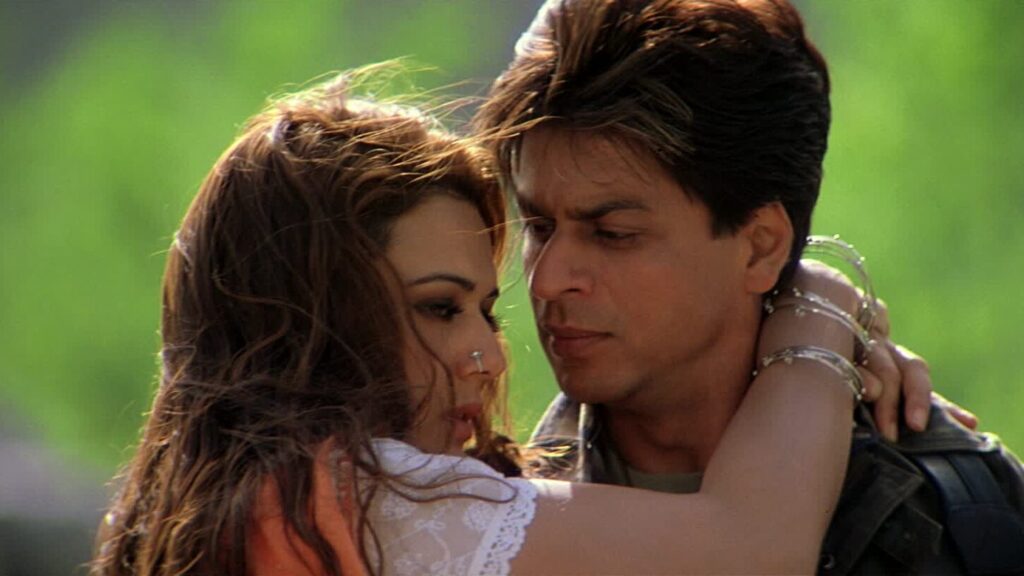
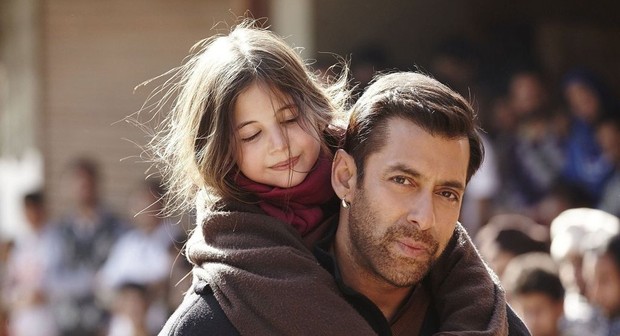
These films manage to focus on individual experiences without erasing or rewriting the past, and their existence skews the idea that Hindi cinema has a single, unchanging attitude towards Pakistan.
Verma and Gera Roy (2022) further examine the ideological positioning of films like Veer-Zaara, Uri: The Surgical Strike and Kya Dilli Kya Lahore. They argue that most mainstream Hindi films are a result of the dominant state Hindutva ideology; which equates Indianness with an orthodox Hindu identity, while identifying Kya Dilli Kya Lahore as the film that challenges that ideology.
In real life, it is definitely more likely that the enemy state can be a source of danger politically, but its people can also be neighbours, parents, children and individuals whose lives cannot be explained by the name on their birth certificate and geographical positioning alone. A country is not a hivemind; there are all kinds of people all over the globe in every group. Selectiveness can be used to explain why some people may constantly find a villain in the same group.
Who gets to write the ending?
Let’s to the opening scene: the agent crossing the border, the threat approaching, the audience waiting for the hero to win. There is nothing inherently wrong with a patriotic story, a tense spy thriller or a film about genuine security concerns. The more important question is what the story asks audiences to accept along the way.
When the same country repeatedly occupies the role of the enemy, the boundary between dramatic convention and political imagination becomes worth examining. Kumar and Raghuvanshi (2023) show how cinematic borders can contribute to the construction of national identity, while Karmakar and Catterall (2025) demonstrate how a spy thriller can link patriotism, sacrifice and the othering of Pakistan. Contemporary commentary on Dhurandhar illustrates how these representations can become subjects of public controversy (Biswas, 2026; Sharma, 2025).
Films do not single-handedly determine public opinion. Audiences interpret stories differently, and political attitudes are shaped by many influences beyond cinema. If anything, they present an opportunity for people to rethink their previous stances. Films contribute to the cultural language through which people imagine nations, enemies and belonging.
Perhaps the biggest revelation is not that patriotic narratives need a villain. Stories have always needed that conflict. But when the villain so often comes with a national identity tied to it, especially during politically desperate times, you begin to wonder if a country’s national identity is eve strong enough to stand on its own feet without needing to turn its people against the enemy state time and time again. For a country like India, with such a rich culture and history behind it, it is even more important that audiences start waking up to and questioning this pattern. And by the looks of it, we are not off to a bad start.
 IAmAWeirdLittleKnickKnack
 Idea Phochaiya
 M.Ritchie