
The film opens in a nightclub: heavy techno blares and the sprinklers rain blood. It is 1998, the movie is Blade, and the cold, stone-faced man cutting through the carnage is no hero, at least in the traditional sense of the word. He is a renegade, and the audience is encouraged to cheer for him anyway. A quarter-century later, Inverse still ranked that gruesome introduction among the best in superhero history.
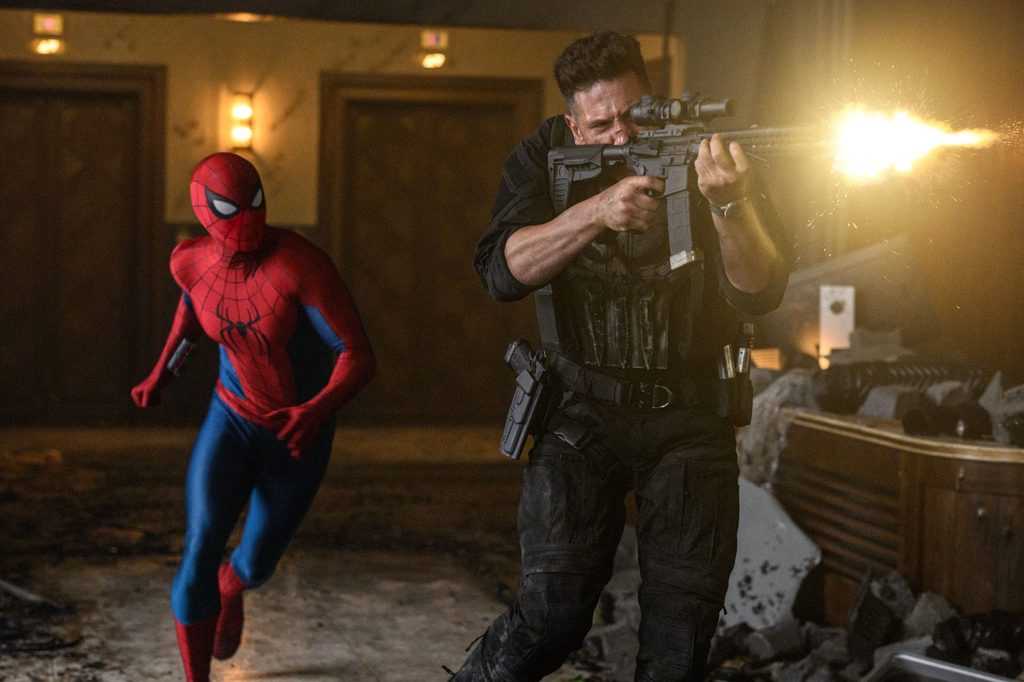
Twenty-eight years later, in Spider-Man: Brand New Day, Marvel’s most dependable good guy collaborates with a man who kills for a living. Tom Holland described the Punisher to Empire as a man who “swears all the time and kills people”.
So that leaves one question, still unanswered after nearly 30 years of superhero cinema:
What really seperates a monster from a hero?
I want to argue that superhero cinema has spent more than two decades eroding the traditional ‘good’ guy. First came the imperfect hero, someone with flaws that general audiences could relate to. Then came the outright antihero, reflecting a cultural zeitgeist in which bad guys were cool and audiences loved it, until moral ambiguity became less of a creative risk and more of the house style.
Now, in 2025 and 2026, the pendulum has swung once again, although it’s not quite what the “superhero fatigue” critics predicted.
The evidence points less to the return of a clean-cut hero than to a renegotiation of superhero expectations. Audiences want heroes who believe in something again, but who are shaped by real-life monsters and flaws.
This feature moves chronologically through three stages, erosion, saturation and renegotiation, evaluating the films that best reflect each era and testing each example against reviews, box-office reporting and critical argument. My first superhero film was the original Blade, and it was my introduction the genre, although at first glance it barely appears in genre.
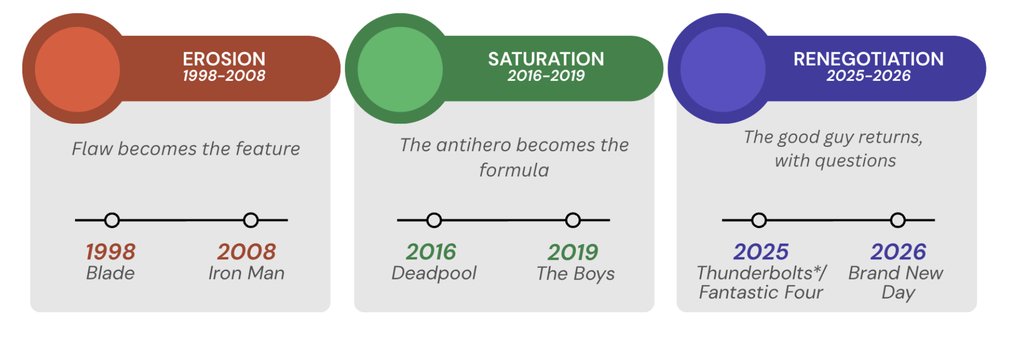
EEROSION: the flaw becomes the feature
1998: Blade
I start with Blade, to mirror Marvel’s own history. Long before the MCU existed, this R-rated vampire hunter managed to turn a $45 million budget into roughly three times that at the box office, which Flickering Myth calls Marvel’s very first box-office success. Kevin Feige, now president of Marvel Studios, has described Blade and X-Men as the “one-two punch” that came before his era, noting that Blade was a fairly unknown character at the time, one that only a few people knew from the comics. Marvel would later build an entire universe on a similar formula, starting with Iron Man.
Blade is also, quite literally, part monster. A human-vampire hybrid, known as the “daywalker”, he hunts his own kind, subverting the traditional hero standards set by the likes of Superman and Spider-Man. The Digital Fix argues that the film heralded the darker, more adult comic-book movies of the 2000s, many of them built around morally complex antiheroes rather than obvious good guys. The question from this article’s opening is answered in Blade’s very makeup: the hero and the monster are sometimes one and the same. Blade acts as an antihero blueprint, waiting nearly 20 years to be used.
2008: Ironman
When the MCU did launch, a decade later, it chose a different kind of imperfection. Tony Stark is a weapons manufacturer who is taken hostage by terrorists and has to build a suit of armour to escape. He then sets about atoning for the business that made him rich.
TechRadar called Stark the genre’s ultimate flawed hero and argued that this theme ran through the MCU that followed. Yet Stark is a flawed hero, not an antihero, and there is a distinction. He is charming, confident and witty, and the film never doubts that he will do the right thing by the end. Iron Man made imperfection profitable within the MCU and set the blueprint for Marvel’s on-screen heroes moving forward. Over the next eight years the MCU grew into one of the biggest franchises in film history. Phase 1 of the MCU was largely built on the strength of three pillars: heroes who quip, make mistakes and subsequently learn.
SATURATION: the antihero becomes the formula
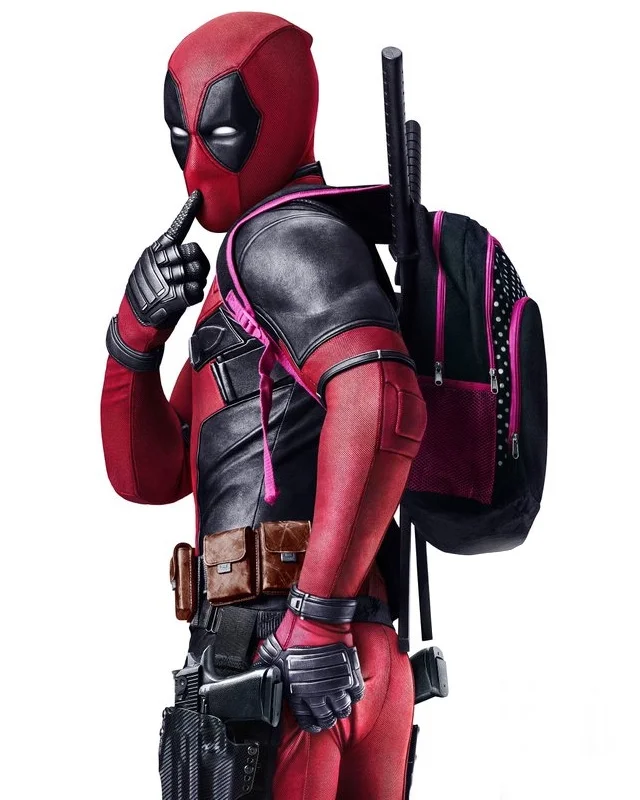
2016: Deadpool
If Iron Man made imperfection acceptable, Deadpool cemented amorality as profitable. The profane, fourth-wall-breaking comedy grossed roughly $780 million worldwide on a $58 million budget, according to Box Office Mojo. It stood as the highest-grossing R-rated film until Joker took the record in 2019. This is the moment the antihero (rather than the flawed hero) became the formula and stopped being a risk. Audiences weren’t new to the genre anymore and were ready for the evolution into harder, grittier stories similar to what Blade initially portrayed all those years ago.
What made the film notable was not only its violence but also its attitude. Deadpool consistently mocks the conventions of the genre in which he exists. However, the joke only lands if the audience knows those conventions well enough to be bored by them. He is, arguably, a hero for viewers who have seen it all and rolled their eyes.
Put the two films side by side, and the pattern is clear. Blade proved back in 1998 that an R-rated, morally unclean Marvel hero could work. Deadpool retested this theory in 2016 to see if this could work at the scale of a global blockbuster. After seeing it gross over 10 times its budget, studios shifted from whether audiences would accept an antihero to how many they would pay to see.
2019: The Boys
Television pushed it a step further. Amazon’s The Boys did not simply feature a morally compromised hero. It centred on the superheroes themselves being the issue, imagining them as corporate products with publicists and no accountability. IndieWire describes the series as grim and skewering superhero culture, and its showrunner described The Boys to Forbes as “the most topical show on TV.”
That last claim matters for this argument. A satire is only topical if the audience recognises and is familiar with its target outside the screen. Writing in 2023, Salon went further, arguing that the standard superhero story was failing because “people no longer trust in saviors,” and pointing to The Boys. By the early 2020s, moral ambiguity was not a risk the genre took. It became the genre.
The genre had solved the problem of making heroes interesting and connecting with in-the-know audiences, rather than being afraid to represent the comic-book culture it was developed from.
RNEGOTIATION: the goodguy returns, with questions
2025: Thunderbolts* & Fantastic Four
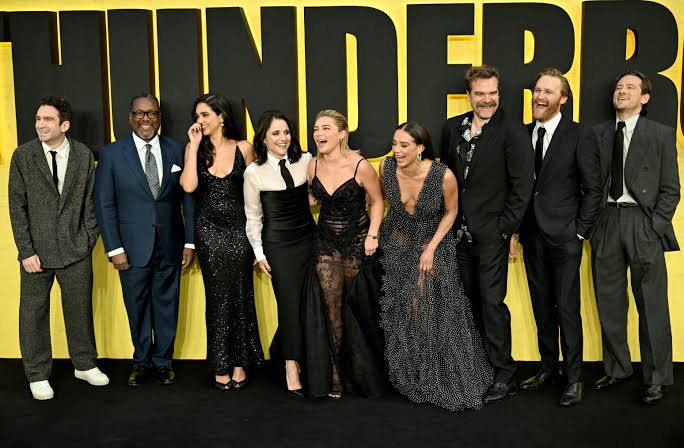
Then Marvel’s mood shifted, though not in one direction. In May 2025 the studio released Thunderbolts*, built around a team of antiheroes: Yelena, Bucky, Red Guardian, Ghost, Taskmaster and John Walker. Critics were generous and asked whether these antiheroes had finally saved the MCU. Audiences weren’t so sure. As C.D. Cunningham notes in Public Square Magazine, critics widely regarded the film as Marvel’s best in years, yet audiences did not show up.
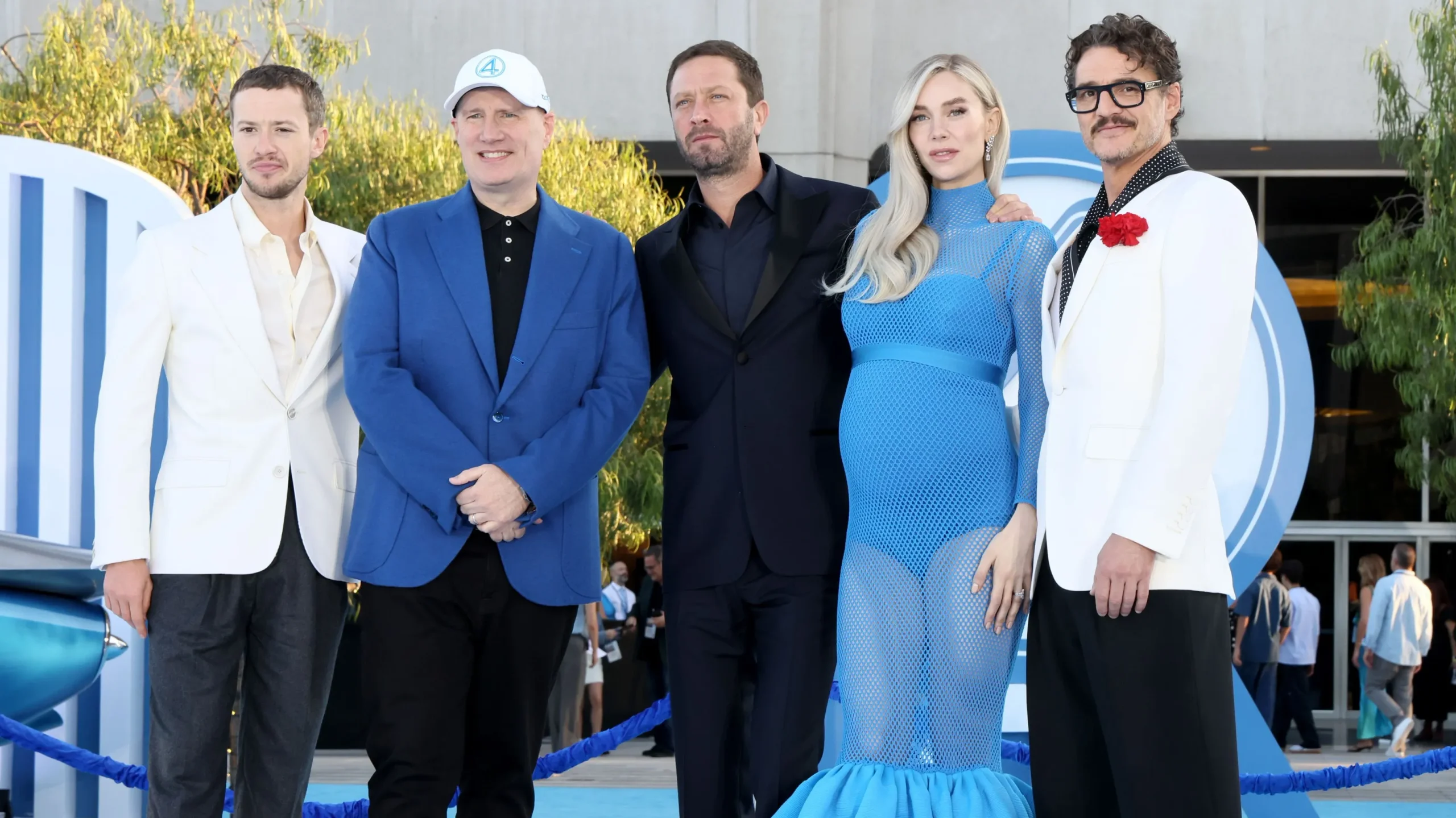
Less than three months later Marvel released The Fantastic Four: First Steps, which was described as standing “in contrast to the cynical antiheroes of Thunderbolts*.” It is closer in spirit to Saturday-morning cartoons. DC’s Superman, released the same month, followed a similar path. James Gunn said he was proud to have made a film about “a kind person always looking out for those in need”, and said the global response was a hopeful testament to human kindness.
As Cunningham argues, audiences seemingly no longer want to become heroes; they want competent ones who simply show up when they are needed most. Both Superman and Fantastic Four skip the origin story entirely, again assuming audiences are already up to speed. Superman in particular sets the DC universe history from the very beginning, wasting no time jumping into a superman story feeling ripped straight from the comics.
Taken together, 2025 does not look like a swing back to the clean-cut, traditional champion. It appears more as a negotiation, with both visions of a hero still at the table.
2025: Spiderman: Brand New Day
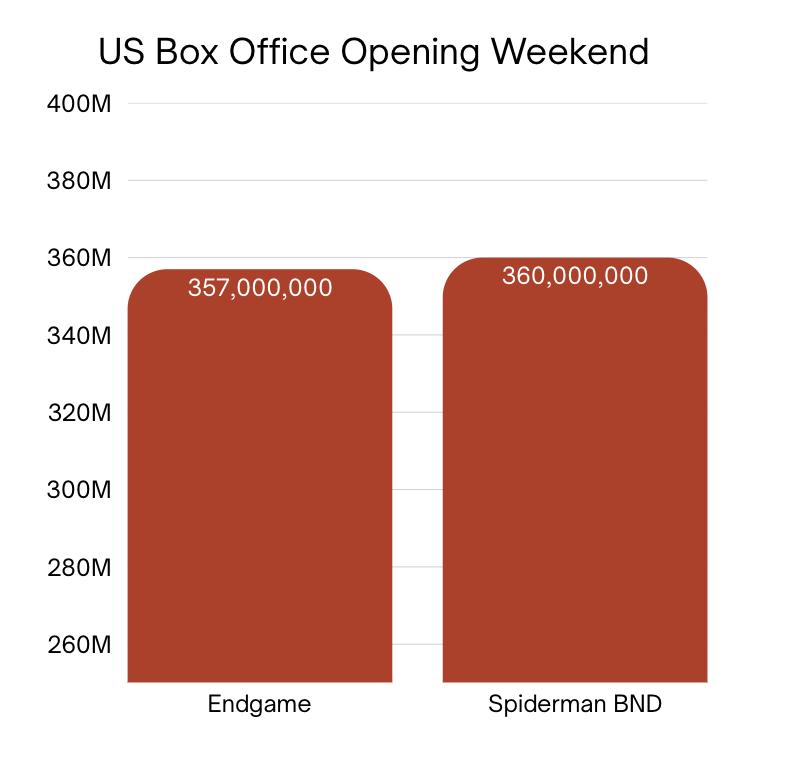
Which brings us back to Peter Parker and Frank Castle. Brand New Day opened in July 2026 to $360 million in North America, breaking Avengers: Endgame’s $357 million for the biggest domestic opening on record, with $932 million worldwide and an A CinemaScore from audiences.
The genre’s most earnest hero now shares a scene with one of its most notorious vigilantes, and audiences loved it. Critics were more divided. Rotten Tomatoes called it the most grounded, mature Spider-Man story yet, and PopEntertainment said it leans into the darker side of Spider-Man. fanfare.pub went further, calling it a disservice to Peter Parker, while a Jacobin review praised it largely as “gleeful, undemanding fun.” Perhaps audiences simply want to enjoy themselves again.
However, that pairing still reflects this whole argument in miniature. A decade earlier, putting a character like the Punisher beside Spider-Man might have been viewed as a risk. But in 2026 the genre has earned the right, because audiences now know both these characters well enough to feel the tension and understand the nuance between them.
THE CASE AGAINST
The strongest challenge to my reading comes from a different corner of the culture debate. Brooke Brandtjen, writing for the Daily Wire, argues that superhero films gradually abandoned clearly defined good guys and bad guys, that heroes turned morally grey while villains became likable. She points to expensive misfires, including The Marvels, which she says reportedly lost $237 million. Brandtjen sees this as a verdict rather than my renegotiation of roles.
Other critics resist both stories. Variety reported in 2025 that Hollywood’s two most reliable genres, superheroes and horror, were “showing signs of fatigue” and were no longer box-office guarantees. I believe that argument revolves around the supply and demand of the genre rather than the morality of its heroes. Al Jazeera calls the fatigue explanation reductive, arguing instead that the genre’s patriotic, liberal optimism no longer resonates with a divided, pessimistic American public. The 2026 calendar complicates all three: the beginning of the year has been relatively thin for live-action superheroes, so scarcity may help explain why one broke a record.
I think Brandtjen is right that audiences have grown tired of cynicism, but the box office does not support her verdict that they want defined roles back and moral complexity gone. Brand New Day putting the Punisher on screen beside Spider-Man is proof of that. What audiences appear to reward is character complexity with a sense of relatability: a hero who is tested and proves who they are, not a hero who is merely bleak and portrays what they are labelled to be.
WHAT SEPARATES A MONSTER FROM A HERO?
So what does separate a monster from a hero? The past year’s films suggest an answer audiences will pay for: not the absence of flaws in heroes, but the choices made with them. Peter Parker can share a scene with the Punisher precisely because the genre spent twenty-eight years proving that heroes are imperfect.
Taken together, the three stages describe an audience moving from trust to suspicion to a wary sort of hope. We began by enjoying heroes who were flawed but good, learned to enjoy ones who were barely good at all, and now seem to want heroes to earn our belief, no matter the flaws.
The next test arrives in December with Avengers: Doomsday. Robert Downey Jr., the actor who launched the MCU as Tony Stark, returns as the villain Doctor Doom.
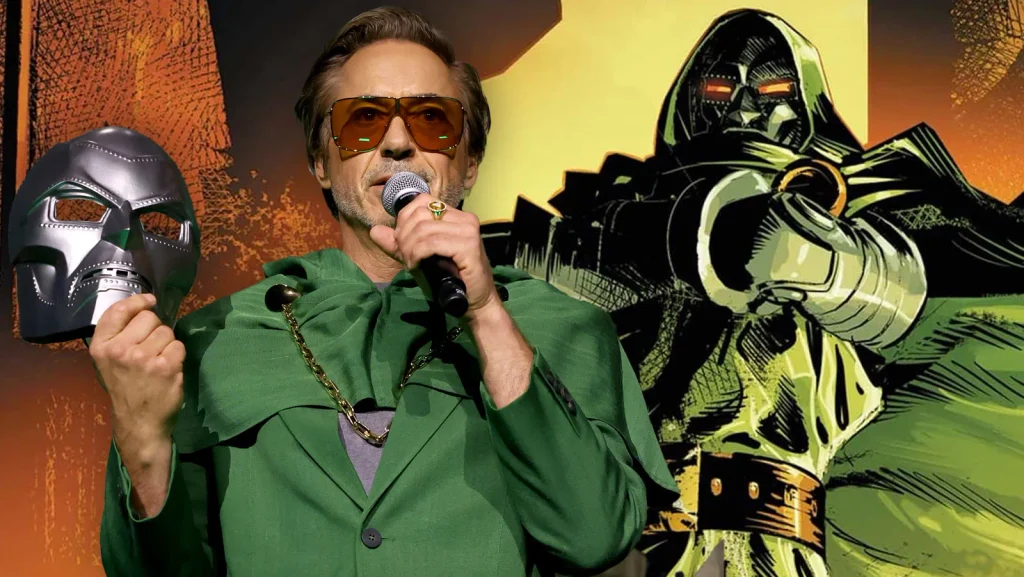
A twist this argument could hardly have scripted. If the renegotiation theory is right, audiences will reward a film that lets its heroes be imperfect. If the sceptics are right, Brand New Day was an incredible exception.
The same answer has held true all the way back to 1998. Heroes thrive as a mixture of complexity, morality, relatability, and reliability. And while different characters can have different amounts of each and still succeed, audiences have grown and evolved alongside superhero media to demand a more nuanced understanding of our heroes.
One size cape does not fit all supes.
 IAmAWeirdLittleKnickKnack
 Idea Phochaiya
 M.Ritchie