

Two ferries drift across Gotham Harbour, each carrying a bomb. The Joker presents their passengers with a horrifying choice: destroy the other ferry or risk losing their own lives. Christopher Nolan’s The Dark Knight (2008) leaves its audiences wondering what they would do in the same situation. Yet, regardless of their answer, they remain merely as spectators.
Now, imagine facing a similar dilemma in a video game instead.
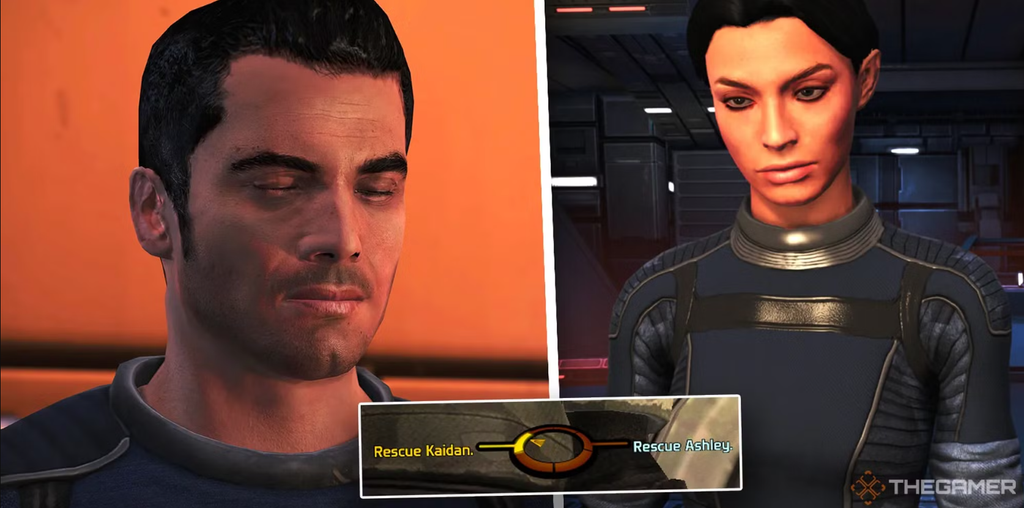
In BioWare’s Mass Effect (2007), players face an impossible decision on the planet Virmire. Commander Shepard has set a nuclear bomb to destroy an enemy facility. However, as it is about to explode, two of Shepard’s companions, Gunnery Chief Ashley Williams and Lieutenant Kaidan Alenko, find themselves trapped and under fire in separate locations. Unlike in a film, the story cannot continue until you, the player, decide who survives, knowing the other will die.
Both scenarios explore the moral weight of human life. Still, the video game medium introduces a crucial distinction: the responsibility of making a decision shifts from the characters on screen to the person holding the controller.
Question: Does making the decision ourselves change how we think about morality?
Many video games, especially role-playing games (RPGs), do more than just portray right and wrong. They often invite players to confront their own personal values and morals by placing them directly in ethical dilemmas, and to experience the consequences of their choices. Perhaps the most revealing part of these decisions is not what they choose, but why they choose it.
The Morality We Bring Into Games
Before a video game asks us to choose between good and evil, we have already brought our own judgment of right and wrong into its world. But how much of our real-world morality actually influences the decisions we make behind a screen?
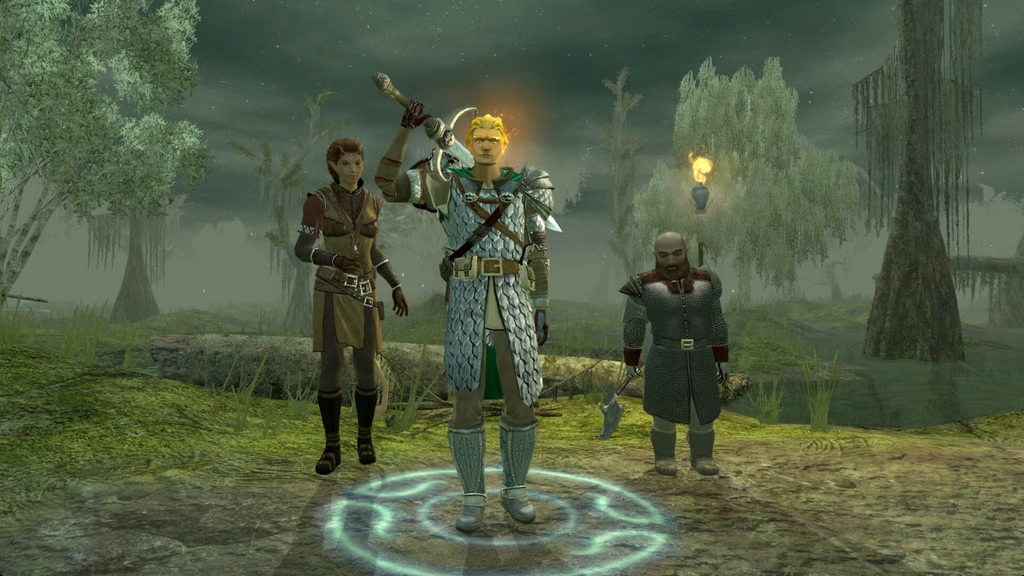
A study of this relationship by Ewell et al. examined how personality traits and moral beliefs influenced players’ character creation in Obsidian’s Neverwinter Nights 2 (2006). Their findings revealed that players who scored higher in agreeableness and conscientiousness were more likely to create morally “good” characters (Ewell et al., 2016). This suggests that a player’s virtual identity often reflects the values they hold “offline”. When faced with difficult in-game choices, they may find themselves drawing on their own beliefs about right and wrong rather than simply acting as their fictional character would.
Yet, a player’s moral compass is not always consistent. Some players may find themselves unable to kill wolves simply because they resemble dogs, even though they are entirely fictional (Tait, 2023). Strangely, those same players might have no hesitation in deliberately drowning their Sims. As Amelia Tait’s experiences show, the emotional weight of an action can vary dramatically between games, even when both involve harming bundles of 1s and 0s.

Tait also recounts the experience of Seth Katz, a hospital vice-president, who refused to “harvest” the Little Sisters in Bioshock (2007) despite the gameplay advantages of doing so. Yet, he can comfortably kill countless “mindless and faceless” enemies in first-person shooters, where violence is framed as self-defence (Tait, 2023). The difference lies in how these characters are presented. Harming a defenceless child feels cruel, while killing an armed enemy feels justified, even though neither action causes any real harm. Our moral values clearly carry over into fictional worlds, but how we apply them can change depending on the circumstances the game presents.
Game Design in Shaping Ethical Decision-Making
While players may bring their own moral values into video games, their decisions are rarely made without outside influence. Game developers play a pivotal role in constructing the ethical dilemmas players encounter. They determine what actions are rewarded, punished, or even possible to make in the first place. These usually consist of morality meters, systems that measure a player’s actions against predetermined standards of good and evil. Some examples include: “Karma” in Fallout 3 (2008), “Paragon vs Renegade” in Mass Effect 1, 2 and 3, and “Honor” in Red Dead Redemption 2 (2018). Points are added and deducted from these morality meters based on the player’s chosen behaviour in the game. Although these systems were intended to give weight to moral decisions, they also risk reducing more complex ethical questions to a numerical score. So, are players making decisions based on their own ethical beliefs, or simply trying to achieve a desirable score? Is being “good” less about personal conviction and more about achieving a certain outcome?
This tension becomes particularly apparent when the morally correct choice is unclear. There is a free-to-play visual novel game called The Great Fire on itch.io, created specifically for a Macquarie University research program on games and ethical decision-making. Many of its players relied on their own judgement when faced with more straightforward moral choices. But in ethically ambiguous situations, they were found to be more influenced by the game’s morality meter (Ryan et al., 2023). Rather than replacing a player’s moral compass entirely, these mechanics can subtly guide their judgement when personal values alone offer no obvious answer.
While many RPGs utilise morality meters to indicate what is good and evil, others employ subtler systems that allow players to interpret the moral consequences of their actions. As in Papers, Please (2013) and Undertale (2015), moral tensions arise from the actions players ultimately decide to take. In Papers, Please, following the rules of border control can cause conflict with compassion for the people trying to cross the border. In Undertale, killing monsters can earn you EXP (EXecution Points) to level up, but what initially appears to be a conventional RPG progression system is revealed to measure the harm inflicted upon others. The dilemma is not just about picking the red or blue response; it is bound up with the natural gameplay mechanics themselves. Game design plays a significant role in shaping how players approach moral dilemmas. Through gameplay mechanics, rewards and consequences, developers can influence the decisions players make.
Beyond Good and Evil
Perhaps the greatest value of moral decisions in video games lies not in revealing whether players are “good” or “bad”, but in giving them the opportunity to question what those labels actually represent. While the developers can construct the choices available to us as players, it does not diminish their significance. Video games provide a unique medium for moral experimentation, where players are free to explore unfamiliar perspectives, challenge their morals, and experience the consequences of decisions they might never otherwise encounter in the real world.
Consider a game like Papers, Please. As an immigration inspector who holds the power to decide who may enter a fictional authoritarian state, the “right” decision is not necessarily the most humane, nor is following the law always the most ethical. The game asks its players to weigh the significance between duty and compassion: allowing a desperate traveller through without the correct paperwork might feel morally justified, but doing so risks penalties that threaten your (the inspector’s) ability to support your own family. Players must decide which values they are willing to compromise, and which they refuse to abandon.
Such dilemmas reflect the complexity of morality beyond video games. In reality, ethical decisions rarely offer a clear distinction between “good” and “evil”. Humans constantly negotiate competing responsibilities, whether between honesty and protection, loyalty and justice, or their own well-being and the greater good. Director of The Last of Us Part II (2020), Neil Druckmann, discusses in a WIRED feature his intention to challenge players’ perceptions of justice through the game’s portrayal of violence. Enemies are given names and relationships, with their companions mourning their deaths: individuals the players might normally dismiss as obstacles have lives of their own (King, 2020). Darryn King even recounts a playtester who emerged from the experience questioning their existing beliefs. Video games allow us to explore these tensions without the irreversible consequences of making similar decisions in real life.
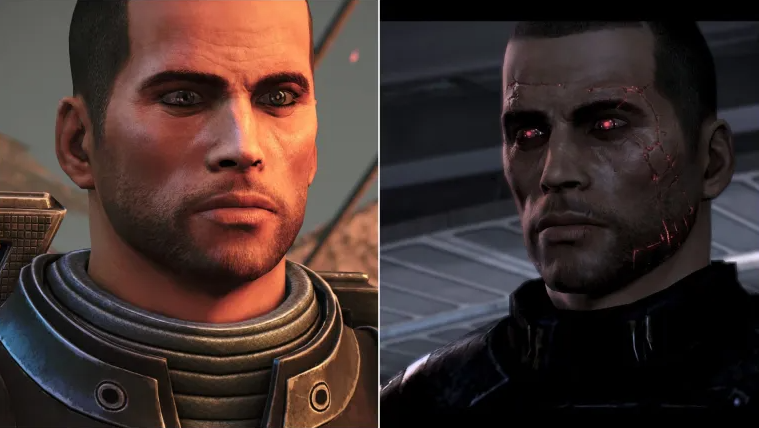
Of course, this does not mean that choosing to spare a monster in Undertale or NOT sacrificing the Batarian Mass Relay in Mass Effect necessarily makes someone a more ethical person. Fictional decisions cannot fully replicate the emotional stakes or responsibilities of real-world actions. Players can reload saves, pursue alternative endings, or simply disregard the moral implications of their choices entirely. Nevertheless, this freedom to experiment is precisely what makes the medium valuable.
More Than Just a Game
The choices we make in games are rarely as simple as pressing ‘X’ to decide. We bring our own values to these moments, yet the rules, rewards and stories surrounding them shape how we act. Even when the consequences are fictional, the hesitation, guilt or heartwarming feelings they provoke can feel remarkably real. Games may not teach us to be better people, but they give us room to test what we believe, and why. Perhaps the most important choice comes after we put down the controller.
 Jessica Goff
 somewhatdamaged
 Fynn Thompson