
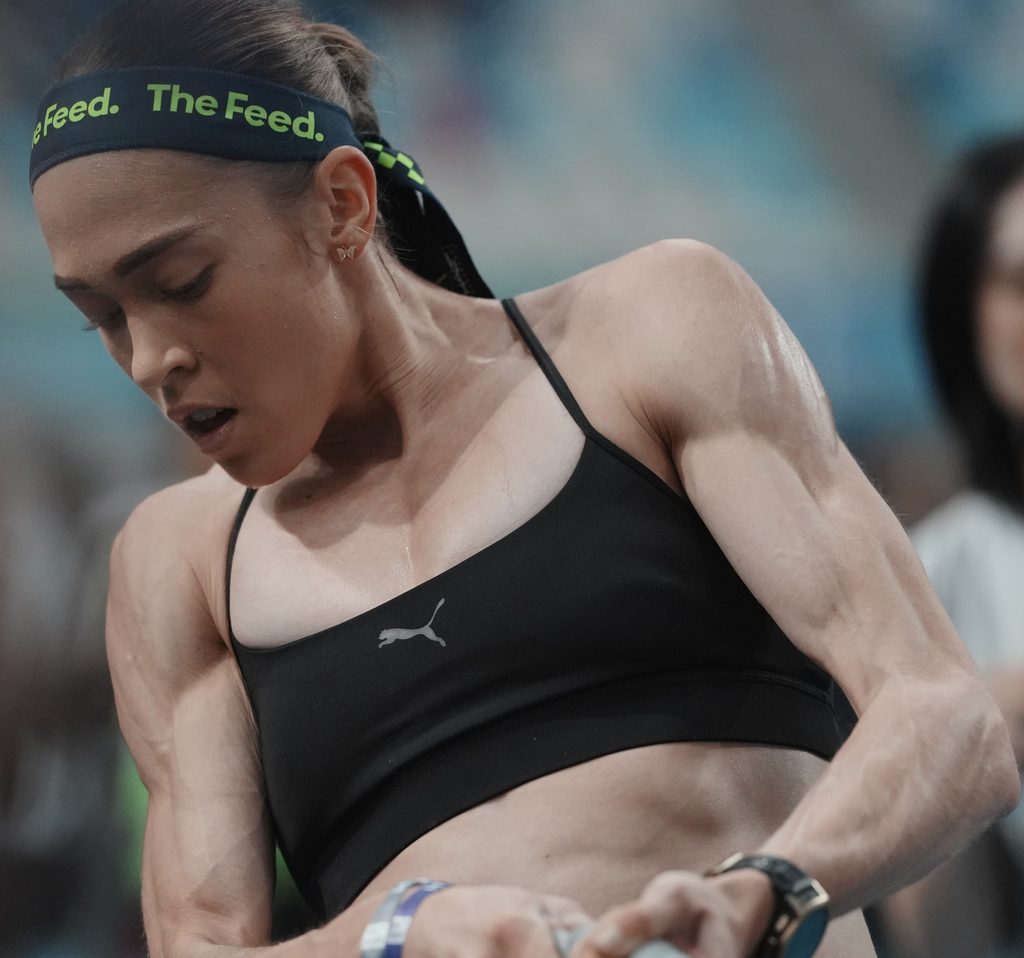
After emerging in Germany in 2017, the fitness competition Hyrox has gained popularity worldwide in the last couple of years. The competition follows a standardised format that combines strength and endurance (Fernández-Navarrete et al., 2026).
More and more athletes have taken to the fitness frenzy, with the strongest and fastest participants gaining popularity and followers online.
One of the athletes recognised worldwide is Joanna Wietryzk. The 24-year-old Australian is the current world record holder in the women’s solo category. She is followed by thousands online and is admired by many within the fitness community. However, after the Hyrox competition in Beijing in September, Wietryzk is not only known to Hyrox lovers; she is known worldwide. Maybe not by name, but by the photos taken of her during a competition in China.
The BBC described that the athlete “soiled herself” during the Hyrox event, while ABC wrote that she finished the race with “faecal matter running down her legs”. Despite suffering bowel incontinence while competing, the athlete continued on and won the race, creating huge controversy far beyond the Hyrox community. Many disagreed with her decision to keep going, while others felt the officials present should have stopped her instantly. The incident has sparked debate on hygiene, elite competitions, and respect for competitors.
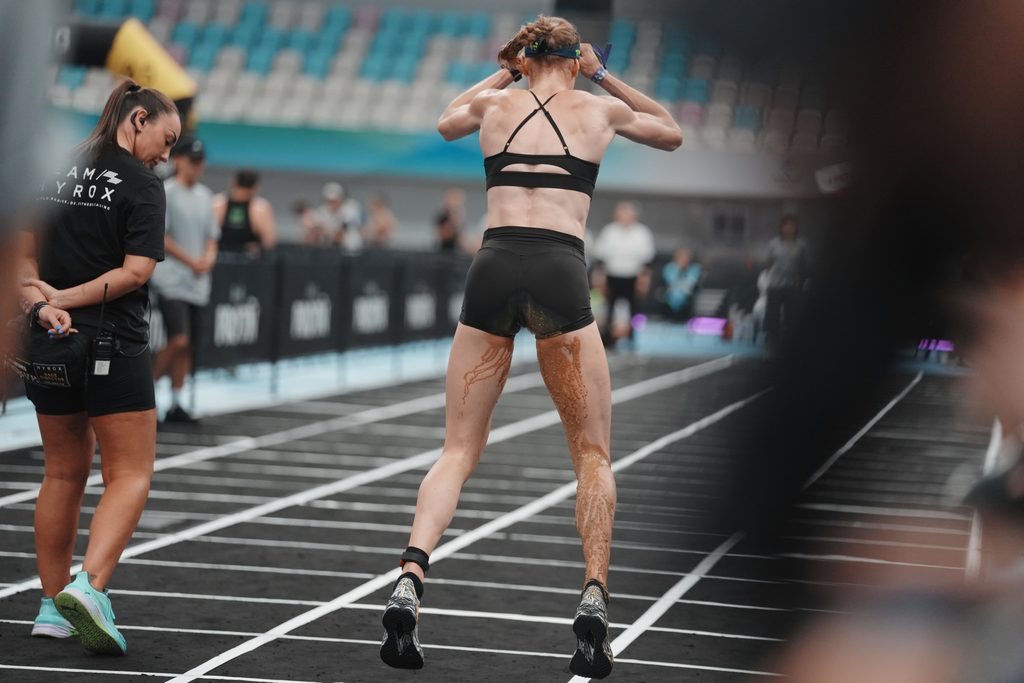
The photos and videos from the event in China quickly spread online, with many having their say. Within 24 hours, everyone seemed to have heard of Wietrzyk, whether or not they had followed the sport previously.
This feature article will explore why an incident goes viral, the topic of virality and the components that make people worldwide engage with certain content.
In this context, why did everyone seem to want to have a say about a 24-year-old Australian girl suffering an embarrassing moment at a fitness competition?
Schafer and Pailler (2024) describe virality as “a social information flow process where many people simultaneously forward a specific information item, over a short period of time, within their social networks, and where the message spreads beyond their own social networks to different, often distant networks, resulting in a sharp acceleration in the number of people who are exposed to the message”.
With the Hyrox incident, it is hard to know for certain where the first pictures from the event were posted. The official photographer is listed as Visual China Group (VCG), and the photos are available through Getty Images, which news sites and media outlets can access for a fee. According to the Hyrox website, they have official photographers at every race, and the images are often shared on their own social media platforms. When Wietryzk and others competed in China, hundreds of spectators were present, capturing photos and videos from the sidelines. Official news outlets seem to have mostly used VCG’s event photos, while content shared on social media includes both official photos and spectator images.
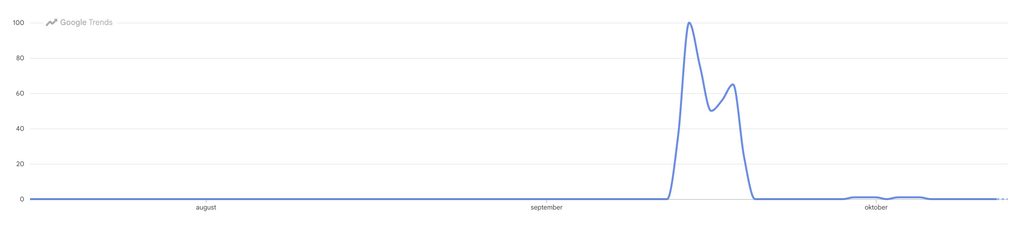
The event took place on 12 September, with the images starting to spread online that same day. Firstly, on social media, and then on different news sites worldwide. With more and more people being aware of the incident, the name “Joanna Wietryzk” started trending online, with thousands searching for her.
Google (2026) itself explains that Google Trends does not show an exact number of times the name has been searched, but rather “represents a normalised relative search interest score on a scale from 0 to 100”. When a search term or a name reaches 100, it means “peak popularity” and “the highest point of popularity for that specific search term during your chosen time frame and location”. Though the event took place on 12 September, Joanna Wietryzk’s name did not reach 100 until 15 September. The following day, the search term pivoted to 55. The search term “Hyrox controversy” followed the same pattern (Google Trends, 2026).
When searching “Joanna Wietryzk on TikTok, numerous videos pop up, with the first few being viewed by 46,000, 4000 and 52,000, respectively. Some are videos from the event with text, while others feature a TikTok user speaking about the incident, with pictures shown in the background. Both on TikTok and Instagram, there are thousands of videos featuring footage from the event.
In a 2016 article, University of Melbourne consumer psychologist Brent Coker identifies a few of the key elements that make certain content go viral. Firstly, he believes that shareability is an important factor. Secondly, he says that the viewer must be able to connect with the content. Coker also believes that if the content elicits a wide range of emotions in viewers, it is more likely to go viral. Lastly, he says a feeling of excitement or thrill can be important (University of Melbourne, 2016).
“Shifting people rapidly across certain emotions is a highly successful tactic which also makes people highly likely to share content on their social media channels”, Coker says.
The photos and videos of Joanna Wietryzk from the Hyrox competition have undoubtedly evoked a wide range of emotions among both supporters of the fitness frenzy and those outside the community. In the days following the incident, many took to social media to share their opinion. Some were infuriated because others had to compete after Wietryzk, believing it posed a health hazard to the other contestants. Others were infuriated that the officials at the event didn’t step in and stop the athlete from continuing. In the days that followed, other emotions were evoked, when it took Wietryzk a long time to make a public statement, with some feeling it wasn’t enough.
A 2019 study on why certain ads go viral online found that strong drama and a surprising element led viewers to share the content. This is relevant to the Hyrox incident, as there were elements of both surprise and drama in the events that unfolded in Beijing. Many were surprised and shocked to see the pictures from the event, with Wietzryk suffering severe stomach issues, displayed by faecal matter appearing on her legs. There was also strong drama with the incident, with so many disagreeing about the whole thing afterwards (Tellis et al., 2019).
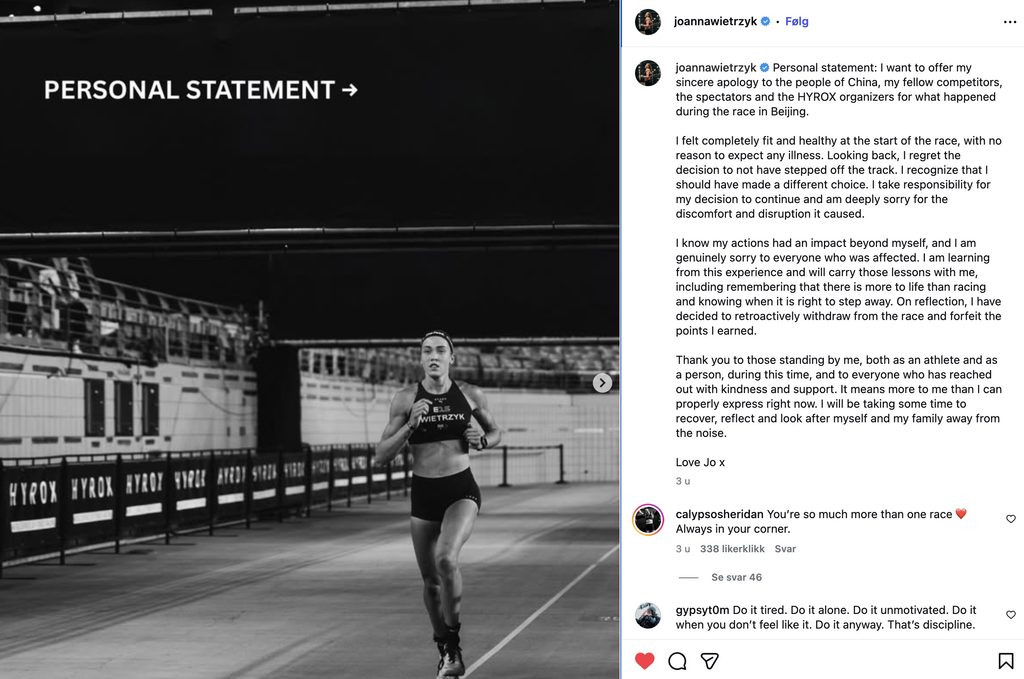
The incident in Beijing sparked significant controversy and online discussion. Photos and videos went viral and reached the world’s largest media outlets. However, it didn’t stop there for Wietzryk and the Hyrox community. After the viral incident, people demanded answers and an apology from the athlete herself. Right after the competition, she posted to social media saying, “a win is a win”, which was quickly deleted as the athlete began to understand the severity of the aftermath. Nearly a week went by before she publicly apologised for the events that unfolded in China.
“I know my actions had an impact beyond myself, and I am genuinely sorry to everyone who was affected”, she wrote on Instagram, stating that she would take some time to recover and reflect. Since the apology, posted on 17 September, she has not made any further posts and has not competed in Hyrox. Many, amongst them her coach, Chris Bayens, called for the bullying and harassment to stop in the days following the incident.
Nearly a month after the competition in China, one has a better understanding of the situation and the viral attention that followed. For Joanna Wietzryk herself, the incident has led to many more people around the world knowing her name. After the event in Beijing, a Wikipedia page was created in her name on 17 September. The page describes her career as a Hyrox athlete but also addresses the incident on 12 September.
The 24-year-old has also gained thousands of followers on her Instagram page. The post she made apologising afterwards has nearly 24,000 comments. The incident has undoubtedly made more people aware of who she is, whether or not they are part of the fitness community.
Not only did the event receive worldwide attention, but it also led to new rules and changes within the Hyrox competition. Previously, competitors had been penalised for spitting and littering on the course, which raised many questions about how Wietryzk were allowed to continue having suffered bowel incontinence during the race. Hyrox co-founder Moritz Fürste apologised for what happened in China and admitted that the race officials made a mistake in allowing her to continue.
Fürste ensured that Hyrox made several “rulebook changes immediately”.
“As of this moment, there are new rules and procedures in place to prevent situations like this from happening again”, he said, according to an article published in The Guardian.
Canadian Running Magazine claims that the new rules place more responsibility on race officials, allowing them to remove athletes during competition.
“The organisation has also updated its rulebook to allow race directors to withdraw athletes when bodily fluids (including blood, vomit, urine or faeces) pose a welfare or contamination risk”, the website claims.
The event in Beijing and the backlash that followed had undoubtedly had a huge impact on both the Hyrox community and Joanna Wietryzk. The photos and videos going viral have made thousands of people engage, with many taking to social media to share their personal views on the matter.
To summarise, the events unfolding in China had an element of surprise and shock, which, according to some of the studies mentioned, is an important factor in content going viral. Seeing an athlete in a popular, up-and-coming sport suffer an embarrassing episode like this on the big stage is not something viewers and fans would expect. In addition, Joanna Wietryzk is one of the best Hyrox athletes in the world, making her a name many in the fitness community already knew. The 2019 study on online ads showed that many chose to engage when there was an element of drama, which there certainly was, in the days following the incident. While the photos and videos spread, everyone seemed to wonder what was next. Would Hyrox change their rules? Would the athlete apologise? How would this all play out?
The drama and shock factor surrounding the Beijing-based competition and its aftermath drew thousands of people online. Joanna Wietryzk’s name was trending on Google, and so was “Hyrox controversy”, as many referred to it online.
As for Wietryzk, she gained a Wikipedia page and thousands of Instagram followers. “Everyone” now seems to have heard her name or seen the photos from her competition. The events that unfolded on 12 September 2026 were a viral moment for some, but for the athlete herself, it all might have been a lot to handle.
“Thank you to those standing by me, both as an athlete and as a person, during this time, and to everyone who has reached out with kindness and support. It means more to me than I can properly express right now. I will be taking some time to recover, reflect and look after myself and my family away from the noise”, Wietryk wrote on social media a week after the competition.
Whether we will see her compete again remains unknown, but the incident undoubtedly made her famous and a viral sensation. The question is, at what cost?
Behind the memes, Google trend stats and social media videos, there is an athlete only wanting to compete in the sport she loves. Only time will tell whether she returns to the competition that made her known worldwide.
 Megan Anne
 Yang Wu
 Liz Farnfield