

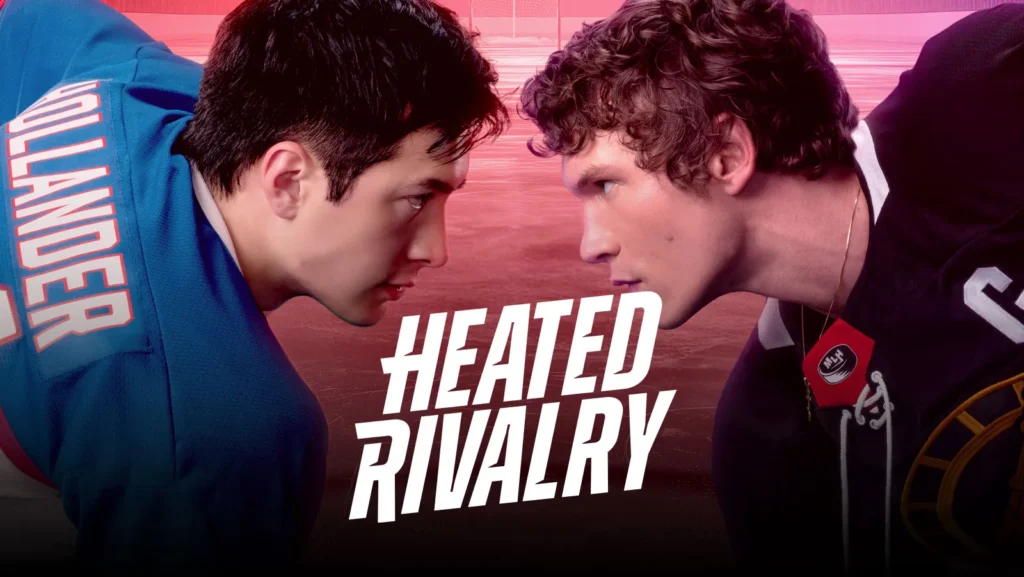
<Heated Rivalry> has become one of the most popular dramas in the late 2025 and gathered incredible adult women audiences to discuss.
The drama has topped in US HBO Max daily charts and become the highest-rate original series in Crave, triggering widespread discussion among media and academic field.

The drama tells the story of two men from opposing ice hockey teams who fall in love through almost 10 years. It takes them lots of time and energies to know each other and go from being enemies to lovers.
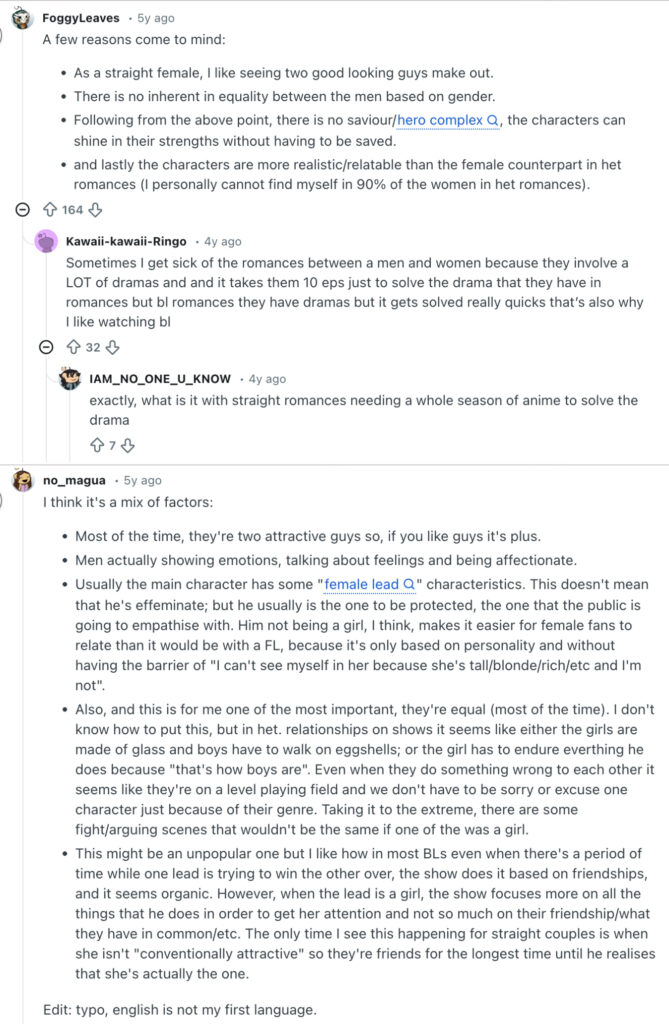
The attraction of Heated Rivalry to women is not only from the sex and love the series shows, but more from an original transformation and replacement of romantic narrative identity.
Through positioning two men into a complex love relationship, Heated Rivalry dismiss solid gender power dynamic in normal heterosexuality stereotype and let female audiences stand in an equal position to participate into discussion about communication, vulnerability and desire, rather than always stay in a subordinate position in a romance relationship.
“Boy’s Love” has long history. The word appeared in early 1970 in Japan, few young female cartoonists created related works of art to challenge gender stereotype regulation. And in 2000, boy’s love has become a global media phenomenon, penetrating into animation, novel, digital games and so on.
The long development of BL stated that female love BL stories are not occasional but even reflect their long-term yearning of the narrative structure that cannot be found in heterosexual love stories.
According to an interview with Rachel Reid, the original writer of Heated Rivalry, women tend to attend the story without female characters since they feel safer and may have dark sexual experiences with men before.
Breaking the communication hierarchy
In traditional straight love story, female characters are always described to be responsible for the emotional labor, while man usually be cultivated as the unapproachable side in an interaction relationship. Just as Curran et al. (2015)researched:
“Connected to gender and power, it may be that the male partner perceives more emotion work performed on his behalf than he desires or needs, which connects to his feelings of lack of relational control or the female partner having more relational power.
— (Curran et al., 2015, p. 169)
The study resulte shows that emotional labor is not a stereotype or theory but is a social phenomenon with solid references. While mainstream narrative has kept strengthen this dynamic insteand of challenging.
Heated Rivalry and other BL stories then break conventional regulation and structure. Shane and Ilya must to study how to express themsleves and they must learn how to communicate with each other even when they are arguing.
Just as Hudson Williams noted in Them interview:
“In a straight heteronormative romance, you fall into tropes and stereotypes where the woman is the communicator and the guys are closed off… when it’s two men, someone has to do the talking.”
For female viewers, this point is important which means that they do not need to carry all the emotional communication alone in a relationship.
Identity replacement
When female characters disappear from the narrative, female viewers can enter the story without having to consider gender power imbalances. Communication barriers and the caution towards male desires in the romance stories are demolished when gender changed to two men.
As the 34th Street Magazine said, in Heated Rivalry, audiences can see that Shane and Ilya are yearning with each other, arguing with each other and be vulnerable in their arguments and communications, which give female the signal that male can choose to be fragile rather than become powerful and dominate.
This is not just a superficial escape from reality, but the reconfiguration of dominate power structure through different narratives. Study did by Jirattikorn (2025) also support that women can satisfy their emotional and social requirement through actively consuming BL cultures and dramas. They aim to find balance between fight and fantasy, which replace their position in society.
Desire can also be discussed in Heated Rivalry. In traditional love drama, desire is always one-way that men chasing and asking for, while women accept it. However, desire in Heated Rivalry is bidirectional, and constructed based on long-term emotional tension.
The achievement of the drama is real, but it also shows one problem. Female audiences need to “disappear” from the narratives to help them find equality and sense of participation. Does it convey that mainstream story creation has not yet find one suitable way to let women viewers as women, feel comfortable in the narratives?Heated Rivalry provided a love story that started from the equality point, which attract number of female audiences. Not only because of it is brave or bold enough, but because it offers something really scarce. This drama may indicate that audiences’ anticipation of on-screen romance story has undergone wider transformation.
 Shoujie Wang
  Yinan Zhou
  SUN Yinchen