
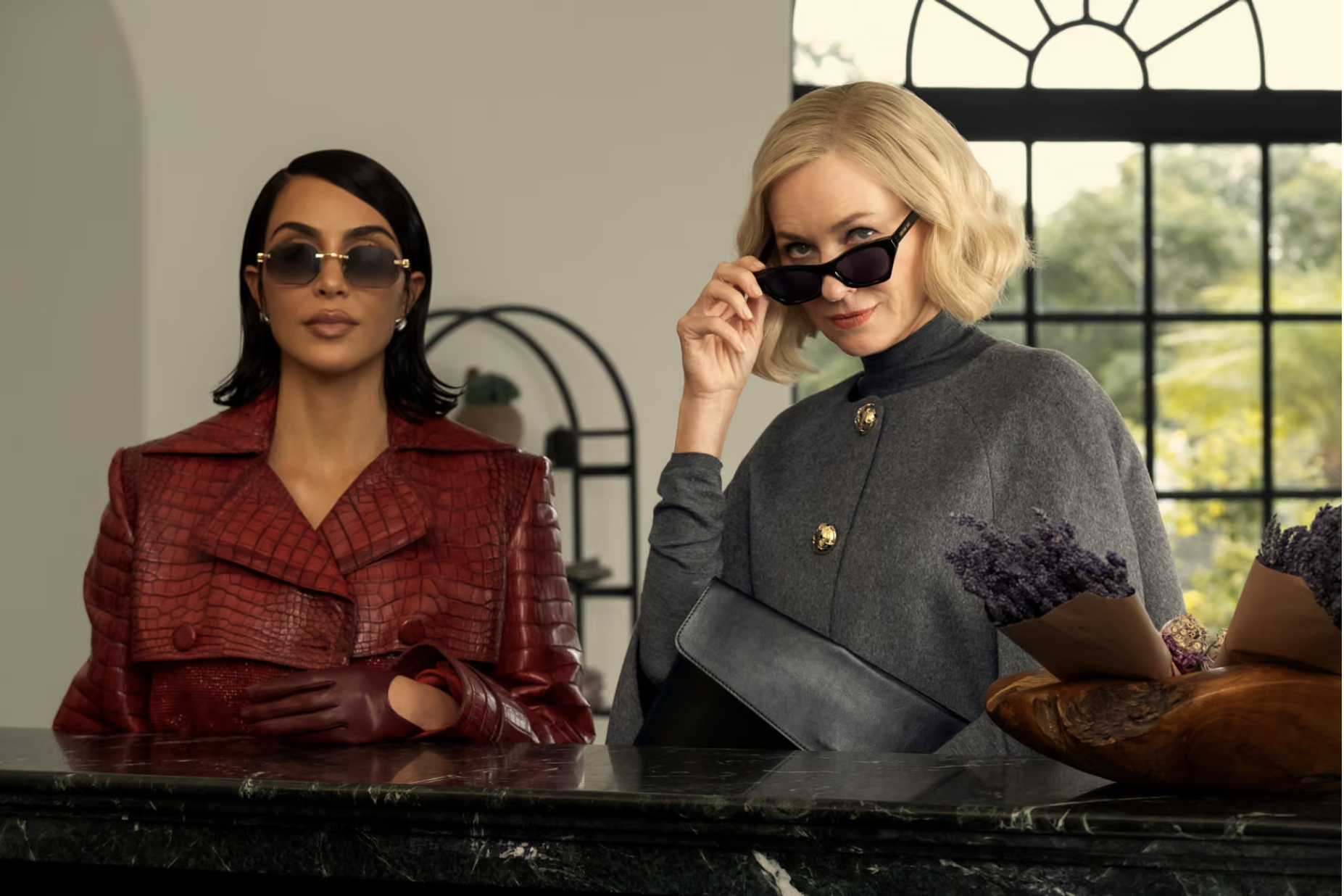
Despite being described as “Too awful to love, too boring to war over”, the glossy legal drama All’s Fair, starring Kim Kardashian, debuted on Hulu in November 2025 to massive viewership, drawing attention even as critics “roundly savaged” the series.
More than just a television drama, All’s Fair reflects a broader shift in how success is defined in the streaming age. In an increasingly saturated market and the field of series gets increasingly packed, being good is no longer enough. Shows now can just cut through it all by being “noticeably worse than the rest”.

All‘s Fair was a television series created by Ryan Murphy that followed the founders of an all-female divorce law firm in Los Angle, handling high profile cases for wealthy clients. The series featured a star-studded cast of Kim Kardashian, Niecy Nash and Naomi Watts, was released on Hulu on November 20th, 2025, the high-budget production combines glossy visuals with celebrity appeal, positioning itself as a prestige legal drama despite its overwhelmingly negative reception.
The review: What the Show Actually Offers
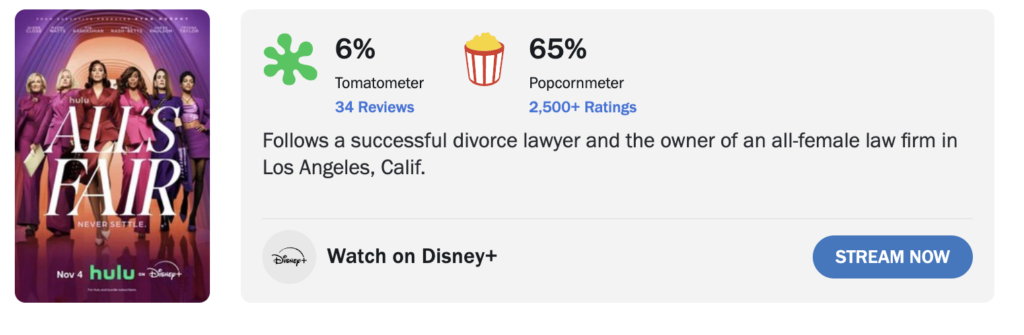
Critical reaction was immediate, and the ratings reflected it. With just 6% on Rotten Tomatoes but a much higher audience score, All’s Fair opened to one of the sharpest critic-viewer divides of the year.
The strongest complaints focus on the writing. Reviewers describe a hollow plot, exaggerated dialogue and legal cases that feel mechanically resolved rather than dramatically earned. As Sophie Gilbert wrote:
“I can’t call it a television show, because it isn’t one. Rather, it’s Instagram Reels at episode length, 45-minute collections of bedazzled moving images, targeted at the idly scrolling second-screen viewer.”
— Sophie Gilbert, The Atlantic (Rotten Tomatoes, 2025)

Evidently, much thought and expense have gone into glamour and spectacle on this show. However, this aesthetic pleasure does not add depth to either the story or the characters. Instead of enhancing the drama, the incessant obsession with wealth and aesthetics undermines the program.
Although the series presented itself as a narrative of female empowerment, much of the critical response described its feminist message as shallow and performative. Rather than focusing on meaningful issues of workplace inequality, gender-biases, women’s solidarity, etc., the show often frames empowerment in terms that are as mundane as wealth, glamorous, and individual revenge.

Its female lawyers are often represented in terms of their fashion choices, lifestyle, and their dramatic confrontation with wealthy men, while the deeper structural problems for women are almost completely missing. In that regard, empowerment becomes more of a brand, rather, than a serious idea. As Ben Dowell wrote,
“It thinks it’s a feminist fable about spirited lawyers getting their own back on cruel rich men but is in fact a tacky and revolting monument to the same greed, vanity and avarice it supposedly targets.”
— Ben Dowell, The Times (Rotten Tomatoes, 2025)
The paradox: So Why Is Everyone Watching?
One reason could be the phenomenon of hate-watching, wherein viewers press play not because they praise a show but because they want to criticize it or take part in the online debate. However, in this case, negative reactions became free advertisement. All’s Fair was advertised on buses, television, cinemas and social medias like an impossible to avoid show. The backlash kept the show more in mind.
The celebrity appeal of this show can’t be overlooked either. The existence of Kim Kardashian as a protagonist brings already an estimated 354 million people on Instagram, meaning many will watch simply because of curiosity. Streaming numbers are often more important for the platforms than critical acclaim. The best sign of success came when the series was picked up for season 2 before the first had officially ended. Industry reports indicated that the show would resume production in Los Angeles in the following spring. In today’s streaming economy, being talked about may matter more than being praised.
What this means: Quality VS. Visibility
The success of All’s Fair proof that streaming platforms are increasingly measuring value based on attention rather than artistic merit. If audiences keep clicking and debating a show, platforms have no reason to worry about what critics are saying against it. What gets made is often what generates demand, even when the response is negative. Producers may even have realized the series would never become prestige television and decided to reshape it into something louder, more campily entertaining, and more likely to inspire the kind of conversations about gender roles.

But for critics and industry observers, this raises a bigger concern about where television is heading. If success is measured primarily by views, impressions and online buzz, drama is at risk of being designed for reaction rather than depth, character, or narrative craft. Shows may become easier to market, but less meaningful to watch. The question is no longer simultaneously whether a series is good or bad, but rather whether it can dominate the feed long-enough to win.

Hulu’s decision to renew All’s Fair is a clear judgment, it reflects a streaming economy where attention, conversation and visibility matter more than critical acclaim. Whether audiences loved it or mocked it became almost irrelevant once they kept watching. In that sense, the show’s biggest success is not artistic achievement, but revealing what truly counts in the streaming era.
 bella
bella  Hayden Price
  Finn Wilson