
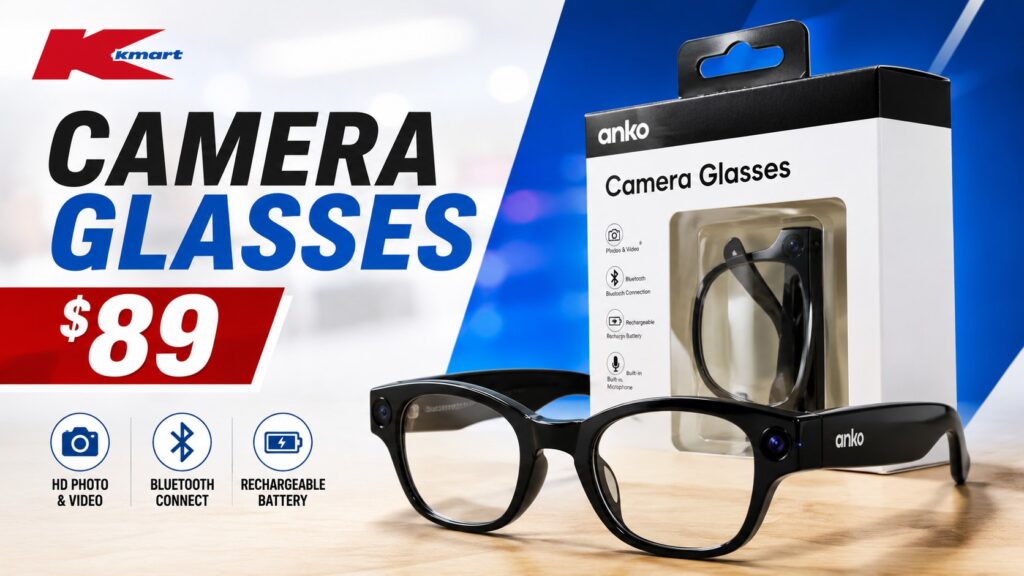
Apparently, all it takes to become a walking camera is $89 and a trip to Kmart.
Kmart’s new Anko camera glasses sold out across Australia almost immediately. Meanwhile, Meta Ray-Bans starts at $337. Making technology cheaper is usually exciting and smart glasses no longer feel like some futuristic toy that only influencers and tech lovers can afford. But when that bargain can also record people around you, the price starts to feel a little more complicated.
The Anko glasses can take photos, record 1080p video, play music, answer phone calls and connect to an AI assistant. That sounds impressive for $89, but it has also raised a major privacy concern. Australiaʼs Privacy Commissioner has even warned that new laws may be needed because our current Privacy Act does not generally cover individuals using wearable technology.
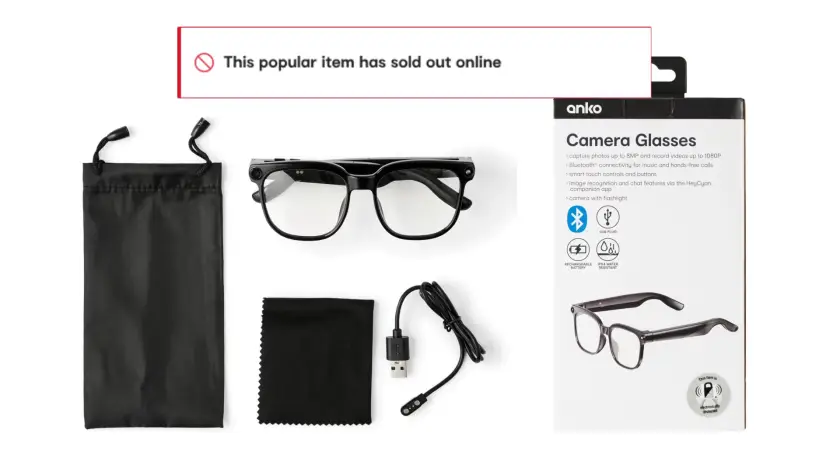
With all the attention on the camera, it might actually be the least useful part. I use smart glasses myself, but I mainly use them to listen to music or ask basic daily questions when I want a quick answer without taking out my phone. It is simple, but genuinely helpful. None of my favourite features involve recording random people who may not even realise there is a camera pointing at them. That is why I think the camera is the one feature smart glasses could do without. Music, calls and quick answers only affect the person wearing them. A camera changes the experience for everyone nearby, especially when it is difficult to tell whether it is recording. The wearer gets the convenience, but the privacy risk belongs to everyone else.
Selling out across Australia proves that people are interested in affordable smart glasses. But competing with Meta did not have to mean keeping the feature people were already questioning. The camera is not what makes smart glasses smart. Their real value comes from making everyday things easier, like answering calls and getting quick responses without reaching for your phone. A camera free version could still feel modern, useful and worth $89. It might even make more people comfortable wearing them and being around someone who does.
If the best parts of smart glasses work without a camera, why are we so determined to put one on our faces?
 Joleen Jublee
  Jamez
Jamez  Scarlett Johnstone