
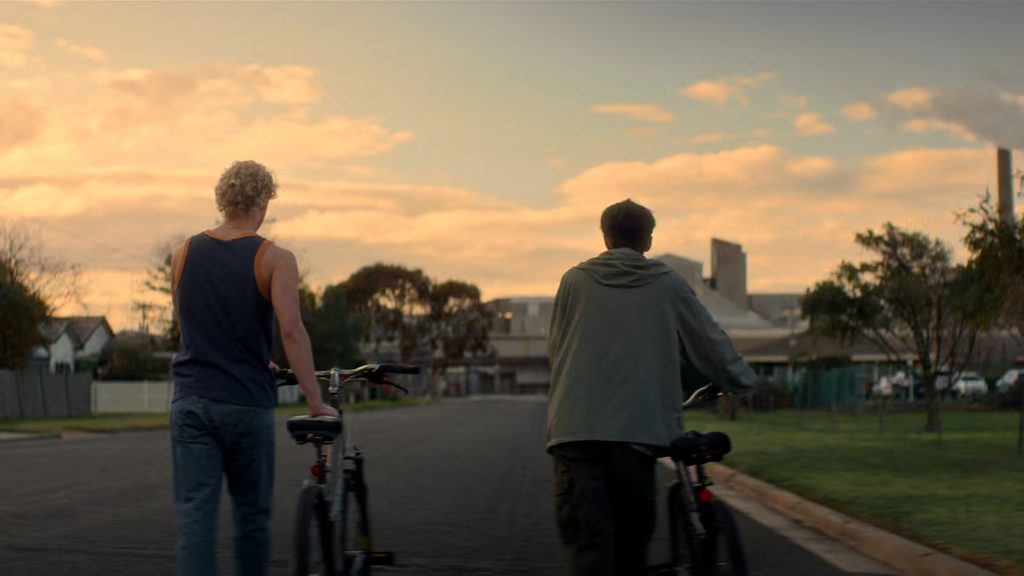
Sparse, wide streets; empty, overgrown yards stretching to dilapidated fibro houses; and sun-baked fields bounded by rusted and failing barbed wire fences. Despite an opening scene that would be right at home in a run-of-the-mill slasher, it’s the scenes immediately following that suggest the isolation of a rural Australian town will be the far bigger threat in Adrian Chiarella’s debut feature, Leviticus.
The main characters, Naim (Joe Bird) and Ryan (Stacy Clausen), are introduced on a typical — if somewhat uneasy — teenage expedition to the town’s now-abandoned mill. The pair quickly go from jibes and play-fighting to a stolen kiss and then making out, ending only when the ever-anxious Naim suggests it might be time to go home. And it’s that trek back to town that hints at the movie’s tensions, setting the two boys side by side and bathed in afternoon sun against a backdrop of suburban decay and abandonment.
The town isn’t completely isolated, though, at least not for everyone. We soon learn that Naim’s mum (Mia Wasikowska) brought them there to find community in a conservative Christian church after his father’s disappearance. When Naim witnesses Ryan engaging in a mutual mortification-fuelled encounter with the pastor’s son, Hunter, he makes a choice that exposes that acceptance and community in this particular church are entirely conditional.
Ryan, Hunter and Naim are forced to undergo gay conversion therapy with a revival-style “deliverance healer” by their parents and the church elders, and are subjected to a ritual that first tempts and then punishes them with an entity that appears as the person they desire most: each other. And it’s clear that this, more than the ritual’s summoned “entity”, is the biggest threat to their lives. The weaponisation of their desires, internalised shame, and their betrayal by the people who are supposed to love and protect them leave them isolated, even from each other.
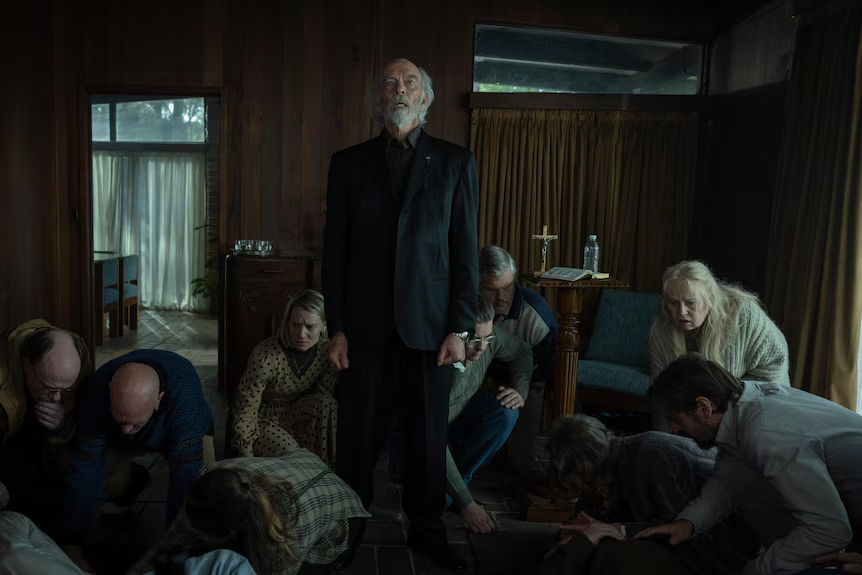
Throughout Leviticus, Cinematographer Tyson Perkins uses light to build youthful joy and intimacy. Restrained, lingering shots enhance both the boy’s intimacy and their vulnerabilities, especially when set against the setting’s dark, oppressive environment. Rather than a bright, warmly lit church, the meetinghouse used by this congregation is dimly lit and constructed of cinderblock and aluminium. By contrast, shots filled with warm sunshine are reserved for the abandoned mill, the place where Naim and Ryan could be alone and feel safe. That being said, the golden light never quite dispels the sense of dread, making the landscape’s beauty feel inseparable from the danger lurking within it.
While most of the cast offer serviceable performances, the two leads’ performances elevate Leviticus into another weight class. Stacy Clausen exhibits a perfect mix of youthful machismo, vulnerability, and dread, but the standout is Joe Bird as Naim, who wears every moment of anxiety, fear, dread, sorrow, and joy on his face and in his posture, gait, and movements. We experience the movie through Naim’s reactions just as much as through what we see on screen.
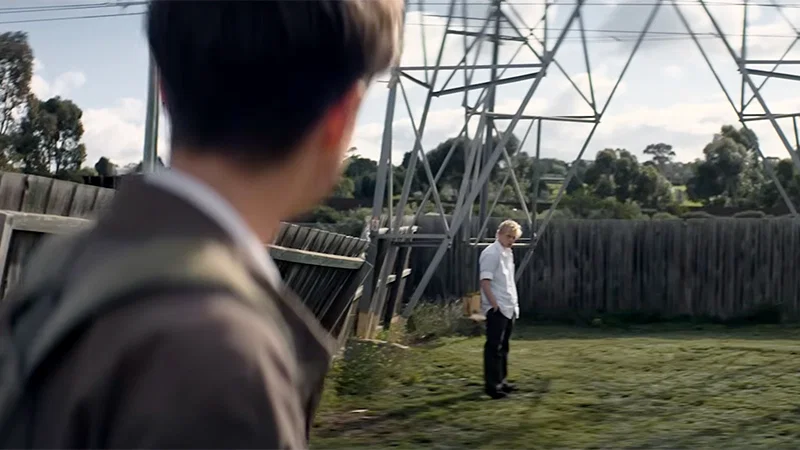
As someone who grew up Catholic in a small country town, nearly every moment of Leviticus resonated. The beauty and desolation of the landscape and the absolute isolation from those around you. Knowing those around you will never understand who you are, and if they had even a suspicion, would shun you at best and at worst, well…
Leviticus is a must-see for anyone who doesn’t know what it is to grow up queer in a community that will hate you for it, and a cathartic release for those who do.
Leviticus was released in theatres in Australia on 18 June 2026 and is currently available to stream on Apple TV, Prime Video, and YouTube.
 Michael Chiodo
 Bryana McGowan
 Audrey James