

Growing up in an algorithmic world
Imagine two teenagers opening TikTok after school. One begins watching fitness and skincare videos, while the other searches for advice about dating and relationships. Neither expects a few minutes of scrolling to influence how they see themselves or the world around them. However, after weeks of using the platform the first teenager might find their feed increasingly filled with weight loss advice and idealised bodies, while the second might encounter increasingly hostile content about women and masculinity.
This raises an important question: How do algorithms influence what young people believe?
Social media algorithms are systems that select and recommend content based on factors such as a user’s activity, interests and interactions. They help determine which videos appear on a person’s feed and which ideas they encounter repeatedly. For young people this matters because adolescents is a period of exploring identity, relationships and personal values.
Algorithms can connect young people with supportive communities and useful information. However, they can also repeatedly expose users to unrealistic beauty standards, misleading information and harmful attitudes. The issue is not necessarily that algorithms tell young people what to think, but that they can influence what young people see often enough for certain ideas to begin feeling normal or believable.
How algorithms shape what we see
Social media feeds are not random collections of posts. Recommendation systems use information about users’ interactions to predict what they might watch next. As a result, two people using the same platform can experience very different online environments.
The Australian eSafety Commissioner surveyed 3,454 Australian children aged 10–17 in late 2024 and early 2025. Almost three-quarters (74%) reported having encountered content associated with harm online, including sexist material and content encouraging unhealthy eating or exercise. Importantly, 69% said their most recent exposure to harmful content had happened accidentally, such as through a social media feed or pop-up.
These findings help demonstrate why algorithms deserve attention. Young people do not always deliberately seek out harmful material, sometimes it appears while they are watching unrelated videos. If a teenager repeatedly engages with a particular topic recommendations may continue to direct them towards similar content. This does not mean every user will be influenced in the same way, but it raises questions about the information young people encounter during a formative stage of their lives.
Why algorithms matter while young brains are still developing
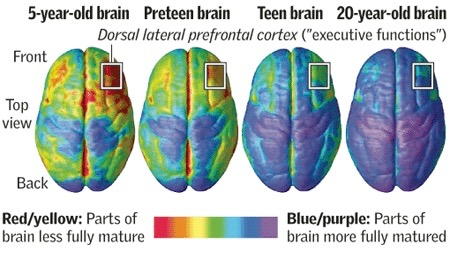
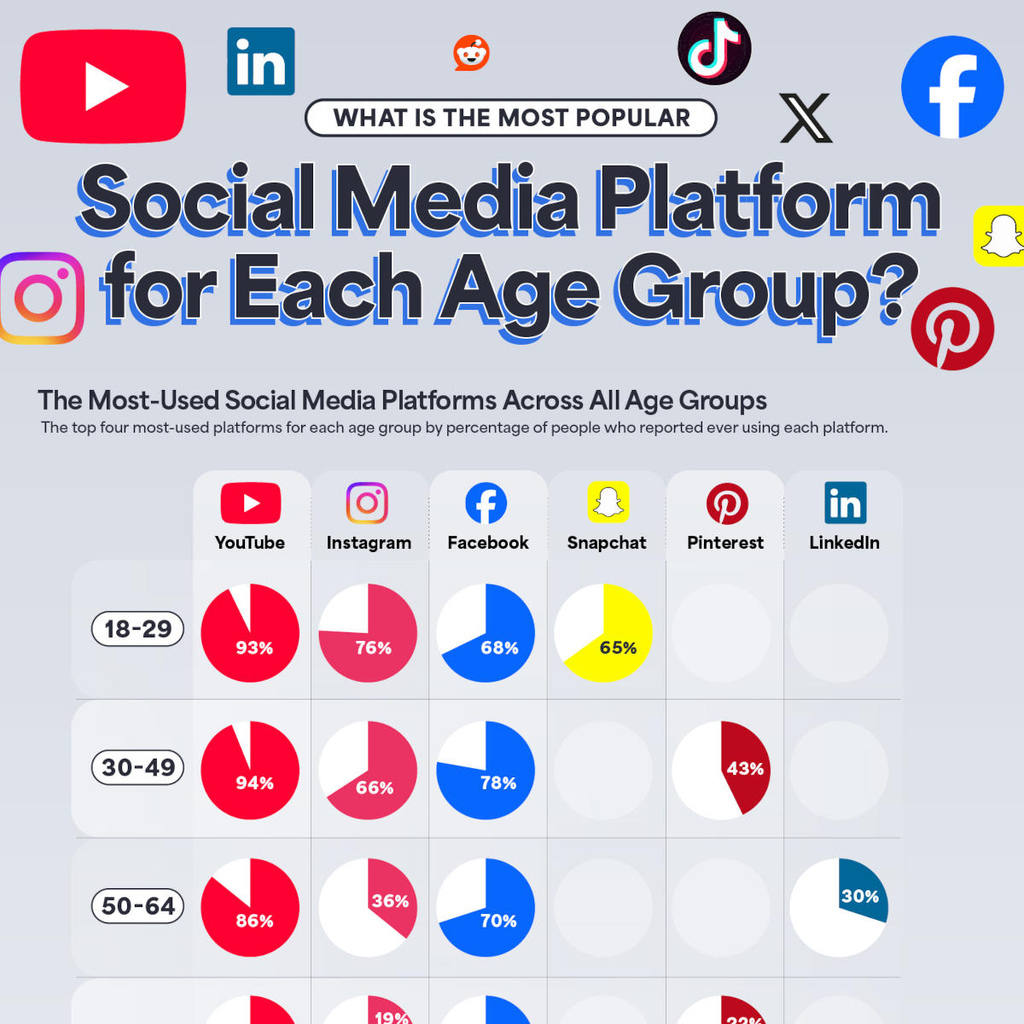
The content recommended to young people matters partly because adolescence is a significant period of brain development. Young people are still developing their decision making skills, emotional regulation and understanding of their identities. The US Surgeon General’s 2023 advisory reported that up to 95% of American teenagers aged 13–17 use social media, with around one-third saying they use it almost constantly. The advisory also highlighted concerns about harmful content, social comparison and the potential mental health risks associated with social media use.
The issue is not simply how much time teenagers spend scrolling, but what they repeatedly encounter while doing so. A girl who watches a beauty video may be recommended more appearance focused content, while a boy interested in gym routines may encounter increasingly rigid expectations about muscularity and masculinity. Repeated exposure does not automatically change someone’s beliefs, and social media can also provide positive communities. However, when young people are still developing their sense of identity, a feed repeatedly promoting the same messages may influence what they perceive as desirable or socially accepted.
This connection becomes clearer when looking at trends such as SkinnyTok and looksmaxxing, where algorithms can repeatedly expose young people to narrow ideals about how they should look.
SkinnyTok and Looksmaxxing: how algorithms pressure to look perfect
Body image trends have become a particularly relevant issue in recent years, as TikTok has helped turn appearance ideals into viral online movements. In 2025, SkinnyTok attracted widespread attention for videos promoting extreme thinness, restrictive dieting and the idea that being skinny represents discipline and attractiveness. The trend became controversial enough that TikTok blocked searches for the hashtag in June 2025, redirecting users towards support resources. Meanwhile, looksmaxxing has gained mainstream visibility among boys and young men, promoting ways to maximise attractiveness through muscular bodies, sharp jawlines, low body fat and particular facial features. Although these trends may appear to be different online subcultures, they reflect a similar pressure: the feeling that your appearance is something you constantly need to improve.
This pressure is reflected in Australian research. Butterfly Foundation’s 2024 BodyKind Youth Survey, which collected responses from 1,648 young people aged 12–18, found that 53.8% were dissatisfied with how their bodies looked, while 57.2% said social media made them feel dissatisfied with their bodies. The survey also found that 75.5% wished they were thinner or leaner, while 66.6% wished they were more muscular. These findings suggest that appearance pressures are not limited to girls wanting to be thinner; many young people also feel pressure to become bigger, leaner or more muscular.
Research by Griffiths and colleagues’ 2024 study provides further evidence of the issue. The researchers analysed approximately 1.03 million TikTok videos delivered to 91 participants, comparing people with eating disorders with healthy controls. The algorithms serving participants with eating disorders delivered 335% more dieting videos, 142% more exercise videos and 4,343% more toxic eating-disorder-related videos than those serving the control group. Stronger algorithmic bias towards these types of content was associated with more severe eating-disorder symptoms. The study does not prove that TikTok caused the participants’ conditions, but it shows how differently users can experience recommended content.
Similar concerns exist for boys and young men. research from the UK’s Centre for Emerging Technology and Security examined 81,513 videos from 45,834 users and identified connections between mainstream looksmaxxing content and more extreme online communities associated with incel ideology. The report found that appearance-focused content could be linked to more extreme material through shared hashtags and reshares.
These findings show how a girl who watches dieting videos or a boy who watches gym tutorials may encounter more content reinforcing the same appearance ideal. The issue is not that caring about appearance is inherently harmful, but that repeated recommendations can make narrow beauty standards seem normal. Whether the ideal is thinness for girls or muscularity and facial perfection for boys, algorithms can help reinforce the idea that appearance determines personal worth.
From Looksmaxxing to incels: When masculinity becomes misogyny
While looksmaxxing can make boys feel that their appearance determines their worth, some online communities take these insecurities further by linking attractiveness to a man’s success, status and relationships with women. This is where the so called manosphere becomes relevant. The term describes a collection of online communities discussing masculinity and gender, ranging from fitness and self improvement content to more extreme spaces that promote hostility towards women.
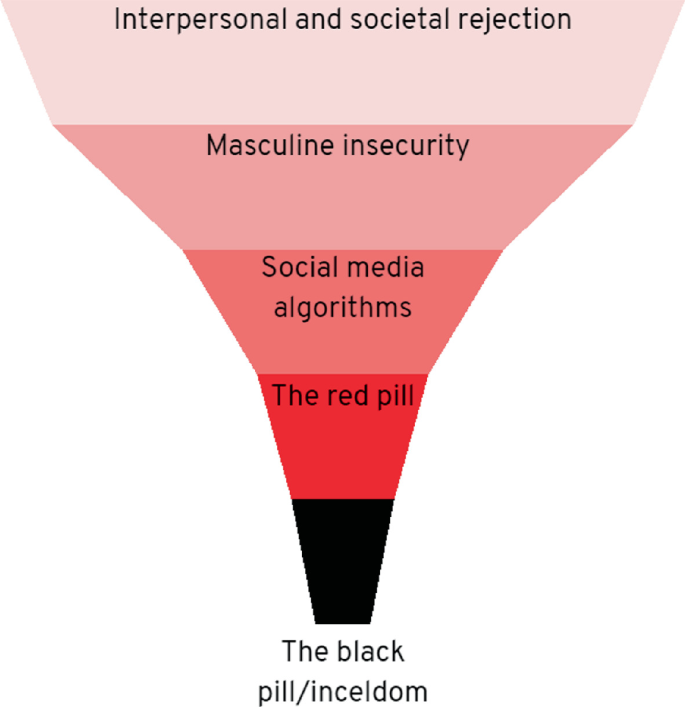
Within these communities, the terms red pill and blue pill, borrowed from the film The Matrix, are often used to describe opposing ways of viewing relationships. Red-pill content claims to reveal the supposed “truth” about women and dating, often presenting men as disadvantaged by modern feminism. Blue-pill content is used dismissively to describe people who supposedly fail to recognise this alleged reality. Some communities go further into incel ideology. “Incel” stands for “involuntary celibate” and refers to people, primarily men, who believe they are unable to find romantic or sexual partners. Although loneliness and rejection are genuine experiences, some incel communities turn these feelings into resentment towards women and the belief that a person’s attractiveness determines a persons social value. Research from the centre for emerging technology and security identifies connections between looksmaxxing content and more extreme blackpill incel material.
The algorithmic side of this problem is particularily important. A 2024 study led by researchers at University College London created TikTok accounts representing different teenage boys, including those interested in masculinity and those experiencing loneliness. Over five days the proportion of recommended videos containing misogynistic material increased from 13% to 56%. The researchers found that the recommended content increasingly shifted towards messages that objectified women, promoted sexual harassment or discredited women.This is a striking example of how recommendation systems can shape the content users encounter, even when their original interests are relatively ordinary.
This suggests that boys do not necessarily need to search directly for misogynistic material to encounter it. A video might initially appear to offer dating advice or confidence tips, yet gradually introduce the idea that women are shallow or that men who do not meet certain appearance standards are destined to fail. For a boy already feeling insecure about his looks or relationships, these messages may offer a simple explanation for complicated personal experiences. The danger is that this explanation can turn disappointment into blame.
However, it is important not to assume that every boy who watches masculinity content adopts these beliefs. Ofcom’s research into the manosphere found that some men engaged with this material for entertainment or self improvement and did not necessarily accept its messages. The concern is therefore not that masculinity, fitness or dating advice is inherently harmful, It is that algorithms can place helpful advice alongside increasingly extreme content, making the transition between them less obvious. Following the body image pressures of looksmaxxing, this demonstrates how recommendation systems may influence not only how boys believe they should look, but also how they believe they should behave and view women. This view is also impeccably portrayed in the hit netflix show adolescence which has 145 million views worldwide creating it to be the second most watched english language netflix series of all time, the show follows a young 13 year old boy who murdered his female classmate due to a mix of low self esteem, online incel radicalization and a deep sense of entitlement.

When repetition makes information feel true,
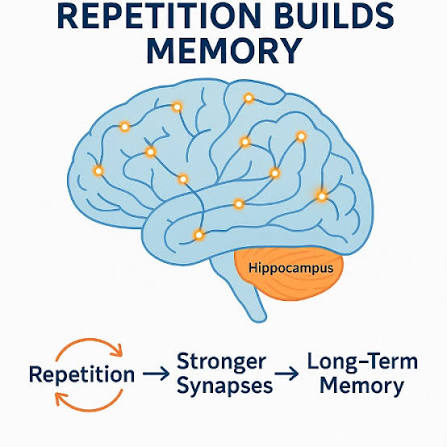
Whether it is a video promoting an unrealistic body ideal or a creator claiming that women cannot be trusted, repeated exposure can make certain messages feel more familiar and sometimes more believable. This is particularly concerning when algorithms continue recommending similar content, creating the impression that everyone shares the same opinions. Psychologists describe one part of this process as the illusory truth effect: people can become more likely to judge a statement as accurate simply because they have encountered it before.
A 2022 study by de Saint Laurent and colleagues explored this through three experiments involving 3,463 participants and misinformation about COVID-19 vaccines. The researchers found that repeated exposure made some false headlines seem more accurate, although it did not produce a corresponding clear change in participants’ vaccination intentions. This distinction matters because seeing an idea repeatedly does not automatically mean someone will believe or act on it. However, it suggests that repetition can affect how credible information feels.
This helps explain why algorithmic recommendations are important to the examples discussed throughout this article. If a teenage girl repeatedly encounters videos praising extreme thinness, or a boy continually sees content presenting women as manipulative, those messages may begin to appear more common or socially accepted than they actually are. The same applies to red-pill claims about relationships or looksmaxxing videos suggesting that physical appearance determines a person’s value.
The problem is not that repetition inevitably changes someone’s beliefs, it is that a feed dominated by one perspective may make it harder to recognise how many other perspectives exist.
Are algorithms really to blame?

It would be unfair to suggest that algorithms are entirely responsible for young people’s beliefs. Users make their own choices about what they watch, like, share and follow, while family, friends, school and personal experiences also shape their attitudes. Some young people actively seek out communities because they provide advice, entertainment or a sense of belonging. existing intrets can also influence the reccomendations they recieve.
The research discussed in this article has limitations. The TikTok eating disorder study found differences in recommended content but could not establish that tiktok caused participants conditions. The study of misogynistic recommendations used simulated accounts, which cannot capture every teenagers real life experience. similarly, The misinformation study found changes in perceived accuracy without a corresponding clear change in behaviour. these distinctions are important because being exposed to an idea is not the same as accepting it.
However, personal choice does not mean platforms have no influence. The Australian eSafety Commissioner explains that recommendation systems can repeatedly expose boys and young men to manosphere content, even when they have not actively searched for it. The Commissioner also acknowledges that many young men engage critically with these recommendations and feel uncomfortable when harmful material appears in their feeds.
This is an important distinction: young people are not simply passive victims of technology, but neither do they have complete control over what platforms put in front of them.
Algorithms are one part of a much larger picture. They do not invent every insecurity, prejudice or misleading claim, but they can influence which ideas receive attention and which messages keep returning. Platforms should therefore take greater responsibility for how their systems recommend harmful content, while schools and families help young people question what they see and check information before accepting it.
The question is not whether young people have the ability to think for themselves, but whether their online environments give them a fair opportunity to encounter different perspectives and make informed decisions.
Who is shaping the next generation?
From SkinnyTok to looksmaxxing and red-pill content, the examples in this article show how social media algorithms can influence more than the videos young people watch. They can help shape the appearance standards, relationship expectations and beliefs about gender that young people encounter while developing their identities.
Addressing this problem requires responsibility from both platforms and the people who use them. Social media companies should be more transparent about how their recommendation systems work, provide meaningful controls over personalised feeds and take greater care when harmful content is repeatedly promoted. Schools and families can also help young people question why particular videos appear, check claims against reliable sources and recognise that popularity does not equal truth.
Ultimately, algorithms do not decide what an entire generation believes. But they influence which ideas receive attention, which voices are repeatedly heard and which expectations become part of everyday online life.
The question is not simply what young people choose to watch but how the content continually recommended to them helps shape what they come to see as normal, desirable and true.
 Megan Anne
 Yang Wu
 Liz Farnfield