
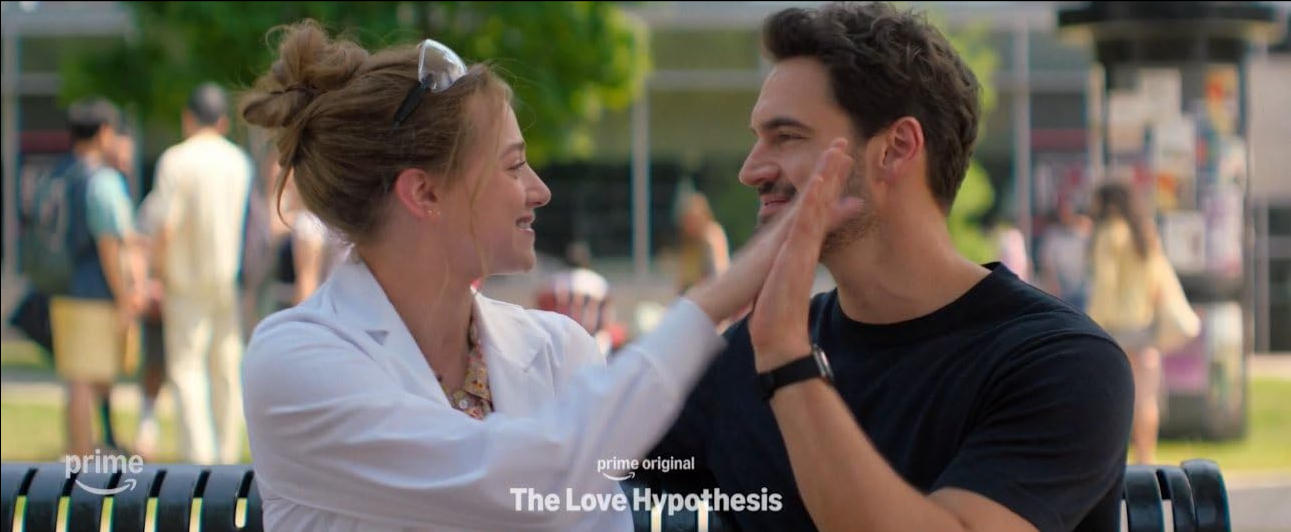
Amazon Prime’s newest rom-com The Love Hypothesis, adapted from a novel by BookTok favourite Ali Hazelwood, is not a movie that screams ‘scary’, and yet it’s one I’m terrified to watch. It’s not that I’m anticipating many jump scares in the story of awkward, sexy scientists who fall in love while fake dating, rather I just know there’s no way a movie can capture in less than two hours the feeling of kicking your feet under the covers at 3am when the enemies finally become lovers after 300 pages of yearning. In short, the book is (nearly – I’ll make an exception for The Lord of the Rings) always better. An unoriginal opinion maybe, but not nearly as unoriginal as Hollywood plundering bookstore shelves for their next quick release.

Book to movie adaptations are flooding the market with at least 11 set to be released in the final months of 2026, and upwards of 30 currently in production. Many of these adaptations are of books popular on BookTok, the predominantly female social media movement responsible for a book renaissance and dominated by romance and romantasy. Ali Hazelwood, Emily Henry and Colleen Hoover are just three examples of popular writers currently having their back catalogues mined for content. I don’t begrudge authors selling the rights to their works, but with the speed these adaptations are being pumped out, particularly by streaming services, it feels less like a desire to adapt good stories, and more like a move by studios to cash in on yet another space women have carved for themselves.
The Love Hypothesis has been received by critics with meagre ‘mixed to average’ reviews, but as long as people watch, studios don’t care. Perhaps I’m naïve, but my heart breaks a little each time a story that started as a book with depth is gutted for the screen. It feels like yet another example of society’s commodification of women’s interests.
Meanwhile, books have never been more popular. You need only look at the frenzy surrounding the next instalment of Sarah J Maas’ wildly popular A Court of Thornes and Roses franchise, to recognise that books have value in and of themselves and should not just be viewed as manuscripts for future films.
 Bethany Miguel
  Tarkyn Sharples
  Sonya Murphy