
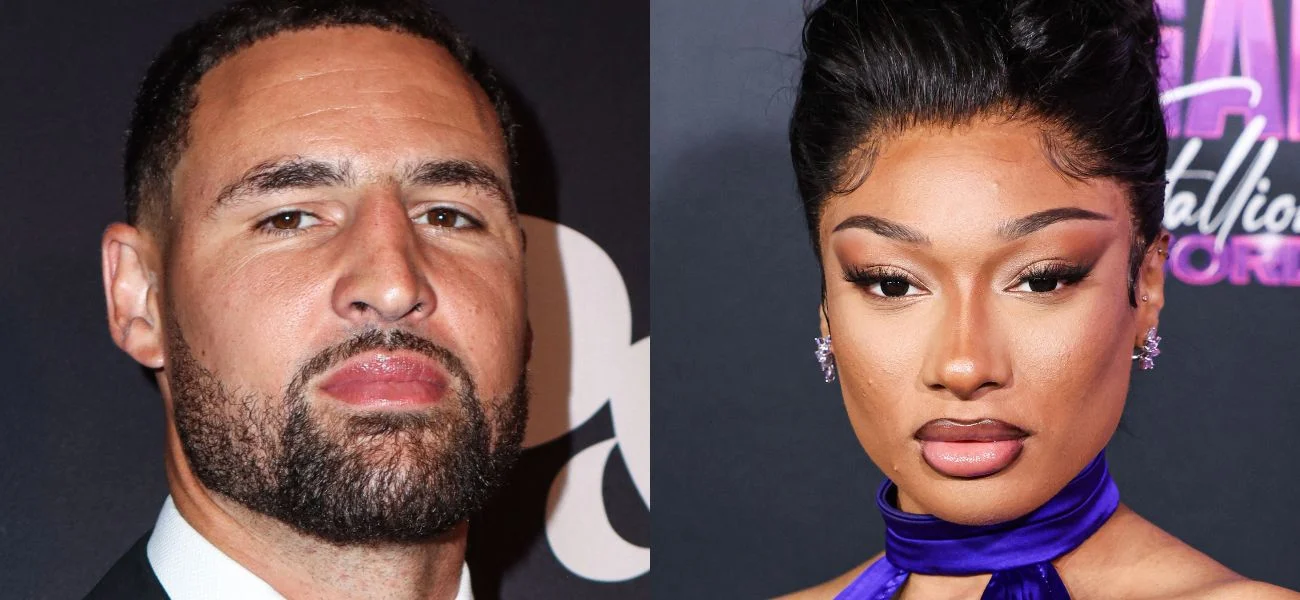
If Megan Thee Stallion isn’t enough for a man, then just who is?
The recent breakup between both Megan Thee Stallion and NBA athlete Klay Thompson is much deeper than the shallow waters of any celebrity relationship drama. After April 2026, amidst very public accusations made by Megan of Klay cheating on her in the past, and Klay confirming this later publicly through his own social media, Megan Thee Stallion described this experience in an interview to be “incredibly rough”. She claims that she lost herself in the process of becoming the perfect partner in someone else’s life. Alongside this, she has clearly stated that she values her relationships to be founded upon a foundational equal trust and respect between one-another.
Megan Thee Stallion, is a widely admired female artist in the rap industry who is mostly praised for her confident femininity, independence and advocacy for marginalised communities. In light of this controversy, people have raised the uncomfortable question, that if a strong independent woman who is massively as successful, attractive and wealthy as Megan Thee Stallion and is STILL experiencing infidelity, what should women to do in order to avoid being mistreated?
Megan Thee Stallion Addresses “Very Rough” Klay Thompson Breakup | E! News
The social narrative of the “high-value woman” is highly problematic. There is a double standard when it comes this archetype and exploring what it means to be a woman of “high-value” versus a man. Women are expected by society to be more desirable, feminine, successful and attractive whereas men are encouraged to use sexual success as evidence that they are truly masculine.
People who have studied the ‘Manosphere’ (a space where this behaviour is endorsed) understand this dichotomy to stem from a hierarchical framework where men are defined as ‘alpha’ or, ‘beta’ depending on where they land on a scale of attractiveness and sexual activity. This encourages an upsetting relationship culture where women are focusing more on how to position themselves as desirable enough for a man rather than debating whether he is capable of being a respectful partner.
There is an underlying message that if women improve themselves to their best extent, they should be rewarded with a high-value partner. Despite Megan fitting all of these qualities and being recognised for empowerment, femininity, knowledge and achievements, this story exposes the inner weakness of this logic. Unfortunately, self improvement cannot promise someone else’s loyalty.
Traditionally, masculinity has historically been associated with promiscuity and physical attractiveness being used to scale a man’s desirability or status. This has led to a further online discussion about finding the distinction between non-monogamy versus infidelity. Cheating is far different from non-monogamy as it removes the consent shared between both partners to pursue another relationship. Sexual success being connected to the feeling masculine the weightage of self-worth also creates scenarios where men feel entitled to their sexual freedom at the expense of their female partner, not allowing her the same choice.
These ideas could also have possibly been influenced by the Manosphere’s growing influence in ‘red-pilled’ communities. These spaces socially construct masculine solely around dominance, physicality and sexual success, while sexistly portraying women as a sexual strategy. This has majorly decreased relationships in these spaces being fundamentally understood as its original meaning, a partnership shared between equals. Now, men and women have become part of a dating economy where men and women have a value based on these offerings.
Megan rejects these expectations. She comments, that she will not let herself be “minimised” or hide behind any man, as she wants to be treated as an equal partner with a higher value for mutual respect. Her and Klay’s breakup is a lesson for any heterosexual relationship. A woman should not have to prove their self-worth to earn the loyalty of a man as it exists independently, and a man’s masculinity should not be defined by the amount of women he can ‘obtain’, but instead by his true character.
 Tilly Bunnage
  Josh
Josh  Idea Phochaiya