
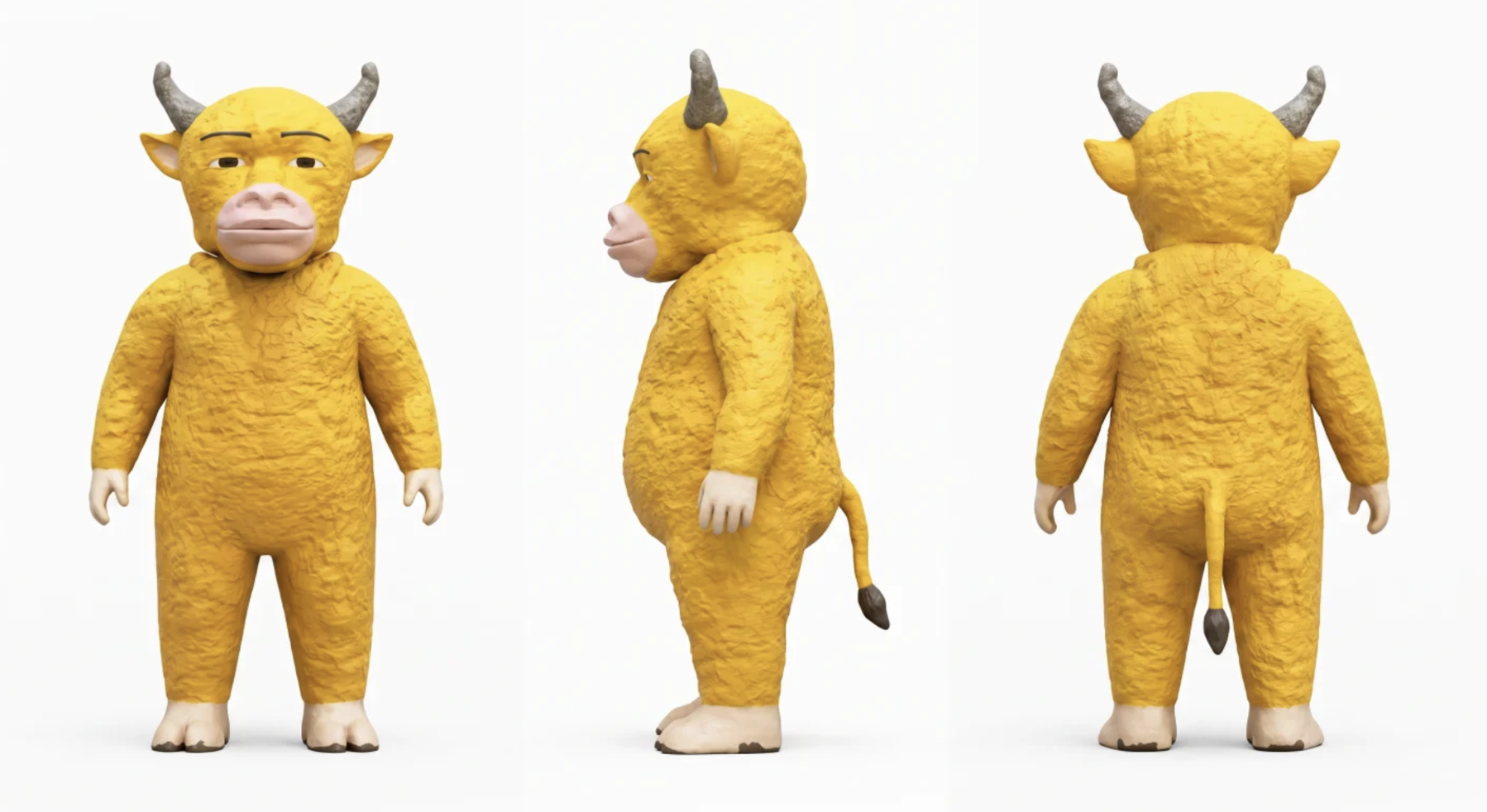
The animated film “Niu Lai”, which was released in China on August 5th, initially received no attention. According to the Associated Press, the film earned about ¥10,000 in its first 10 days after release, but later, because more people saw the mocking remarks online, the box office saw a sharp increase. This is not because the audience suddenly recognized its production. On the contrary, the sudden popularity of “Niu Lai” indicates that a film can, due to its rough and illogical scenes and collective offline teasing, become a web event that become a social-media event that audiences continually remake and recirculate.
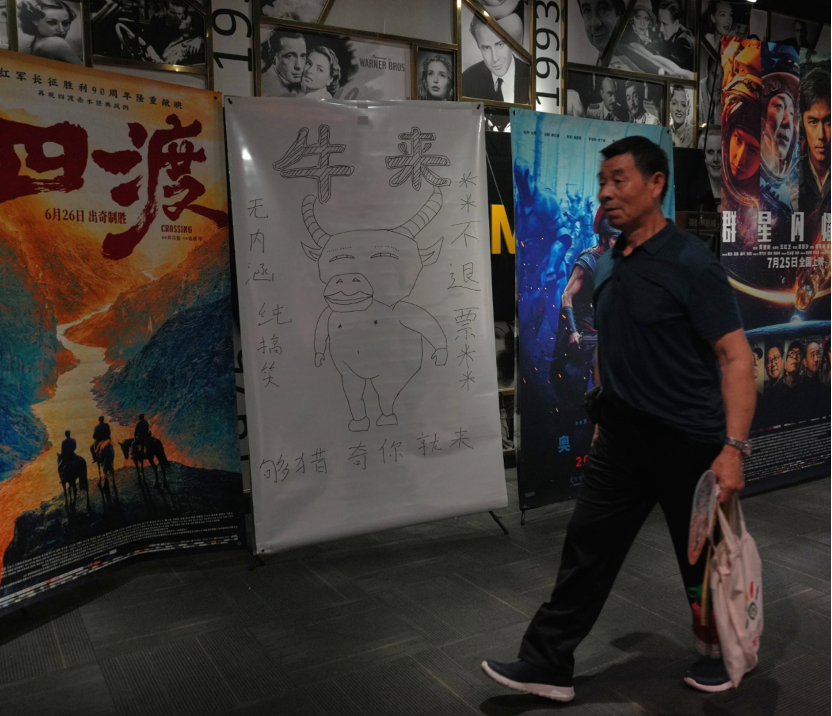
Image 1: A hand-drawn poster promoting Niu Lai in a Beijing cinema.
The film’s most widely shared moment is the exchange, “Mama!” and “Niu Lai!” “This fragment. I also walked into the cinema out of curiosity, thinking to myself, “Just how bad is it?” At first, the sudden delivery of these lines was not part of a carefully constructed joke, but it made the audience laugh immediately. However, this novelty didn’t last long. After this line of dialogue passed, the entire film seemed boring and dull. The pace was sluggish, and the picture quality was too low, which made me lose the desire to watch it. I think it’s more suitable to be broken down into a video meme or a widely circulated joke. In the second half of the plot, I became increasingly frustrated with the slow pace and weak narrative momentum.
This is precisely the contradiction of “Niu Lai”. Its drawback is that the audience loses the desire to watch it in its entirety, but it also provides many clips that can be re-created. The Paper’s analysis of 1,490 Douban comments found that nearly 80% of comments explicitly rated the film negatively. However, the same report also noted that the film’s images, dialogue and technical flaws were easy to clip, imitate and reinterpret. The data analysis by The Paper mentioned that what the audience consumed might not be the movie itself, but rather “Niu Lai”, which became an instant hit through a popular meme after being re-created online.
Niu Lai: From a Family Animation to a Meme-Fuelled Social Event for Young People
| Measure | Before release: “Want to watch” | After release: “Want to watch” (as of 17 August) |
| Number of users | 354 | 151,902 |
| Male audience | 37.0% | 64.7% |
| Female audience | 63.0% | 35.3% |
| Largest age group | 40–49 (24.6%) | 18–24 (28.8%) |
On 17 August, one in every 20 cinema tickets was for Niu Lai.
| City tier | Screening share | Box-office share | Admissions (10,000s) | Attendance rate |
| Tier 1 cities | 6.9% | 4.9% | 4.6 | 18.4% |
| Tier 2 cities | 6.4% | 4.5% | 11.5 | 12.9% |
| Tier 3 cities | 6.7% | 5.4% | 5.7 | 11.3% |
| Tier 4 cities | 5.9% | 4.7% | 7.7 | 9.4% |
Data visualisation translated from The Paper’s analysis of Niu Lai.
Figure 1: Audience changes before and after the release of Niu Lai*.
This way of dissemination has also changed the traditional meaning of watching movies. For some viewers, buying tickets is not just about immersing themselves in the story, but also about gathering offline and verifying a popular Internet meme. In an interview with the cinema, In its report on cinema audiences and screening schedules, The Paper noted that some viewers treated the screening as an offline gathering rather than a conventional film experience. New Yellow River’s on-site report recorded some viewers checking their phones, falling asleep or leaving early during one screening. Although an individual cannot represent every viewer, the on-site report of New Yellow River indicates that the popularity of this film does not only occur on the screen, but more importantly, it flows among short video platforms in cinemas and comment sections. Some foreign media reports have placed “Niu Lai” in discussions about “anti-AI” or opposing overly refined content.
Video 1 :A clip from the movie “Niu Lai”
Euronews reported that some viewers viewed the film’s handmade appearance as a contrast to highly polished digital content. However, this should not be misunderstood as the low completion level of “Niu Lai” being an advantage. Essentially, what it truly offers are materials that can be easily imitated, spread and re-created by the audience. The essence of the huge popularity of “Niu Lai” is not that “even a bad film can succeed”, but rather it reveals the changes in film dissemination in the era of short videos. When a work that is not so outstanding is re-created and is being disseminated, its online life may be longer than its complete film life.
In fact, “Niu Lai” on the screen was never successful, but on short-video platforms, he has achieved “a longer online afterlife”.
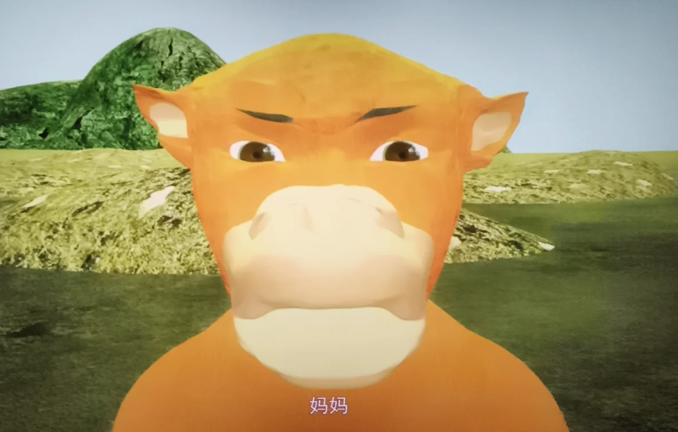
Image 2 by Yiming, 2026.
 Tilly Bunnage
  Josh
Josh  Idea Phochaiya