
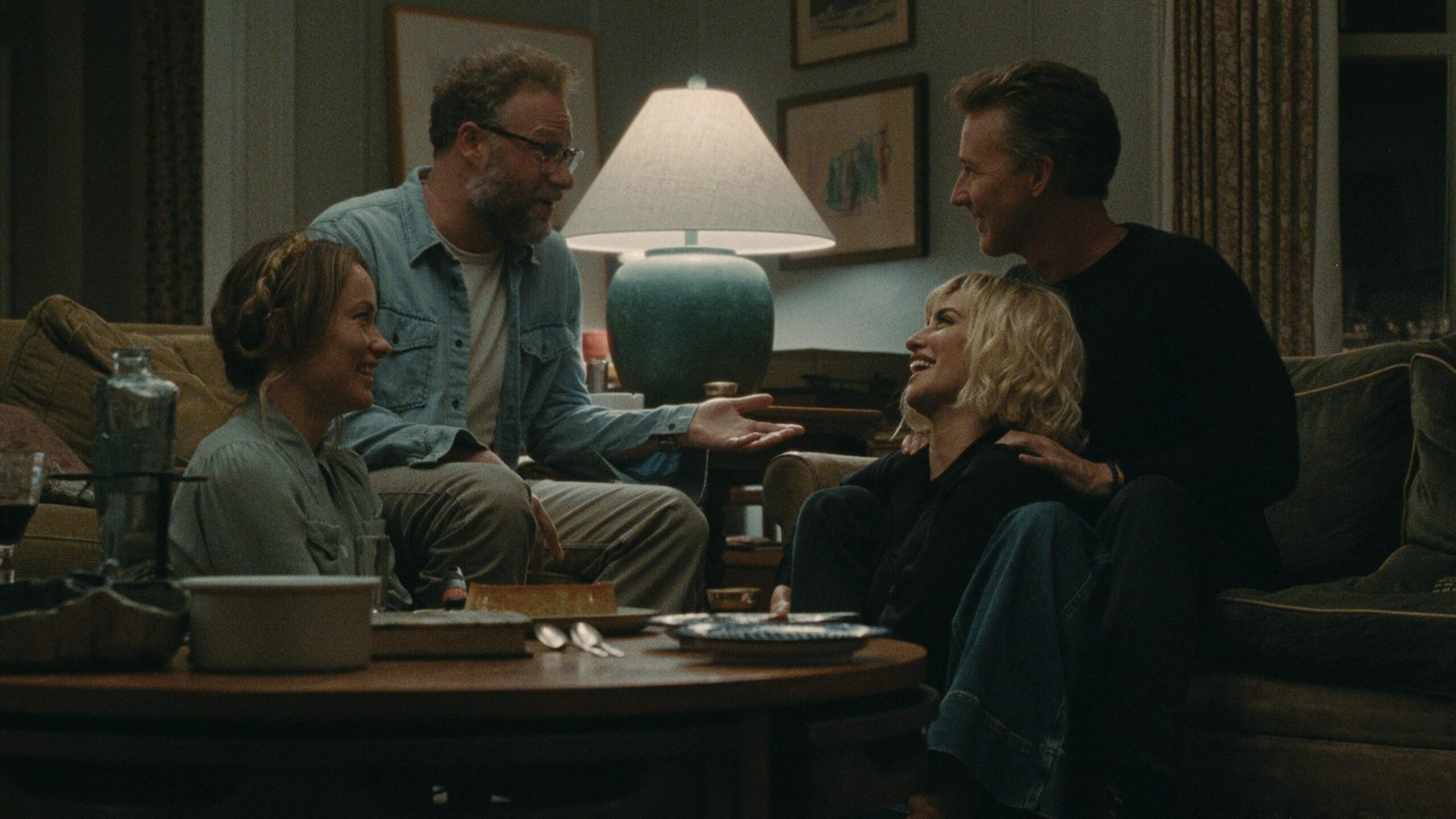
In a world where young people aren’t getting into relationships as frequently, the essence of intimacy ends up being The Invite’s most prominent fantasy. Going into the film, which is seemingly just about two couples having a dinner party, and almost by surprise, you get one of the funniest and most touching films of the year. I would not be surprised if future studies link this film to divorce counseling.
Set in San Francisco, Angela (Olivia Wilde) and Joe’s (Seth Rogen) marriage is on thin ice, and in an act of almost selfish desperation, Angela invites their upstairs neighbors over for a dinner party, who tend to keep the whole building up with their loud, rough lovemaking noises. Moments before the couple arrives, Angela and Joe get into a heated argument. Joe feels he was not informed of the event and is quite frustrated with the idea. At the same time, Angela is obsessed with making sure everything is perfect for when the guests arrive, Joe announces that he plans to confront them about their noise. Pina (Penelope Cruz) and Hawk (Edward Norton) arrive, and the night spirals into an unexpected direction.

Director and star Olivia Wilde hands in one of the snappiest and best-looking comedies of the year. The apartment setting works so well, giving each performer room to excel. The blocking and use of the environment felt like a play, which I mean in the most positive way possible. Within the film’s intimate subject matter, Wilde never uses comedy to downplay the topics brought up; it’s used more as a relatable platform for each performer to bounce off of and give you the giggles. Another thing Wilde managed to do was make Seth Rogen look like a great actor. Joe is the audience’s anchor of the film; we follow him from beginning to end, and his frustrations and desires deliver the film’s message.
Shot by Adam Newport-Berra on 35mm film, The Invite seems to declare itself timeless. The lighting placed around the set gives this pleasant green-blue colour grade that represents where Joe and Angela are at as a couple, not warm, almost a bit too cold. There is a sequence halfway through the film where Joe finally confronts Pina and Hawk, casually walking above a lamp that casts a sinister shadow across his face as he finally gains power in the situation, which I quite liked, it was quietly dramatic. The film uses quite a lot of frame-in-frame shots through the apartment windows, which worked well. Still, it felt repetitive for me until the final one, which punches you in the gut and kicks you repeatedly.
For a story based mostly around communication, good writing is a bare minimum and actor-turned-writers Will McCormack and Rashida Jones pen in what is their best screenplay yet, adapted from the 2020 Spanish film and stage play Sentimental. Each performance is in its own world while playing into the others’ strengths; however, Edward Norton’s performance does feel a little one-note by the end, before his time is up, and he disappears. Throughout the film, the score by Dev Hynes, also known as Blood Orange, uses his violin so sparingly and perfectly that it feels like it aids the comedy and drama. It serves as the audio cue that something important has happened, which seems great for Gen Zers watching this while scrolling on their phones.
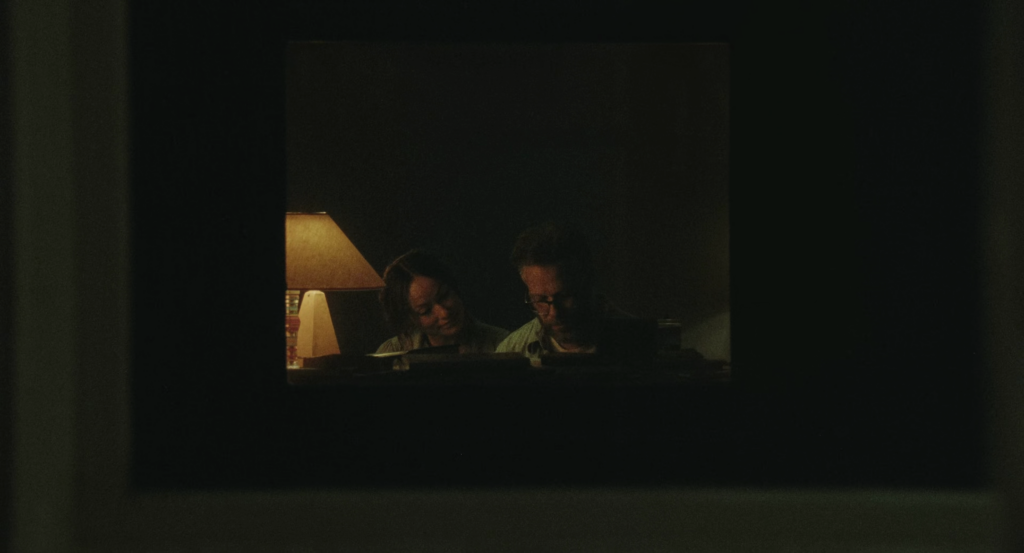
In the eyes of Gen Z, which data shows is declining in the relationship sphere, the biggest fantasy of the film isn’t the sex parties proposed by Pina and Hawk; it’s the intimate, fragile connection between Joe and Angela. It’s rare to see a modern film that feels like an instant timeless classic, and The Invite is definitely one of them. I recommend this to anyone looking for a more intimate comedy film, and we don’t get a lot of comedies these days. Olivia Wilde knows how to speak to multiple generations. In the cinema, this had older adults cracking up and us younger folk giggling around too.
The Invite warmly invites itself as one of the year’s best films yet.
9/10
 Michael Chiodo
 Bryana McGowan
 Audrey James