
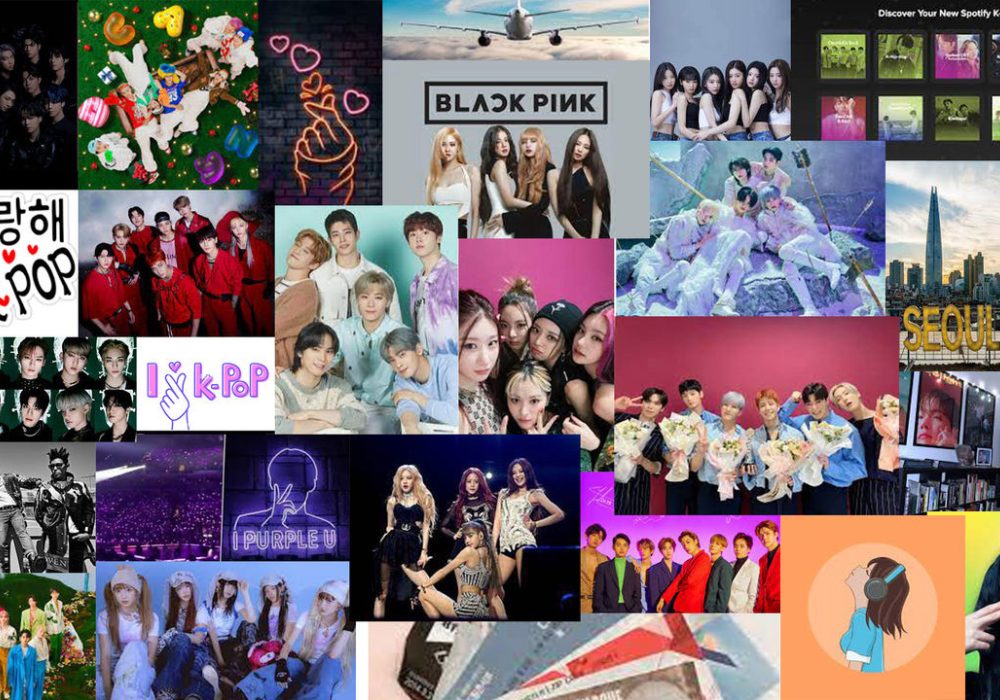
In 2012, a music video featuring a dynamic dance and a man wearing a bow tie speeding through Seoul unexpectedly became popular. This was a music video released by the Korean singer Psy, titled “Gangnam style”. This song became the first video on YouTube to receive one billion views, marking the development of K-pop music on the global stage. Initially, K-pop culture only expanded in East Asia. Now, it has rapidly become popular worldwide and has evolved from a local Korean music genre into a global cultural phenomenon. K-pop culture has become a cultural force with worldwide influence, not only affecting music, but also fashion, language, and media communication methods. From concert performances to interactions on social media platforms, the spread of popular tags, and the dissemination of fan culture, K-pop culture has established itself as one of the most important phenomena in contemporary cross-cultural communication. This article argues that the global success of K-pop culture is driven by three key factors: the hybridity of its music and language, the strong visual aesthetics presented in music videos and performances, the company’s utilisation of global social media and the strategic use of digital media platforms together with active fan communities. By examining these elements, this article demonstrates how K-pop has transformed from a regional music genre into a global cultural phenomenon that promotes Korean culture and cross-cultural exchange worldwide.
The hybridity of music style and languages.
K-pop culture attracts global audiences through the hybridity of music style and language as well as unique visual aesthetics. Firstly, K-pop songs are distinctive in the mixture of musical elements and languages. K-pop songs skillfully combine international musical elements and local musical characteristics, creating a familiar and unique cultural product. This mixture enables K-pop to transcend international boundaries of language and culture while maintaining distinct Korean cultural features. As studied by Sankaran et al. (2025), contemporary K-pop songs usually combine various musical styles such as pop, pop culture, electronic dance music, and R&B, forming a diversified and mixed sound style. This style incorporates globally renowned sounds while placing them within the framework of unique Korean characteristic music. Furthermore, the diversity of languages is also an important component of the hybridity of K-pop culture. Many K-pop songs not only use Korean but also incorporate English, Japanese and Chinese, thus forming a “global localization” communication strategy. This strategy not only reflects the characteristics of local culture but also has global popularity. For example, while the song retains the main Korean elements, it consciously adds English keywords or entire choruses, enabling international listeners to quickly grasp the core emotions and memorable points of the song even if they do not understand the meaning of the Korean lyrics. This multi-language integration processing reduces language barriers for international fans and enhances emotional resonance among listeners from different cultural backgrounds. Take the song “Kill This Love” released in 2019 by the Korean girl group BLACKPINK as a specific example. This song fully shows the “integration” characteristics of Korean pop music in terms of language and musical style. In terms of musical style, this song combines elements of pop, electronic dance music and hip-hop, and integrates strong brass sound effects, electronic rhythm and hip-hop style choreography, forming an international-style musical structure. In terms of language strategy, this song adopts the hierarchical structure of “Korean narrative plus English chorus”, the lyrics part conveys emotional narrative in Korean, and the core memory point is in the chorus part, which presents “Let’s Kill this love!” in the form of all-English interpretation, so that even if international listeners don’t know Korean, they can quickly understand the emotional core and memory anchor of the song. Thus, this hybridity of musical style and language could attract more international audiences or fans, then improve the spreading of Korean culture.
The strong visual aesthetics and performance
Apart from the music itself, the visual aesthetic art of K-pop also plays an important role in the global dissemination of Korean culture. The visual aesthetics of K-pop function as a form of cultural branding. Highly stylised fashion, synchronised choreography, and cinematic production create a recognisable K-pop identity that distinguishes it from Western pop music. These visual elements enhance audience engagement on digital platforms, where visually appealing content is more likely to be shared, replayed, and circulated globally. Haessler (2022) shows that the music videos of K-pop music have established unique style norms and production methods for shooting music videos. These music videos feature highly choreographed dance moves, exquisite costume and landscape designs, and even cinematic shooting techniques, elevating the music videos to a high level. The visual impact and high aesthetic standards greatly enhance the interest of global audiences. Especially, in the visual-dominated digital era, music videos are not only promotional tools, but also independent works of art and narrative expressions. The pursuit of perfection and conceptual narrative in visuals makes Korean pop music distinct from many similar works in Western countries, forming a unique factor that promotes the global dissemination of Korean culture.
The music video of BLACKPINK’s “Kill This Love” perfectly embodies the core characteristics of K-pop visual aesthetics.

It showcases the iconic pipe organ scene in the Music Video. The members are dressed in advanced customization clothes. Standing in front of the giant pipe organ in a blue and purple colour scheme, they create a powerful visual impact, demonstrating the high pursuit of fashion and scene design in K-pop Music Video.

At the level of choreography, the gesture dance in the chorus section has been meticulously designed, combining a sense of power with memorable elements. In the Music video, the members are dressed in uniform red and black military-style clothing and perform highly synchronized group dances in the ruin’s scene. What’s more, the Music Video also utilized high-definition scene transition technology, seamlessly switching between graffiti-covered streets, crystal corridors and war ruins, creating an otherworldly visual space.
This visual strategy that integrates haute couture fashion, cinematic scene design, symbolic color language and precise dance choreography enables “Kill This Love” to not only achieve cross-cultural communication at the musical level but also establish a global audience’s cognitive framework for K-pop aesthetics through visual symbols. As of 2022, the MV has surpassed 2 billion views on YouTube (Billboard, 2022), demonstrating its strong visual aesthetic appeal worldwide and becoming a unique factor in promoting the global dissemination of Korean culture.
Entertainment companies use global social media
Although the innovations in music and visuals laid the foundation for the appeal of Korean pop music, the full utilization of global social media and digital music platforms also played a significant role in promoting the global dissemination of Korean culture. Korean entertainment companies fully utilize digital media to maximize their exposure and establish connections with international audiences. These entertainment companies systematically utilize global social media for distribution, promotion and marketing. They recognise that digital distribution has significantly changed the geographical landscape of cultural consumption (Jin, 2016). Platforms such as YouTube, Spotify, Apple Music and TikTok provide publishing and distribution functions, enabling content to be released simultaneously worldwide. Compared to the earlier physical distribution methods that had time and space delays, digital platforms could reach audiences in Seoul simultaneously with audiences in other countries, accessing their works at the same time. The strategic layout of entertainment companies on multiple platforms ensures that the content can meet the needs of consumers in around the world. A clear example of this strategy can be seen in BLACKPINK’s online promotion activities. The group releases music videos simultaneously on platforms such as YouTube and Spotify, allowing fans around the world to access new content at the same time. The rapid circulation of K-pop content on algorithm-driven platforms demonstrates how digital media has transformed cultural consumption from a geographically limited activity into a global real-time experience.
Fans culture
Finally, one of the most important features of the global expansion of K-pop is the positive role played by the fan base in maintaining and amplifying the cultural influence of the genre. Although entertainment companies provided the initial content, fans base has become autonomous cultural producers. They promote the spread of K-pop worldwide through organized communication, systematic support activities, and various spontaneous and creative practices.The cross-border communication among fans is one of the important factors for the global dissemination of K-pop culture. Fans from different countries organize various support activities on social media, such as global topic discussions initiated on platforms like Instagram and Twitter, as well as collective support activities at overseas concerts. These activities are referred as “networked public” (Gutierrez-Jauregi et al., 2025), which is a community structure formed through digital media rather than geographical proximity. This cross-border interaction strengthens the communication and connection among fans from different countries and promotes cross-cultural communication and dissemination. For instance, the fan group “BLINK” of BLACKPINK typically demonstrates this cross-border network organization ability. On June 26, 2020, during the release of BLACKPINK’ s single “How You Like That”, BLINK initiated a global topic discussion via Twitter, generating over 5 million tweets within 12 hours of its release. According to the official blog of Twitter, the hashtags #BLACKPINK and #HowYouLikeThat ranked high in the global trends, becoming the top global trend on Twitter.
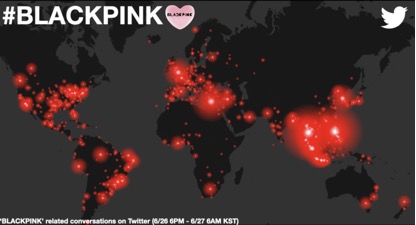
Source: BLACKPINK related conversation on Twitter
In addition, the fans actively promoted the global dissemination of Korean pop culture through their own creative content and offline activities. They voluntarily translated subtitles for video productions, enabling non-native Korean speakers to understand song lyrics, program content, and social media posts. This spontaneous work effectively localized Korean cultural products and accelerated the global popularity of Korean culture, for example. Moreover, the fans would create remedial videos, reaction videos, dance recaptures, and analysis content on platforms such as Instagram and TikTok. These contents were introduced to newcomers through recommendations from other fans rather than official and company advertisements, such as introducing Korean pop music to new audiences. Fan organizations’ offline activities, including holding idol birthday events in public places, promoted the dissemination of Korean culture in communities around the world. These activities incorporated Korean cuisine, fashion elements, and language learning elements, transforming the fan community into comprehensive cultural disseminators and explorers. For instance, this kind of fan-initiated cultural content and dissemination behavior ensured that K-pop culture no longer remained merely at the music level but developed into a global cultural phenomenon that encompasses language learning and fashion acceptance.
In conclusion, the global success of K-pop culture in its ability to blend diverse musical styles and languages, craft visually stunning and cinematic music videos, and the power of digital platforms and fan communities. By integrating international sounds with Korean cultural elements, adopting multilingual strategies, and elevating visual aesthetics to an art form, K-pop creates a hybrid cultural product that resonates across borders. At the same time, entertainment companies’ strategic use of social media and streaming platforms ensures worldwide accessibility, while passionate fan networks amplify and localize the culture through creative and organized efforts. Together, these factors transform K-pop from a national genre into a global cultural phenomenon that bridges music, fashion, language, and digital community.Ultimately, the global expansion of K-pop demonstrates how digital media, cultural hybridity, and participatory fan culture can reshape the international flow of popular culture in the era of globalization.
 TianYuran
  Lu Yunyan
  Pauleen