
Genshin Impact’s newest region is a perfect cultural product. That’s not the same as Chinese culture.
Introduction
When Genshin Impact Version 6.5 was updated on April 8, 2026, millions of players stepped into “Luyang Academy” for the first time. This new area is presented to players as a sub-region in the new version of the “Temple of Space” map. The area has obvious “Chinese style” elements. The mountains hidden in the mist mimic the style of the painting “Dwelling in the Fuchun Mountains”. The academy’s courtyard landscape is inspired by the concept of the Four Seasons. The four garden layouts of spring, summer, autumn and winter are reflecting the traditional Chinese garden principle of “a new scene with every step.”
Genshin Impact was developed by Shanghai HoYoverse and officially tested in 2020. According to statistics, the game has more than 300 million registered players worldwide, with domestic and foreign users accounting for 50% each, and the core user group is 18-30 years old. For games of this scale, their role is no longer just entertainment. They are actually helping to shape global players’ understanding of world cultures, especially young players.
Using Luyang Academy as a case study, this article argues that because global games like Genshin Impact are built around a commercial logic of global consumption, what they spread is not Chinese culture itself but a curated visual product, shaped by what is photogenic and globally marketable rather than by Chinese tradition.
The Landscape Made for The Camera
The clearest sign that Luyang Academy is built as a curated visual product rather than as an extension of Chinese tradition is what hits players first: a beautiful Chinese surface that is meticulously designed to be seen, photographed and shared. Luyang Academy makes an impeccable first impression on both Chinese and international players. Its architectural visual effect obviously draws on traditional Chinese academies and garden art. Entering through a scroll, players can see the closed courtyards, the high pavilion, and the Chinese aesthetic of Song Dynasty blue-green landscape paintings and ink-wash landscapes. These elements easily bring to mind Yuelu Academy, Suzhou’s Humble Administrator’s Garden (Zhuozheng Garden), and Wu Daozi landscape style. By any standard, this art design is meticulous and professional.
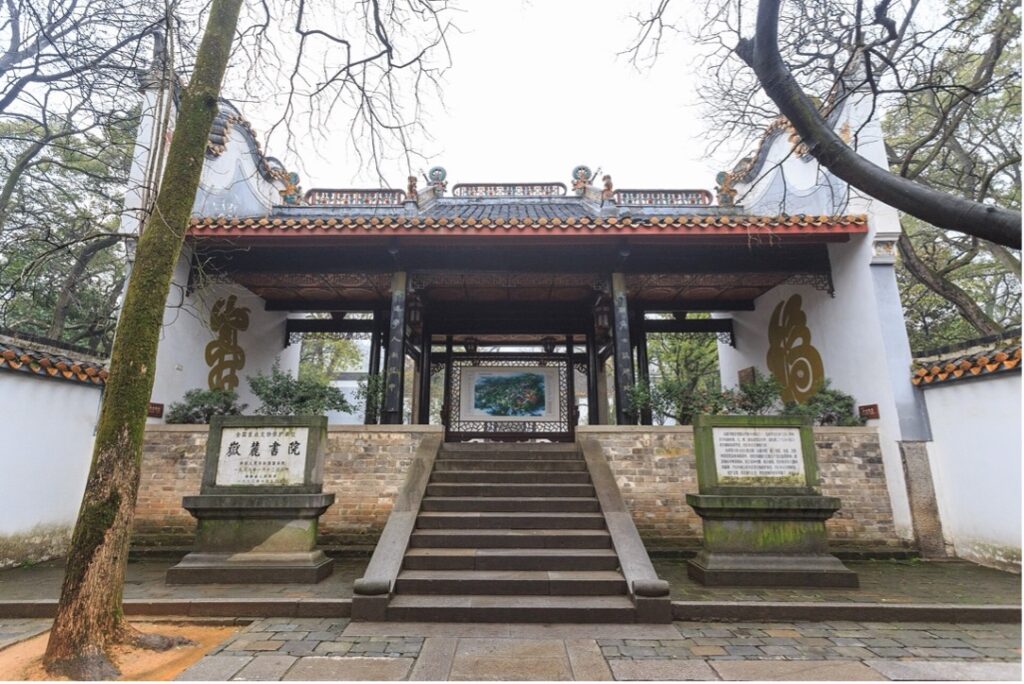
However, this kind of beauty is actually pieced together from “selected cultural fragments” rather than a complete presentation of a tradition. The “Temple of Space” in the game is set as a space for Asmoday, the “Ruler of Space”, to collect and preserve the cultural features of Teyvat’s diverse civilizations. Before the player enters, the game has already told us through this setting that the cultural display before us has long been removed from its real history and life context.
This selection process does not stop at the visual surface. The game decides which fragments of Chinese culture the player gets to see, and it also decides how the player is allowed to interact with them. The regional main quest “Long Live Life” requires players to enter the scroll, control the miniature landscape, and advance the plot by adjusting the camera angle to frame the ink-drawn characters. Although the Academy is vaguely related to philosophical traditions such as Confucian self-cultivation, there is no guidance in the game that encourages players to stop and think. It only hopes that players will quickly solve puzzles, collect items, and watch animations. The only thing that exists is the quest tracker. This design choice matters because, in Möring and de Mutiis’s (2019, pp. 74-84) classification of in-game photography, Luyang’s quest falls into their first category, where simulation photography is the core game mechanic and progress depends on taking photos. Pauliks and Ruchatz (2025, pp. 1-3) further note that screenshots from such modes circulate online as both player-driven cultural records and user-generated advertisements. What makes Liyang Academy unique is that the cultural records being generated have been pre-screened.
After leaving the game, this image-centered logic is reinforced by the platforms where players gather, but in a very specific direction. On Bilibili and YouTube, the most widely spread Luyang Academy content is photography-mode screenshots and short edits set to slowed guzheng.
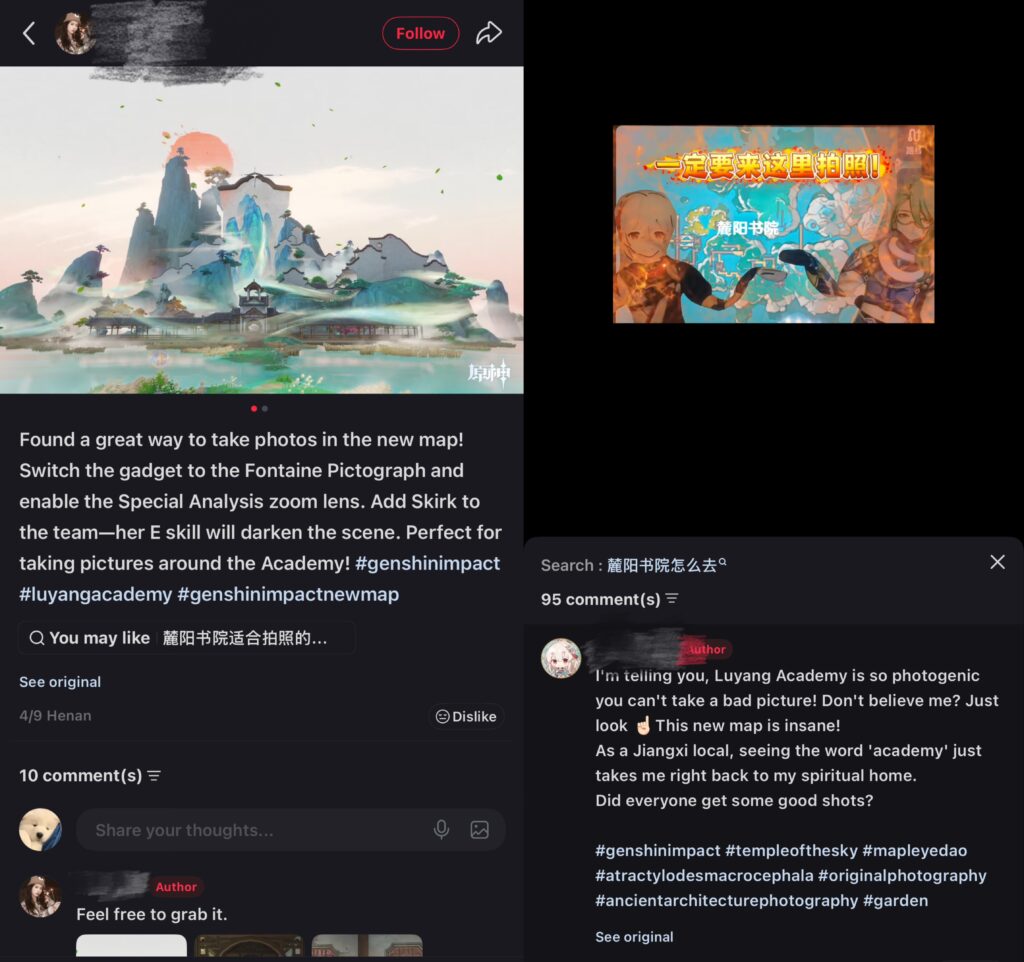
On Rednote, players have begun posting tutorials recommending the best camera positions in Luyang, with map annotations, lighting suggestions, and recommended characters. These framings are not new. Qing dynasty export paintings produced in Canton for Western buyers were designed to fulfil Western imagination of Oriental civilisation rather than to record Chinese life as it was (Wang, 2023 and Liu et al., 2024). The screenshots and camera tutorials circulating around Luyang Academy occupy the same visual lineage. The same curved roofs, misty mountains, and isolated pavilions that have appeared on export paintings now reappear on player-generated screenshots.
This is close to Debord’s society of the spectacle, in which real social experience is replaced by reappearance, and reappearance itself becomes the core of consumption, dissemination, and evaluation. But what is specific to Luyang Academy is that the spectacle has a direction. It is not just any image replacing any reality. It is a particular kind of Chineseness, photogenic and template-ready, replacing the rest of Chinese culture. Manovich (2017) calls this kind of platform-shaped beauty an Instagram atmosphere, generated by platform infrastructure and disseminated through it. In Luyang’s case, that atmosphere is built specifically from a recycled visual vocabulary of Chineseness, and it serves as the entry point through which most global players will ever encounter Chinese aesthetic traditions.
The Chinese Frame around Global Emotion
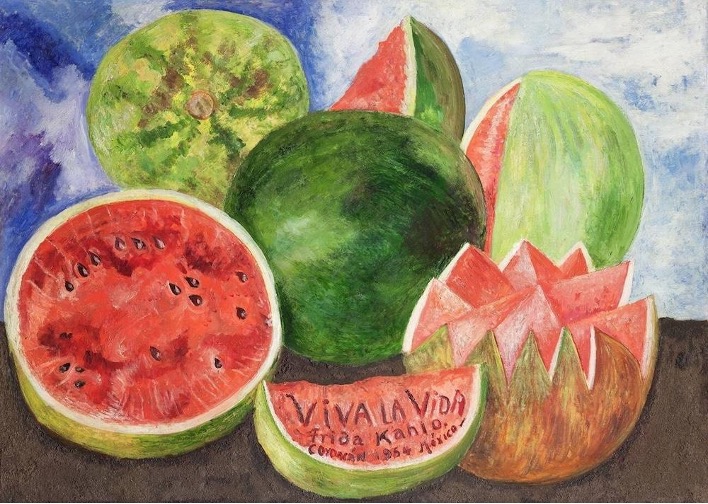
This curating logic does not stop at the visual surface; it also shapes the kind of story the map is allowed to tell, replacing locally rooted meanings with emotional themes that any global audience can read. The style of the map of Luyang Academy is undoubtedly Chinese, but the story it really wants to express is not. The English name of the mission “Long Live Life” is actually a direct translation from Frida Kahlo’s 1954 painting “Viva la Vida”.
In the game mission, the painting that the player enters also obviously draws on the composition of Kahlo’s works. In an extremely “Chinese” space centre, what is placed is a Mexican modernist artist’s farewell to life. This collage and supplement of cross-cultural elements is a clear design choice. Iwabuchi (2002) proposed the concept of “cultural odourlessness” to describe popular cultural products that deliberately weaken the cultural characteristics of their own countries in order to facilitate cross-border dissemination. Such works still have an aesthetic style, but their national attributes are blurred and mixed, becoming universal.
This pattern is not unique to games. On this Unit website, Zhang (2026) traces the same logic in K-pop. She discusses BLACKPINK’s recent album DEADLINE, which critics have described as a move “beyond K-pop”: smoother, more linear, heavier on English lyrics, and notably “safe.” The reason is structural. As the genre globalises, artists face growing pressure to “create music that will be heard in the various markets.” The Korean Wave keeps its frame, but quietly trades some of its distinctiveness for global readability. Genshin Impact makes the same trade. The Chinese visual frame stays vivid. The story it carries gets filed down into something any global audience can read.
As an anime-style ARPG, Genshin Impact fully demonstrates that an “odourless” product can still form its own art style while its connection to any specific national culture is deliberately diluted. Therefore, within the Chinese framework of Luyang Academy, the Confucian tradition of self-cultivation has not really entered the plot. The real story Hilda tells is not a Confucian narrative of self-cultivation but a globalised emotional narrative any international player can recognise-confirming that the Chinese frame is decorative while the emotional core is built for global consumption.
Although this global emotional expression is adopted, Chinese aesthetics is indeed easier to be accepted by international players and spread globally. Recent studies on the reception of player culture are more optimistic in this regard. Based on interviews with Genshin Impact players in Asia, North America and Europe, players do not passively accept the designed cultural content. Players take the initiative to reinterpret cultural elements, decode them into “structured cultural knowledge”, and transform them into real consumption, extraction and re-creation behaviour (Yu et al., 2025, pp. 16-18). But this kind of description may underestimate the previous steps. The cultural elements that players can actively reinterpret have already been screened, adapted and integrated before entering the interpretation scene. Players must have gained something when they left the area. However, what they have learned is HoYoverse’s design decision about what the map’s task should look like, not culture.
Who Should Define “China”?
Behind both the curated visuals and the globalised story sits a question of power: who actually decides what counts as “Chinese culture” for tens of millions of global players? Once that authority shifts to a commercial studio competing for the international market, the cultural fragments it keeps are the ones already pre-approved by global consumption.
Said (1978) put forward the concept of “Orientalism” in Oriental Studies. The “East” is not a real unified cultural entity but an “other” image built by the West through art, media and politics over a long period. Importantly, this “Oriental” image is not the true image of Asia, but the Asian image needed by the West.
Based on this theory, Dirlik (1996) put forward the concept of “self-orientalisation”. He argues that by the late twentieth century, orientalism is no longer simply a Western monopoly; orientalised cultures themselves take the initiative to learn and replicate the Oriental symbols that the international market is already familiar with. This state of active choice is self-orientalisation. For game companies, if a game wants to enter the international market quickly, it needs to downplay those parts that are difficult to translate and unsuitable for global consumption. They will take the initiative to choose the elements most likely to be recognised as “China”, such as ink wash, garden and calligraphy. On this unit’s blog, Han (2026) shows that Genshin Impact’s revenue model is built around chance-based microtransactions, giving the studio a direct financial stake in keeping content broadly attractive rather than locally specific.
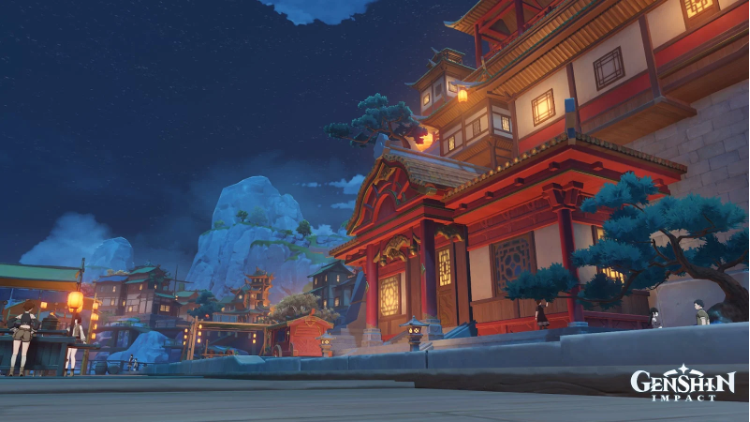
Luyang Academy can almost be regarded as a typical case of this structure. HoYoverse is not simply reproducing traditional culture for Chinese players, but designing a cultural product for tens of millions of players from all over the world that can also clearly distinguish characteristics in cultural integration displays. Tang and Li (2025, 931-933) combined Iwabuchi’s concept of “cultural odour” and Baudrillard’s concept of simulacrum, believing that this game is a kind of ” odourless simulacrum “. It is a product that integrates various cultural elements into the form of aesthetics and stylized form, which looks like it has nothing to politics. Off. Their interpretation of Liyue’s architecture is representative; the game retains the visual aesthetics of historical sites such as Hanging Temple, while stripping away their original philosophical and religious meanings.
But what is really deleted is actually worth paying attention to. In the display of Luyang Academy, only the buildings are preserved. However, the communication and feedback of players only need superficial visual effects, screenshots, publishing and adding labels such as “ancient style” and “oriental atmosphere”, which further strengthens the dissemination of this visual template. Therefore, the company still adopts very standardized cultural characteristics in the next map design, forming a cycle. This cycle is a kind of self-reinforcement, constantly reinforcing the stereotype of people outside the culture.
Therefore, for global games like Genshin Impact, the most important question is not whether they accurately reflect the culture. No culture can be reproduced accurately, and accuracy is not the most central evaluation criterion for an aesthetic product of this kind. The question it really want to raise is: who decides what “Chinese culture” should look like in the eyes of global players? And when this power is held by a commercial game company, even if the vision is sincere and beautiful, cultural communication may still be empty.
Conclusion
Luyang Academy is a visually successful game map. However, what players really experience is still not a realistic, complex and contested Chinese cultural tradition, but a selected, odourless, self-orientalised “cultural fragment”. This does not mean that Genshin Impact’s map design is wrong, nor does it mean players should not enjoy it. What really needs to be thought about is:
Do people begin to mistake this visual experience for cultural understanding?
Games can spread aesthetic symbols and become the entrance to the surface of culture, but it cannot bear the real cultural inheritance alone in digital media. Does it also bear some responsibility for all audiences, including those who design, play and spread? While being moved by the beauty of the world, one is willing to continue to search and ask what the real traditions behind these visions are.
 TianYuran
  Pauleen
  Lu Ching-Cheng