
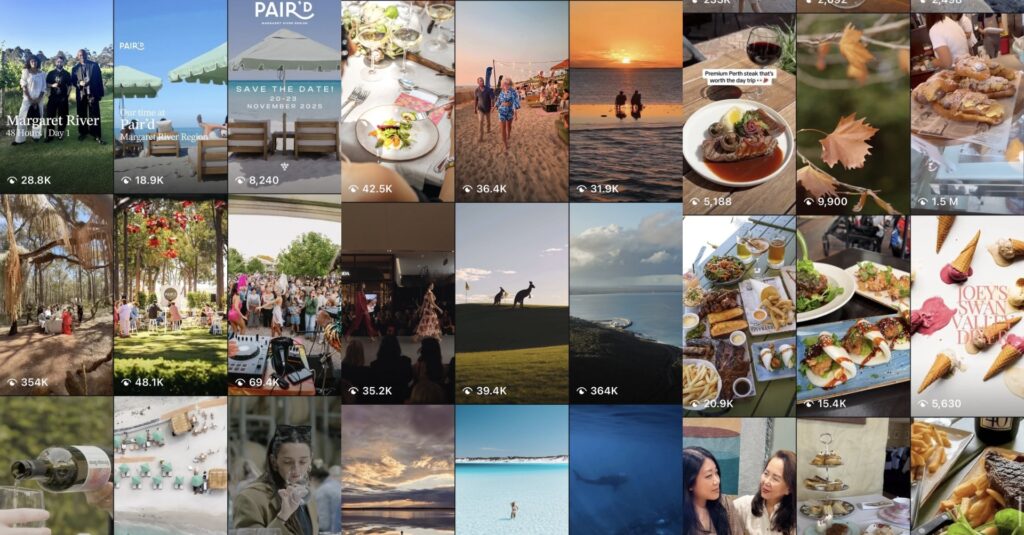
For decades, local tourism boards and government-run visitor centres controlled the story of travel. They decided which beaches, cafés, and wineries made it onto glossy brochures, official websites, and television campaigns. These carefully curated narratives shaped how people imagined a destination long before they arrived. If you wanted to explore a region, these campaigns were your window into what the place promised and, more often than not, what it wanted you to see.
But in 2025, that window has shattered and expanded all at once. The power to shape tourism no longer sits neatly within the offices of tourism boards. Platforms like TikTok, Instagram, and Google have become the new cultural gatekeepers, not just channels for marketing, but ecosystems that determine what becomes desirable, discoverable, and shareable. What you see, click on, and dream about visiting is no longer solely the product of a marketing plan. It’s the result of millions of micro-moments online, filtered through algorithms that decide what deserves attention. The shift is profound. Algorithms now influence which destinations “go viral,” which hidden gems get “discovered,” and which regions become “trendy” overnight. A moody video of misty vineyards at sunrise or a slow-motion pour of local wine can ripple through TikTok, sending curious travellers down a rabbit hole that ends in booked flights and full itineraries. If you’ve ever found yourself scrolling through your feed and suddenly craving a retreat in Bali or a long weekend in the Swan Valley, chances are, an algorithm quietly nudged you there.
Traditionally, tourism marketing was a top-down affair. Brochures, websites, and TV ads were cohesive stories, built around a central message and polished to perfection. Local governments and regional tourism boards held the reins every image, tagline, and colour palette chosen with intent. These campaigns could be beautiful and persuasive, but they were also limited. Reach depended on distribution budgets, media buys, and time. Then came TikTok. Its algorithm doesn’t care about glossy production or brand guidelines it cares about engagement. As researchers Fusté-Forné and Orea-Giner (2024) note, TikTok’s model of “interest-based content discovery” connects with younger audiences faster and more effectively than any traditional platform before it. A single 15-second clip of someone sipping wine at a country bar or discovering an unexpected café can reach millions overnight. Suddenly, anyone with a smartphone became a potential tourism ambassador. Authenticity, or the illusion of it, trumped polish. A shaky, unfiltered video showing the “real” side of a destination can often outperform a six-figure ad campaign. For local tourism operators, this has been both liberating and disorienting. The narrative is no longer something they write, it’s something they react to.
Similarly, the Filipino bakery Keni Doughnuts in Guildford saw its viral Instagram reel reach over 1.5 million views. The impact was immediate: the owners no longer need to open seven days a week, freeing up an extra day and improving their work-life balance. A single reel has transformed the business’s visibility, customer flow, and even the owners’ quality of life.
Even major events with significant marketing budgets, like Margaret River’s Paired festival or the Swan Valley’s Entwined in the Valley, are finding that visibility is not guaranteed by spending alone. A single viral moment a quirky food pairing, a chef’s behind-the-scenes laugh, or an unexpectedly heartwarming story can drive more engagement than any brochure ever could. The success of a campaign now depends as much on luck and timing as it does on strategy.
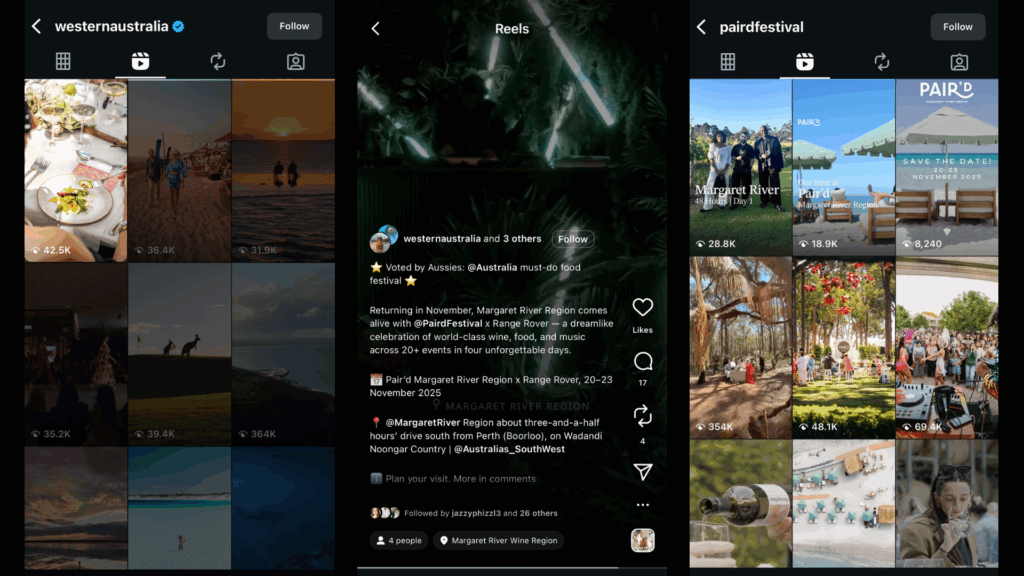
In this new landscape, tourism marketing has become a conversation rather than a broadcast. The story of a place is not just told by those paid to tell it it’s co-created by visitors, influencers, and everyday people sharing snippets of their experiences online. The challenge for tourism boards in 2025 is learning not only how to stand out in this sea of content, but how to stay authentic while doing it. Because while algorithms may decide what gets seen, authenticity is what makes people care enough to click, share, and visit.
Algorithms as the New Gatekeepers
The shift in tourism marketing isn’t just about reach, it’s about a fundamental change in what travellers consider desirable. TikTok videos and Instagram reels don’t merely entertain; they set the cultural agenda. Viral clips of Perth’s “best-kept secrets” shape how people imagine these destinations, often outweighing the influence of carefully crafted, big-budget campaigns. If a campaign fails to spark engagement, even the most polished ads can struggle to be seen.
Local tourism operators feel this pressure acutely. In Western Australia, small regional businesses have reported their posts disappearing into the digital void unless they understand the platform’s algorithm, or pay to boost visibility (Vlasich, Lee, & Archer, 2023). In this new ecosystem, the algorithm decides what counts. Virality can make or break a destination’s appeal, and increasingly, small creators wield more influence than official tourism boards.
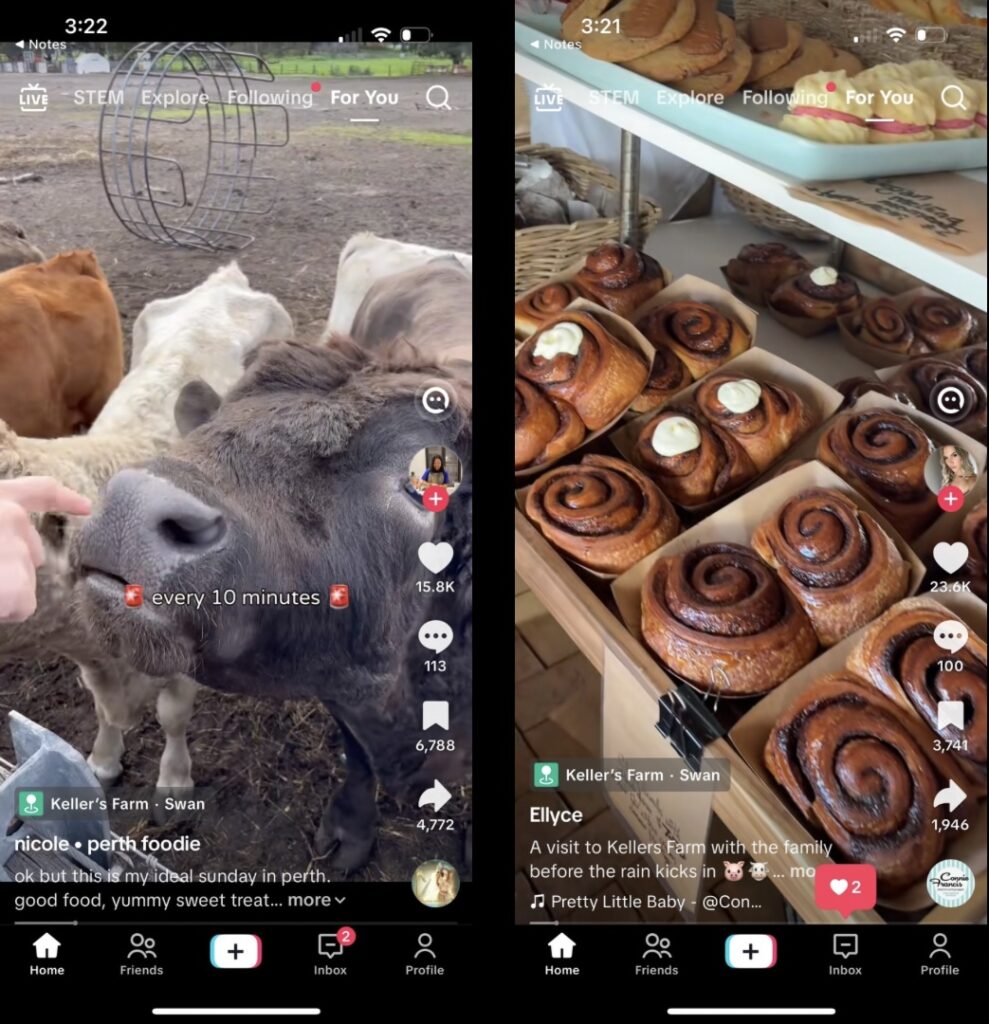
Take Keller’s Farm in the Swan Valley, for example. Each weekend, the farm opens its street market to the public, offering baked goods, fresh produce, and the chance to feed the animals. Thanks to a surge in social media activity, including TikTok and Instagram-friendly experiences, the farm’s owners report being busier than ever.
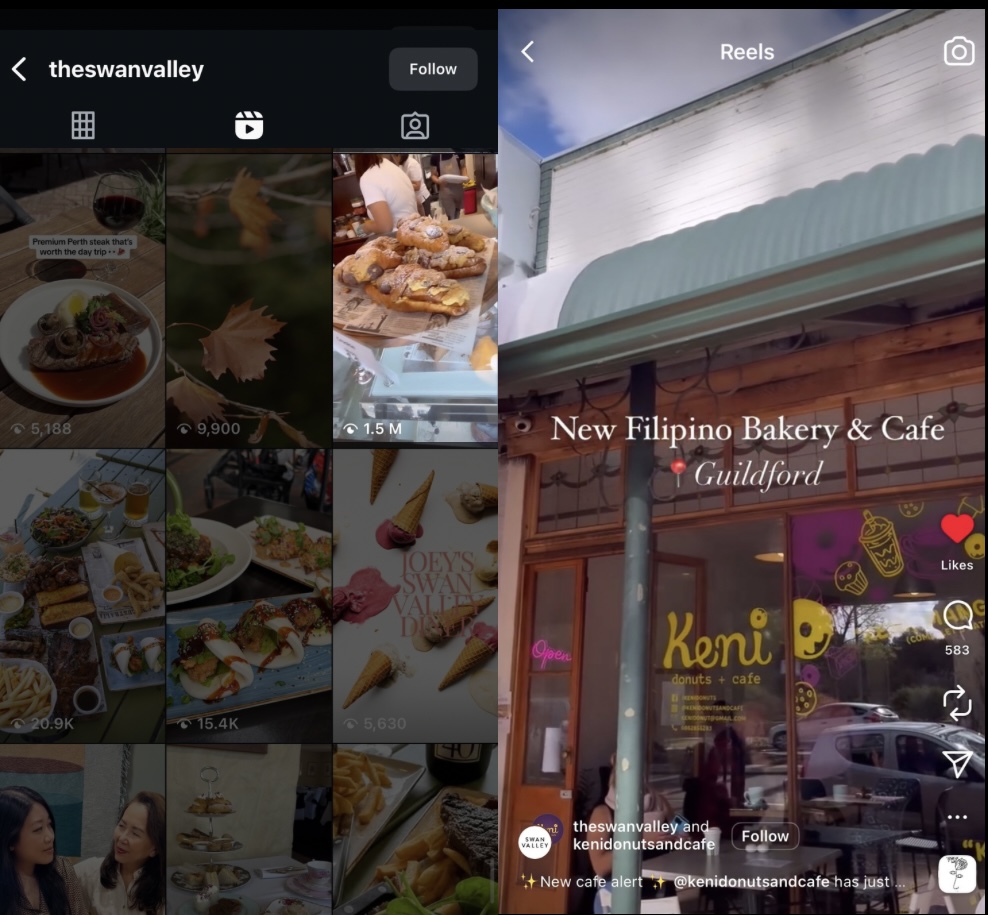
Similarly, the Filipino bakery Keni Doughnuts in Guildford saw its viral Instagram reel reach over 1.5 million views. The impact was immediate: the owners no longer need to open seven days a week, freeing up an extra day and improving their work-life balance. A single reel has transformed the business’s visibility, customer flow, and even the owners’ quality of life.
This new reality is both exciting and terrifying. Viral trends can amplify campaigns far beyond what a traditional budget could achieve, but they also dilute control over messaging. Memes, influencers, and short-form content often rewrite brand narratives that have been carefully curated to influence their audience in a specific way. Ahmad (2025) found that TikTok videos can build strong emotional connections with viewers, increasing brand love and reducing anxiety about visiting a destination. But here’s the catch: influencer-driven content often fails to build perceived authenticity. Audiences might adore a video, but they don’t necessarily trust it as a credible representation of the place.
Marketers now juggle two goals: create content that performs well algorithmically and maintain authenticity to protect local culture. Li and Xu (2024) found that viewers trust individual creators far more than official tourism accounts, seeing them, as “overly promotional.” In short, the most shareable content is often not the content marketers worked hardest to produce.
Local examples show the power of algorithmic influence. Both Swan Valley and Margaret River deploy professional marketing campaigns funded by local governments. Yet viral TikTok videos, showcasing wine tasting, food, or events, often capture more attention than official campaigns. Algorithms are co-authors of the destination’s story, determining which experiences go viral and which remain obscure (Vlasich, Lee, & Archer, 2023).
On a global scale, the same patterns emerge. Hidden spots in Italy, Japan, or Iceland have become tourist magnets after going viral on TikTok. Influencers act as hybrids, part marketer, part algorithmic amplifier, blurring the line between promotional content and organic discovery (Ahmad, 2025). These viral moments can reshape entire regions, sometimes leading to over-tourism before authorities even notice.
The Future of Tourism Marketing: Is Traditional Marketing Irrelevant?
It’s easy to assume that marketers are now powerless, that algorithms alone determine which destinations thrive and which fade into obscurity. After all, in today’s feed-driven world, visibility often depends less on budgets and more on how content performs in real time. But traditional marketing hasn’t disappeared. It’s evolved. Brochures, campaigns, and brand guidelines still matter; they remain the creative backbone that feeds the algorithm. These materials provide the storytelling framework the imagery, language, and emotional cues that social media content draws from. The difference now is that success depends on co-creation. Tourism marketing no longer ends with a campaign launch; it begins with how platforms, audiences, and trends choose to interpret and remix that story.
Local governments continue to play a critical role, too. Council-funded visitor centres coordinate regional promotions, maintain visitor infrastructure, and ensure destinations are ready to meet demand. They build the stage on which tourism happens. Yet in an era of social media discovery, planning and funding only go so far. If the content doesn’t perform algorithmically, it might as well not exist. The Blackwood River Valley case study illustrates this perfectly: despite traditional marketing investment, the region’s visibility hinges on whether its content resonates within algorithmic ecosystems. Official campaigns still enter the social media arena, but their reach is no longer guaranteed. Each post is subject to the invisible hand of algorithms that decide what rises to the top of your feed and what vanishes into digital obscurity. As a result, the future of travel promotion looks less like a polished brochure and more like a constantly shifting conversation between marketers, creators, and machines.
So what does this mean for the future of travel promotion? The answer is clear: traditional campaigns alone can no longer carry the weight. To remain effective, marketers must adapt to the realities of algorithm-driven platforms understanding how content is discovered, amplified, and shared. Every post, reel, or TikTok video is now filtered through systems that decide who sees it, how long they engage, and what they do next. As Vlasich, Lee, and Archer (2023) explain, “Social media is no longer just a promotional tool; it is an economic driver that transforms the visibility and competitiveness of regional destinations.” In short, tourism marketing has shifted from persuasion to algorithmic negotiation.
At the heart of this transformation is authenticity. Gen Z and younger travellers increasingly seek genuine, relatable experiences rather than polished promotions (Li & Xu, 2024; Fusté-Forné & Orea-Giner, 2024). TikTok, in particular, rewards storytelling that feels sensory and spontaneous — capturing local flavours, laughter between friends, or the slow rhythm of a community event. As Fusté-Forné and Orea-Giner note, “Destinations effectively capture attention through the power of short-form videos and engaging storytelling, combining music and narratives… authenticity is embedded in food heritage and traditions… but also in the people behind them.” This shift towards authenticity doesn’t mean strategy is obsolete, quite the opposite. Engagement now plays an equal, if not greater, role. Algorithms reward content that sparks interaction: likes, shares, comments, and completion rates all influence visibility. For small tourism operators, this levelling of the playing field can be revolutionary. Keller’s Farm in the Swan Valley and Keni Doughnuts in Guildford are prime examples. A single viral TikTok or Instagram reel can transform not only foot traffic and revenue but even business decisions from extending trading hours to expanding production all triggered by the algorithm’s response.
For larger organisations, digital literacy is no longer optional; it’s essential. Tourism boards, local governments, and destination marketing organisations (DMOs) must treat algorithms as active partners in storytelling rather than passive channels. As Vlasich, Lee, and Archer argue, “The power of social media platforms to influence economic outcomes suggests they are not merely communication channels but actors in the tourism ecosystem.” Those who embrace this reality anticipating trends, analysing performance data, and crafting content that thrives within algorithmic systems will be the ones defining the next generation of travel culture. Ultimately, the power to define destinations is now shared. It no longer rests solely with marketers or government campaigns; it’s co-created by content creators, audiences, and the algorithms that connect them. As Sheraz Ahmad (2025) observes, TikTok videos can cultivate “brand love… resulting in favourable consumer behaviour and financial gains,” yet they may also struggle to convey authentic destination branding without thoughtful planning and local insight. The challenge for tourism marketers, then, is to navigate the delicate intersection of cultural relevance, algorithmic visibility, and authentic storytelling. The future of tourism marketing is participatory, dynamic, and algorithm-driven, a space where creativity, strategy, and technology converge. It’s no longer just about where people travel, but how they discover, share, and experience the world. The next great tourism story won’t be written in a marketing office, it will be co-authored by travellers, creators, and algorithms, one viral moment at a time.
Conclusion: Content is King, but Algorithms Rule
Tourism is no longer a one-way broadcast from marketer to traveller. Algorithms now determine which destinations are seen, which experiences go viral, and even how culture is represented to the world. While marketers and local governments remain crucial storytellers, their messages must pass through a new gatekeeper: the algorithm.
For travellers, this means the places we choose to visit are increasingly shaped by short-form videos, viral trends, and user-generated content. For marketers, it means embracing co-creation, digital literacy, and strategic engagement. And for destinations, it signals a fundamental truth: content is king, but only if the algorithm approves.
 Guan QiuYu
  REN Ren
  Tan Kane