
When I scroll through Instagram and watch others post their perfectly curated posts, I often feel an urge to prove that my life is just as exciting and that I am doing fine, too.
You might turn to Instagram for a break, only to be met with an endless scroll of flawless selfies, curated travel posts, and captions that appear effortlessly witty. It is easy to ignore that many of us are just performing behind these screens. For many young social media users, who constitute the largest age group, this has become an all-too-familiar experience, with the subtle pressure to perform. What began as a space for authentic self-expression has slowly turned into a stage where lives are packaged, filtered and displayed for others to see. These posts aren’t just random updates; they are fragments of an ongoing effort to balance who young users really are and how they want others to see them.
In this digital theatre, algorithms spotlight what’s more visible, peer validation amplifies what is most appealing, and users learn to showcase what will earn the most ‘likes’. Social media has, in several ways, transformed everyday life into a stage where the need to be seen and validated drives performance.
Instagram sold us authenticity, but today, the notion of ‘real’ on social media feels like a paradox rather than a promise. Yes, performative posting can fuel creativity and connection, but it also threatens authenticity, adds to the weight of social expectations and quietly reshapes young people’s sense of self. So it is also important for the young users to know how social media platforms like Instagram blur the line between performance and reality, creating pressure to appear perfect while acknowledging that they also open up unexpected possibilities for real connection in an age of constant display.
Instagram as a Stage of Performance
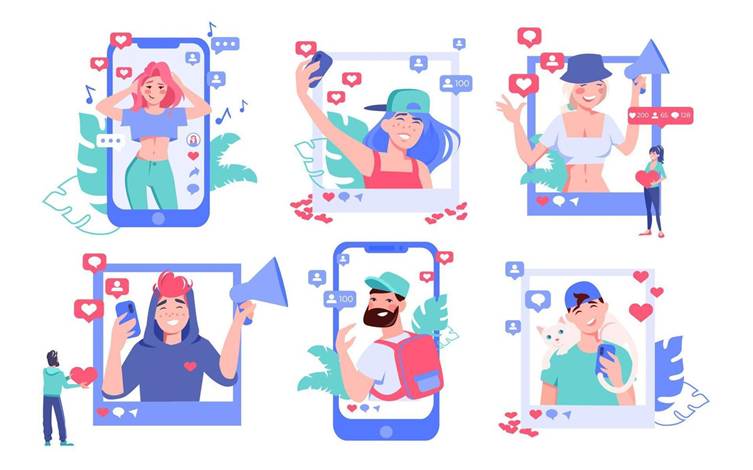
Social media has now transformed from a tool for communication to a space to create and perform individual identities. Some authors point out that social media platforms like Instagram have become digital stages where young users perform their identities consciously or unconsciously. In essence, instead of only sharing updates, young people actively curate how they appear to others through deliberate choices like selecting photos with care, crafting clever captions, or intentional omissions. For instance, people share their vacation photos on Instagram that only show the fun, peaceful, and beautiful parts, omitting the stressful, boring parts and creating a polished version of reality that caters to the aesthetics of Instagram. In effect, social media has become less a space for authenticity and more about managing impressions, where identity is negotiated and renegotiated through repeated performances, blurring the line between reality and performance.
Social media platforms like Instagram provide us with content and play an active role in constructing the users’ self-presentation. Algorithmic visibility and constant demand for performance play a significant role in this process. Cotter argues that Social media algorithms reward content that grabs attention, encouraging young platform users to create content to gain maximum engagement through posts. An example of this can be found in Instagram’s “photo dump” trend. The photo dump trend on Instagram, once considered an authentic and spontaneous way of sharing glimpses of everyday life, became a stylised one where seemingly casual photos were selected to fit aesthetics. So, what appears to be real and casual is curated for the algorithm and shaped by broader platform dynamics. This reveals how the desire for visibility shapes users’ actions, turning genuine self-expression into a deliberate performance.
The pursuit of external validation is closely linked to the content shared on Instagram. Kacar highlights that posting has become tied to hunger for validation, where likes and comments have become more valuable assets. For example, research by Dr Jean Twenge, a psychologist and author of iGen, shows that young people increasingly tie their self-worth to social media feedback. Her studies indicate that platforms like Instagram encourage a constant need for attention, and each like, comment, or interaction triggers dopamine release, reinforcing this behaviour. This creates a feedback loop where youths seek continuous validation online, which can amplify narcissistic tendencies and influence how they craft and share content. This highlights that engagement on social media extends beyond simple communication or self-expression; it is closely tied to psychological rewards, shaping the nature of content shared and how identities are performed online.
The world of Instagram also makes users feel that their existence depends on their daily posts. For many young users, silence in social media provokes anxiety, fearing exclusion from shared cultural moments or relevance among peers. This anxiety, commonly termed as Fear of Missing Out (FOMO), fuels the compulsion to remain visible through stories, reels, and updates, even when they have little substance to share. Over time, posting shifts from an act of genuine self-expression to an unwritten obligation to remain visible, relevant and engaged. Everyday experiences, from concerts and dining to quiet moments at home, are converted into content that validates one’s participation in collective online life. Study points out that his subtle and constant pressure to remain visible can also breed social media fatigue, leaving users emotionally drained, disconnected, and overwhelmed by the demand to always be “on”. Thus, the endless loop of constant consumption and creation blurs the line between pleasure and pressure, trapping many young users between the desire to disconnect and the fear of losing social connection.
Instagram does not just act as a digital platform; it plays an active role in shaping cultural norms and expectations. Pan & Lee foreground that the aesthetics of social media uphold certain standards of beauty, lifestyle, and success, encouraging users to conform to those absurd norms. For instance, restaurants, hotels, and cafes are now designed specifically to be “Instagrammable,” and interiors, lighting, and décor are deliberately crafted to encourage social media sharing. By doing so, these offline spaces essentially serve as extensions of online performance, tailored to align with audience expectations on social media. This foregrounds how online performances can influence the offline environment, reshaping everyday spaces into stages for visual performance. As a result, the users internalise these standards, adjusting their behaviour, appearance or experiences to align with the prevailing notions of visual appeal and online popularity. At its core, the aesthetic demands of social media do not stop at online behaviour, but extend to shaping environments and expressions, merging performance with lifestyle.
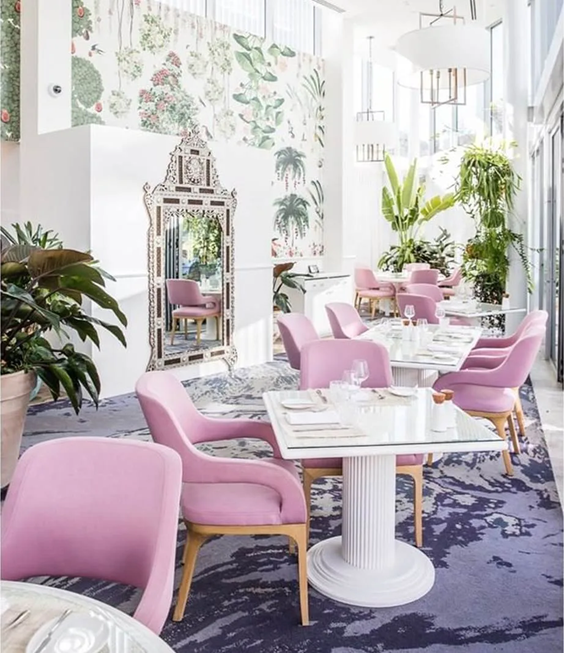
Image -marieclaire
Another domain where the performative aspect of Instagram becomes visible is in digital activism. Researchers point out that social media activism often appears as performative acts, where young users share content to signal their social awareness rather than to contribute to meaningful change. This might usually be part of slacktivism or clicktivism, i.e., doing less effective activities like posting activist posts, liking or sharing to create an impression of involvement. One of the recent examples of this is the ‘deinfluencing’ hashtag trend, which originally promoted sustainable living and critical consumption. While the initial intention of the activism was rooted in the promotion of ethical practices, it soon became another trend used to gain engagement and algorithmic visibility for the users. This reveals how social media dynamics can redirect movements with real social aims, with visibility and engagement can overshadow core objectives, turning activism into acts of performance rather than tangible change. Therefore, digital activism can become performative, where signalling social consciousness outweighs generating real social change.
Creativity and Community Growth
While debates around social media frequently center on its performative demands and possible negative effects, it is important to acknowledge the positive aspects of social media platforms like Instagram. Zhang and Mao argue that social media performances can promote creativity and community growth. The process of sharing content like thoughts, experiences, or creations can inspire users to experiment, refine their abilities, and experiment with creative forms of expression. For instance, communities on Instagram, such as Book review pages, Film review pages, and pages promoting social causes, allow users to express their creativity while also encouraging engaging conversations and connections with like-minded peers. Sharing a thoughtful film review or a unique book recommendation can prompt others to respond and create, establishing a continuous flow of creative interaction. This highlights that the performative aspects of social media do not always result in superficiality; rather, they can serve as platforms where authenticity and performance coexist, allowing users to engage with communities and amplify shared interests. Ultimately, careful and deliberate social media performance can promote shared creativity, learning and community building, showing that online performance can be used for beneficial social purposes.
The Loss of Authenticity
Despite the wide-ranging potential of social media to foster creativity and connection, researchers find that the performance-driven aspect of social media can result in a lack of authenticity and may create tension between the online and offline selves. When individuals create content to gain attention, engagement, or approval, they tend to display curated, perfected versions of themselves, excluding the mundane or vulnerable aspects of their lives. To navigate this tension, many users maintain private or secondary accounts such as Finstas (fake Instagram accounts) or spam accounts, where they share unfiltered, messy, or personal content for a select group of friends. Spam accounts also operate in a similar way, allowing users to post frequent, low-stakes updates without worrying much about aesthetics. These private spaces offer a refuge from the demands of public performance, allowing users to express themselves more authentically, without scrutiny from followers or algorithms. This contrast underscores the difference between curated public personas and authentic self-expression, pointing out the internal negotiation users experience between performing for an online audience and staying true to their offline lives.
Emergence of Authentic Alternatives
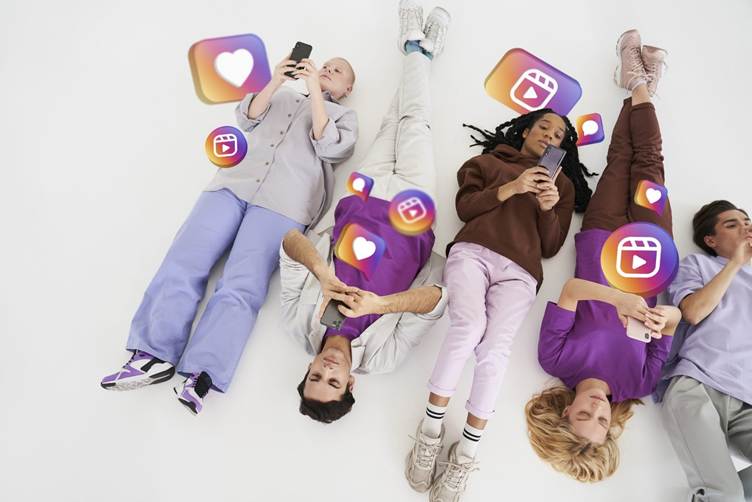
Although social media platforms like Instagram often promote curated performances, some users actively maintain authenticity to push back against self-presentation. These individuals intentionally share the messy and unfiltered sides of their lives by posting no-makeup looks, failed cooking videos, or behind-the-scenes to remind us that everything is just a performance and real life can be chaotic and imperfect. This approach challenges the dominant trends of curative narratives and perfect visuals, providing a more genuine perspective. However, some researchers find maintaining this level of honesty can be difficult, as sharing negative or vulnerable aspects of life exposes users to potential judgment and may conflict with the social rewards of engagement, likes and positive feedback. Ultimately, while seeking authenticity can relieve the pressure of constant performance and provide a more genuine depiction of life, the social and emotional costs of maintaining such openness make it challenging for most users.
Social media has woven performance into everyday life, but that does not mean it has to define it. Every post, reel or story offers young users a chance to engage and to carefully shape the image they project. The polished, curated self, however, isn’t necessarily fake; it is a reflection of what platforms have trained users to prioritise. Yet, behind the filters and staged moments, traces of real life still peek through, a cooking mishap, candid laughter, or late-night musings reminding us that authenticity has not disappeared.
This isn’t a call to quit social media or to stop performing online. Instead, it is about striking a balance, sharing moments that feel real, embracing creativity, and keeping an eye on the pressures lurking behind likes, comments and visibility. By approaching it thoughtfully, young people can turn social media into a space for connection, self-expression, making a difference and sharing meaningful moments, rather than a constant pressure to appear flawless.
References
Abdalla, A., D’Souza, N., Gill, R., Jadavji, R., & Meneguzzi, C. (2022). Social media as a stage: A behind the scenes analysis of performative activism, “cancel culture,” and effective allyship. McMaster Undergraduate Journal of Social Psychology, 3(1), 83–122. https://journals.mcmaster.ca/mujsp/article/view/3139/2071
Ahmed, N. (2025, March 27). The performative nature of social media. The Phoenix. https://swarthmorephoenix.com/2025/03/27/the-performative-nature-of-social-media/
Bailey, E. R., Matz, S. C., Youyou, W., & Iyengar, S. S. (2020). Authentic self-expression on social media is associated with greater subjective well-being. Nature Communications, 11(1), 1–9. https://doi.org/10.1038/s41467-020-18539-w
constructadora. (2024, July 3). Instagram Reels: Sparking creativity and building community. Medium. https://medium.com/@constructadora05/instagram-reels-sparking-creativity-and-building-community-056c3e9071c6
Cotter, K. (2019). Playing the visibility game: How digital influencers and algorithms negotiate influence on Instagram. New Media & Society, 21(4), 895–913. https://doi.org/10.1177/1461444818815684
Freelon, D., Marwick, A., & Kreiss, D. (2020). False equivalencies: Online activism from left to right. Science, 369(6508), 1197–1201. https://doi.org/10.1126/science.abb2428
Haimson, O. L., Liu, T., Zhang, B. Z., & Corvite, S. (2021). The Online Authenticity Paradox: What Being “Authentic” on Social Media Means, and Barriers to Achieving It. Proc. ACM on Hum-Comput. Interact., 5(CSCW2), 1–18. https://doi.org/10.1145/3479567
Harden, O. (2022, April 26). Watch: Travel photographer exposes the Instagram vs reality of popular European destinations. Matador Network. https://matadornetwork.com/read/instagram-vs-reality-tuscany-switzerland/
Kacar, G. Y. (2023). Instagram as one tool, two stages: Self-presentational differences between main feed and story on Instagram. Atlantic Journal of Communication, 1–18. https://doi.org/10.1080/15456870.2023.2202401
May, C. (2025, August 18). Banning social media: Why stop at kids? NETS2001 Writing on the Web. https://wotw.netstudies.org/2025/08/18/banning-social-media-why-stop-at-kids/
McCulley, K. (2025, August 25). Finstas, spam accounts & alt TikToks: The rise of ‘private’ public spaces. 500 x 136. https://www.lifeblogs.org/entertainment/finstas-spam-accounts-alt-tiktoks-the-rise-of-private-public-spaces.html?
McNeal, S. (2023, February 25). Sorry, but the “deinfluencing trend” is just… influencing. BuzzFeed News. https://www.buzzfeednews.com/article/stephaniemcneal/deinfluencing-trend-tiktok
Pagan, C. (2025, February 12). Insta-validation: How Instagram Notes is breeding a new era of digital narcissism. The Science Survey. https://thesciencesurvey.com/editorial/2025/02/12/insta-validation-how-instagram-notes-is-breeding-a-new-era-of-digital-narcissism/
Pan, L.-Y., & Lee, C. T. (2024). How does engagement on social media reinforce life aesthetic literacy? The role of interpersonal and intrapersonal influences. Computers in Human Behavior, 161, 1–10. https://doi.org/10.1016/j.chb.2024.108409
Possamai, M. (2023, August 9). How is performative activism perpetuated in social media? Power in Place.https://powerinplaceproject.com/news/2023/8/9/how-is-performative-activism-perpetuated-in-social-media
Rebollo, C. (2023, July 13). Non-stop scrolling through social networks: FOMO, an extreme fear of missing out. EL PAÍS. https://english.elpais.com/science-tech/2023-07-12/non-stop-scrolling-through-social-networks-fomo-an-extreme-fear-of-missing-out.html
Salter, H. (2024, September 14). How Instagram changed restaurant design forever. The Independent. https://www.independent.co.uk/life-style/instagram-restaurant-design-food-social-media-b2610876.html
Sheikh, M. (2025, February 24). Social media demographics to inform your 2025 strategy. sproutsocial.https://sproutsocial.com/insights/new-social-media-demographics/
Tandon, A., Dhir, A., Talwar, S., Kaur, P., & Mäntymäki, M. (2021). Dark consequences of social media-induced fear of missing out (FoMO): Social media stalking, comparisons, and fatigue. Technological Forecasting and Social Change, 171, Article 120931. https://doi.org/10.1016/j.techfore.2021.120931
Tejakusuma, M. (2024, May 21). Performative acts and the illusion of authenticity on Instagram. Medium.https://martinustj.medium.com/instagram-performative-acts-and-the-illusion-of-authenticity-ea40458bafc2
Travers, M. (2023, November 7). Beware of fake online activism, or “slacktivism.” Psychology Today. https://www.psychologytoday.com/us/blog/social-instincts/202311/beware-of-fake-online-activism-or-slacktivism?msockid=1854c271c9fe67592027d624c8a366c0
William. (2023, January 21). Social media and the banality of life: How platforms shape reality. Hardware & Software.https://techwelo.com/social-media-the-banality-of-life/
Zhang, G., & Mao, S. (2025). A double-edged sword: Social media use and creativity. Information Technology & People, 38(2), 660–685. https://doi.org/10.1108/ITP-09-2022-0682
 TianYuran
  Lu Yunyan
  Pauleen