
Music has always been political as it is a means of social commentary, and along with the rise of social media musicians who are seen as influential figures, they have been pressured more to express their political beliefs to their listeners. Music is a form of public art, it is free and easily accessible no matter your ethnicity, status, education or financial situation.
This presents the question: can music be separate from politics?
The answer to this question is becoming more and more difficult, and in the digital age, influential figures are being held to a standard by their followers to speak out on political issues. For many years, Taylor Swift was unwilling to speak out about her political beliefs; consequently, she was then bullied online for not speaking out against Donald Trump in 2018, causing her to break her silence and endorse the Democratic Party in the midterm elections in the United States in 2018.
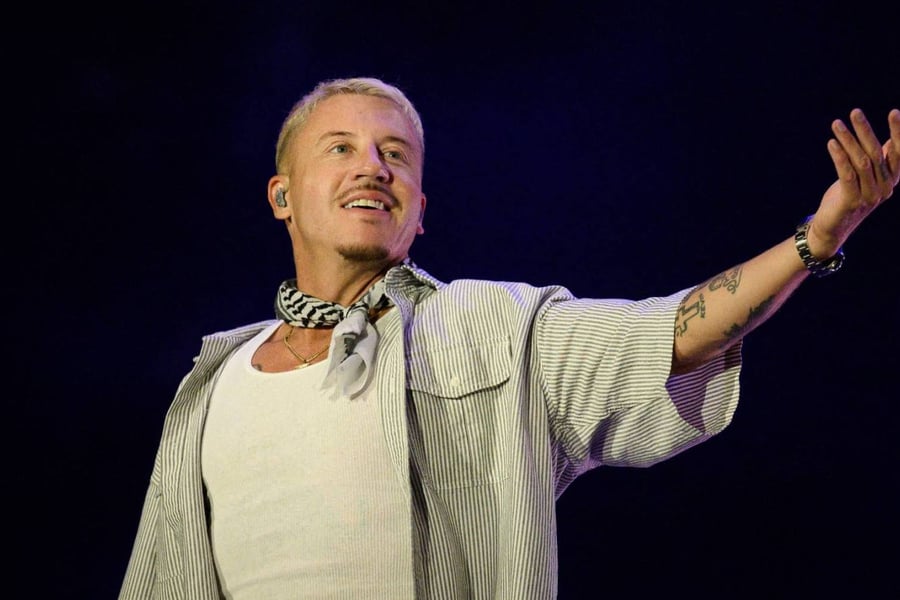
On the 11th of September 2026, music artists Macklemore and P!NK started some online debates around Macklemore’s pro-Palestine performance and speech while performing in New Jersey. Macklemore was opening for Ed Sheeran’s “The Loop” tour and gave this speech on two different nights, however, after these two nights, he was told that he would not be allowed to perform at other stadiums, upon request from the stadium owners, and as a result was removed from the tour by Sheeran’s team.
People online have begun to cancel all three artists, based on the part they each had to play in this situation. Would we have known what happened at Macklemore’s performance on Ed Sheeran’s tour without social media?
Music can be a clear indicator of a person’s attitudes, beliefs and preferences, without them explicitly stating them. There has been many forms of explicitly political music and musicians over the years with some having distinct political leaning songs and others showing their political beliefs off stage, however music has always been political, it is a form of human culture that indicates individual differences. Artists such as Bob Dylan and Johnny Cash made protest music with leftist messages post-war, focusing on civil rights, antiwar movements and Native American activism, as a lot of their discography was written and recorded in the 60s and 70s. Most music is a form of cultural hybridity, this is a new area of negotiation, representation and meaning as created by the fusion of multiple cultural elements.
While not all music is explicitly political, like songs by Rage Against the Machine or U2, there are artists such as Amyl and The Sniffers, Kanye West, Olivia Rodrigo, and Macklemore (just to name a few) who are politically outspoken online and at their concerts. During their Glastonbury set in 2025, Amyl, the lead singer of Amyl and The Sniffers, spoke out about colonialism, Indigenous rights and Palestine. Whilst Macklemore has made political music before with his 2012 song with Ryan Lewis, “Same Love”, supporting the marriage equality movement and criticising homophobia, 2012’s “Thrift Shop” criticising consumerism and 2024’s “Hind’s Hall” being a pro-Palestine song with 100% of the profits being donated to UNRWA (United Nations Relief and Works Agency).
Social activism in music has encouraged participation in political movements, take “Fight the Power” by Public Enemy, speaking on the racial tensions within New York, calling out artists like Elvis and John Wayne. “Fuck da Police” by N.W.A is another song that comes to mind as one of the greatest protest songs of all time. Music has been a vessel for musicians to speak publicly about things directly affecting their listeners and the public alike.
Whilst some artists have spoken on purely American politics, like Ariana Grande, Taylor Swift, and Olivia Rodrigo publicly speaking out against Donald Trump using their music as it does not align with their political values, and artists such as Ye (Kanye) West and Nicki Minaj showing their undivided support for Donald Trump’s republican party, not all of them speak of politics on a global scale.
Macklemore was also outspoken in the Black Lives Matter Movement; his song with Ryan Lewis, “White Privilege II (Feat. Jamila Woods)”, criticises other artists who are not using their influence to address their white privilege.
Macklemore has been one of the most outspoken musicians of my generation as he has been releasing music that criticises social and political issues since 2012. Whilst Ed Sheeran has attempted to remain apolitical (not political) for most of his career, removing Macklemore from his tour might have been one of the most political things he could have done. Ed Sheeran has also not been as apolitical as he says, as he publicly spoke out on the Brexit campaign along with many other British political issues.
Social media use has increased exponentially, putting extra pressure on film, television and music stars, as they are told to use their fame to create political capital. Social media has made music, performances and art more accessible than ever, and social media has helped in making art in the public sphere even more accessible as it is now available worldwide and for free.
Along with the accessibility of music that social media creates, it also has negative effects such as cancel culture, which has become a large part of social media in recent years. This is where people stop supporting, interacting and mentioning other individuals due to their actions, both online and in public. As part of the controversy between Macklemore and Ed Sheeran, people have been trying to cancel both artists, along with P!NK for involving herself in the drama. After posting multiple stories about Macklemore’s Free Palestine speech, where he specifically stated that the Jewish people are separate from the Israeli government, P!NK, who has a Jewish background, had a serious reaction to the things Macklemore said during his performance.
P!NK brought up an outfit from Macklemore’s past where he dressed in what she believes was a costume that was meant to be a Jewish caricature; however, Macklemore had apologised for the costume at the time and did so again, as that was not his intention for the costume. Around a week later, P!NK posted an apology of sorts on her social media (without saying the word “sorry”) and admitted that not everything she had posted was correct.
The age of social media has boosted many artists’ careers whilst harming others. Record labels have always tried to censor their artists, however, with the increased use of social media, it has become worse for some artists. In his early years, Macklemore and his longtime collaborator, Ryan Lewis, chose to remain independent of the major record labels so they could control their music and own their master recordings.
Social media has allowed musicians to move away from record labels that try to control and censor their music so it can be more political. Social media also allows users to connect over music with others on the other side of the country and around the world, with users across the globe publicly commenting on Macklemore’s speech hours after it happened and still engaging with content surrounding it now. Social media also assists in the understanding of politics, especially for young people. Macklemore made many people realise that the conflict in Palestine has been happening for years, I know I was getting more pro-Palestine posts on my social media after engaging with public comments on Macklemore’s speech than I was prior to the controversy.
With all this drama, Macklemore gained thousands of followers in the days following the speech, with his streams also increasing in solidarity. Whilst Ed Sheeran posted to his social media, much like P!NK’s post, it was less of an apology and more a defence of his and his team’s actions.
The fallout from this speech and the removal of Macklemore from Ed Sheeran’s tour was extreme, it was also made very public by social media. While it is hard to tell whether it is a good or bad thing (which depends on who you support), it prompted many people to ask: “Does music have to be political?”
The music industry itself contains power structures surrounding representation, money and access, which it also reflects in its politics. Historically, music has been political; it is very hard for it not to be, and the age of social media has made it even harder for musicians and celebrities to remain apolitical.
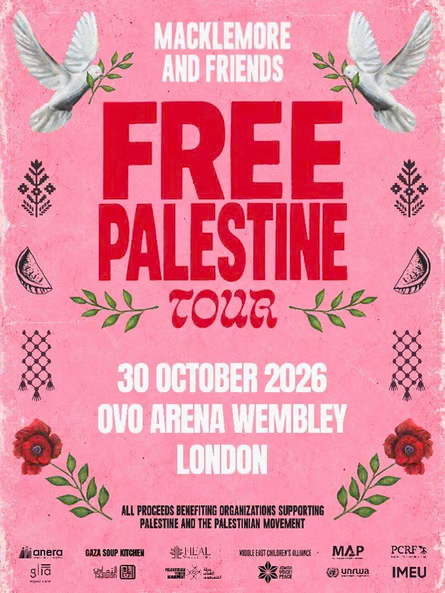
Whilst most concerts and festivals are not free, this does not change the access social media provides to view the performances, including any and all political speeches that may accompany them. After the controversy of Macklemore & Ed Sheeran’s public disagreement, Macklemore created his own “Free Palestine” tour, with all proceeds going to support Palestine and their people; this tour has had a large amount of positive feedback and sold out its first night in Dublin.
So, do you think Ed Sheeran’s reaction was fair? Should he have caved to the pressure of the venue owners? Do you think that the hate and Ed Sheeran being “cancelled” is justified? And do you think that music is political, or is music “just music”?
 Damien Humphrys
 Alessia Arcaro
 Victoria Katris