
“The Internet is a system with common rules that should be acceptable for everyone. That means creating something as close as possible to having no rules at all”. This is a quote by computer scientist and creator of the World Wide Web, Sir Tim Berners-Lee, whose work established the foundations of technologies such as HTML, URLs and HTTP. Suffice to say, computing and the internet have evolved considerably since Berners-Lee wrote Weaving the Web: The Original Design and Ultimate Destiny of the World Wide Web in 1999. However, his insights into the utility of, and issues surrounding, his invention remain valuable. Since then, the world wide web has taken on its own life, becoming a key aspect of the world’s political, economic and social spheres of influence. Changing not only how we interact with the world but with each other. To say it has affected the lives of nearly every living soul on the planet either directly or indirectly, is an understatement. However, the internet has become a vast and largely lawless space, full of content that goes unmoderated and easy to reach should one know the right key words to punch into a search engine. It’s so easy a child could do it. And therein lies the issue at the heart of much of the discourse surrounding the internet in recent years: how can we control what impressionable young people see and are influenced by on the internet? And how can we protect minors in a space designed to have no rules at all? These questions have plagued policy makers all over the developed world and could fundamentally change the ways not only minors use the internet, but everyone.
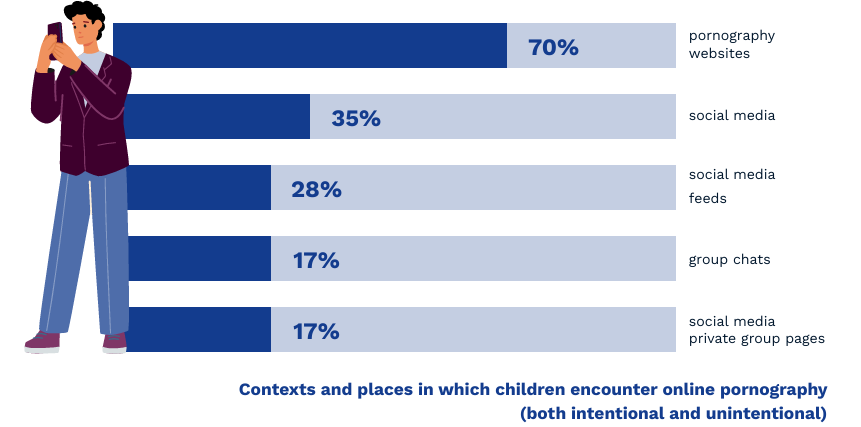
The internet can be an extremely dark place, one that should have guardrails in place to protect children. However, the role the government should play in mitigating this risk is a fine line to walk between protection and overregulation. Australia takes its eSaftey incredibly seriously, with the eSaftey commission being incredibly outspoken on the need to increase protection for minors’ online. Since 2023 the commission has been emphasising the importance of online age verification services. Its stated intention is to address the widespread availability of online pornography, identifying porn sites, social media, group chats and chat forums as key places minors are being exposed to adult material. However, its targets also include content that is not pornographic but may be graphic, such as video games. With the support of the Australian Government, the eSafety Commission states they want to put the onus on services providers to work with them to enact these age verification systems, or risk facing hefty fines. The Commission has also stated that parents can try and protect their children but due to many contributing factors such as low awareness, digital illiteracy and inability to calibrate settings they cannot always be relied on to keep their children safe online. The commission has highlighted this issue by stating that between the ages of 14 and 17, 71% of adolescents are exposed to sexual images online, while parental awareness of this issue only reached 34%. The focus of the eSaftey Commission has instead been on implementing numerous age verification tools into not only pornography sites, but social media platforms, video streaming sites such as YouTube and video game online store fronts such as Steam, PlayStation and Xbox. The commission highlights three forms of ensuring minors are protected: age assurance, age verification and age estimation. These three forms of protection vary in their levels of intrusiveness. Age estimation prompts a user to allow a service to scan their face using facial characteristics to determine a user’s age, age verification asks to scan legitimate documentation to ascertain one’s age, and age verification combines both forms. There are a variety of issues with these forms of verification, issues that have not gone unnoticed by the wider world.
RMIT University associate dean of technology Dana McKay recently told the ABC; “When I enter a bottle shop, they ask for my ID, I show it to them and they give it back, they don’t photocopy”. This quote highlights the main issue many people have with these current age verification systems. Online security has always been a concern, and many security companies have made substantial profits addressing it. However, with the fast-learning artificial intelligence systems now being used, see the OpenAI hack of Australian Medicare in September 2026, one is justified in being cautious about where they share their personal data. We have seen the ramifications of inadequate security of users’ age verification data. In 2025 the online chat application Discord was hacked, resulting in the exposure of 70,000 user-verification photos. Data breaches of this scale can have monumental consequences to the affected people, potentially leading to unfair banning’s from sites, bank detail breaches and identity theft. The risk to the services provider is substantially less and the risk to the government even smaller. The eSafety Commission has addressed these concerns, emphasising the need for these systems to be secure regarding people’s data. However, this ultimately requires users to place their trust in the government and corporations to which they hand over their personal data. The issue is not so simple, with many eSafety specialists arguing that Australia’s protection of citizens’ data is long past due for an overhaul, particularly in how corporations store and use our personal data. Queensland University of Technology Professor Daniel Angus told the ABC that these new verification systems are entrenching the absolute fundamental requirement for users to hand over increasing amounts of their data. This may reflect a broader shift in our government’s willingness to require citizens to surrender their data to third-party corporations.
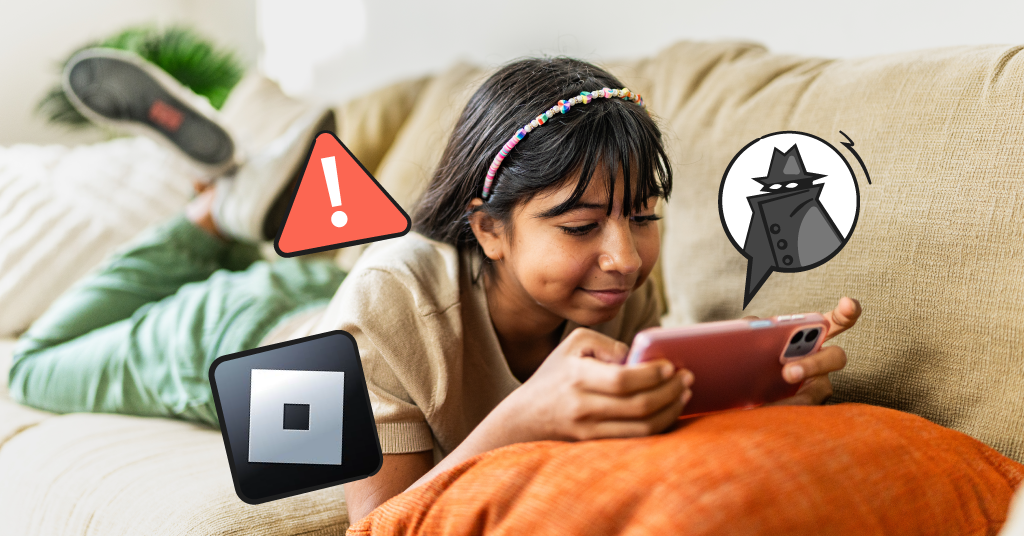
Children need to be protected online. But the government is not the one that should bear the primary responsibility of doing so. Then who is? The same people who protect them when they are crossing the street, or when they scrape their knee in the park, or are approached by a creepy stranger: their parents and guardians. The onus needs to be on parents and guardians to be able to keep their own children safe online. As discussed earlier, the current level of media and technological literacy among many parents is concerning and, according to UNSCEF, is one of the factors contributing to unsafe internet usage among minors. UNICEF has found that when minors know more about technology and the internet than their guardians, they may be more likely to engage in unsafe online behaviour, as suspicious activity is easier to hide from adults who lack the knowledge to recognise it. It is this lack of awareness that has contributed to the government intervention we now see, often with insufficient consideration for both our data privacy and internet users who do not have children. Overcoming the challenge of protecting children online while also protecting adults from having their data stolen is no easy task. However, if the immense cost and resources being devoted to these flimsy verification systems were instead used for providing online safety education for parents, we may be able to protect everyone online more effectively. After all, how can anyone navigate today’s fully digital landscape while remaining so uninformed in the way the internet works? I have seen this problem in the wider world, where some older adults have no idea what the internet is beyond access to email and today’s Wordle. These are mothers and fathers whose eight-year-olds’ knowledge of technology and the internet far exceeds their own. They then complain that the government is not protecting their own children from predators on Instagram. The overreliance on government systems and, especially, service providers to protect children online is misplaced and will not necessarily make anyone’s kids safer online. This is particularly concerning when we consider the growing popularity of sites such as Roblox, an online gaming service for children that has received serious concerns that predators are using it as a platform for grooming minors online. The problems associated with Roblox and other third-spaces online will certainly not be solved with age verification, yet they hold a far greater risk than minors’ ability to watch trailers for Grand Theft Auto V. Parents willingly entrust their children’s safety to companies like Roblox, which have, in turn, faced criticism over their handling of the misuse of their services by predators.
Then how are parents supposed to protect their children online? In much the same way they prevent them from opening a car door on the freeway: child locks or parental controls. Parental controls online have been available since the popularisation of the internet in the late 90s, allowing parents to block websites and restrict access through their children’s account. Since then, parental controls have evolved to moderate the content children see not only on a web browser but on an app-by-app basis. According to the Australian E-Safety Commission 45% of parents and guardians do not use parental controls at all. This is an alarming figure for a country supposedly ranked second for online safety, and I believe demonstrates the misguided nature of these new reforms. Surely, it would be more productive to increase the number of parents using parental controls to protect their own children online. There are many parental-control tools available online, ranging from built-in features offered by Google and Microsoft to independent applications that allow for differing levels of control. Bark, for example, supports AI-assisted monitoring of children’s emails, social media profiles, texts and even media saved to their phones. Should it detect content it deems to be inappropriate it can alert parents instantly. Bark represents one of the most intense parental controls I could find, while many other tools provide more targeted management of the content minors can access online. If the government wishes to place the onus on service providers to protect minors on their sites, perhaps requiring effective, appropriately regulated parental controls on a site-by-site basis would be a better use of time and resources, than requiring every grown adult to scan their face or passport to gain access.
Parents need to protect their children online. Just as they need to in any public or shared space, from the park and shopping centre, to the Roblox server on which their children spend three hours each night. The world has always been dangerous for minors, but the ways in which parents have been protecting their children up until now is outdated and does not adequately account for the multitude of new threats young people face in the digital age. Of course this does not apply to all parents. A new generation of technologically literate parents is emerging, equipped with the knowledge needed to protect their kids online. Policing these issues is rarely the answer. Age verification can be bypassed, VPNs can be used to access services through countries with less restrictive laws, and dummy accounts can be created. Just as resourceful minors find ways around these guardrails, so too will those who mean them ill online. We should not take the power away from parents to watch over and protect their children, nor should we have to make up for inadequate parenting by impacting everyone’s internet access. Education is often the answer, and this is no exception. By keeping parents informed about what is happening online and teaching them the practical steps they can take to moderate and monitor their children’s activity, meaningful change can be achieved, and children can be better protected.
 Tyler James
 Charlie
 Yuxi Xu