
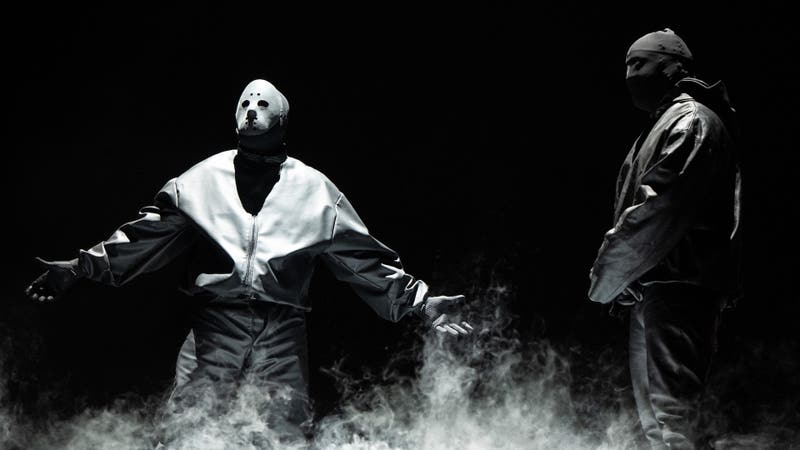
There is no music genre feeling the wrath of artificial intelligence (AI) more than hip-hop. The release of Kanye West and Ty Dolla $ign’s Vultures 2, despite severe pushback by fans and critics alike, opened the floodgates for AI usage within the genre. In this album, unreleased classics like “SKY CITY” and “530” would have verses produced via an AI voice filter which replicated Kanye’s voice. Additionally, Kanye would use AI to produce the music video for the infamous “BOMB”, whilst multiple songs on his 2026 release BULLY, despite claims that there was no AI, have been speculated to contain AI punch-ins and verses.
What would follow this is a series of mainstream artists who began showing support of AI usage, claiming that it’s just a new technological advancement that people need to get used to. Timbaland would sign AI artist “TaTa” over other talented creators, and most recently Tyga would release a fully AI album called $TARFACE (2026). As AI becomes more and more weaved into our daily routines, and as AI programs rapidly learn how to replicate human activity, its prevalence in art will only increase and its ability to be identified will only diminish.
However, it can be argued that new technology can aid artists in creativity and production. We’ve seen this before with auto-tune, where as it became more advanced and socially acceptable, artists adopted autotune as a tool to aid in achieving their artistic vision. This did come with significant initial backlash however, with Jay-Z releasing “D.O.A. (Death Of Auto-Tune)” in protest of the overuse of Auto-tune within hip-hop. Similarly to AI, Kanye West would be a key advocate of auto-tune, popularising it’s use with his release of 808s and Heartbreaks, which is cited as one of the most influential hip-hop albums of all time due to its melodic use of auto-tune. Just like auto-tune then, AI’s ability to be used as a tool rather than a substitution for creativity is already being explored. From JPEGMAFIA’s AI sample on “either on or off the drugs” to AI-powered orchestral frameworks being pushed by RZA, AI could become more accepted within the space, given the extent of its use.
So what is the boundary? Where does AI turn from robots trying to imitate human experiences and art, to a tool that can be used for creative expression in ways unobtainable before AI?
Literature Review
There seems to be two main camps of thinking about AI within any art form, and it’s that either AI has no place as it strips the human aspect of art, or that it is a new way to express yourself and should be embraced.
The latter is supported throughout Banerjee et al. (2025), a study in which investigated the impact and capability of AI on music production and consumption. It is argued that musicians now have the opportunity to create new, unique melodies and rhythms using AI programs, whilst these same AI programs lowers the barrier for entry by allowing users with less experience or resources to easily express themselves musically. This creates a landscape where AI actively engages in what art is meant to be, which is a demonstration of creative imagination and emotional expression, two distinctly human characteristics. AI is able to aid real-life artists in creating personal emotional pieces, and whether it is them audibly expressing that art is unimportant when it is the creator’s artistic vision being expressed.
It is also argued that AI will exponentially help artists by streamlining production and reducing costs of creation. Based on Research and Markets, a study cited by Banerjee et al. (2025), the market for AI music is set to reach $1.5 billion by 2027. By using AI to dissect consumption data, trends can be predicted and thus allows musicians to better create music the consumer wants, increasing artist success, longevity, and revenue. This is further supported as AI continually improves the speed of mixing and mastering, allowing artists to work faster and cheaper.
Whilst there are several moral issues presented throughout this study, primarily regarding copyright legalities and the potential decrease in music authenticity, Banerjee et al. (2025) clearly paints a picture where AI can be a tool that can aid in artistic expression and cost and should be welcomed into the music industry.
This, however, is opposed throughout multiple studies, one of which is Ahmed et al. (2026) which studied the main drivers of music enjoyability within hip-hop, country and synthwave. During this study, it was discovered that perceived realism and satisfaction were the main drivers for music enjoyability, portraying a clear AI deterrence in hip-hop consumers. However, many listeners were wrong regarding which songs were AI or human-made, particularly among hip-hop fans. This conveys two findings, that AI has already reached a point where detection by those unaware is difficult, and that hip-hop is clearly the more accepting or developed genre regarding AI, of which would be partially due to it’s development since Vultures 2. This creates a problem in transparency and artistic authenticity. Consumers clearly would rather listen to an album which was meticulously crafted to express the artists emotional vision, however the ability for listeners to recognise this is becoming difficult and thus raises moral concerns.
Furthermore, Pierre (2026) criticises the use of AI in rap music, music videos and album covers, lambasting the ridiculousness and laziness of replacing real artistry with AI prompts. It is also mentioned how using AI particularly for music videos heavily contributes to the environmental and class impacts of AI, political misinformation and dealings in the weapon industry. Overall, Pierre (2026) argues that AI as a whole is a clear net negative for the genre, but it’s presence in music videos is particularly distasteful due to the external influences it can have.
Will Our Favourite Artists be Replaced by AI?
The capabilities that AI holds in hip-hop are practically endless. Entire albums could be produced in mere moments, replacing producers who shaped the genre like J.Dilla and Metro Boomin. AI has already begun replicating the voices of those who made us fall in love with the genre, and the stranglehold AI could have over hip-hop without listeners ever realising it is a depressing future to be sleepwalking into.
In a recent study, it was revealed that 44% of newly uploaded music is generated by AI, a number that will only continue rising as people give in to the tech giant’s desires. More people will feel comfortable in making AI music, and more people will cut corners in their artistry, whether that is ethically correct or not.
“Before long, all the songs the whole world sings / Will be generated by latest of AI regimes / As all of our favorite artists erased by it scream / From the wayside, “Ayy, whatever happened to human beings?” – J.Cole on “cLOUDs” (2025).
However, It is with the aforementioned J.Dilla that the clear shortcoming of AI begins to reveal itself. The issue with AI is by removing all human authenticity, you remove the backgrounds of these albums and artists, the stories, and the soul. J.Dilla released his final album, Donuts (2006), just three days before his passing. During the creation of this album, Dilla would produce most songs in Cedars-Sinai Medical Center whilst hospitalised with lupus and a rare blood disorder, with his hands even swelling to the point that his loved ones had to massage them so he could continue making music. This album is seen as an autobiography of Dilla and is often cited as one of the most emotional hip-hop records ever made, with its beauty hiding behind the context surrounding the album’s creation and aftermath. This is just one of the many beautiful and human stories within hip-hop, something that AI can never replicate. An AI can not experience hardship, emotions, death, or relationships. An AI can not create Circles by Mac Miller or Manger On McNichols by Boldy James because they will never be able to express the emotion nor the history behind those albums. Everything AI does is fictional, and in a genre where authenticity and individuality are the main currency, that leaves AI with an almost unbridgeable gap for respectability, at least within active listeners in the genre.
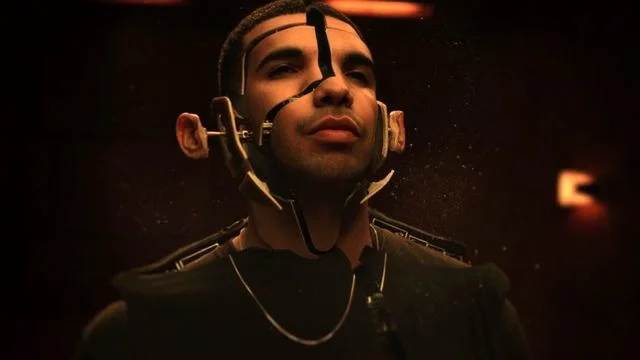
So will Drake remain Drake, or will he turn into the Drake seen in “The Spark” Sprite commercial? For as long as people actively engage with the genre, and the history in which makes these artists so special, then AI will likely never truly replace authentic artists. However, there is no doubt that several artists will turn to AI like Kanye West has, and these artist’s unwavering fanbases will ensure AI will never truly be out of the genre.
How AI can be Positive in Hip-Hop
If AI can’t be rejected, then it must be controlled. There is no doubt that AI can and will create artistic moments that will be celebrated. JPEGMAFIA’s “either on or off the drugs” features an AI sample which loops throughout the song, of which is widely considered as the best on I LAY DOWN MY LIFE FOR YOU (2024) and one of the best songs in his entire discography. The difference between using AI as a sample and using AI to produce or perform entire songs is that it creates new sounds that were not achievable before AI. AI sampling broadens the ability for artists to express themselves by creating new sounds that can be implemented into the music. This is similar to certain AI voice effects, or AI production that is unachievable without AI. Additionally, using AI to aid in the final mixing and mastering of an album is less egregious than entire production credits, and could help upcoming artists reduce the cost of creation, ensuring more people are able to express themselves through hip-hop.
Is AI just another auto-tune? If AI is able to be limited to creating sounds, vocal effects and samples that both couldn’t be performed before and doesn’t imitate other authentic artists, then AI could be widely utilised within the genre. However, serious regulations need to be implemented to avoid AI replacing the voices of yesteryear. Streaming services have already begun requiring AI music to bear AI transparency tags, limiting the amount of people who unknowingly listen to AI music. Additionally, Spotify recently removed over 70 million spam AI tracks from the platform and blocked another 50 million low-quality AI from recommendations. It was revealed in Ahmed et al. (2026) that the main initial driver for music enjoyment was the perceived reality of the artist. The listener’s beliefs regarding AI should not be tested every time they listen to a new song, as they’re forced to determine whether the song is created by a computer or a human. Without continual regulations against AI within hip-hop, it’s popularity and abundance will only increase as passive listeners will not bother finding the transparency label, creating a lucrative market for such soulless creations. Thus, it is imperative that not only lawmakers begin limiting the capabilities of AI software in replacing art, but the artists and fans of today must also collectively disregard entire AI creations, creating such a stigma around AI music that the lazy positives no longer outweigh the societal negatives, and thus reduces the amount of AI used within hip-hop spheres.
The Future of AI
AI is a topic that will never go away for the rest of time. It’s ability to perform tasks within all walks of life will continue to surpass those of humans, replacing jobs and minds alike. The places where AI shouldn’t be prominent are the most human aspects of life. Hip-hop represents a genre of music which connects millions around the world, and thus the integrity of that must be safeguarded from unauthentic robots. Life is about the beauty of your environment and the emotion that you feel through your life experiences. If every hip-hop artist was replaced by virtual bots performing off the prompts of wealthy businessmen, would anyone actually listen?
 Charlie
 Yuxi Xu
 Jez Murdock