
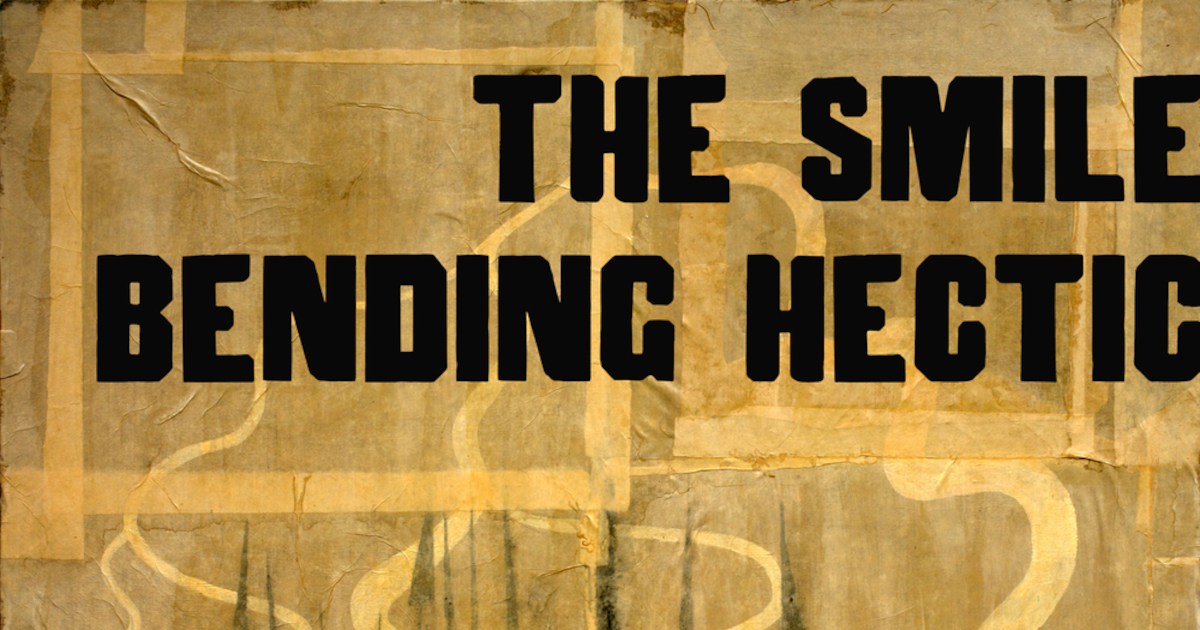
Bending Hectic is an eight-minute driving manoeuvre around a hairpin turn. It’s also a soliloquy on suicidal ideation, the call of the void, of passivity and responsibility. It’s also surprisingly Shakespearean.
Wall of Eyes, the second album from splinter band The Smile, is rife with Thom’s telltale ethereal vocals and peculiar melodies. One song in particular at the end of the album, Bending Hectic, gives me tonal whiplash. At eight minutes, it’s the longest on the album. As a single, it precluded the album in 2023, but didn’t name it.
Let’s deconstruct.
The song opens with soft fingerpicking on a reverberant guitar, the sweet hum of a bass in high register, and the tinkling of metal. It’s dreamy. The tension is teased on the guitar’s high string evoking the surreal sensation of the stretching of time. Not all is well.
I’m changing down the gears
I’m slamming on the brakes
a vintage soft-top from the sixties
There’s just a whisper of percussion unpredictably touching a dozen instruments, ambient, unstructured.
We’re coming to a bend now
skidding ’round the hairpin
a sheer drop down the Italian mountainside
Violins ease in chords in between fifths and seconds. Isn’t it pretty?
but time is kinda frozen
and you’re gazing at the view
and I swear I’m seein’ double
The scene is set. It’s a luxury joyride through the mountains in an expensive car. His partner is wholly unaware of the narrative that’s about to play through his head, the vow–the fantasy–he’s about to make:
No one’s gonna bring me down, no
no way and no how
I’m letting go
of the wheel
it might be as well (x2)
Luxury isn’t enough. A car that old probably isn’t either.
There’s no conviction, though- “no way and no how” is followed by a spineless “it might be as well.” The choice of no action is a choice of action, but the time yawns on without the resolution of action. Giving up is easy, but committing to it is not. He decides without his passenger- I don’t think he could face them if they weren’t turned away.
The melody pivots. the bass drops low, the guitar strummed with notes clipped. Percussion keeps itself to the soft march of the drum set while the violins work upwards to single steady notes, with dissonant steps along the way. I’m being foreshadowed by violins.
I’ve got these slings, I’ve got these arrows
I force myself to
turn
Yorke directly references a soliloquy from Shakespeare’s Hamlet, “To be or not to be,” to bear the pain of living or the finality of suicide. But the singer ruminates, and whines, and waffles. The slings and arrows of outrageous fortune are just something that happens to him.
The original melody picks up again, as does the tempo. The drums are steady, and the motif isn’t allowed to finish before the lyrics return, with fewer lines before the refrain. The violins vanish as Thom speaks. Urgency builds.
The ground is coming for me now
we’ve gone over the edge.
If you’ve got something to say,
say it now
No one’s gonna bring me down, no
no way, no how
I’m letting go of the wheel
The order of actions leads me to believe it’s a fantasy sequence. The suicide is idealised: how romantic to reach for last words! To let go, and eke a response out of the passenger, as though important conversations happen by doing nothing. “The ground is coming for me,” shifts the doom from the driver’s bloody hands. It’s also antithetical to Hamlet’s soliloquy, which requires suicide as a choice, and letting go of the wheel is no choice if they’ve sailed off the edge already.
The passenger never faces him, never has a say, yet Yorke reiterates, “no one’s gonna bring me down.” Say those last words happened before the cliff?
It’s deflection. The call of the void comes from a refusal to to take agency, to speak to his passenger, to accept responsibility and choose action. He doubles down, but is running out of time.
The violins come back, shrill, horribly, in multitudes, a whole orchestra of string instruments in wilful calamity, high notes climbing higher and low voices digging lower as fantasy approaches reality and inaction becomes annihilation. The cello bottoms out and the guitar returns, roaring, distorted.
Despite these slings, despite these arrows
I force myself to
(x2)
turn
‘Despite’ changes everything.
The driver pivots and commits, spites annihilation, spites the call, and turns. He repeats; ‘arrows’ is a sour note approaching a scream, and turns. The guitar squeals a new melody in solo, emulating tires and brakes shrieking as “turns” repeats and fades. The song finishes to a long, flat tone, which whips out twice to five heavy seconds of silence. The suicidal fantasy is over. I hear my heart beat in my ears like life cast back from a black mirror and I remember to breathe.
To quote from Hamlet, “Thus conscience doth make cowards of us all, resolution is sicklied o’er with the pale cast of thought, and lose the name of action.” The driver chickened out. He took agency and chose to live. Maybe it doesn’t matter which.
The last song to play is the softer, placid You Know Me!” Don’t think you know me,” it insists, as if to warn my next speculation. Thom married Italian actress Dajana Roncione in 2020, and just one year after Wall of Eyes, was arranging Radiohead album Hail to the Thief for a theatre production of Hamlet.
I hope he talked to his passenger.
 Tilly Bunnage
  Josh
Josh  Idea Phochaiya