
Image 1: Poetry Poser
The beauty of William Shakespeare’s work wasn’t the writing; it was the art in the performance. I considered these words as I sat drinking my lime-infused cider and muttered the words of another well-known modern poet.
The words of these two literary heavyweights echo in my ear as I recite the words of my original poem: something that matters to me; something deep, emotional. This past week almost served as a lyrical therapy to me. As I waited to sign up, I considered the permutations of this genre, the origins, my upcoming experience, and what brought me to this place, this time, this chapter.
The influences and origins of slam poetry are quite circumspect. Oral poetry has existed since Homer (of the ‘Iliad,’ not the ‘Simpson’). The idea of metered and measured spoken poetry has been around since Allen Ginsberg and ‘Beat Culture’ in the 50s in jazz clubs and cafes. The impassioned resistance, rhythmic, rebellious spoken art stemming from the Civil Rights and Black Arts movements of the 60s and 70s. However, the roots of slam poetry can be traced back to the ‘Get Me High Lounge.’ Chicago. 1984. The concept is accredited to a construction worker who believed poetry had lost its passion and wanted to bring it back to the people.
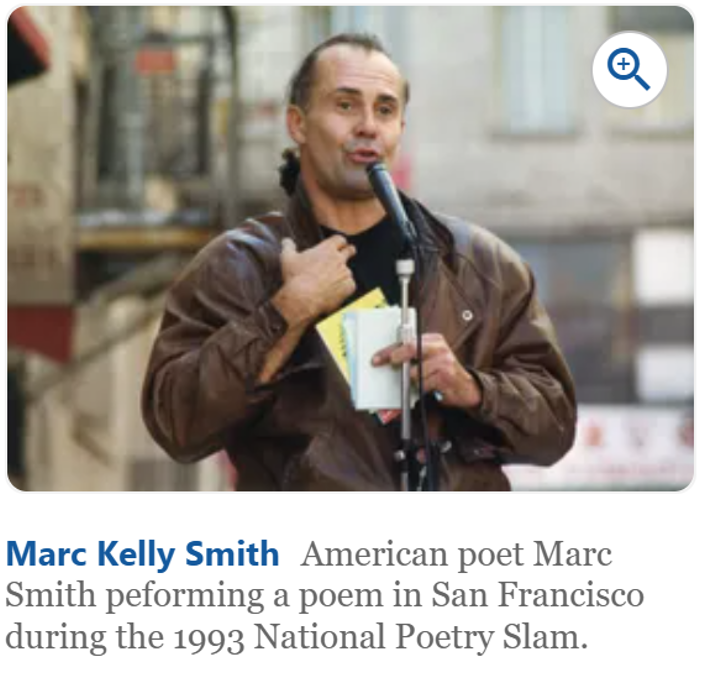
Marc Kelly Smith is credited with the idea of slam poetry: a timed, open performance for anyone (who wished to participate); a combination of spoken art, writing and competition; the judges being five random people selected from the audience. Smith contests the idea of those who are opposed to competition in art, stating: “The point is not the points. The point is the poem.”
The aesthetics of slam poetry are centred around emotional intensity and authenticity. Poets regularly voice raw, unfiltered thoughts and use the high-energy and passionate genre to highlight social, personal and political issues. The landscape of slam poetry challenges traditional poetic and literary norms; allowing for more diverse voices and experiences.
Waiting for my first ever performance, I was greeted by the stereotypical crowd you would expect; as Joe Weil describes it, “a hipster’s pep rally.” There is the green-haired neurodiverse, the non-binary skater, the tall, brooding vampire, and, as you would typically expect, the self-confessed bisexual Asian in an Akubra hat donning a green Hawaiian shirt. As always, there are exceptions to the rule.
I don’t hear the first host’s name as I am trying to remember the flow and words of my poem. However, I do remember the political rhetoric of their opening as it hit every slam poetry cliché: racism, fascism and gender equality. If I didn’t before, I now knew I was at a slam poetry event.
The next host, alias ‘The Antipoet,’ comes off as fun-loving and intensely energetic. He displays political undertones and a clear passion for the genre. In a May/June 2004 manifesto, he speaks of the best poetry: “It is raw. It should make you squirm; its beautiful stark reality should even hurt you, make you flinch, force you to block your ears.”
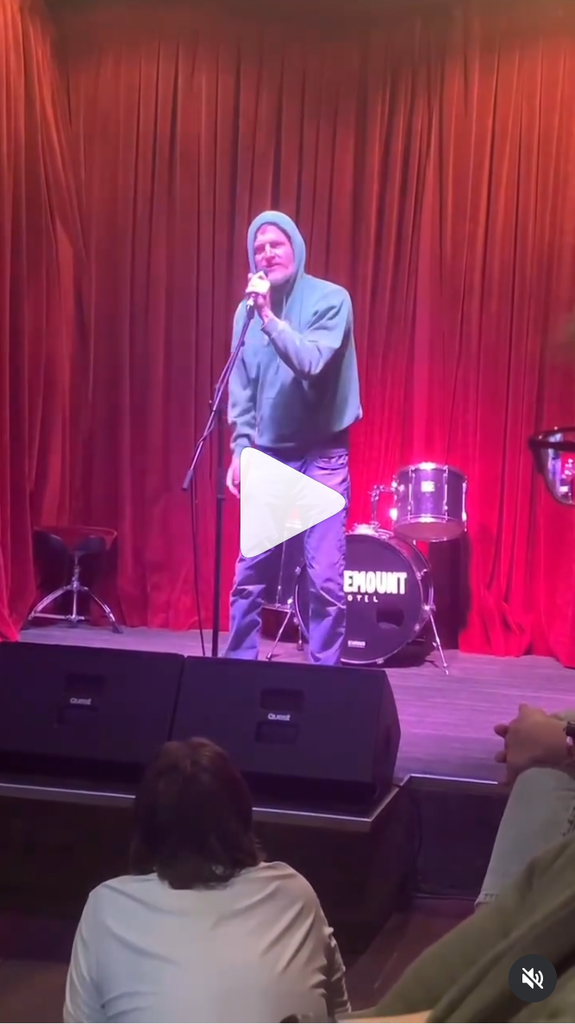
I end up (picked out of a random hat selection) being the third speaker up to perform. With my ‘elder millennial’ (also my alias) attire slipped on (complete with Seattle Supersonics hooded jumper), I step up to the stage. The words of Eminem echo in my mind, but like Hamilton, I “summon all the courage I require,” and deliver my first performance.
What does this mean in the long run? As a highly competitive individual, I look at the winning formula: the highly personal, the funny and the highly political. “Is the point the poetry?” If I keep that mentality, this could be therapy (ooh, new line!). This platform could be that missing manifestation of desire to write, to yearn, to breathe free! (oops, wrong manifesto!). Weil describes the genre as ego-driven and appealing to a “demographic of media: the 18-34 year old target market” who abandon real talk and fear taking real chances. Yet upon completion, two phrases from the hosts echoed in my brain: “The next poem you hear could save your life,” and “I’ve heard poetry that still lingers in my head now.” Maybe the point is the poetry, and the choices and chances matter.
Upon self-reflection, as a white male, aged in the (ah-hem) next bracket, I felt my performance (on a competition standpoint) was going to count for very little. The reception was positive, and the judging was fair, but the winners were the funny one and…the funny one. The formula won out. It was also won by members entrenched in this tight-knit community. Will I return and continue to follow the words of Marc Kelly Smith? Since that fateful Sunday, I have written two new poems: a sardonic essay about my father, and a commentary on the social world. I know the first was ‘all me;’ my own brand of self-deprecating, authentic prose. The second? Am I already being influenced by competition and wanting to fit into this world, any world? Is poetry the point, or is competition the end goal?
 Tilly Bunnage
  Josh
Josh  Idea Phochaiya