
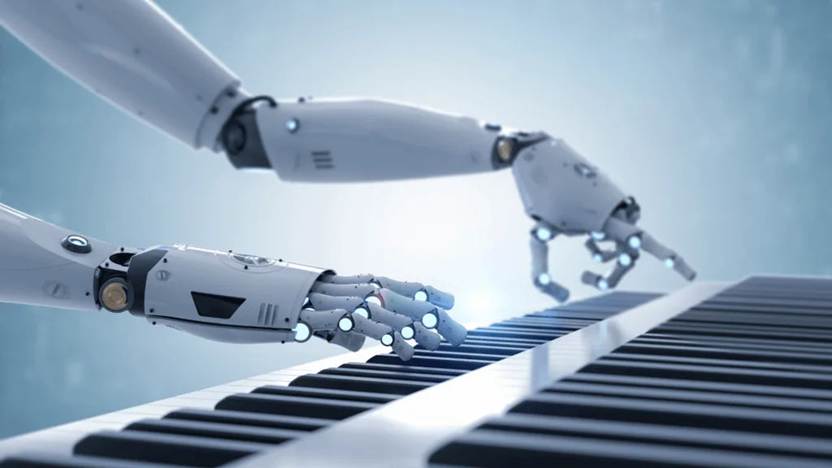
What would happen if the next hit song on the chart was not composed by a human artist, but generated by an algorithm based on thousands of copyrighted music? This scenario is no longer a hypothesis. With the rapid development of artificial intelligence technology, music can be generated in a few seconds and can imitate the voice, style and even creative logic of a specific artist.
However, this technological progress is causing a series of profound copyright and ethical issues. AI-generated music is not only a change in the way of music production, but also essentially a challenge to the labour value of creators.
This article argues that AI-generated music does not merely threaten copyright but systematically exploits copyrighted works under the guise of technological innovation. This exploitation operates through three mechanisms: large-scale data extraction, misappropriation of artistic identity, and gaps in legal regulation, each of which will be examined in turn.
AI training: the basis of systematic copyright exploitation
The operation of AI music systems depends on the training of massive music data, most of which comes from unauthorized copyrighted content. This process is not a neutral data processing, but a structural copyright exploitation (Roberts, 2025; Welsh, 2025).
AI companies convert creative works into training data without authorization or compensation, and thus generate output content with commercial value – such as songs produced by algorithms, but the creators cannot get any benefits from it. These dynamic transforms creative labour into raw materials for technological production, fundamentally changing the relationship between authorship and economic returns.
– by Applealmond
Research shows that about 83% of AI training data sets contain unauthorized copyright content. According to an industry analysis released by ZipDo in 2026, the unauthorized use of music works for AI training is severe, leading to an estimated $2 billion annual revenue loss for the music industry and numerous high‑stakes copyright lawsuits (Holm, 2026). This means that most AI systems have been built on the unauthorized use of creators’ works during the development process.
In addition, industry surveys show that AI companies usually capture music data through streaming platforms, online databases and user-uploaded content (Roberts, 2025). Some music publishing organizations even pointed out that AI companies have “grabbed data from the works of millions of artists for training models”.
“Machine learning models are trained using a vast database of visual content sourced from the internet.
This consists of not only public domain images, but copyrighted images scraped from artists’ portfolios on websites like Pinterest, resulting in some artists potentially competing against their own previous work in the marketplace.”
More seriously, this kind of data use almost completely bypasses the creator’s right to know and gain. According to the data, 97% of creators said that their work had been used for AI training without permission. The impact of this unauthorized use goes far beyond the issue of the right to consent, but extends directly to the level of economic damage.
In 2025 alone, Deezer, a large-scale music streaming platform, detected more than 13.4 million music works completely generated by AI, and the upload volume of AI-generated songs reached about 60,000 per day, accounting for nearly 39% of the daily new content of the platform (TechRepublic, 202 6). Despite such a large amount of content, AI-generated music accounts for only 1% to 3% of the total number of plays. However, as many as 85% of AI-related plays were found to be fraudulent broadcasts, which artificially dilutes the royalty pool that should belong to real-life artists (TechRepublic, 2026). Spotify has removed more than 75 million junk audio tracks in the 12 months ending September 2025 – a number almost equal to the size of its entire music library (Spotify Newsroom, 2025). This large amount of AI content with low participation and potentially fraudulent playback systematically erodes the economic foundation of human music creation by consuming platform resources and diverting royalties revenue.
At the same time, AI companies often defend their behavior through “fair use” (Dube, 2024; Thubron, 2024). However, there is obvious controversy about this statement. Because when these data are used to generate new content with commercial value, their nature has gone beyond the rational use in the traditional sense.
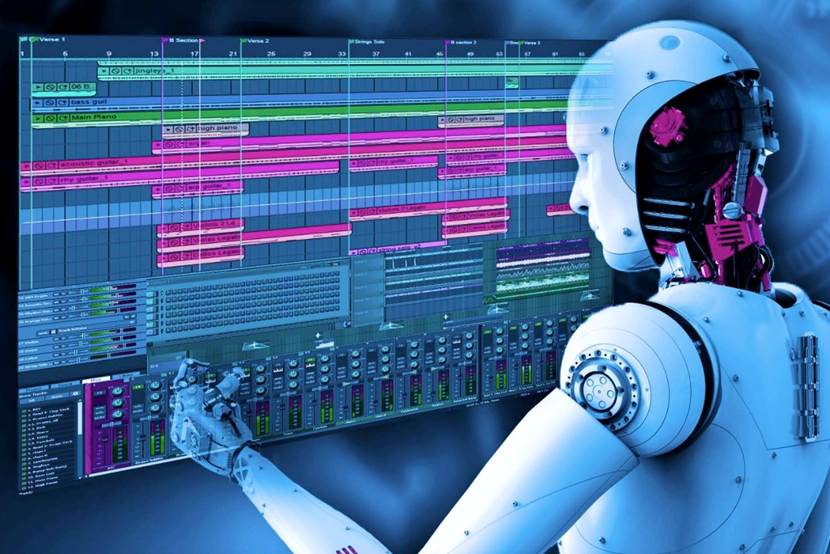
– by Upbeat Media
Therefore, AI training should not be understood as a mere technical process, but should be regarded as an exploitative mechanism that transforms creative labour into productive resources. This mechanism not only weakens the principle of copyright protection, but also redefines the relationship between creation and value.
AI’s misappropriation of artist identity
AI-generated music does not merely replicate existing works; it appropriates the identity of human creators by copying distinctive artistic styles (Sturm et al., 2019; Yglesias, 2026). This practice transforms artistic expression — which is rooted in personal experience and cultural context — into a machine-replicable asset.
– by Edward Lewis from Linkedin
Contemporary AI systems can generate highly realistic music that mimics the voice and style of specific artists. What’s more noteworthy is that a transnational survey shows that 97% of listeners cannot distinguish between AI music and human-created music (AFP, 2025). This means that AI not only copies the artistic style technically, but also blurs the boundary of “who the author is” at the cognitive level. This perceptual indistinction weakens the concept of “unique artistic expression” and brings practical challenges to copyright law enforcement – it may be difficult for listeners and even experts to judge the source of music.
This phenomenon should be understood as “identity appropriation” rather than a simple imitation. Artistic style is not a simple combination of technologies, but the embodiment of the artist’s personal experience, cultural background and emotional expression. When AI copies these elements, it actually reconstructs the artist’s creative identity without permission. Furthermore, as Mehta et al. (2025) pointed out, such systems tend to strengthen the mainstream music style and marginalize the cultural expression of minorities, thus exacerbating the existing inequality in cultural production.
– by gogoplus
From an industrial perspective, AI-generated music is expanding rapidly. For example, the data shows that more than 90% of commercial AI music in the first quarter of 2026 comes from the same platform (Suno). This centralized trend further shows that AI not only changes the way of creation, but also reshapes the structure of the music industry.
Therefore, AI generated music not only reproduces works of art, but also reconstructs artistic identity and cultural production mode. This change has a profound impact on the long-term development of creative industries.

– by Blikk
The failure of the legal system and the lack of supervision
The development of AI-generated music exposes the fundamental shortcomings of the existing copyright legal system (Lim, 2023; Yang, 2026).
First of all, it is difficult for copyright law to define the ownership of AI works. The current law has not made it clear who the author of AI-generated content is, nor can it clearly divide the responsibilities (Lim, 2023).

– by Sina Finance
Secondly, it has become extremely difficult to identify and track infringements. Because AI training involves complex data sources, creators often cannot prove that their works are used. Unlike traditional copyright infringement (specific copies can be identified and compared in traditional infringement), AI training will absorb a large number of works without storing direct copies, which makes forensic testing almost impossible (Yang, 2026). In addition, many AI companies do not disclose their training data sets on the grounds of trade secrets or proprietary technologies. This lack of transparency creates a major evidence barrier: creators can’t even confirm whether their work is included in it, let alone prove infringement in court.
At the same time, AI-related legal disputes are increasing rapidly. Data shows that between 2023 and 2024, there have been more than 30 lawsuits related to AI copyright in the United States.
In the music industry, the three major record companies (Universal, Sony and Warner) have also filed lawsuits against AI companies, accusing them of “large-scale copyright infringement”. By the end of 2025, Warner Music reached a settlement with Suno and signed a license agreement, while Universal Music reached a settlement with Udio in October 2025. However, as of early 2026, Sony Music continues to file active lawsuits against Suno and Udio, reflecting the fragmented and inconsistent response methods within the industry.
It is worth noting that Warner Music disclosed that its cooperation with Suno is expected to bring “material revenue“, which proves that the license agreement model is feasible – a fact that directly weakens the “reasonable use” Defense of AI companies’ claim that “there is no market for authorized training data”. Since then, Universal Music and Sony Music have requested the court to force the disclosure of the agreement between Warner and Suno, believing that the existence of the agreement refuted Suno’s legal position (Digital Music News, 2026).
This evolving legal pattern not only illustrates the persistence of copyright disputes, but also reflects the uneven process of the music industry’s transformation into the licensing model, which still makes a large number of creators and small rights holders unprotected in the absence of systematic reform.

– by Produce Like A Pro
In addition, these companies believe that AI-generated music may “directly compete with human artists and weaken its value”.
These cases show that the existing legal system not only fails to effectively supervise AI, but also allows the continuation of infringement to a certain extent. The core of this failure is that the legal status of “rational use” in the context of AI training is not yet clear. Although AI companies often invoke “reasonable use” to defend large-scale data extraction (Thubron, 2024), the court has not yet established a unified standard, especially in the case of direct competition between the generated content and the original work. This legal ambiguity allows infringement to continue, while transferring the burden of rights protection to individual creators and small rights holders, who often lack the resources to file lawsuits.
More broadly, the issue of AI copyright is becoming a global issue. Statistics show that global AI copyright-related legislation has increased by more than 237% since 2022, reflecting that countries are trying to meet this challenge.
However, the current legal reform still lags behind the development of technology. This lag enables AI companies to continue to expand in the regulatory gray area.

– by Brandtrack
AI generation music is not only a technological innovation, but also a systematic exploitation of creative labour. It has jointly built a new cultural production model through unauthorized data use, reproduction of artistic identity and loopholes in the legal system.
“What appears as technological innovation can also be a form of creative exploitation. Because human’s original works have become raw material for algorithmic profit.”
Without effective supervision, this model will gradually become the norm, thus weaken the value of artistic creation and change human understanding of “originality”.

– by Theverge
Therefore, in the era of artificial intelligence, protecting creators not only requires legal reform, but also fundamentally rethinking the value and meaning of creative labour. Without this double response, AI-generated music may normalize the exploitation of artistic identity and further deepen the structural inequality in cultural production.
Immediate action is required to prevent the normalization of creative exploitation. Policymakers, technology companies and creative communities must work together to establish a transparent data governance mechanism, an executable content use authorization mechanism and a fair compensation framework, and truly regard creative labour as the purpose itself, not just the raw material for algorithm innovation.
 TianYuran
  Lu Yunyan
  Pauleen