

The shift to an AI-based production model for digital news would be a change that could have significant implications for the nature of writing and its relationship to both producers and consumers. The shift towards using Artificial Intelligence (AI) in creating written content in digital media is not just about changing the tool used to write articles.
The use of AI is a fundamental change in how written content will be created, evaluated, distributed and accessed by consumers. While many media outlets are touting AI as a viable solution for helping journalists produce content at a higher volume, and potentially reducing costs associated with producing that content, there are other potential benefits such as reaching new audiences through new media.
AI has some advantages over humans when it comes to certain aspects of the writing process. For example, AI can assist with limited tasks or functions. For instance, AI can quickly provide a transcript of an interview, generate headline options, create captions, organise general background information etc.

Figure 1. AI infrastructure behind the media’s AI pivot. Source: Microsoft Official Blog.
The most compelling case for using AI in media is straightforward. Media outlets face financial pressures as their search traffic becomes volatile. Advertising dollars are less predictable. Media consumers have never been more fragmented. Many believe AI will provide smaller newsrooms with increased capacity to produce more content quickly and continue producing content when the business environment has become more challenging. AI presents an attractive option. AI could be used to develop initial drafts of headline copy, summarise meetings, facilitate translations, and generate explanatory content. This appears to be a method of accomplishing more work with fewer employees.
This is not merely theoretical. Business Insider laid off roughly 21 percent of its staff in 2025 amid declining search traffic and increasing utilisation of generative AI technology (Reuters, 2025). Business Insider was also accelerating its adoption of AI (Reuters, 2025). While this serves as evidence as to why AI would be appealing to media organisations, it highlights the risk that using AI to reduce costs may ultimately diminish the value of the content itself. This is the danger inherent in conflating cost savings with quality.
In a justifiable argument against the notion that AI has no value, there exist many applications for the technology that are practical and relatively non-controversial. A journalist could use a transcription program to convert audio recordings of interviews into written text. A writer might utilise an AI-based note sorter prior to beginning the composition phase. In each case, time would likely be saved; however, the human writer remains in control of the final product.
It is at the point where media organisations begin using AI as a strategic component that the risks become apparent. Koebler (2025) argued that forcing journalists to utilise AI tools constitutes neither a legitimate nor viable business model, and the only feasible approach will be demonstrating why human effort merits continued financial support. I concur with Koebler’s distinction regarding how AI can aid in the writing process while ensuring that human judgement is maintained.
Koebler’s distinction aligns with the format and intent of a feature article. While a feature article does provide factual information, one of its primary purposes is to articulate an opinion. If a media organisation utilises AI solely as a means to generate content without providing readers with meaningful reasons to care, the articles may appear complete but have little substance. Instead of asking whether AI can create text, the appropriate inquiry is whether such text provides readers with sufficient justification to be interested.
The primary concern with the use of AI in writing is the question of understanding. While humans are capable of producing grammatically correct sentences that flow together smoothly, they do so because those sentences express their own thought process. While an LLM may create coherent-looking text based on predictions, it has no real understanding of the world in the same way that humans do.
The use of LLMs to produce written content for the internet could be problematic. A human who writes using words like fear, anger, or hope is doing so from prior experience, memories and judgement, whereas an LLM will almost always be generating these same words based upon the likelihood that those words appear after others. From a semiotic viewpoint, human writers connect the signifier to the signified. While an LLM can replicate the signifier, it is not connected in the same way to meaning. The quality of writing produced by an LLM will generally be diminished whenever the task requires interpretation, critical analysis and a personally held point of view.
Online readers already contend with many iterations of identical content; therefore, articles and blogs need to contain something more than well-written, error-free prose. Each piece of writing needs to demonstrate an identifiable authorial voice. It needs to illustrate what the writer saw, why that writer believes the issue matters and what conclusions the writer reached.
I have another concern that is more functional. Since AI systems are based on the output of other humans, AI may make readers want to visit the originating website less often. This creates an unusual feedback loop. First, authors write original stories. Next, the AI web crawler collects the information. Then, the AI system returns a summary. The user may be so happy with the response that they never look up the original story. While this is convenient, it hurts the author who invested time and money into producing the piece.
Koebler (2025) provides a simple example using 404 Media. As he explains, ChatGPT generated more traffic to his site than did Google; however, since AI uses internet content as well, he states that ChatGPT was much less valuable to him than Google. Tomé (2025) stated that there is a crawl-to-refer problem among some AI companies; they crawl significantly more pages than the number of visitors they refer back to those pages. The Cloudflare report provided data that showed that for each referred visitor Anthropic crawled approximately 38,000 pages in July 2025 and OpenAI crawled approximately 1,091 pages per referred visitor (Tomé, 2025). Although both sets of numbers may not represent all referrals from native applications, the trend remains significant. AI systems can benefit financially from the use of your content and do not give sufficient credit or exposure back to you.
The pivot to AI could negatively affect online writing economically. If publishers lose traffic and money, then they may lay off writers. If writers are laid off, then we will have less new reporting available for AI systems to summarise. Consequently, the internet will be filled with rehashed versions written by fewer individuals.
It also affects how readers consume news. At first glance, reading an AI answer is easier than opening five separate articles. However, if the authors who wrote the stories disappear, then the AI responses become inferior. An answer only has value if there is credible original content behind it. Losing traffic represents a loss of quality.
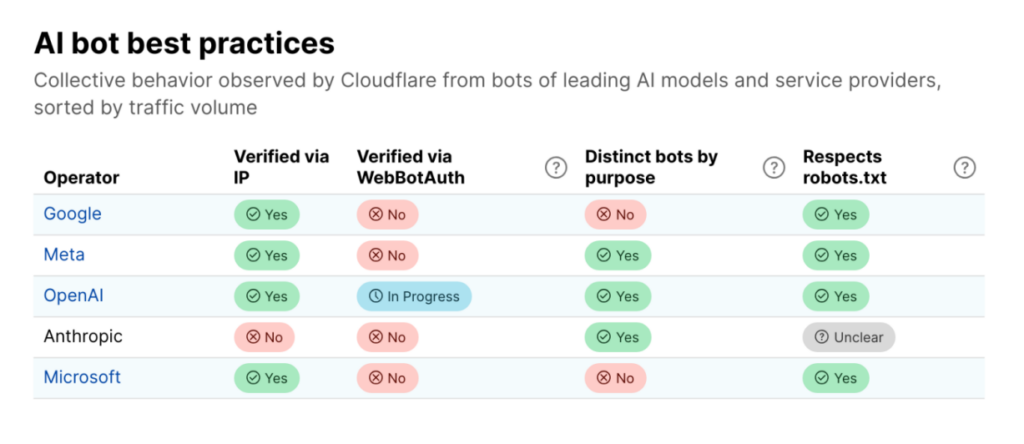
Figure 2. How AI crawling can weaken publisher traffic. Source: author’s diagram based on Koebler (2025) and Tomé (2025).
My third major concern is that using unchecked AI-generated writing will weaken the reader-writer relationship. While online writing does compete for time, it also competes for an audience’s trust, voice, judgement and credibility. People go back to writers and publications for one reason: they have faith that someone real did the work. They don’t always have to agree with the writer, but they know that there is a person accountable for what was written.
The use of AI-generated writing without careful consideration can blur this accountability. AI-generated writing can look like credible news, opinion or critique, yet no one knows who bears the responsibility for creating such content. That is what people typically refer to as slop: content that takes up space, but provides little substance, thoughtfulness, accuracy or viewpoint.
Koebler (2025) believes that media organisations do not need to compete with this inexpensive content by competing solely on price. Instead, media organisations should compete based upon quality and communicate with their readership as if the organisation is speaking directly to them. This concern aligns closely with Juliana S.’s unit blog post, Why AI Writing Sounds Right, but Feels Wrong (Juliana S., 2025). Both posts ask why acceptable-sounding machine-generated text feels less persuasive than text created by humans. The best way for online writing to evolve would not be to appear more automatic. Rather, it would be to allow the individual writer to become more visible.
I have also had personal experiences with this issue during my online reading experiences. When I read a high-quality piece of online journalism, I am seeking information. But I am also seeking a rationale from the author about why the information matters. I am looking for evidence that the author chose each example carefully and accepted responsibility for making the arguments in the article. If the article reads similarly to a generic response produced by a machine, I have less confidence in its validity.
The fact that Nvidia was at the centre of the AI boom made sense because its graphics cards are the backbone of most AI systems. Nvidia was reported as the first company to hit a $5 trillion market cap in October 2025 (Nishant & Singh, 2025). The same report stated that Nvidia’s $5 trillion market cap was largely due to demand driven by a global AI boom. These financial stories put pressure on other companies to say they are AI-first if there is money to be had from the investor crowd. The MIT GenAI Divide report gives context here (Challapally et al., 2025). The report tells us that while corporations have been spending large sums of money on AI, few AI pilot projects have created measurable financial returns. This does not mean that AI has no potential value; it shows that hype over AI and results from using AI do not always go hand-in-hand. When talking about online media, the distinction between hype and results is important. A corporation can tell you they are working to make themselves more efficient through the use of AI. But what matters is whether your readers receive quality content. Are writers able to write meaningful content?
That explains why I wouldn’t frame the debate about the role of AI in journalism as technology vs. traditionalism. Technology has always influenced media. Writing now appears differently than it did during blogs, search engines, social media, or newsletters. What makes the AI pivot unique and problematic is that it can disconnect writing from those who bring meaning and accountability. Scale is rewarded by capital; however, quality writing requires attention.
 TianYuran
  Lu Yunyan
  Pauleen