
Coachella Poster. Image @Instagram
Coachella was regarded as one of the most influential music festivals in the world, but now it is known for its influencer culture and brand activations. I’ve been a loyal fan of Coachella since 2019, when BLACKPINK was first time invited to perform on Coachella. What surprises me this year is the festival invites Justin Bieber. On 11th April 2026, Justin Bieber appeared on Coachella stage after a four-year break. His returning surprised millions of fans and broke Coachella’s single-day ticket record. We can tell that the event continues to catch global attention. However, increasing popularity of Coachella brings an issue: is Coachella still focus on high-quality music, or has it become a media spectator driven by commercial and digital forces?
Coachella was founded in 1999, and it traditionally focused on live music and art expression. Over the past decade, Coachella has experienced a significant transformation. The festival becomes a platform for social media content, celebrity appearance and large-scale production. The festival has been strongly shaped by “millennial nostalgia” and spectacle-driven recent years. It means that audience expectations now extend far beyond music. Moreover, performance quality is also challenged. For instance, female K-pop group LE SSERAFIM was invited to Coachella, but their performance was not satisfied to audiences.
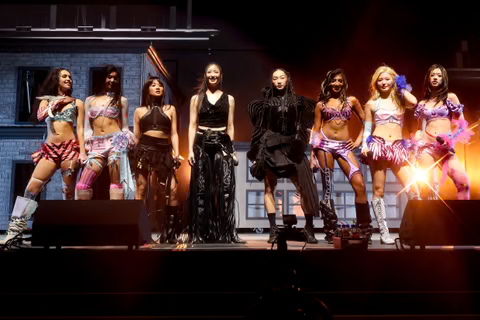
KATSEYE performance on Coachella 2026. Image @The Guardian
However, the returning of Justin Bieber also caused a discussion of his performance. Reactions to his performance were sharply divided. Some people described the set emotionally showed self-indulgent. His performance changed standards at major festivals. In contrast, some people emphasized the strong sense of nostalgia and personal connection experienced by fans. Fans increasingly value authenticity and emotional resonance is over technical perfection. To be honest, I agree with both of sides. As a loyal music fan of Justin Biber, I was super excited while watching his performance, especially there was a long gap from the last time he was on stage. And I listened to so many classical songs that I like. It was so nice I could sing along with Justin and thousands of audiences. But his performance was plain without special design and costume. He just sat on the stage and searched his previous music videos randomly. Two different comments highlight a key issue in contemporary pop culture. Standards and expectations of a successful live performance are changing.
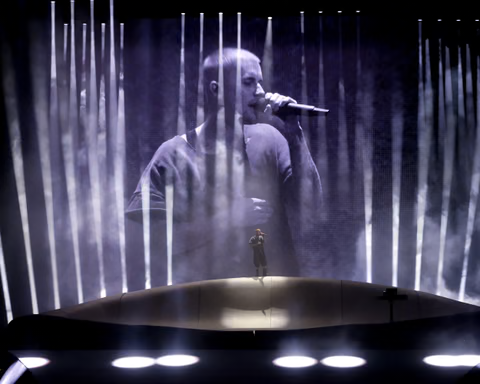
Justin Bieber performance on Coachella. Image @ The Guardian
While scrolling my phone on TikTok, I feel like the festival operates as a commercial ecosystem now. Influencer participation at Coachella is no longer incidental but strategically organized. Brands use the platform with creators to generate online contents to promote their products. The festival can greatly increase popularity and visibility. Therefore, the festival is no longer purely for music but a platform for marketing.
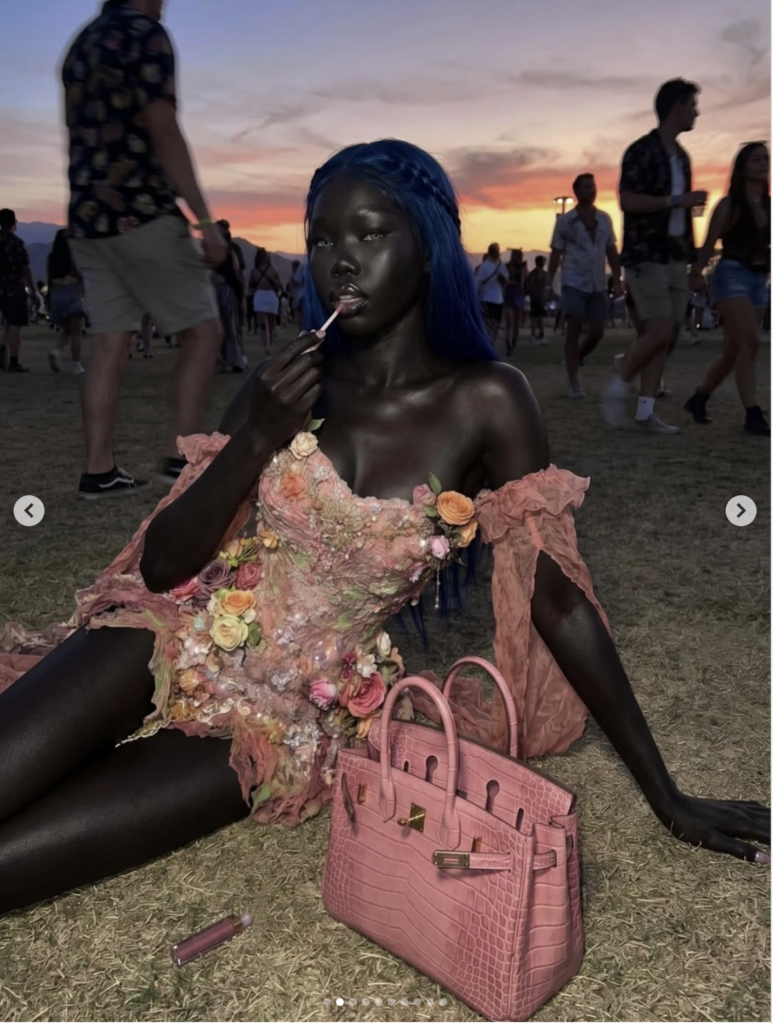
Influencer posting pictures for showing handle bag and lipstick at Coachella. Image @Instagram
Moreover, the commercial nature of the festival is reflected in the rising costs of its tickets. I have watched so many videos talking about spending 30 thousand dollars attending Coachella. The figure becomes more unaffordable and unreasonable. A report shows that participations need to pay high costs of food and services. Daily spending may exceed 100 dollars. What is more, normal participations don’t have good living conditions, such as sleeping in camps. They have to wait in line 2 to 3 hours to take a bath. However, for those VIP participations, who may be invited by the event, are offered nice hotels and good seats. It is not fair and arouses the dissatisfaction of many participations. All of these information makes me feel that Coachella is no longer a festival to enjoy music and culture but an exclusive and commercial event.
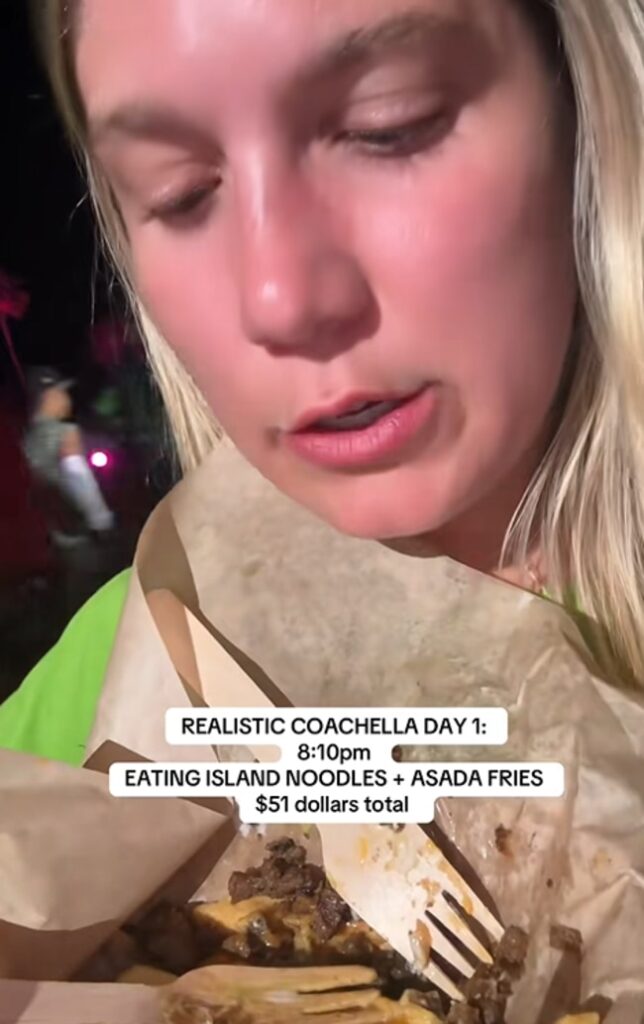
Normal Participations Vlog at Coachella, including the insane prices for food. Image: @TiTok
However, it would be over simplistic to frame these developments as entirely negative. I think that Coachella has evolved into a multifaceted cultural platform. It integrates music, fashion and digital media platforms. The change reflects how audiences engage with entertainment in a digitally connected world. Influencers and brands want to get more attractions through Coachella. The festival now gives a holistic cultural experience a purely musical one for many audiences.
At last, I think the transformation of Coachella reflects a shift in contemporary media. Cultural events are increasingly shaped by visibility, branding and digital consumption. I believe put too much attention on commerce may ignore the original purpose of holding the event. While music remains a central element, it is no longer the sole focus. As audiences continue to engage with the festival both physically and online, the challenge is redefining what Coachella really wants to represent. In addition, the festival also has to make a balance in retaining its artistic identity in an increasingly commercialized landscape.
 Shoujie Wang
  Yinan Zhou
  SUN Yinchen