
Do a google search for wildlife conservation charity and youre likely to land on one of the World Wildlife Fund’s websites.
It’s got a catchy mission statement and an iconic logo. There’s even a nice big unmissable button on the top that says Support WWF, so that every donor knows where to send their money. A reputable website, in other words, and one that befits a reputable charity from a reputable industry. And yet, this same conservation industry is currently overseeing the forced eviction of the Maasai people from Tanzania’s Ngorongoro Conservation Area — a process so brazenly rigged that the government commissions set up to review it have been referred to as “a sham, a gimmick designed to give Tanzania’s violent persecution of the Maasai a veneer of respectability.”
But, yknow, everything for the wildlife, right?
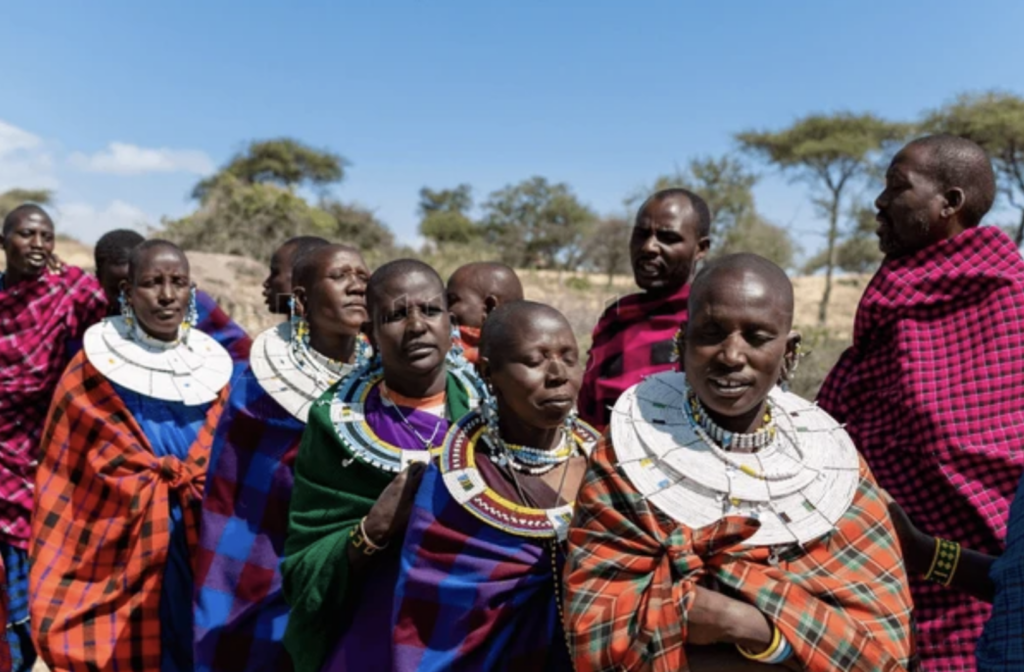
Now, to be fair to the conservation establishment, they would like the general public to understand, in no uncertain terms, that they are deeply committed to indigenous rights. So committed, in fact, that they have policy documents, safeguarding frameworks, and entire consultative bodies to prove it. They will tell you that lessons have been learned, that the model is evolving, that this time is different. What they are less keen to advertise is that the model producing these evictions — Frantz Fanon, eat your heart out — is the same one they have been running for over a century.
There’s even a term for it: “fortress conservation“. Draw a boundary. Remove the humans. Hand guns to the people enforcing it and look the other way. And if some women are raped and some children beaten in the process — well, that’s the price to pay for a better future. The people being evicted from Ngorongoro were explicitly guaranteed the right to remain there when the conservation area was established in 1959. That guarantee is now being quietly dismantled to make way for safari tourism.
The frameworks get updated. The policy language gets softer. The commissions get convened and then quietly buried. But the model that produced Ngorongoro — exclude, arm, enforce, deny — remains the dominant framework for protected areas across the globe.
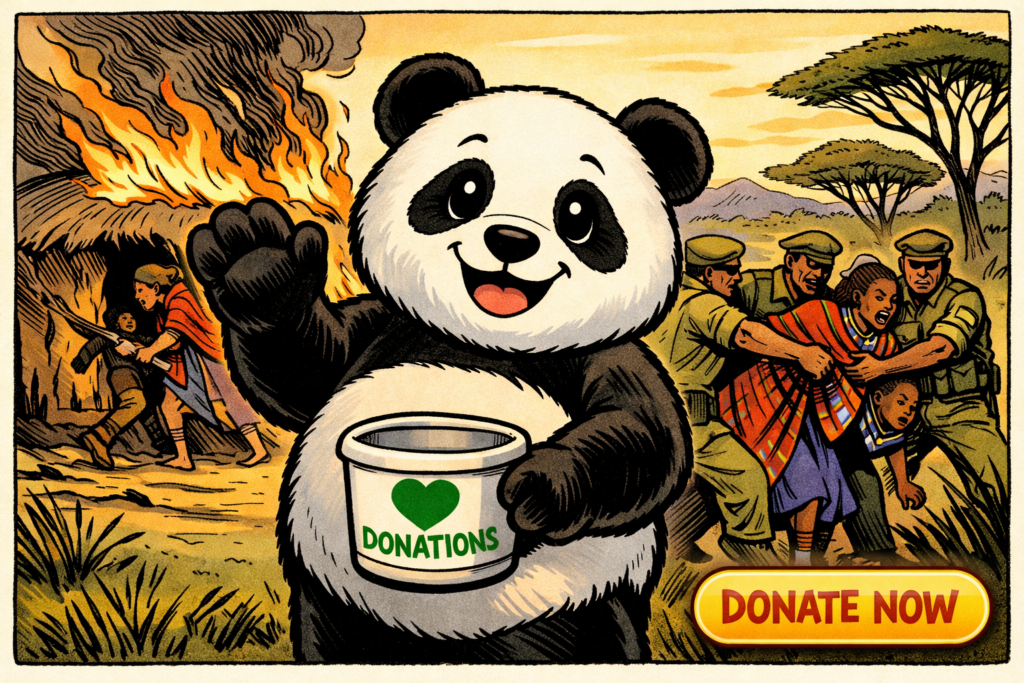
The structure remains intact. The donation button still works.
So next time you see that panda, ask yourself what it’s standing in front of.
 Joleen Jublee
  Jamez
Jamez  Scarlett Johnstone