
OLED screens are increasingly being adopted by companies for use in mobile phones or computers, as they incorporate more advanced technology, which can make the phones screens brighter.
In modern life, digital screens are used almost constantly. Many people browse social media late at night, watching short videos while go to work or school, or read novels on their phones in bed. Smartphones have become a central part of our lives, used for communication, entertainment and work. Consequently, our eyes are constantly focused on the bright screens of our phones, display technology has become extremely important.

Supporters of OLED technology believe it represents a significant change compared to traditional LCD displays. Since each pixel of OLED can be controlled and have its own light, it can produce better contrast and richer colors. According to Guo et al. (2025), in terms of OLED materials and display structure, these displays are also thinner and more energy efficient than older technologies.
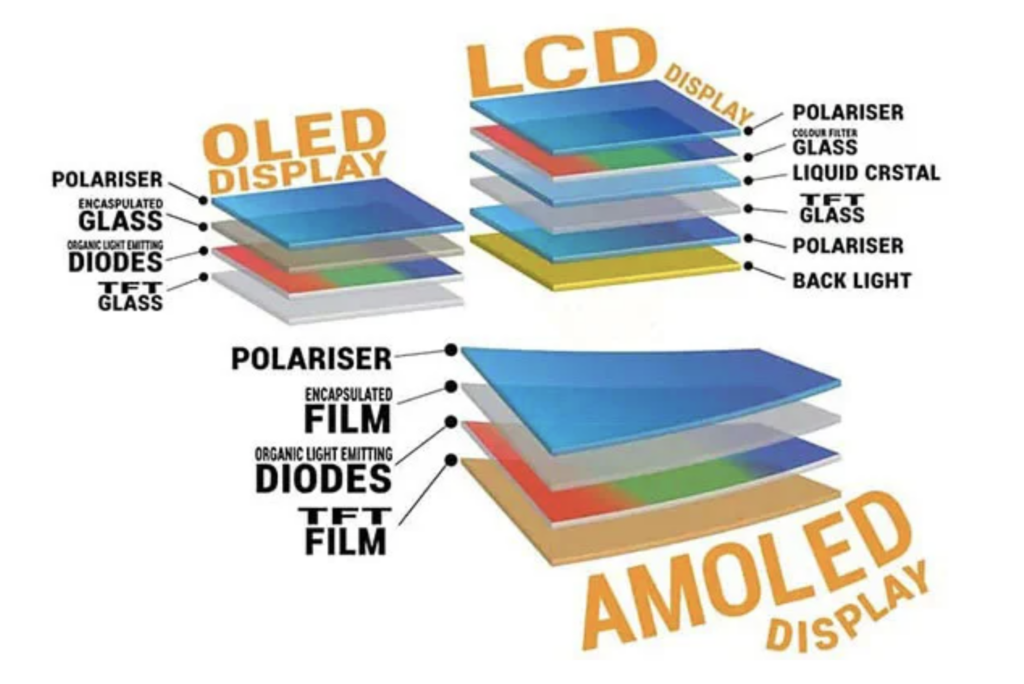
image source: the difference between OLED and LCD
However, technological improvement does not always mean a better experiences for users. One of the biggest issues with OLED screens is that they may cause eye fatigue. one possible reason is that some OLED displays use pulse-width modulation (PWM) to control screen brightness. This technology can open and close the display screen more quickly at a very high frequency, making the phones to better show different brightness levels. Although this flickering is usually not consciously visible to people, some studies have shown that it may cause visual discomfort to some users, which can potentially lead to eye strain (Shpychko 2025).
YouTube video of eye strain: https://www.youtube.com/watch?v=Ovs0p3jJJt4
With the continuous development of display technology, companies typically focus on making screens clear and brighter. However, these improvement do not always guarantee a better user experiences. If only the screen becomes advanced but brings discomfort to people, it will cause a question about the direction of technological development. Although OLED screens have thinner screens, better colors and energy efficiency, people use their phones more frequently in their daily lives.
Therefore, when companies use OLED screen technology, they should focus on how display technologies affect the long-term health and comfort of users rather than just pay attention to visual performance. After all, looking at phone screens is part of our lives. If new technology makes the display brighter and more impressive, but also makes our eyes more tired, is this really considered an improvement?
 Joleen Jublee
  Jamez
Jamez  Scarlett Johnstone