
It is said those who do not learn from history are doomed to repeat it.
There is much being said these days about internet safety and what is being done around the world to keep users, particularly children, safe online. While Australia pioneers world-first legislation to ban under-16s from social media platforms such as X and YouTube, other nations have turned to using controversial AI-powered verification checks to estimate a person’s age and prevent them from accessing inappropriate content such as pornography and violence, to mixed success. Yet these measures do not address online games such as Roblox, one of the largest online social platforms marketed primarily at children and young people under the age of 18, and one that is no stranger to having questions raised about its safety and appropriateness for its target demographic. However, due to recent high-profile controversies and perceived missteps by management, Roblox now faces renewed global scrutiny, as well as legal action, about its seeming inability to adequately protect its vulnerable user-base from paedophiles, groomers and other bad actors.
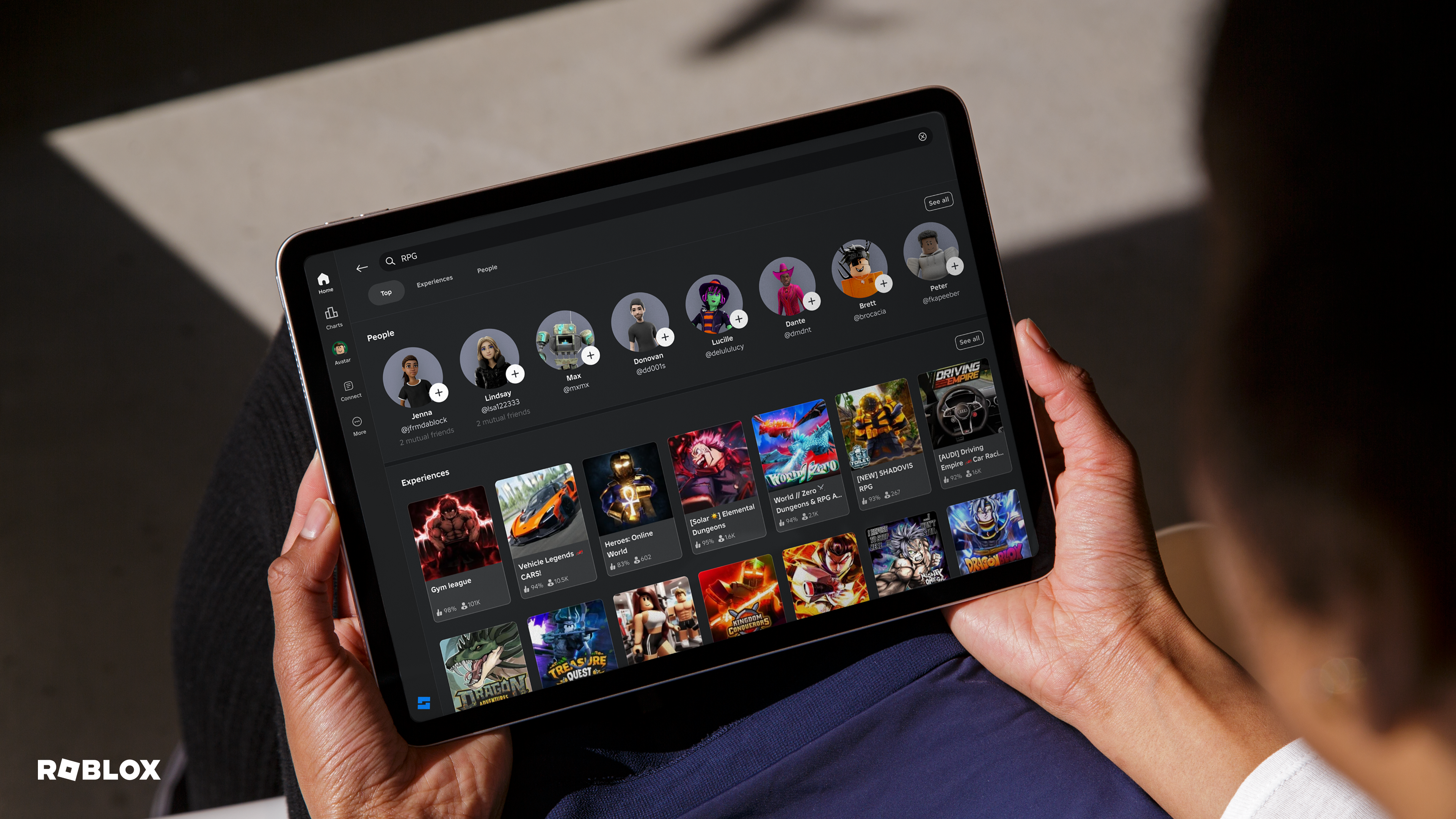
Ask any child today how they spend their time online and the chances are good that one of the first things they mention will inevitably mention Roblox. The hugely popular “virtual universe” sees roughly 111 million users per day as of Q2 2025, the vast majority being minors and 40% being under 13-years-old, with each able to explore a vast number of virtual experiences and worlds, interacting with other users through in-game chat features, or chilling with friends in their own personal virtual space. Using the platform users can create and share their own games, locations, even items that can be worn by other users in exchange for the in-game digital currency “Robux”, earning a percentage from every purchase. Robux itself can be purchased using real money through the Roblox online store, or by redeeming codes from physical cards that can be bought in stores. In Australia it is the most popular gaming app among children aged between four and 18, making it the second-largest market for Roblox behind the US.
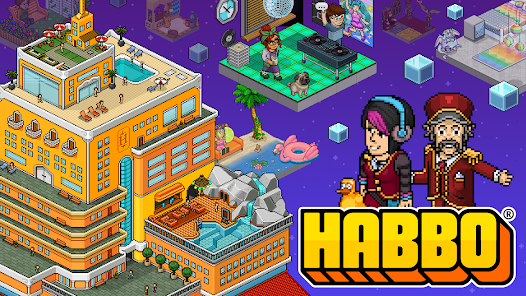
Readers above a certain age may be remembering a similar, albeit more primitive, online platform called Habbo Hotel. Launched in the early 2000s, in Habbo Hotel you could also create your own avatar, meet up and chat with other players in your own curated spaces with furniture and clothing purchased using a digital in-game currency purchased with real money. While the technology of the time could not match the scope and variety of what Roblox is capable of, Habbo Hotel was still incredibly popular, with an estimated peak of 10 million monthly users, many of whom were under the age of 18. However, in 2011 investors pulled out of the company and stores removed Habbo currency from its shelves after a Channel 4 investigation in the UK revealed the platform had been infiltrated by paedophiles. Conversations of an explicit and sexual nature being commonplace in spite of the company’s attempts at moderation. One investigator posing as an 11-year-old girl was propositioned within a couple of minutes of logging in, being “asked to strip, fully naked, and asked what [they would] do on a webcam” before being asked to take the conversation to another platform, one with fewer restrictions and protections. Such conversations were commonplace and often incentivised with the groomer offering in-game currency to the victims, something that they would often not be able to afford to buy themselves. The revelations bought the company to its knees. The service was taken offline for years, and while Habbo Hotel was eventually relaunched exclusively for over-18s, it is a shadow of its former self barely managing more than a few thousand daily users.
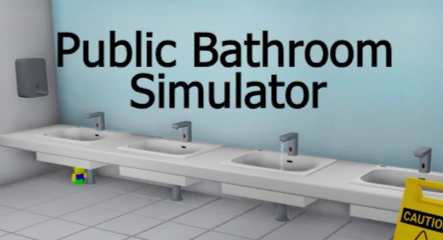
Despite eclipsing Habbo’s success in almost every possible metric, Roblox has seemingly not learned from the mistakes of the past and is now facing its own inquisition into the safety of its userbase after several high-profile controversies that have shed light on apparent inadequacies in its own moderation policies. Groomers are reportedly commonplace, as is the tactic of offering Robux to engage with certain illicit behaviours. Exact numbers are difficult to pin down, but a study suggests that at least one in ten adolescents have been the victim of online grooming, though the number of those approached and propositioned is likely higher, particularly among girls as they enter their teenage years. But while questions have long been asked about Roblox’ safety guard rails and the policies in place to protect its users, with Hindberg Research previously calling it an “X-Rated paedophile hellscape”, a large source of the problem is in its user-generated content where experiences created and shared within the community can be freely accessed with minimal vetting and allowed to stay online despite obvious warning flags. Roblox’ powerful tools allow users to create highly customed games, worlds, and experiences with their own content and rules. These experiences are then posted and shared for others to access and given an age-rating by the developer to limit who can access it. Experiences such as “Escape to Epstein Island” and the numerous “Diddy Parties”, referencing notorious paedophile Jeffrey Epstein and problematic hip-hop artist Sean “Diddy” Combs, are two examples that likely don’t require further elaboration, whereas in the now-deleted “Public Bathroom Simulator” players could simulate being watched while using the bathroom with an open stall, then slip in a puddle, have the lower parts of their clothing disappear, and then have other players imitate sexual acts upon their avatar. Each of the above user-created experiences, along with countless others with similar themes, could be self-rated in Roblox as being suitable for all ages and then accessed by all users, including children.

Questions surrounding Roblox’ ability to moderate itself have prevailed for years, but in August 2025 further fuel was poured onto the fire when the company made the decision to ban the YouTuber Schlep, himself a former victim of grooming on the platform from the age of 12, and threatened him with legal action due to his actions as a “predator hunter” who openly criticised the platform for failing to do enough to protect children from dangerous users. Schlep caught paedophiles online by posing as an under-age user and letting them send unsolicited explicit messages, arranging to meet in-person, then sharing these details with the police as he did not trust Roblox’ own official reporting and moderation systems due to his previous experiences of delays and ineffectiveness when doing so.
After a very public backlash against the decision, Roblox’ founder and CEO David Baszucki released a video statement explaining the decision, suggesting that “vigilantes” like Schlep were in fact assisting predators to bypass their own security measures by taking conversations offline, or to other platforms such as Discord, despite evidence indicating thin Schlep’s case that this was always being initiated by the groomer. Comparing the vigilantes’ actions to those of the predators, Roblox’ Chief Safety Officer Matt Kaufman argued they were in breach of the Roblox terms of service, and as a result they had no choice but to terminate Schlep’s account. This explanation did not go down well, with commenters suggesting that Roblox had decided to side with the predators instead of the children it is meant to be protecting.
The pushback against Roblox was swift, with YouTubers and influencers, most notably those part of Roblox’ Partner Program, quitting the platform en masse. News outlets around the world picked up the story raising awareness of the platform’s struggles to combat paedophiles to the parents of young users, and governments around the world began to sit up and take notice, with the US States of Kentucky and Louisiana suing the platform for failing to protect children, the families of victims also filing lawsuits, and some nations such as Algeria and Bahrain have either banned or are drafting up legislation to ban the platform outright, while others seek further assurances regarding the platform’s safety.
For Roblox’ part, attempting to moderate the real-time interactions of its 380 million active users, including chat and action logs and generated content, is a mammoth task. Impossible, some might say. Yet for a multi-billion-dollar company that markets itself primarily to children this is the very least it should be doing. While the company employs roughly 3200 moderators armed with a suite of AI powered tools to review reports of abuse and inappropriate content, by their own admission this is clearly insufficient to adequately police the billions of chat messages and hundreds, if not thousands, of reports every single day. For context, as of 2024 TikTok had about three times as many daily users as Roblox, but employed a moderation team of 40,000, more than 12 times larger.
Roblox says the safety of its users is paramount, and it is constantly introducing new safety measures to protect its player base such as live monitoring tool ParentTrust Hub for families, and AI facial recognition to help prevent deepfake uploads. They also claim that 99.8% of harmful content is removed within minutes through its automated systems. Yet over the years many users, including but certainly not limited to Schlep, have reported delays of days or even weeks before receiving a response to a report through Roblox’ systems, and when they do it is typically a generic email template. In some cases, users reported for inappropriate behaviour on the platform do not face sanctions or bans even after being reported. Studies have shown that the automated AI platforms being employed by Roblox are vastly inferior to human moderation, and entirely insufficient to properly protect users. This includes the Roblox developer who groomed a 12-year-old Schlep, who faced no repercussions after his mother reported the matter, and her son’s attempted suicide attempt, to the company. Indeed, the individual was only removed from the platform some time later after a female developer accused him of sexual assault.
If there is one positive to take away from the current spate of Roblox controversies, it’s that the spotlight is now shining upon the company at a critically opportune time. With Australia considering which platforms will be bound by its social media ban for under-16s, questions are now being asked as to whether Roblox should make the list, and the impact this would have on online gaming and the wider internet. Certainly, with Australia being such a large market for Roblox the impact of a ban on the company would be huge. Critics might argue that such a ban would be ineffective or difficult to enforce, and that may well be the case. However it’s difficult to argue in the defence of a platform marketed primarily at children that has harboured dangerous paedophiles and groomers for years, is demonstrably ineffective at removing them from their own services, and instead prioritises taking action to further protect these individuals by banning its users who are working with the police to do a better job at moderating Roblox and removing these predators than the company is. At the end of the day, Roblox failed to learn from the shortcomings of Habbo Hotel, and the internet would be a safer place for our vulnerable youth if it were to share its fate.
 TianYuran
  Lu Yunyan
  Pauleen