
I. Introduction
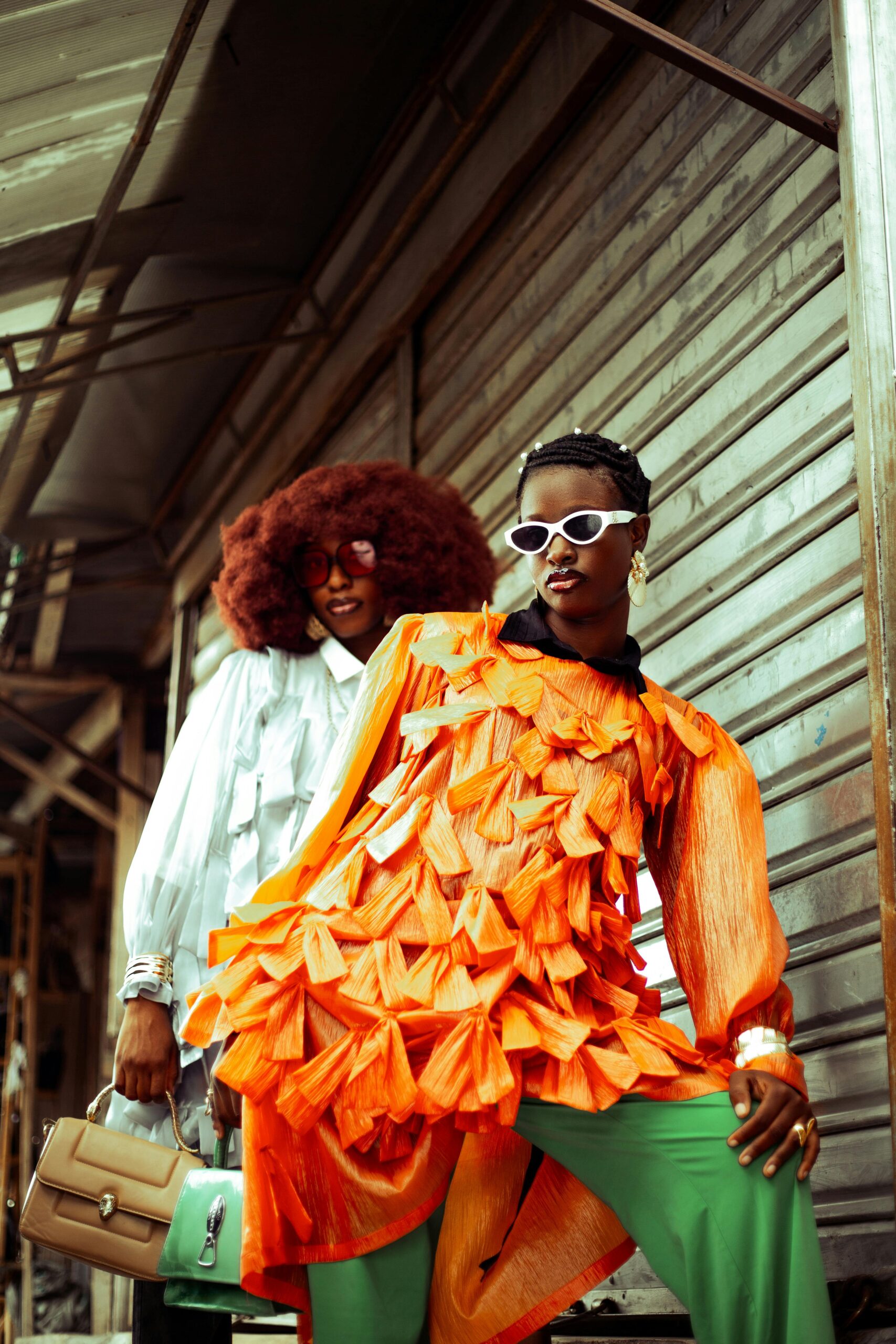
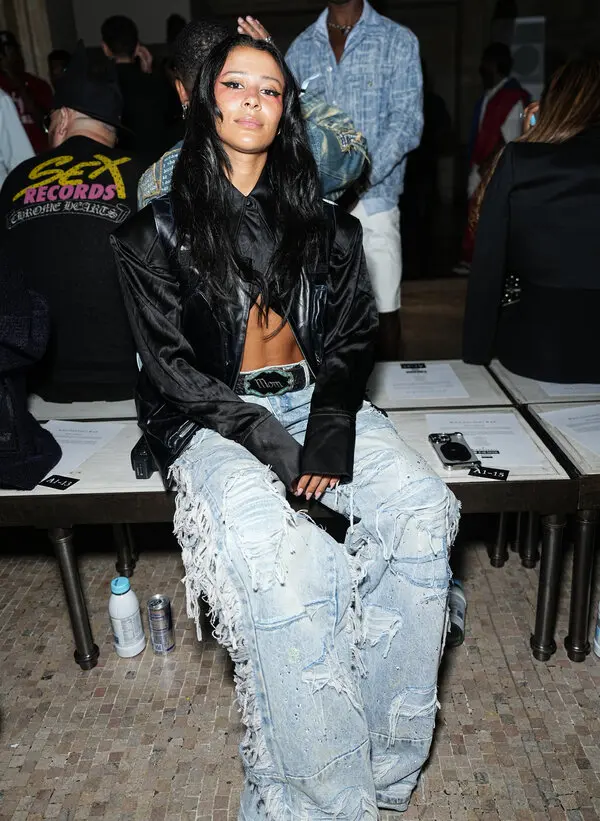
Is fashion just about what you wear? Hardly. As Elon Musk posted on X in March 2026, “Fashion in 2026 still looks like 2006. Time for change!” Fashion is a world where rebellions, artists, and visionaries once spoke the language of rebellion, challenged society and redefined beauty according to its own terms. Now, more people are starting to complain that modern fashion has lost its edge, and originality and creativity have been taken from fashion by the overwhelming power of social media trends. Once an art form is increasingly becoming a performance of conformity with viral aesthetics, disposable clothes, and unnotable algorithmic influences. Although fashion today is the most accessible and inclusive ever, its aesthetic value is compromised by the power of fast fashion, social media and algorithms that favor trends instead of creativity. This article argues that the expression of cultural identity and dissent that was expressed through fashion has been squashed by fast fashion, social media, and algorithmic curation and reduced to the monotony of disposable conformity. Unlike the ripped jeans of punk culture, which stood as an act of defiance against the mainstream (Diznew, n.d.), modernity’s predominant styles are now manufactured and promoted without the space of genuine creative rebellion.
II. Originality destroyed by fast fashion
Fast Fashion has resulted in clothing being more affordable and accessible, yet horribly damaging originality and quality in the fashion industry, which is the core of fashion. Firstly, prominent brands have based their powerful supply chains on copying rather than creating. Companies such as Shein and Zara oversell trend-based products quickly. Upon the recognition of a trend, sales data allows for trends to see more traction via select marketing and tailored suggestions on online shopping stores. Therefore, a cycle is created where popular styles get more attention, possibly pushing aside lesser-known designers or rising trends. Additionally, this devalues originality in design because creative concepts are immediately copied with no time for the independent makers to use their power to protect themselves.
Apart from the copying concerns, there are also the poor methods used in the fashion production procedure, which will further undermine the sense of fashion in three key approaches. A lot of the products in fast fashion are massively produced with low durability. The resulting low-quality stitching, low-quality fabrics, and poor-quality control lead to items that only hold up through a few years before they fall apart, and consumers must constantly buy new items to replace them. Instead of a shop or just buying in bulk, it’s all a never-ending cycle of buying and getting rid of cheap and poor products, thus making it impossible to create a personal style, as it’s only a revolving door of articles of clothing you can’t keep forever.
Fast fashion brands spread the same clothing trends around the world quickly with social media, influencer marketing, and mass production, leading to consumers of different backgrounds wearing more and more similar styles(Barnes & Lea‐Greenwood, 2006). As the whole industry is made and designed to create the new viral look as quickly as possible, there is no time for uniqueness — everyone ends up wearing the same thing at the same time in the same moment. With fast fashion insistent on constantly keeping up with new trends and looking good when following trends, consumers will be geared towards more of keeping up with new styles than on expressing their own individuality and personal aesthetic identity. In addition to this, the business model is intentionally crafted to encourage a higher rate of over-consumption rather than consuming thoughtfully. Sales occurring frequently and new arrivals often keeping consumers on their toes encourage the making of impulsive consumer decisions. The global embrace of athleisure style encapsulates this perfectly, yoga pants and sports bras are the signature of athleisure style. Born as a grassroots street trend that defied the lines between sportswear and everyday fashion, ‘athleisure’ was imbued with real cultural energy. But it soon had fast fashion titans like Shein, Zara, H&M, and ASOS realizing its potential for their money-making machines. In short order, identical items were on the shops’ counters at affordable prices, killing the trend’s level of individuality that made it interesting in the first place. As fashion commentator, explains, when a street style is copied by fast fashion’s mass production factories, the subversive spice that made it unique falls away.
III. Homogeneity brought by social media
Social media has caused fashion trends to be more homogenous and people’s inclination to dress similarly, rather than form their style, resulting in a lack of creative rebellion. First, social media has allowed trends to spread rapidly from platforms such as TikTok and Instagram, reaching millions of users in a few months due to its distribution characteristics at the speed of light. Fashion trends such as the #clean girl, #old money or #Y2K have become a global trend since they started trending up in months. With the recent TikTok trend cycles, micro-trends – short-lived fashion trends that go viral and die as fast – have started to happen like “Coconut Girl,” “Dark Academia,” or “Coastal Grandmother style”. This proved that social media results in fashion trend cycles where trend users are merely copying popular fashion instead of forming their unique fashion identity.

Moreover, social media influencers whose trends are fashionable are replacing conventional style authorities with a new form of digital peer pressure in a quicker fashion cycle. Fashion lovers do not await a seasonal publication; they await daily updates provided by fashion influencers on Instagram, TikTok, or YouTube. Many users purchase identical outfits, accessories, and makeup products suggested online. Social media influencers, bloggers, and content makers have taken over traditional magazines as style authorities. Therefore, fashion is centered around imitation rather than self-expression since millions of people are wearing the same looks at the same time endorsed by the same handful of creators. When trends move this fast, there’s no time to develop a reasonable attitude about fashion — what could have been personal style reduced to homogenized imitation, in which everybody looks identical as everybody follows the same feed.
Other than imitation, constant trend viewing puts individuals under pressure to conform to popular culture, and those who fail to follow trends may be made fun of by others. Individuals may feel outdated without following viral aesthetics, and social media has normalized mocking those who are considered behind the trend. Through fast fashion, the psychological sense of being manipulated by constantly changing trends is exploited in retail stores and social media. Zara, one of the most successful fast-fashion companies of all time, places clothes in their stores 10-15 days after creating the original design. This strategy limits and decreases the individuality and diversity of fashion choices, as they conform not through the favor of the individual, but out fear of being forgotten. What is most damaging to fashion is not simply that people follow trends, it is that the emerging style loses its potential to be a game-changer. it is that the nascent style lacks the capacity to become a game-changer, toppled before it can evolve into something truly original. On social media, a look that does not immediately go viral is dismissed, discarded, and replaced by the next trend, leaving no space for the kind of slow, organic creativity that has historically defined the most influential movements in fashion history.
IV. Algorithmic recommendation mechanism damages fashion aesthetics
The harm to fashion is not only in the social media content, but the intelligence recommendation mechanism of social media is also more hateful to fashion aesthetics, here we see it most clearly in the algorithm. Digital algorithms now shape public taste, pushing safe styles that are popular, sacrificing experimental creativity. Firstly, algorithms tend to prioritize content with high engagement, wherein the more popular an existing outfit is, the more it is amplified to new audiences. Outfits that have gained popularity are more likely to be algorithmically recommended, which induces a reinforcing loop with minimal potential for anything different or unconventional to surface. Today’s algorithmic recommendation displays a “popularity bias”, that is, they tend to emphasize already popular items in their recommendations, resulting in increased exposure for those items and undesired reinforcement effects due to that popularity over time, according to peer-reviewed research recently published in User Modeling and User-Adapted Interaction. This causes a dearth of visibility in unique or offbeat fashion concepts as the algorithm embarks on an endless shouting match, raising popular items again, while alternative concepts are stifled into silence. The reason why unconventional, creative fashion concepts are quietly suffocated, and woulf never reach the audience they target, not because of their lack of artistic merit, but their lack of existing engagement.
Secondly, it’s elaborating on that perspective, discovering niche designers and alternative styles being underrepresented online further, with the system being ingrained against this systemically. Independent designers often find it difficult to compete with mainstream trend content, not since it’s creative, but because the algorithm doesn’t care about creativity; it rewards clicks and online traffic. Critics suggest that algorithms threaten to promote the homogenization of sensibility where everybody ends up in homogenous attire dictated by whatever is popular through social media. Artists’ fashion designs try to align themselves in synergy with what algorithms deem as ‘marketable’, much at a disregard for daring innovation. Fashion, therefore, becomes transient and shallow instead of artistic or permanent. Grassroots designers and sustainable brands find it difficult to compete with algorithmically driven trends often. The algorithm doesn’t reward thoughtful and slow-made collections — it rewards velocity and virality. This conflict is shaping what even fashion represents. As such, creativity is obscured by what does the most algorithmically, and the genuine subversive voices in fashion become systematically marginalized.
Perhaps most disturbingly, people have begun to believe popularity itself to be a good sign of style, whereas people give up their own individual taste for algorithmic metrics of control. Many consumers confirm that all the viral products represent style and the spirit of the times, seeing the mass engagement as a mistake of actual quality. In Kyle Chayka’s book Filter World, the New Yorker writer suggests the dominant law of algorithmic society states “the popular becomes more popular, and the obscure becomes even less visible”, replacing the key part of the rule about a person’s artistic judgment by the metrics of engagement. What the phenomenon brought is that it redirects the judging of fashion from artistic value to the popularity of the algorithm, turning from a deeply personal type of self-expression to the more passive delivery of what the algorithm says is worth seeing.
V. Conclusion
Fashion is not entirely falling out of style, but its aesthetic substance faces danger from the forces of digital culture. Fast fashion cheapens originality by mindlessly reproducing and disposing of creative innovations at the speed of space; social media promotes uniformity by rewarding imitation at the expense of eccentricity; and algorithms promote popularity over creativity by structurally simplifying unbridled expression. Together, these three forces are shaping fashion not as a medium of art and self-expression, but as a pattern of consumption and conformity. To be any kind of meaningful self- expression, fashion needs its consumers and creators to consciously fight these forces, choosing individuality, craftsmanship, and authentic creativity over the transient validation of a viral stream.
 TianYuran
  Lu Yunyan
  Pauleen