
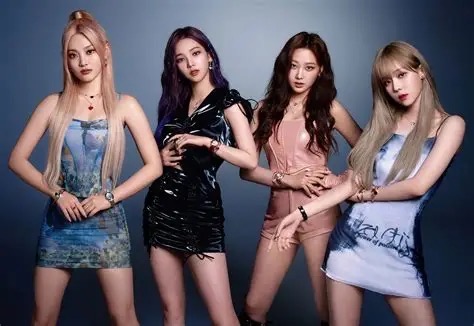
From BTS’s speech at the United Nations to BLACKPINK’s appearance on the Coachella stage, the influence of K-pop has far exceeded the Korean mainland. K-pop has grown into a cultural power that crosses language and geography. The question is: why can a local pop music quickly sweep the world and profoundly influence the culture and consumption of young people?
This article argues that the global success of K-pop lies not only in the music itself but also in its close integration with digital media, fan culture, and the consumer industry. K-pop is more than a genre of music. It has become a lifestyle, shaping youth identity, aesthetics, and spending patterns.
Digital Media and Global Communication
The rise of K-pop is inseparable from digital platforms. YouTube, Twitter, Instagram, and TikTok give K-pop direct access to a global audience. Unlike older forms of popular music that spread mainly through radio, CDs, and TV, K-pop entered global youth culture through social media networks.
YouTube is one of the strongest drivers of this growth. BTS’s music video Boy With Luv set a record by reaching over 70 million views in a single day. BLACKPINK’s How You Like That also broke records, showing how quickly K-pop can dominate online attention. Jin (2016) explains this as part of the “New Korean Wave,” where the combination of media platforms and cultural products gives Korea new power in global culture.
Twitter helps fans amplify songs and news through trending hashtags. For example, when BTS released Dynamite, Twitter reported over 100 million related tweets within days. TikTok plays another role. It encourages fans to take part in dance challenges that spread songs worldwide. Zico’s “Any Song Challenge” is one of the best-known cases, copied by millions of users across countries.
Example: Instagram is also important. BLACKPINK’s members each have tens of millions of followers, making them some of the most followed women in the world. Their posts are not only personal but also serve as global advertisements for fashion and beauty brands. On Instagram, fan accounts also remix content, turning small clips into memes that spread quickly. This shows that K-pop is not only music but also visual culture that thrives on image-based platforms.
Fans are not only watching but also creating. They post fancams, reaction videos, memes, and edits. Jenkins (2006) calls this “participatory culture.” This means fans help spread and even change K-pop content. Because of this, K-pop is not just distributed by companies. It lives inside digital youth culture itself.
Digital platforms also allow translation and subtitling. ARMY and other fan groups make songs and videos available in Spanish, English, Arabic, and many other languages. This labor makes K-pop understandable and accessible in almost every corner of the world. The role of digital platforms, combined with fan work, explains how K-pop became global in such a short time.

Fan Culture and Identity Recognition
K-pop’s success cannot be separated from its fans. Unlike traditional pop audiences, K-pop fans are active participants in communities. They create meaning, organize activities, and turn music into part of their lives.
BTS’s ARMY is one of the strongest examples. Fans do not only stream songs. They also organize global charity campaigns. In 2017, BTS joined UNICEF for the “Love Myself” project against violence. ARMY helped raise millions of dollars to support it. In 2020, ARMY also donated over $1 million to Black Lives Matter within a day, after BTS showed support. This shows how fandom is not only cultural but also political and social. Choi and Maliangkay (2015) argue that K-pop fandom works like a global “nation,” with fans linked by common values and goals.
For many young people, fandom is also about identity. Being ARMY or BLINK is not only about music taste. It is a way to belong to a group, to find friends, and to share values. Online spaces like Twitter, Discord, and Reddit make it easy to connect across borders. Duffett (2013) explains that fandom is a way to build meaning in modern media life.
Example: Many fans also engage in education. They learn Korean to understand lyrics and idol interviews. University programs in Korean studies report higher enrollments connected to K-pop’s rise. Some fans also learn about Korean culture, history, and even politics through fandom. This shows that fandom is not only about entertainment but also about cultural learning. In this way, K-pop fandom becomes a form of informal education and intercultural exchange.
Fans also create culture. They write fan fiction, draw fan art, and do dance covers. They translate and subtitle videos into many languages. Jenkins (2012) calls this “spreadable media,” meaning fans make media circulate into new contexts. This creative work helps K-pop spread beyond Korea and beyond language barriers.
But there are also challenges. Fans spend much time and money on these activities. Their labor often benefits entertainment companies without pay. Streaming campaigns, fan voting, and merchandise promotion all support sales. Some critics see this as exploitation. Still, many fans view their actions as a gift of love.
For youth, fandom is a space of empowerment. It offers belonging, identity, and the feeling of making a difference. Even if companies profit, fans also gain meaning. This double role makes fan culture central to K-pop’s global influence.
Consumption Patterns and the Idol Economy
K-pop has grown into a complete economic system. It sells not only music but also a full lifestyle. This is often called the “idol economy.” Idols are treated as cultural brands. They connect with music, fashion, beauty, and products in ways that turn fandom into consumption.
Luxury fashion partnerships are one of the most visible examples. BTS served as ambassadors for Louis Vuitton. BLACKPINK members represent Dior, Chanel, and Saint Laurent. These partnerships link K-pop with luxury industries. They also show how idols are more than performers. They are symbols of global style. Oh and Park (2012) explain that the K-pop industry has shifted from business-to-consumer (B2C) models to business-to-business (B2B) models. In this system, idols partner directly with global companies.
Merchandise and albums also play a major role. K-pop albums often come with collectible photo cards and limited goods. Fans buy multiple albums to collect sets. This has created huge sales numbers. For example, BTS’s Proof sold millions in 2022, partly because of collectible features. Lie (2015) writes that K-pop is unique because it turns emotional love into money flow.
Concerts are another key part of the idol economy. World tours by BTS and BLACKPINK sell out in minutes. In 2022-23, BLACKPINK sold more than 1.5 million tickets worldwide. Fans buy not only tickets but also official light sticks, t-shirts, and banners. These events create global youth gatherings.
Example: The idol economy also links strongly to Korea’s national exports. K-beauty has become a global trend worth billions of dollars. In 2021, Korean cosmetics exports reached over $7.5 billion, with strong markets in China, the U.S., and Southeast Asia. Much of this success is tied to idol endorsements. When idols appear in skincare commercials, young fans adopt their routines. This shows how cultural products and commercial industries work together to spread Korean influence.
For youth, these products are more than goods. They are ways to perform identity. Wearing a BLACKPINK hoodie, using BTS-endorsed makeup, or holding an official light stick is a statement of belonging. Consumption becomes symbolic. The idol economy makes K-pop a lifestyle that shapes how young people look, act, and spend.
Conclusion
K-pop shows how a local music form can become a global cultural force. Its global spread is not only because of music. It is because of digital media that carries it across borders, fans that build communities, and industries that turn it into lifestyle.
The research question can now be answered: K-pop has profoundly influenced global youth culture. It shapes identity, values, and consumption. Young people are not only listening. They are acting, sharing, and buying. K-pop has become both a cultural and economic system.
In the future, more local cultures may follow this path. Digital media, fan mobilization, and global business can help other cultural products become global. K-pop is a model for this new form of popular culture. It shows the power of youth but also the power of capitalism. Both forces together explain its rise.
The global spread of K-pop is not only a musical phenomenon, but also a mirror reflecting the multi layered characteristics of contemporary youth culture. It demonstrates the new logic of cultural dissemination in the digital age, content no longer flows from the center to the periphery, but forms a “decentralized” diffusion model through online platforms and fan actions. K-pop not only turns young people into passive audiences, but also into co-creators of culture. They constantly reshape cultural significance through social media, fan communities and consumption behaviors. This sense of participation enables young people to find self identity in the process of globalization and also provides new expression paths for non Western cultures. Meanwhile, the development of K-pop also reveals the dual aspects of capital and culture. On one hand, it has stimulated creativity, unity and cross cultural communication. On the other hand, it also deepens the logic of consumerism and image production, drawing both idols and fans into a continuous market cycle. The success of K-pop tells us that the future global culture will rely more on the interaction of technological platforms, fan networks and commercial mechanisms, and young people are the core drivers of this process. They are not only consumers but also creators and participants in the global cultural flow.
 Megan Anne
  Imogen
  Kyra
Kyra