
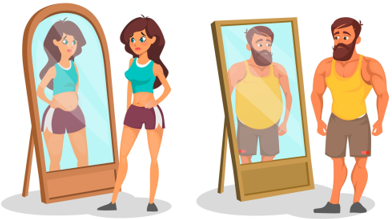
This article is for those whose confidence and self-perception are affected by what they see on social media. For those who seek to understand social media’s strategic algorithm and how they are being influenced by it. If you are one of these people, you need to read this!
Social media is a powerful agent that consistently influences modern beauty standards today. TikTok and Instagram create an online culture that impacts how people perceive their overall confidence and self-image. While there are both unfavourable and beneficial factors to these social platforms, it’s the way in which one decides to interact with these platforms that will determine the benefit they’ll receive. When looking at the correlation between social media, beauty standards, self-perception, and self-esteem from a feminist lens, social media spreads unrealistic beauty ideals by promoting unachievable beauty standards. As social media becomes increasingly popular in today’s world, social platforms including Instagram and TikTok pose impact to the way people view themselves and the world around them. With the rise of influencers, user-generated content, algorithm favoritism, photoshop, and the use of filters, these online social spaces promote a range of beauty standards, affecting one’s confidence and self-perception.
Social media and body image – Negative impacts
The prevalence of unobtainable beauty standards on TikTok and Instagram has a major impact on one’s body image and self-perception. Body image can be defined as how one views their own physical appearance, with emotions, thoughts, and perceptions all playing apart in their overall self-image. While self-perception closely correlates, defined as one’s view of their whole self, including mental, physical, emotional, and social aspects. Social media is a key factor influencing user’s identity, by filtering out content that promotes unobtainable beauty ideals, leading to low-self-esteem, eating disorders, anxiety, and dissatisfaction. Use of social media can be classified as ‘active’ and ‘passive’ which can determine the overall benefit one will receive from these social spaces. Active refers to the ability of users interacting with others and actively creating and publishing content. Passive refers to the act of one scrolling and browsing social networks. Research suggests passive use of social media is increasingly common compared to active use, with most users acting as ‘lurkers’ rather than contributors to these social platforms. User’s experiencing mental health issues like depression are typically passive users, with platforms such as Instagram and TikTok favouring ‘idealised images’ leading users to compare themselves and their own physical appearance to these heavily edited and filtered images. Futhermore, interactive tools such as liking, sharing, and commenting, often serves as a means of social acceptance. For instance, the more likes received, the more valued users are within their social hierarchy. By platforms encouraging interaction through these tools fosters a negative feedback loop that endorses the importance of one’s appearance in shaping self-esteem. This reinforces unhealthy habits such as constant body analysation, over exercising, negative self-talk, and harmful dieting (Merino et al., 2024).
A study was taken on two diverse university students measuring the impact of social media on body dysmorphia, and eating disorders. Results showed that in 2022 the use of image-based social media like TikTok and Instagram was more prominent compared to 2015. Participants were more likely to use laxatives and force themselves to vomit in attempt to meet the beauty standards they were exposed to online. Research also found that the content participants were typically consuming was the issue, rather than how much time they were spending online. The content was frequently related to weight loss, body image, and appearance which resulted in binge eating, declined body confidence, and eating disorders (Sanzari et al., 2023). While body positive content is available, research found that this was usually washed out by negative body content, weakening overall benefit.
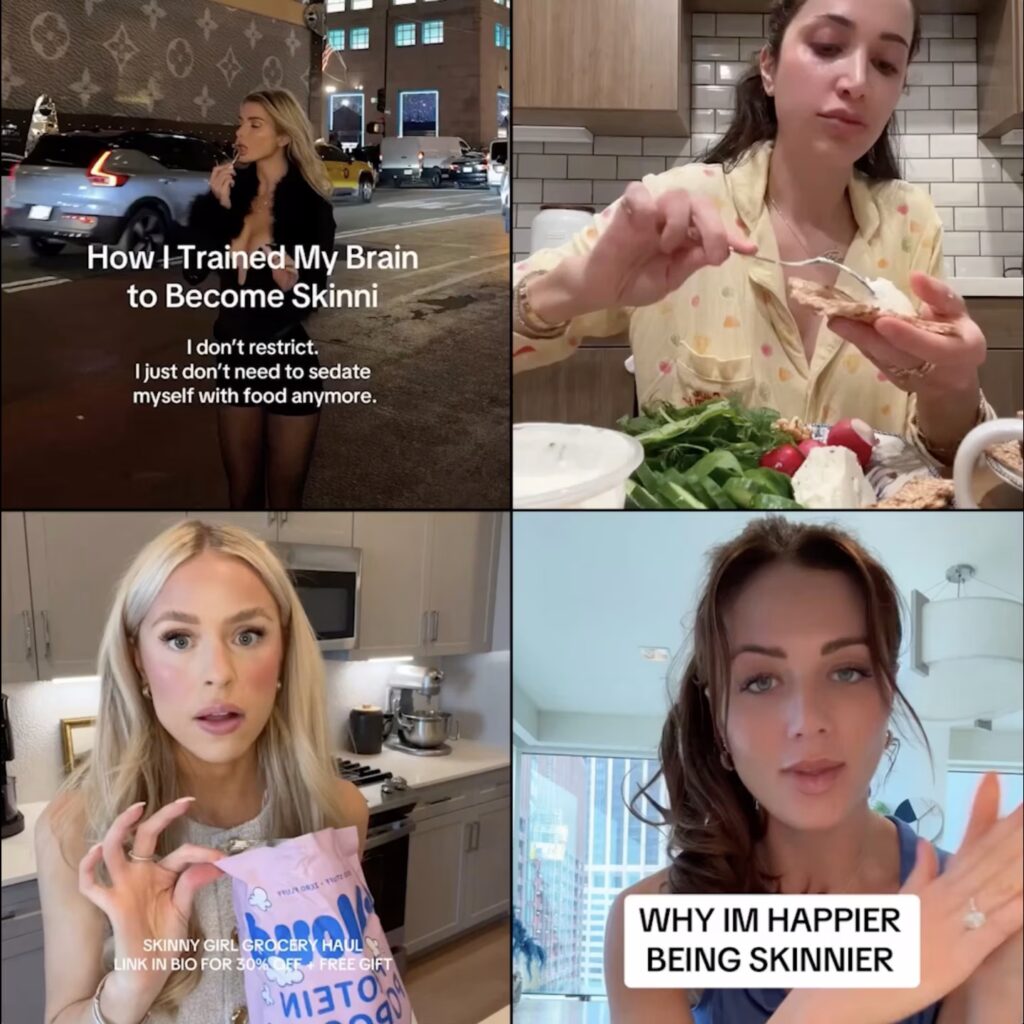
Furthermore, diet culture on TikTok is known to promote eating disorders and idealise unrealistic beauty standards. In 2022 TikTok was called out for promoting thin body types as the ideal body standard, which harshly impacted users by pointing out their insecurities. Additionally, it was proven that within 8 minutes of a user setting up a new account on TikTok, they were exposed to eating disorder-related content. Trigger words such as ‘thinspiration’ and ‘fitspiration’ also became popular on TikTok, reminding users of the need to meet these unrealistic beauty ideals and further contributed to weakened self-image.
Social media and body image – Positive side
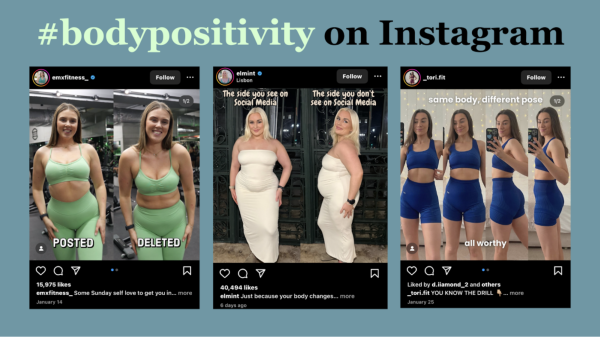
While the negative side of social media regarding self-perception is often discussed, there are favourable aspects that encourage positive self-representation. Self-representation refers to how one presents themselves to others. When linking this phrase to social media it points to the ability for individuals to present themselves in any way, shape, or form, with any user able to be any kind of ‘content creator’ they want. This opens users to a broad range of communities, ensuring a place for everyone with different abilities, genders, cultures, sizes, and location. Social media users typically love seeing people embrace their bodies, feeling comfortable and confident enough to post themselves, which encourages them to do the same.
Furthermore, social media can be the result of boosted body positivity, with a 2021 study to back this statement. Body positivity can be defined as the idea that all bodies are celebrated and appreciated regardless of one’s size, cultural background, gender, abilities, and shape. This 2021 research study examined 233 diverse women between the ages of 18-30 that posted body positivity content on Instagram. Results discovered how this form of content made one feel more accepted and confident in their own bodies. Research found that content with one expressing their naturally beauty and bodies instantly uplifted one’s mood and contributed to body satisfaction.
Social media and body image – Authors view
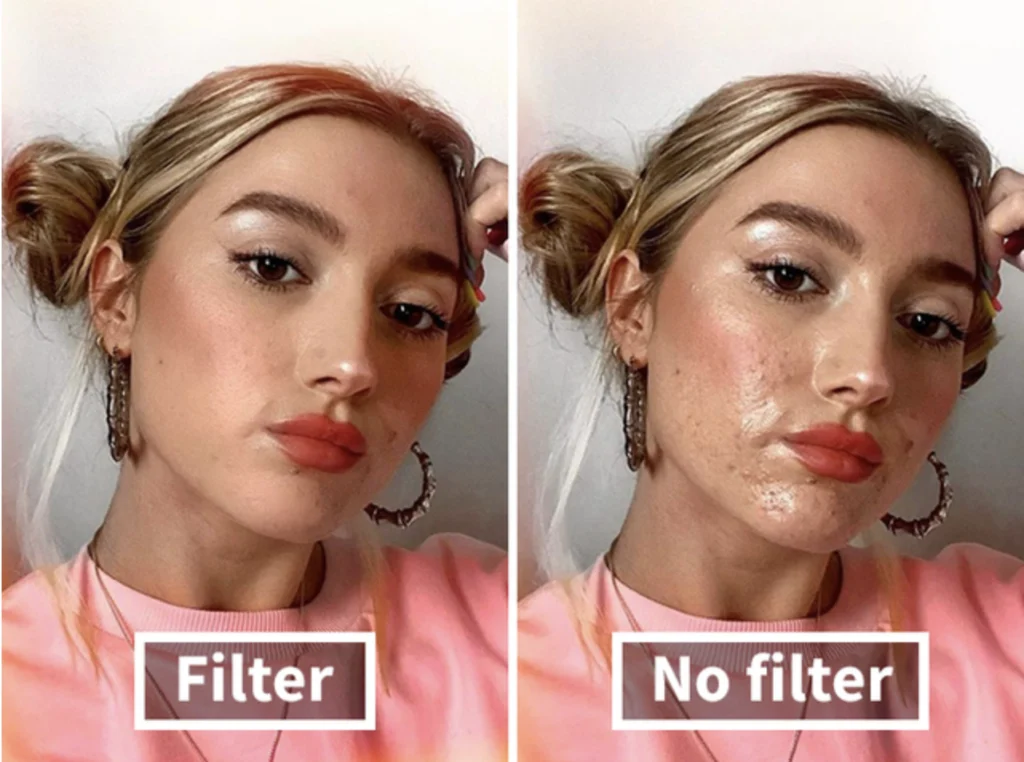
While social media isn’t entirely harmful the unfavorable aspects outweigh the positives, making it a toxic social culture to be a part of. Instagram and TikTok platform features such as liking, commenting, and sharing sticks out as strong indicators of social validation, promoting the need to chase approval from users and fit within a socially acceptable standard. Futhermore, the increased use of editing apps becomes obvious, with many online users falling into the trap of comparing themselves to user-generated content, most of the time enhanced with filters and face tune. A survey in 2021 by Consumer Reports analysing American adults use of beauty filters on social media, found that one in five Americans are using them when posting images or videos. When breaking this down into age demographic, it was found that 47% of American respondents between 18-29 were more inclined to use beauty filters. The 2021 consumer report survey suggests an upward trend, with many worried that this current and future use of beauty filters will continue to hinder one’s self-representation by promoting unrealistic beauty ideals. Additionally, 59% of Americans admitted they find beauty filters concerning, particularly in regard to one’s mental health. Body dysmorphia and eating disorders are two mental health-related issues I’d like to shed light on, as evident causes of social media and it’s promotion of unrealistic beauty ideals.
Body Dysmorphia disorder (BDD) can be defined as a condition that involves obsessive thoughts regarding self-image. Individual with this disorder often hyper fixate on one thing they dislike about their appearance, and let it unhealthily consume their brains. BDD results in various symptoms such as anxiety, depression, reliance on editing apps and filters, cosmetic surgery, and self-harm. Research in 2023 regarding BDD was undertaken in a study by Frontiers in Psychology. Results found that 16-18 year-olds are typically victims to BDD because of image-related content their exposed to on social media. Additionally, a study by the American Psychological Association found that symptoms of BDD decreased by 50% in just 4 weeks, when young adults spent less time on social media.
Eating Disorders (EDs) are another common cause of social media and its impact on self-representation. EDs are classed as a mental condition, the act of an individual forming abnormal eating patterns that cause mental and physical strain on their bodies. Symptoms of EDs include over exercising, binge eating, unhealthy eating patterns, and fear of gaining weight. Research by the National Institute of Mental Health found that the use of social media is a prominent catalyst of one developing an eating disorder. A 2023 study revealed that females are prone to eating disorders, due to use of social media as it weakens their body satisfaction causing insecurities regarding their weight and shape. Furthermore, results show that within just one week of females being exposed to content that promoted harmful eating behaviors, they were influenced to cut their calorie intake by 20%.
Social media and body image – Ways to combat the negative impacts
There are several ways people can combat the negative impacts of social media on their body image such as:
- Spending less time on social media, with research showing that students who spend less than two hours on social media per day are less likely to have issues with their body image. Less time on social media mean users can cut down the time they spend comparing themselves to others online, and rather use that time to improve their own well-being rather than wasting their time on other people.
- Being picky about who you choose to follow and who you want to see the content you’re posting. Ensuring your following promotes body positivity rather than unrealistic beauty standards is important when protecting your self-perception. Additionally, make note of what content you’re liking, commenting on, and sharing ensuring it is body positive-related content. The algorithm will analyse your interactions and ensure content you see aligns with what you’re engaging with.
Conclusion
TikTok and Instagram remain as dominant social media spaces that degrade one’s self-esteem regarding body-image, self-perception, and body confidence. Inclusivity, the feeling of community and promotion of expressing yourself online is evident, however, often overshadowed by the prevalence of unrealistic beauty standards perpetuated online. In turn, a toxic culture is formed leading to individuals developing several mental health issues, such as body dysmorphia, and eating disorders. Social media also influences people to rely on filters and editing apps when posting content online, to help them meet a socially acceptable standard of these unrealistic beauty ideals spread online. Mitigating the effect of self-representation issues due to social media becomes easy if one spends less time online, while also being selective with who they chose to follow and interact with. While social media has potential to be a space of empowerment, the unhealthy culture created surrounding body image, self-representation, and confidence becomes a challenge that outweighs it’s positive impact.
 TianYuran
  Lu Yunyan
  Pauleen