
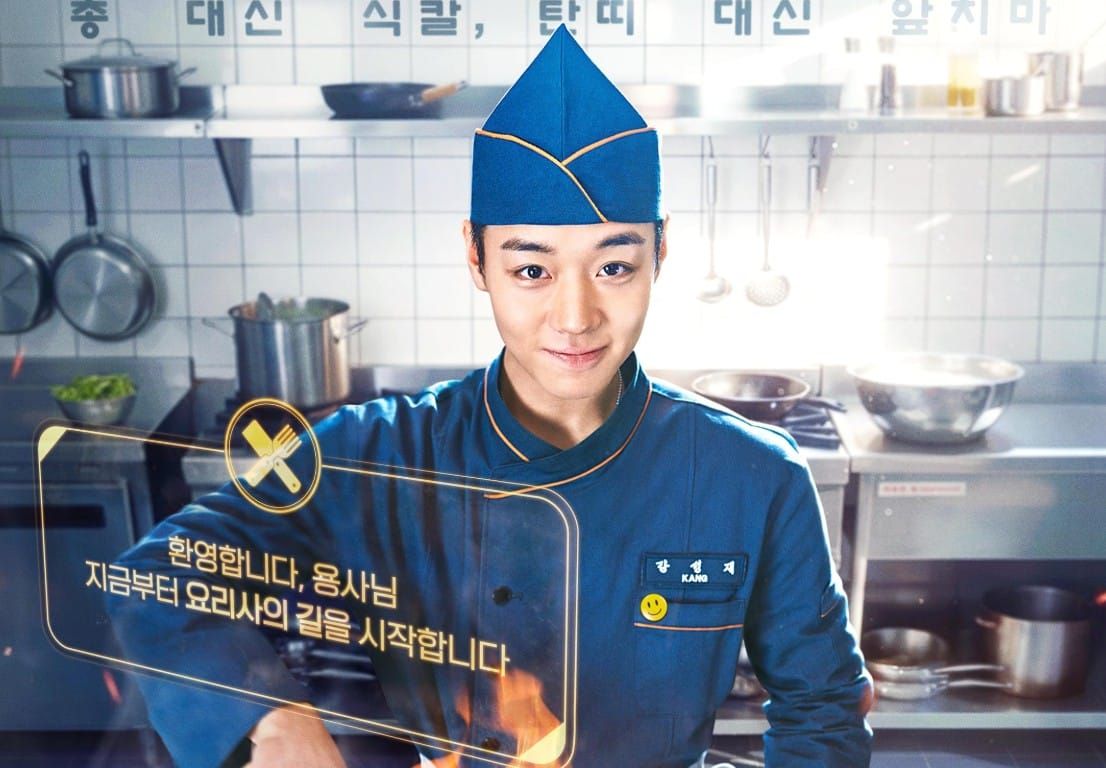
The Legend of Kitchen Soldier, is a military fantasy comedy set in modern day South Korea and directed by Jo Nam-hyung. The drama is adapted from JRobin’s Korean manhwa of the same name.
Following his father’s death, protagonist Kang Sung-jae (Park Ji-hoon) enlists in South Korea’s military and is transferred to fictional Ganglim Outpost, only to discover the remote military unit is regarded as a dumping ground for officers and soldiers alike. Upon his arrival the base buzzes with excitement, expecting this rookie to be the ace they have been waiting for. Almost as soon as he arrives, Sung-jae begins to experience unexplainable game-like sounds and visions as a direct result from being chosen for the ‘Chef’s Path’ from the ‘System’. Witnessing his bizarre behaviour, Sung-jae’s fellow comrades are left with a less than favourable impression.’
Alongside his new superiors; Sergeant Major Park Jae-young (Yoon Kyung-ho), Platoon Leader First Lieutenant Cho Ye-rin (Han Dong-hee) and Company Head Captain Hwang Seok-ho (Lee Sang-yi) and fellow soldiers; head cook Sergeant Yoon Dong-hyun (Lee Hong-nae) and Corporal Kim Gwan-cheol (Kang Ha-kyung), he must follow instructions from the ‘System’ to improve his cooking skills, his military standing and ultimately save Ganglim Outpost from disaster.
Live action adaptations of animated media are no new thing, with examples of manhwa/kdrama adaptations dating back to the late 1990s. However in today’s market, manhwa & web comic adaptations are a popular source of new material with studios drawing in new viewers as well as existing fans. The Legend of Kitchen Soldier is one of the newest in a long line of manhwa adaptations and it does most things right.

The overarching plot line of each episode is fairly straightforward – all roads lead to food. Script writing sets the stage in the first episode when, upon failing a surprise kitchen inspection, Lieutenant Colonel Baek Chun-ik (Jung Woong-in) makes a statement about how food is the foundation of military strength. Both this statement and the episode as a whole emphasise the importance of improving the state of Ganglim’s mess hall, thus setting the stage for the remainder of the series.
Such a militia setting is mainly used to provide a believable foundation where a hierarchy between officers and soldiers could feasibly develop the ultimate corruption revealed in the underlying plot. The storyline uses the ‘System’ as a medium of conflict resolution as it delegates food related tasks, bringing out a humorous approach to navigating darker issues such as corruption, grief and embezzlement. Cooking and food is also highlighted as a motivator to improve troop morale and overall improve the base’s military standing.
The main technical drawcard that makes this absurd show enjoyable, is its use of visual effects. Using visual elements from its manhwa counterpart paired with over-the-top physical comedy highlights its cartoonish nature, however it is the use of special visual effects, namely fantasy sequences, that gives The Legend of Kitchen Soldier a comedic edge.

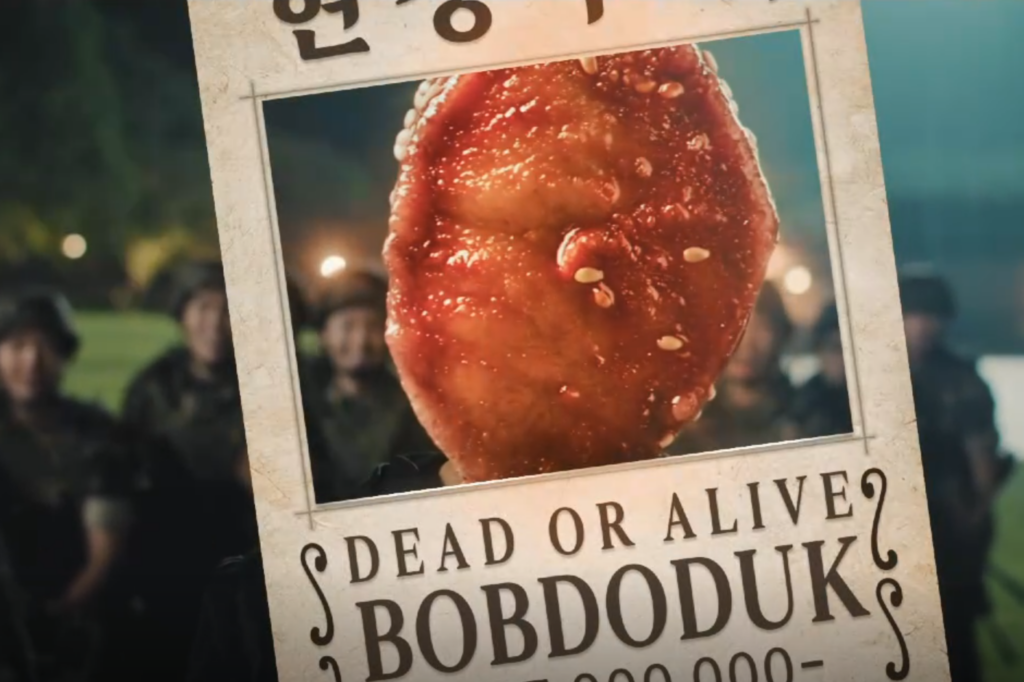
The fantasy sequences dotted throughout each episode perfectly encapsulate character emotions when tasting certain dishes, whether good or bad. From an enemy raid and battalion fire to pure ethereal bliss, these scenes aren’t meant to be taken literally but instead, be a catalyst to show pure emotion in the most humorous of forms.
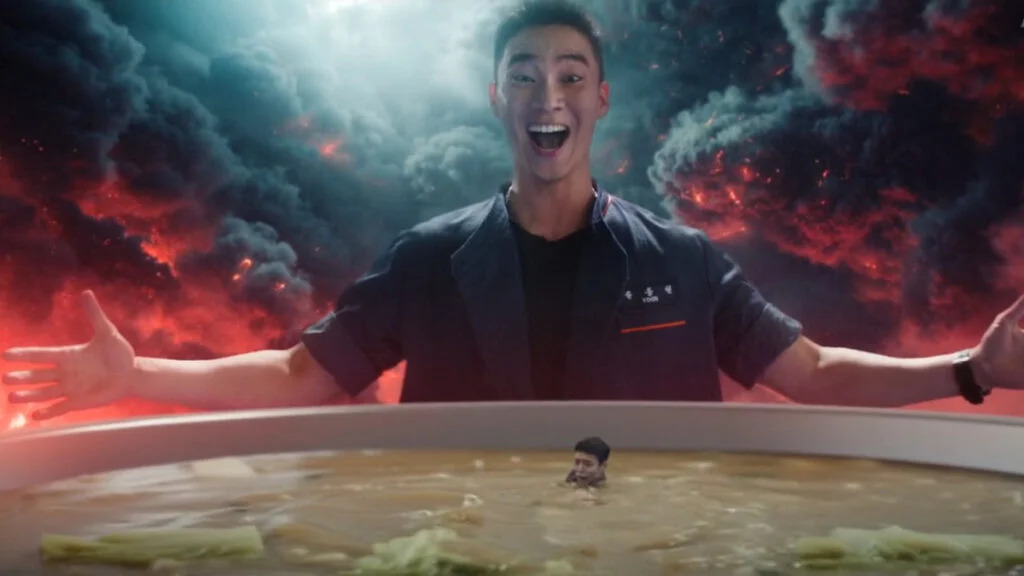
In the first episode, viewers are treated to the first of many fantasy sequences. As Sung-jae tastes Sergeant Dong-hyun’s abysmal soybean paste stew for the first time, the scene perfectly transitions from reality to fantasy as Sung-jae falls to the floor only to emerge at the bottom of the very same stew with Dong-hyun’s massive frame looming and cackling like a maniacal video game boss.
The limit of 12 episodes leaves some of the characters feeling underdeveloped, despite each episode running for roughly 60 minutes each. The character of First Lieutenant Ye-rin, in particular, had a mysterious underlying backstory which only made itself apparent in the last few episodes of the series to coincide with the overarching conflict. The attempt to condense roughly 240 chapters of original source material into 60 minute episodes also leaves some plot lines feeling too busy and difficult to navigate.
Despite its downfalls, The Legend of Kitchen Soldier makes a solid attempt to translate the quirky and playful nature of its original source material into something that can be enjoyed in a live action counterpart. The successful combination of drama and comedy elements alone makes this such an intriguing watch and proves that sometimes absurdity is its own answer.
 bella
 Hayden Price
 Finn Wilson