
By: Yuxi XU

On May 9, 2026, 29-year-old Chinese creator Liu Ziyu released a short AI film called Zombie Scavenger on Chinese social media. The 3-minute-34-second film attracted international attention the following day, when Hollywood-based AI filmmaker PJ Accetturo, known online as PJ Ace, shared it on X, praised it as one of the best short films he had seen in years and asked users to help find its creator. The film subsequently became an international viral hit, with reports putting its global views above 60 million.
The attention is striking partly because of how the film was made, and who made it. Liu completed the project alone in about 10 days. Cost estimates for the project vary by source: the South China Morning Post reported a production cost of around 3,000 yuan, while Liu himself later told Time Weekly that he personally spent nothing, as the platform supplied free credits and support. The gap between these figures says something new: AI platforms are quietly redefining what “production cost” means by absorbing some of the costs themselves. The film used AI tools including ByteDance’s Seedance 2.0. Liu was not a traditionally trained filmmaker. He graduated from a technical school, previously worked as a train driver and later supported himself through wedding and promotional photography in Yunnan. The project therefore shows how generative AI can reduce some of the financial and technical barriers to producing ambitious visual work.


The more interesting part of the story, however, came after Hollywood noticed the film. Accetturo publicly offered to hire Liu, but Liu did not immediately move overseas. Reports later confirmed that Liu remained in contact with Accetturo’s team while continuing to develop opportunities in China. This is significant because the film did not simply attract attention; it created opportunities for its creator to communicate with established industry players.
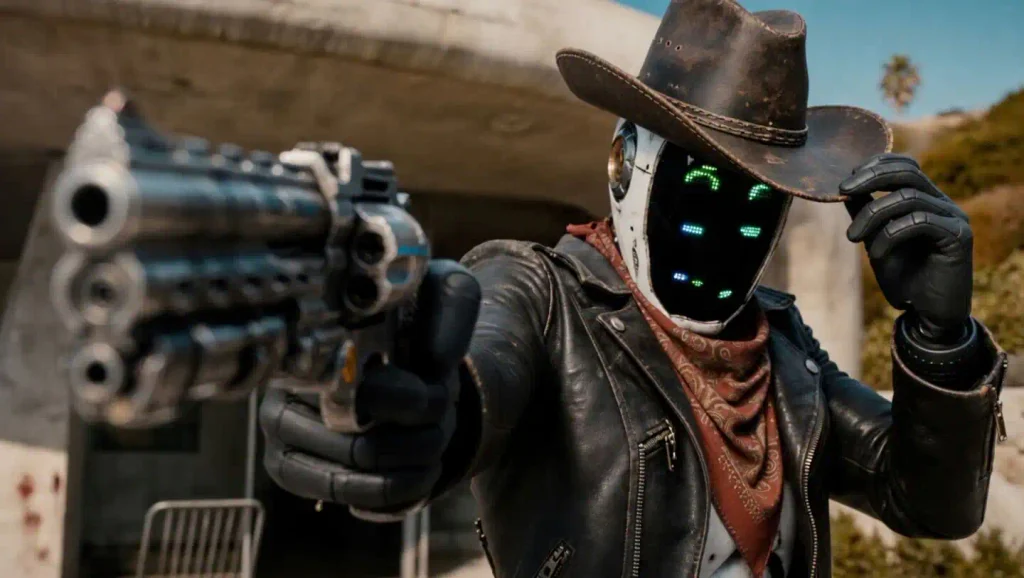
Meanwhile, Zombie Scavenger began moving beyond the short-film format. Shanghai Daily reported that Chinese entertainment company Qingqiu Culture secured global film and television rights and planned a feature-film adaptation. It also reported an official game adaptation developed with AI interactive-video platform Yoroll. Yoroll separately announced that the project was being developed as a playable AI video game, using the film’s robot cowboy, post-apocalyptic setting and visual style as the basis for an interactive experience.
This development changes how the story should be understood. The headline is not simply that AI allowed one person to make a film for a fraction of the traditional cost. The more significant point is that the film became a form of creative and commercial leverage. Liu created the work first, attracted an audience second and entered discussions with established industry players afterwards. Traditionally, creators seeking to turn a successful short into a larger commercial project have often depended on established production, distribution or financing networks. Zombie Scavenger reverses part of that sequence.
At the same time, the film should not be treated as proof that AI has removed the need for the traditional media industry. Industry reporting notes continuing problems with continuity, narrative quality and consistency in AI-generated productions. Liu himself acknowledged imperfections in Zombie Scavenger, including continuity problems, while reporting also noted that some individual shots required extensive refinement. AI can lower production barriers, but it does not automatically create a strong story, an audience or a sustainable commercial model.
The more convincing interpretation is therefore that AI is changing the timing of industry access rather than simply dismantling traditional studios. Creators can increasingly make ambitious work, test audience interest and build an identity before approaching established companies, rather than needing industry approval before producing the work. Zombie Scavenger suggests that future media creators may enter the industry with an audience and commercial opportunities already attached to their work. In this sense, AI is not replacing the traditional media gateway; it is giving creators a way to approach that gateway with greater bargaining power.
 bella
 Hayden Price
 Finn Wilson

