
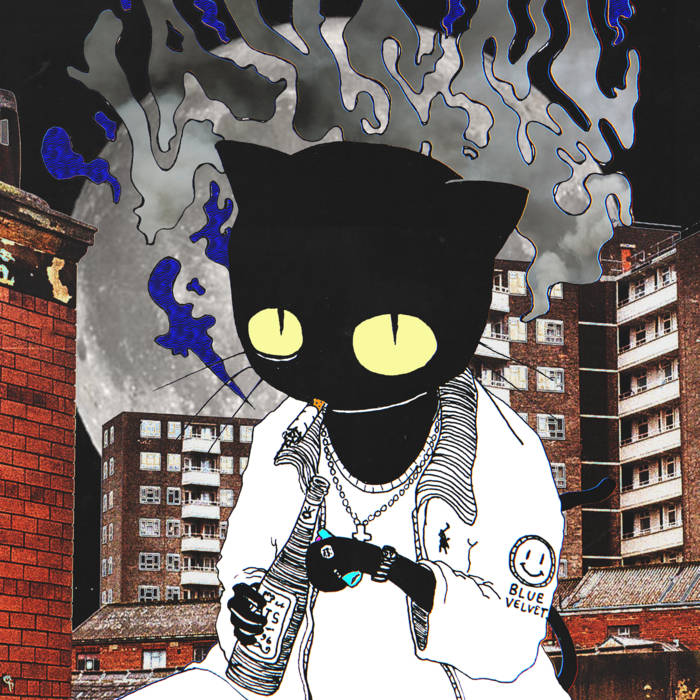
For seven long years, it was assumed that the mythological Lausse The Cat had run away to the wilderness to live out the rest of his nine lives. With the release of his classic EP The Girl, The Cat and the Tree (2018), Lausse perfected a lo-fi, jazz-infused style of hip-hop which captured thousands of fans, but as quickly as he became relevant, he vanished. Finally however, almost as sporadically as his disappearance, the cat has reappeared from the shadows again, with The Mocking Stars being a more mature, daring, and magical journey than his previous.
The Mocking Stars is a chimerical journey following the psychedelic trip and eventual ego-death of Lausse as a form of escapism from his hedonistic lifestyle. The title The Mocking Stars refers to the reflection on his lifestyle during the experience established by the Jungian conjunction where the Sun represents one’s conscious self, and the Moon unconscious.
Beginning with album standout “Blue Bossa”, Lausse sinks into his disdain for the “normal” societal loop of jobs, relationships, and responsibilities, whilst finding comfort in those worse off than him, the Mad. Performed over a beautiful collection of trumpets and xylophones, Lausse continually talks of escaping through slumber, rejecting the sun as it shines a light on his conscious self, his own struggles. This is followed by the two most popular tracks on the album, “I.D.W.G.A.J” and “The Midnight Hour”. Meaning “I Don’t Wanna Get A Job”, this continues the rejection of societal norms, and by the end of “The Midnight Hour”, which features the jazziest beat you’d find in a Swing Era bar, Lausse descends into his trip and joins The Moon. As a man in my early 20s, I find these three songs are the highlight of the album due to similar anxieties of growing independent and struggling with avoidance, whether I should be relating to a drug-addicted cat is neither here nor there, and perhaps resembles the beauty of Lausse’s storytelling across this album.
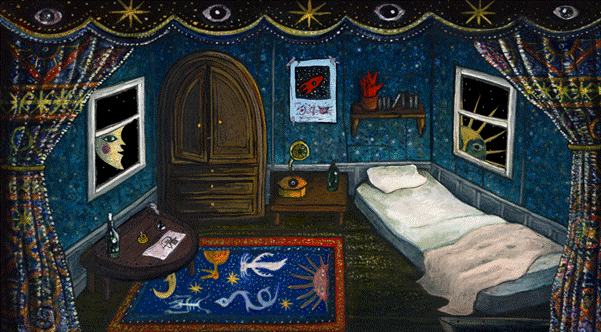
Following a brief interlude, you are hit with the behemoth 10-minute and 45-second title track. This length isn’t new for Lausse, with his most streamed song “Redstripe Rhapsody” demanding an 8-minute runtime. He is mocked by “The Stars”, which is Lausse berating his own lifestyle choices. Sonically, this is the most ambitious track on the album, backed by a gentle piano and bending through genres of spoken word to jazz rap, exceeding that of “Redstripe Rhapsody” in its complexity. On occasion however, the overwhelming amount of storytelling can begin to outweigh the replayability of the song. For instance, the four-minute spoken word section is great for the story of the album, enhancing the album experience, but means that it’s replayability compared to a “Redstripe Rhapsody” and other songs within his catalog perhaps falls slightly short.
Over the next tracks, Lausse finds himself on Mars, representative of his inner aggression, where he reflects on what he’s lost by joining the Moon. Each track represents a slow burn where Lausse begrudgingly realises he’s lost his sanity by rejecting the Sun, especially after his tea with the Mad which leaves him alone in the trip. “Space Cadet Cat” features an incredibly fascinating beat with a jumpy, extraterrestrial sound as if Lausse is jumping between planets. Additionally, this section concludes with standout “Peonies For Breakfast” which contains a beautiful layered final chorus, reflecting on his previous relationships that his distrust for humanity ultimately destroyed. The story concludes with “Lotus Blossom”, symbolic of Lausse’s growth within his dark environment, whilst also showing his need for the Sun. Departing from jazz rap and featuring house-like production, this track is the most distinctive across his entire career and acts as a near-perfect final chapter to Lausse’s journey.

When I heard The Girl, The Cat and the Tree, it instantly became the soundtrack for my high school years. Now, despite the time that passed and the years where I was begging for something new, The Mocking Stars has released at just the right time for its audience. A new musical handbook to live by, and it so happens to also be an extraordinarily sweet listen.
 bella
 Hayden Price
 Finn Wilson