
Introduction
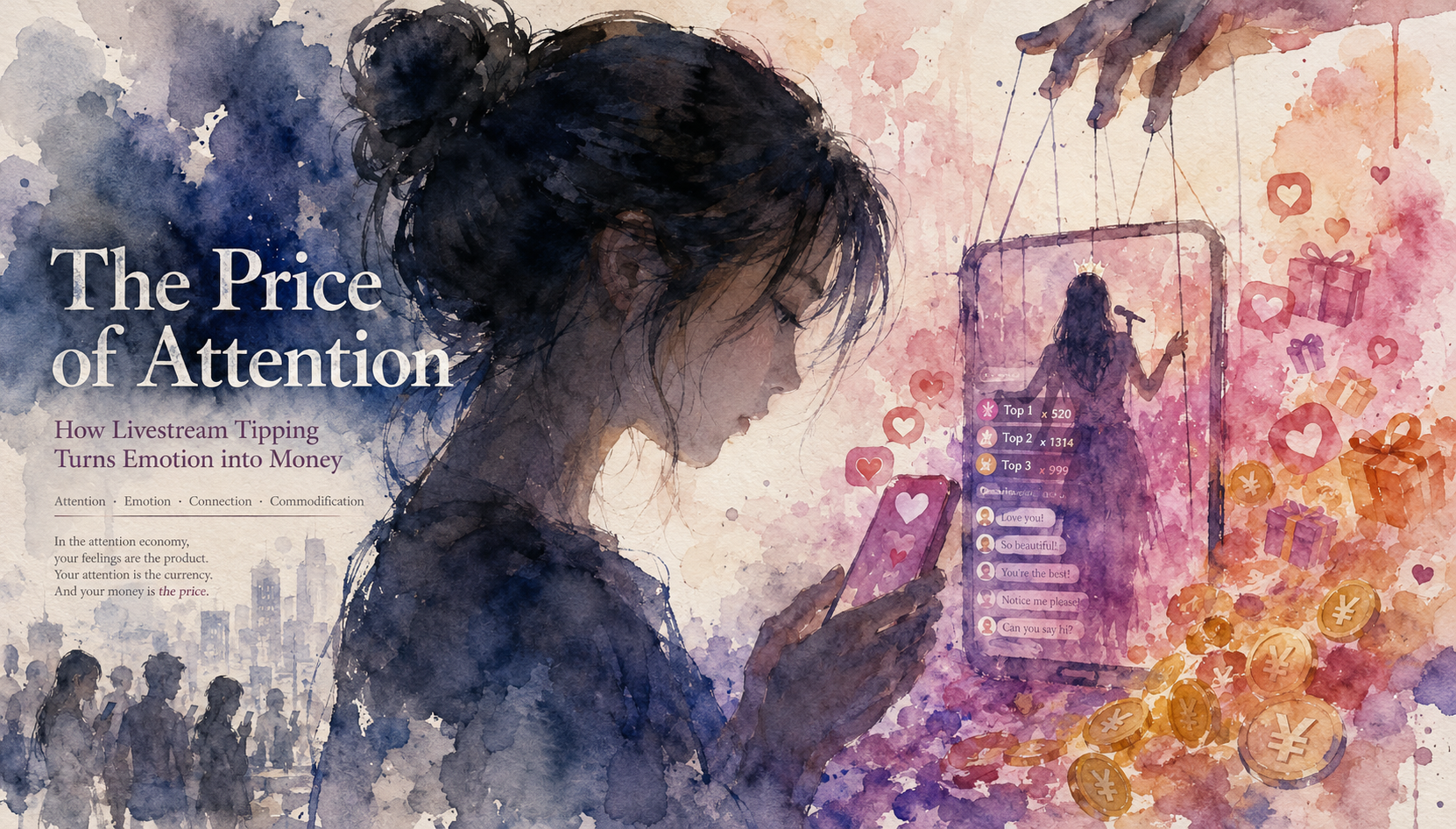
A 19-year-old woman in Zhengzhou allegedly spent almost 17 million yuan on a livestreaming platform over months, primarily via high-value virtual gifts during livestreams of group dancing and buying fan products like blind boxes and collectible cards. Her expenditures were funded by diverting funds from her father’s business, which eventually prompted him to report her to the police, according to Sixth Tone (2026). Over time, streamers were paid money for their attention, interaction and emotional companionship repeatedly. It started out as a little online fun and turned into too much, leading to financial losses and family breakdown. The case attracted a lot of attention in the public sphere regarding irrational consumption and emotional manipulation in livestreaming platforms.
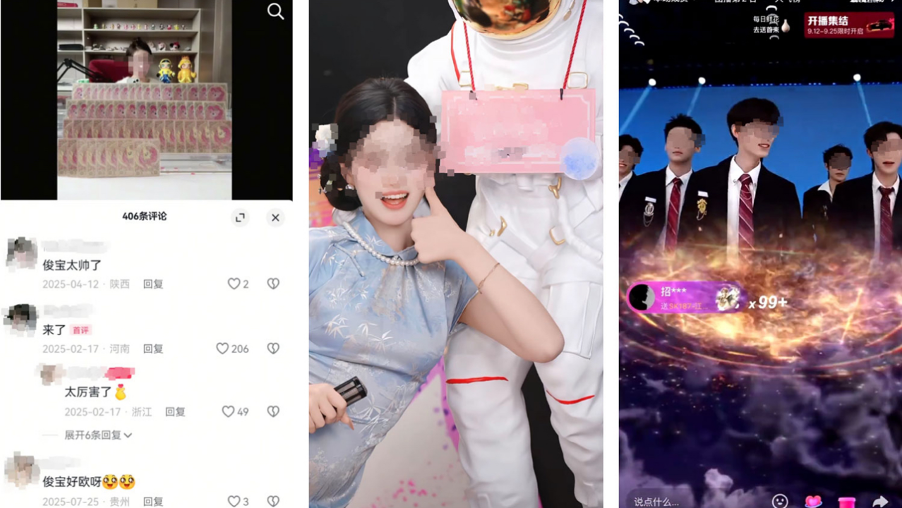
Behind this case is a wider shift in the nature of the formation of close relationships in the digital age. Platforms like livestreaming allow for online interaction, and through mechanism design, immediate emotional reactions and feedback are encouraged, as well as user engagement. Interactive features are intended to engage the emotion, to create a spectator from a passive viewer and make them more of a part of the experience.
The Livestream tipping is referred to as free will by the content creators. But this is an incomplete analysis as it fails to take into account the mechanisms that shape user behaviour. In this article, it is argued that livestream tipping exemplifies the commercialisation of emotion, the process of systematically transforming users’ attention, emotional attachment and social identity into economic value. Meanwhile, users are pushed by a quest for entertainment, and also for emotional connection and belonging.
We analyze it from three related perspectives: how emotional dependency develops between streamers and audiences; how platform architecture influences consumption behaviour; and the psychological, economic and social effects of emotional monetisation.
Emotional Dependency as the Foundation of Livestream Tipping
The primary reason for the quick rise in livestream tipping is the emotional bond that streamers have with their target market. As opposed to traditional media consumption, livestreaming is based on the production of perceived intimacy as the basis of its business model.
Firstly, streamers create emotional closeness with real-time interaction. When streamers engage with comments, call out viewers’ names, and give a public thank you to those who contribute, it gives the impression of personalised communication. This helps to diminish the psychological distance and move from being a mass audience to a recognised individual. These interactions are performative but can still create a feeling of emotion, which can make the streamer become the source of emotional support.
Secondly, the act of livestreaming offers a habit-forming experience that can be addictive over time. In 2026, the South China Morning Post noted that many users have interwoven streamers into their daily lives, finding a bit of companionship and emotional support from streams that can serve as a substitute for real-world socialization. As time goes on, streamers are no longer thought of as far-off media makers, but as emotional people involved in daily life.
The same can be seen on such global platforms as Twitch. Sleep streaming, in 2020, was reported by WIRED to draw in large crowds of people who would keep donating when they watched the streamers sleep. One of them is Matthew Mizkif Rinaudo, who made more than US$5,000 in a single session, mostly from people looking for attention and interaction. This is an example of how livestream platforms are monetising parasocial relationships and not content. This is in line with Horton and Wohl (1956), who proposed a theory about parasocial interaction, whereby one-sided emotional bonding can happen between the audience and a media personality with limited real-life interaction.

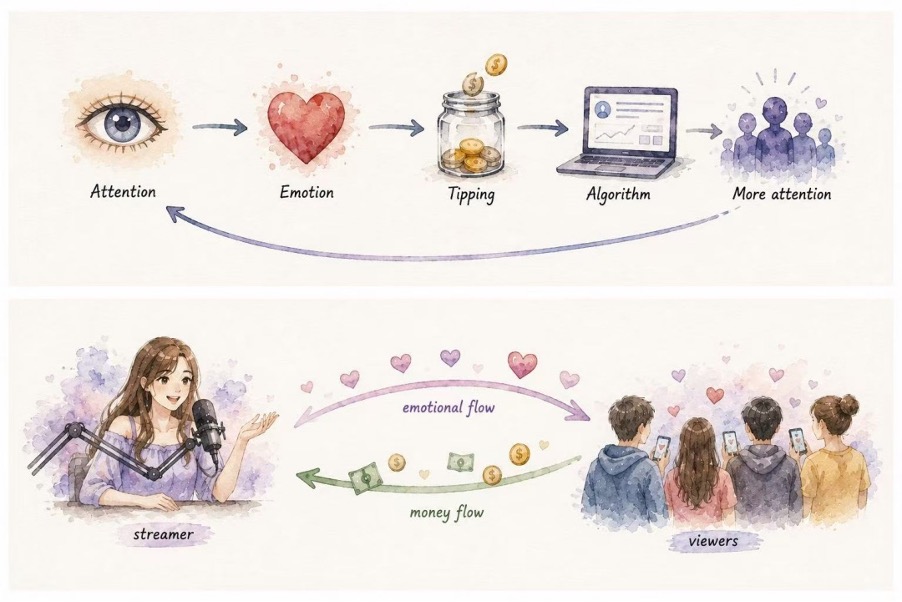
Thirdly, there has been a change in how tipping is done. It is now more about expressing emotions and seeking recognition. What they do now is to send gifts to the streamers not as a reward for the quality of the content but to gain attention, visibility, or emotional written acknowledgment from the streamers. In this process, money is not only associated with consumption but also with emotional validation and social recognition.
In the psychological aspect thereof, livestream platforms work by using a variable ratio reinforcement mechanism as described by Skinner (1965), in which rewards are given randomly. Immediate attention could be provided to a user after tipping, or no action may be taken. This uncertainty reinforces repetitive behaviour, like a gambling system, where people are intermittently rewarded, making them more engaged and dependent.

Overall, dependency from an emotional perspective is not spontaneous but is created through the systems of interactions and platform design in livestreaming.
Platform Architecture and the Monetisation of Attention
When it comes to tipping, emotional attachment is the psychological building block that dictates how it translates to spending, and platform architecture is the technical building block that dictates how it translates to an actual tip. Livestreaming platforms are thus not content-neutral spaces, but rather finely-tuned systems engineered to drive engagement and revenue.
Virtual gift systems first involve making spending a game. Virtual gifts are supposed to feel more like shows than more like money transfers with animated effects, platform-wide notifications and celebratory visuals. According to a report on China Daily from 2026, this design prompts people to view tipping as a form of interaction, not as a loss of money. Therefore, money that can otherwise be used for economic purposes is demoted to emotional arousal, impairing users’ sense of true economic cost.
Second, hierarchical visibility systems link consumption to social status. Platforms build ranking systems (VIP level, leaderboards, highlighted user displays) where visibility and social recognition are derived directly from the level of consumption. This is because a structure of spending is integrated in identity construction, especially for younger users who are more susceptible to comparison through the online environment. In this context, the visibility is dependent upon consumption, and consumers who do not spend money risk becoming socially invisible in the livestream space.
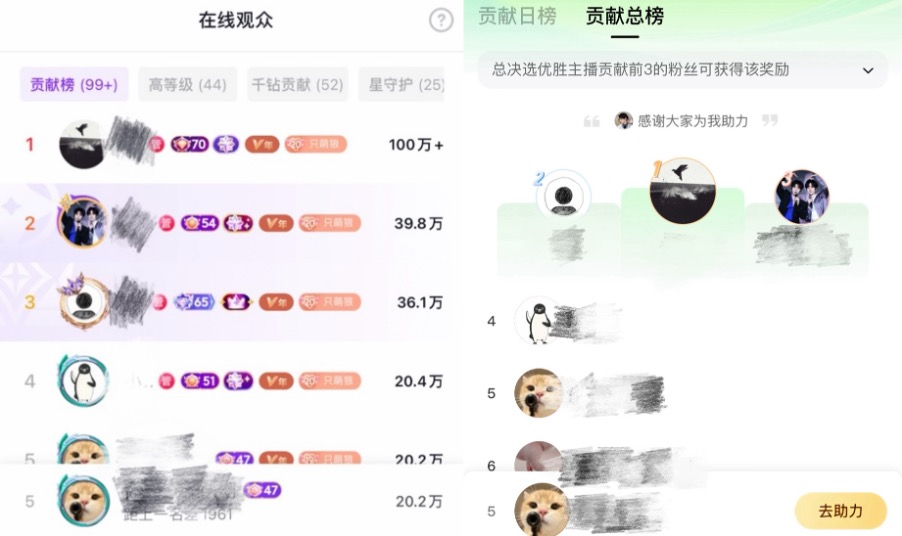
Thirdly, algorithmic amplification forms a feedback loop of attention and spending. Streamers will focus on and highlight high-value users, and platform algorithms will push high-interaction, high-revenue rooms, as noted by Caixin Global in 2025. This results in a vicious circle of spending leading to visibility, leading to more spending. Eventually, consuming becomes a means of gaining attention and a reaction to it.
Politically-economically, this process can be understood as the extraction and the commodification of the user activity as theorized by Srnicek (2017) through his theory of platform capitalism. Algorithmically, systems optimize interactions and advertising value, and attention, interaction, and behavioral data are captured and converted in real time to monetizable resources. In this context, user behaviours are not merely a matter of personal choice, but also of structural incentives programmed into the platform.
This is called collective pressure, and is a result of the structure design. Users witness when others are being recognized by high-value gifts, and social comparison is increased, which leads to imitation and consumption as a participation norm. Then, attention becomes layered and will be allocated through spending power rather than equal involvement.
It’s a reflection of a broader evolution in the digital economy where the attention itself is a precious commodity, and platforms compete for it, as well as the opportunity to sell it. Many aspects of the logic of livestreaming can be understood as the most visible and extreme version of the attention economy, as described by Davenport and Beck (2001), in which attention is considered a type of currency in the digital marketplace that can determine value.
Emotional Monetisation and Its Psychological, Financial, and Social Consequences
The monetization of emotionality in livestreaming has significant consequences in terms of psychological, economic, and social aspects.
Emotionally dependent consumers are likely to be less rationally controlled in their consumption. If people get an emotional attachment with the streamer, they will pay more money to it because of their emotions and not their rational thoughts. This results in hasty and reckless spending when under financial stress in severe cases. As seen in the Sixth Tone’s 2026 report on the Zhengzhou case, the blurring of lines between entertainment and emotional dependency can lead to severe economic consequences.
Livestreaming platforms also make extensive use of virtual gifting as an integral part of their monetisation system, from an economic ethics angle. To better understand this mechanism, Hochschild‘s (2012) theory of emotional labour is used here, namely, the process by which the expression and relations of emotions are rendered into economic value. In this context, emotional attachment is not only encouraged, but it is also exploited systematically for profit, as also raised ethical questions regarding the use of such platforms, highlighted by The Star in 2025, asking whether platforms are exploiting the vulnerabilities of individuals for commercial benefits.
Emotional monetisation is not only a question of the behaviour of an individual, but of a change in social relationships in digital platforms. Consumption has become the key to visibility and recognition, so that those who are spending more get more visibility and interaction with them, and others get increasingly pushed aside. Thus, the social presence is differentiated according to an economic power, and attention and recognition are redistributed as a privilege according to spending, rather than being accessible to us all.
Regulation and Ethical Debate
With the public increasingly aware of the over-tipping phenomenon in livestreaming, regulatory measures have been taken to curb the behavior, such as real-name verification, standardising tipping systems and tightening virtual gifts mechanisms, as reported by China Daily in 2026.
But such regulatory measures have structural limitations. Livestreaming platforms are situated within digitally mediated governance contexts, in which governance structures have yet to catch up with the fast-changing platform affordances. But, as Pasquale (2015) argues, the “black box society” is a model that is difficult to monitor algorithmically mediated and platform-based systems, as they are “difficult to see” by both regulators and consumers. This means that just stopping tipping behaviour is not changing the incentive structure that is driving towards monetised engagement. Platforms can also be pushed by regulation to change their interface characteristics and interaction paths, without jeopardizing continuity of engagement-based revenues.
This has since raised a platform responsibility debate. One is emphasizing personal responsibility and implying that it is the responsibility of the users to be self-disciplined in use. The second perspective highlights that platforms by design shape user behaviour and that platforms have ethical responsibility beyond the moral responsibility of individuals in that they are structured by ethics.
The problems discussed are not only those of China, but also those of the whole digital economy, in which social and business communication increasingly converge.
These ideas, for example, providing a spending cap, transparency, or reduced gamification, often clash with the core of the business model, which is all about engagement maximisation when designing an ethical platform. This exposes a more fundamental conflict between business bottom lines and moral management. Zuboff (2023) also theorises this as a form of “surveillance capitalism” with the extraction of behavioural data and optimization of engagement built into the structural operations of platforms, making it inherently difficult to redesign them in an ethical way.
This is often suggested as a remedy – to increase digital literacy – but it is a move that largely places the responsibility on individuals and does not consider the features of the system that influence people’s behaviour at scale.
Conclusion
Live-streaming tipping exemplifies the merging of emotion with technology and commerce in a system that can be monetised and in which affective involvement is systematically converted to monetary value. This appears to be regular entertainment but is actually a part of an organized system to make money through user engagement. The Zhengzhou case helps illustrate the extent of change and some of the structural conflicts within the platform economy.
Emotional labour is being commodified as livestreaming is slowly taking off in the world. This correlated growing capacity to monetize attention, emotion and identity is a broader trend in digital capitalism that monetizes human engagement itself. This will present serious challenges to the issue of participation, manipulation and profit.
As a conclusion, livestreaming platforms illustrate a general tendency in the structuring of social relations in the attention economy. To address these dynamics, it is not just a matter of regulation but a need for a more in-depth rethinking of the role of digital infrastructures in human interaction and value production in today’s society.
 TianYuran
  Lu Yunyan
  Pauleen