

In the modern digital environment, every action of users on the internet, such as clicking, staying, and swiping, will be recorded by the platform. Therefore, no matter what online activities users engage in, their behaviors will become the foundational data on which algorithmic recommendations predict their preferences. Often, this invisible hand can identify users’ needs before users themselves become aware of them. However, this convenience also leads to an ethical issue: Is the algorithmic recommendation helping consumers make more rational choices, or is it quietly depriving consumers of their choice rights?
As a tool for improving efficiency, algorithmic recommendations have significantly enhanced the operational performance of the platform, thereby reducing search costs and simplifying decision-making processes for consumers (Chernev et al., 2015, p. 334). Generally speaking, algorithmic recommendations use artificial intelligence techniques to analyze users’ preferences and behaviors, thereby making the final recommendation results more accurate (Liu, 2022, pp. 1-2). This approach also reduces transaction costs and enables the platform to deliver more personalized experiences, thereby fostering greater user loyalty and stronger emotional connections (Obiegbu & Larsen, 2025, pp. 199-200).
However, this convenience has also resulted in some negative effects. Firstly, decision-support mechanism restricts users’ choice freedom and prevents them from accessing diverse information, which also keeps them trapped in an information bubble persistently (Chen et al., 2025, pp. 2-3). Secondly, as consumers’ reliance on algorithmic recommendations increases, their ability to make independent decisions will gradually decline (Chen et al., 2025, pp. 2-3). Thirdly, social platforms are still companies that aim to maximize their commercial value (Lora et al., 2025, p. 2). Therefore, the purpose of features such as “infinite scrolling” and “personalized pricing” are not to enhance ethical standards, but rather to be based on the premise of user engagement (Seele et al., 2021, p. 703). This implies that algorithms may leverage users’ psychological tendencies to encourage consumption (Lora et al., 2025, p. 2; Seele et al., 2021, p. 705).
This article argues that although algorithm-driven personalized recommendations significantly improve decision-making efficiency, they also threaten consumer autonomy by subtly shaping consumers’ preferences and purchasing behavior. Therefore, we need to reassess the balance between technological convenience and individual sovereignty, in order to systematically assess the role of users in the digital era.
The Engine of Efficiency
Before the digital age, consumers were often faced with an overwhelming number of product options, which made it difficult for them to make purchasing decisions (Chernev et al., 2015, p. 334). This directly led to delayed consumption, thereby affecting the platform’s transaction rate (Chernev et al., 2015, p. 335). However, after algorithm-based recommendation systems were introduced, consumers’ shopping experiences have significantly improved (Liu, 2022, pp. 1-2). By applying advanced technologies such as machine learning, algorithmic recommendations can precisely analyze consumers’ behavior data and predict their needs and preferences with a high degree of accuracy (Liu, 2022, pp. 1-2). This method not only reduces users’ search costs, but also streamlines the decision-making process (Liu, 2022, pp. 1-2).

Based on the “choice overload” theory analyzed by Chernev et al. (2015).
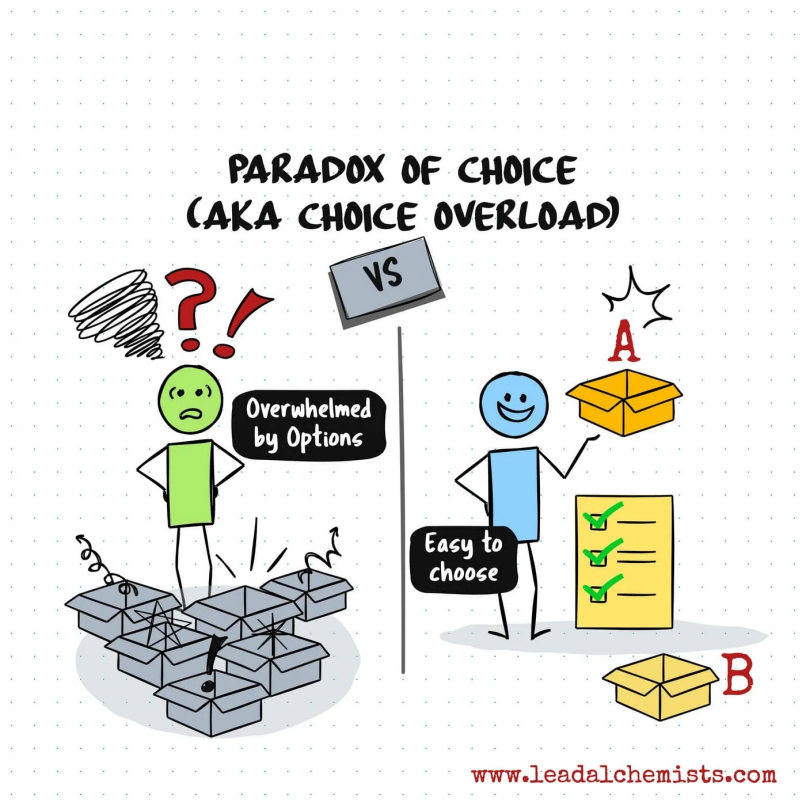
Note. Adapted from Lead Alchemists (n.d.).
In addition, algorithmic recommendations are also the foundation for the platform to provide personalized user experiences. According to Obiegbu and Larsen (2025, pp. 204-209), when an algorithm successfully predicts and delivers music content aligned with users’ specific tastes and preferences, it can stimulate users’ “experiential brand loyalty” towards the streaming service. This process not only displays that the algorithm has met the actual needs, but also enables consumers to feel the “attention” and “understanding” from the platform (Obiegbu & Larsen, 2025, pp. 204-206).
In other words, algorithm-based personalization replaces the traditional “one-size-fits-all” marketing approach by tailoring recommendations to individual consumers’ specific needs and preferences (Liu, 2022, pp. 1-2; Obiegbu & Larsen, 2025, p. 201), thereby enhancing their overall satisfaction (Liu, 2022, p. 8; Obiegbu & Larsen, 2025, p. 199) and strengthening their relationship with the brand (Obiegbu & Larsen, 2025, pp. 204-209). Consequently, algorithms are not exploiters, but efficient digital stewards that help them effectively alleviate the burden of information overload (Chen et al., 2025, pp. 2-3). Meanwhile, these precise recommendations can also enable users to gain a deeper understanding of the areas they are interested in (Obiegbu & Larsen, 2025, pp. 207-208). From this perspective, algorithms not only assist consumers in addressing their needs but also serve as a valuable tool for understanding the market.
The Enclosure of the Information Cocoon

Note. Adapted from Lv et al. (2024).
Nevertheless, when predicting users’ preferences, algorithms rely heavily on users’ past behaviors, which can reinforce existing preferences and consumption patterns (Chen et al., 2025, pp. 2-3). In other words, this system will filter out the users’ “non-preference” options and prioritize the content the users are most interested in (Talamanca & Arfini, 2022, pp. 4-5). Subsequently, users will continuously be exposed to information appealing to them.
From this perspective, although algorithmic recommendations are highly effective, their underlying design significantly limit users’ access to new information, thereby creating a filter bubble (Areeb et al., 2023, p. 4). According to Talamanca and Arfini (2022, p. 24), this filter bubble effect reinforces users’ existing worldviews and strengthens their attachment to preferred content. Additionally, this effect narrows users’ exposure to diverse information, causing them to focus excessively on content that aligns with their existing interests (Areeb et al., 2023, p. 4).
Therefore, when the consumers’ interfaces are all filled with highly similar content recommended by the algorithm, users’ autonomy of choice actually becomes a pseudo-concept (Talamanca & Arfini, 2022, p. 5). This means that consumers are no longer choosing freely from the full range of market options; instead, they are selecting from a set of alternatives that has already been filtered and prioritized by the platform’s algorithm (Talamanca & Arfini, 2022, p. 5).

This visualization demonstrates how both data biases and algorithmic biases interact with user behavior to create a self-reinforcing “information cocoon.” Adapted from ResearchGate (2023).
Furthermore, this limitation of perspective has a more profound impact on the homogenization of consumer culture. As recommendation algorithms shape consumption patterns, users may be increasingly exposed to homogeneous content, limiting the diversity of information they encounter (Fei et al., 2025, p. 2). Specifically, homogeneous social media content can increase consumer impatience and reduce their willingness to explore new content (Fei et al., 2025, pp. 1-2).
At the same time, as consumers gradually become accustomed to algorithmic guidance, their independent decision-making ability will also decline (Lu, 2024, p. 5). Thus, growing dependence on algorithms encourages recommendation systems to prioritize content that maximizes user engagement over content that promotes curiosity and independent exploration (Areeb et al., 2023, p. 4), thereby weakening users’ capacity for independent judgment (Lu, 2024, p. 5).
The Architecture of Manipulation
The profit-driven nature of digital platforms has also made algorithmic recommendation a tool for manipulating users’ behaviors by exploiting their psychological characteristics. Although many platforms clearly state that their algorithms aim to assist consumers, these algorithms are actually tools centered on increasing user engagement and purchase rates (Lora et al., 2025, p. 2). This suggests that commercial objectives often take precedence over users’ long-term well-being and autonomy (Lora et al., 2025, p. 18).
For instance, “infinite scrolling” is a very typical mechanism designed to entice users into prolonged and often unconscious consumption (Lora et al., 2025, p. 2). According to Lora et al. (2025, p. 2), this mechanism reinforces a cycle of finite satisfaction, encouraging users to continuously consume content that aligns with their interests while providing only temporary gratification. Compared to traditional media, this approach removes the stopping cues that users rely on when encountering uninteresting content, thereby significantly extending the time users spend on the platform (Lora et al., 2025, p. 2). Hence, infinite scrolling also makes it easy for users to start impulsive purchasing (Akter et al., 2022, p. 203).
Furthermore, the current algorithmic recommendation remain a secret of the platform, which means that their recommendation mechanisms lack transparency and enable the platform to implement differentiated pricing strategies more precisely (Seele et al., 2021, p. 709). By analyzing the user’s online activities and consumption patterns, algorithms can quickly understand the urgency of the user’s demand for different products, thereby adjusting the price in real time to maximize the platform’s profits (Akter et al., 2022, p. 203).
This approach is also called “behavioral price discrimination”, which creates an imbalance of power because consumers are no longer rational individuals in this relationship, but rather a target exploited for surplus value by the algorithm (Seele et al., 2021, p. 705). Therefore, when the demand and supply of products depend on an algorithm that determines the price through a “black box”, the relationship between consumers and the platform is no longer equal (Akter et al., 2022, p. 204). Consumers no longer exercise full autonomy in their decisions, as the algorithm increasingly shapes their choices (Lora et al., 2025, p. 2). From this perspective, the boundary between “helpful suggestions” and “covert manipulation” becomes increasingly blurred, allowing platforms to further increase their profits (Seele et al., 2021, p. 705).
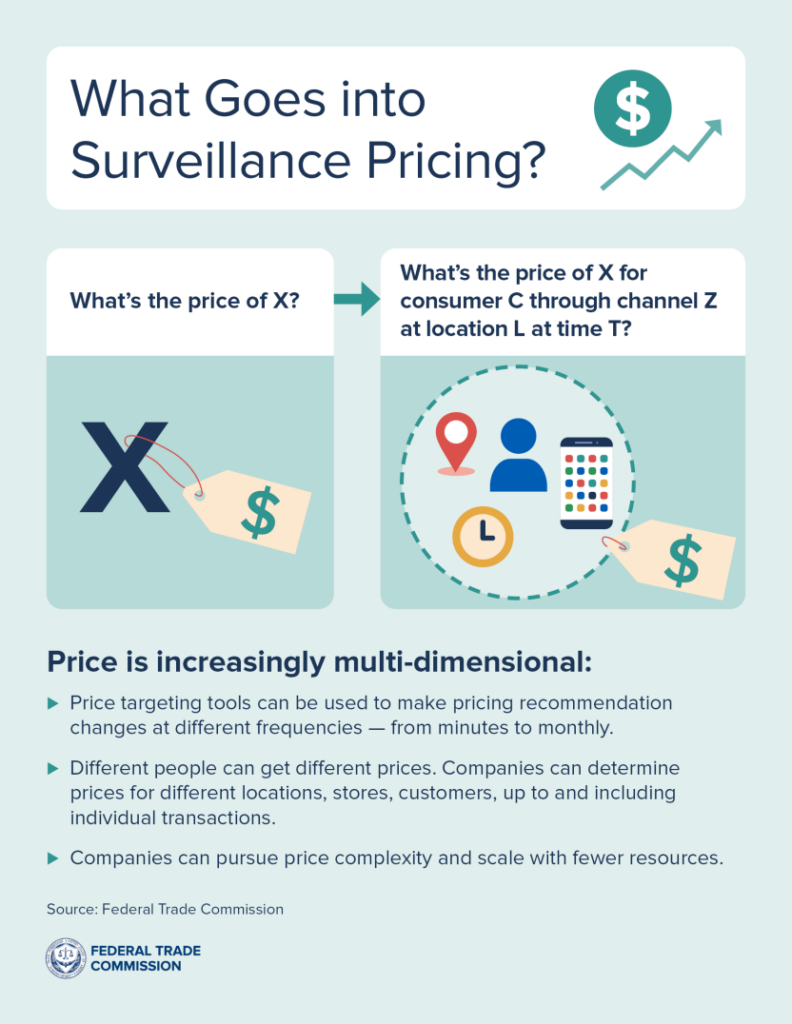
Note. From Federal Trade Commission (2025).
Reclaiming Choice in a Programmed World
The development of algorithmic recommendation systems reflects advances in decision-support technologies. However, the widespread use of this system still remains controversial. The algorithmic recommendation is an indispensable tool for improving platform efficiency, as it not only alleviates the burden of “choice-overload” for consumers, but also enhances the connection between the brand and consumers (Akter et al., 2022, p. 201).
Nonetheless, the price of this convenience is that consumers completely lose their autonomy in making choices and are trapped by the algorithm (Lora et al., 2025, p. 2). Meanwhile, platforms also takes advantage of this feature to exploit users’ psychological weaknesses and stimulate their purchasing intentions (Akter et al., 2022, pp. 201-202; Lora et al., 2025, pp. 2-3). If no intervention is strengthened, consumers will eventually become mere recipients of algorithmic recommendations rather than independent decision-makers (Chen et al., 2025, p. 3; Seele et al., 2021, p. 703).
In the future, platforms and the government need to address the contradiction between convenience and autonomy from the following aspects. From the perspective of the platform, solving the “black box” problem of the recommendation algorithm is crucial (Gagrčin et al., 2024, pp. 425, 430). If the platform fails to disclose the derivation process of its recommendation algorithm results, it is likely to use the algorithm to exploit users’ psychological weaknesses to guide their consumption, which would deprive users of their autonomy (Gagrčin et al., 2024, pp. 441-442; Seele et al., 2021, p. 703).
From the perspective of the government, improving the “algorithm literacy” of the public is crucial (Gagrčin et al., 2024, pp. 423-424). The government needs to guide users to consciously judge whether the content recommended by the platform truly meets their own needs, which helps users gradually break through the information cocoon (Talamanca & Arfini, 2022, pp. 1-3).
References
Akter, S., Dwivedi, Y. K., Sajib, S., Biswas, K., Bandara, R. J., & Michael, K. (2022). Algorithmic bias in machine learning-based marketing models. Journal of Business Research, 144, 201–216. Available at:
https://doi.org/10.1016/j.jbusres.2022.01.083
Areeb, Q. M., Nadeem, M., Sohail, S. S., Imam, R., Doctor, F., Himeur, Y., Hussain, A., & Amira, A. (2023). Filter bubbles in recommender systems: Fact or fallacy—A systematic review. WIREs Data Mining and Knowledge Discovery, 13(6), e1512. Available at:
https://doi.org/10.1002/widm.1512
Chen, S., Qiu, H., & He, W. (2025). The information cocoon paradox: Fostering unity or fueling divergence? Humanities and Social Sciences Communications, 12, 859. Available at:
https://doi.org/10.1057/s41599-025-05169-0
Chernev, A., Böckenholt, U., & Goodman, J. (2015). Choice overload: A conceptual review and meta-analysis. Journal of Consumer Psychology, 25(2), 333–358. Available at:
https://doi.org/10.1016/j.jcps.2014.08.002
Federal Trade Commission. (2025, January 17). FTC surveillance pricing study indicates wide range of personal data used to set individualized consumer prices. Available at:
https://www.ftc.gov/news-events/news/press-releases/2025/01/ftc-surveillance-pricing-study-indicates-wide-range-personal-data-used-set-individualized-consumer-prices
Fei, X., Ke, W., & Wang, H. (2025). The cross-domain effect of perceived homogenization of social media content on consumer impatience. Journal of Business Research, 201, 115723. Available at:
https://doi.org/10.1016/j.jbusres.2025.115723
Gagrčin, E., Naab, T. K., & Grub, M. F. (2026). Algorithmic media use and algorithm literacy: An integrative literature review. New Media & Society, 28(1), 423–447. Available at:
https://doi.org/10.1177/14614448241291137
Lead Alchemists. (n.d.). Guide to the paradox of choice in marketing. Available at:
https://www.leadalchemists.com/marketing-psychology/paradox-of-choice/
Liu, L. (2022). e-Commerce personalized recommendation based on machine learning technology. Mobile Information Systems, 2022, Article 1761579. Available at:
https://doi.org/10.1155/2022/1761579
Lora, S. K., Purba, S. A., Hossain, B., Oriana, T., Seum, A., & Sharmin, S. (2025). Infinite scrolling, finite satisfaction: Exploring user behavior and satisfaction on social media in Bangladesh (Version 2). arXiv. Available at:
https://arxiv.org/abs/2408.09601
Lu, W. (2024). Inevitable challenges of autonomy: Ethical concerns in personalized algorithmic decision-making. Humanities and Social Sciences Communications, 11, Article 1321. Available at:
https://doi.org/10.1057/s41599-024-03864-y
Lv, L., Kang, K. Q., & Liu, G. G. (2024). Prick filter bubbles by enhancing consumers’ novelty-seeking: The role of personalized recommendations of unmentionable products. Psychology & Marketing. Advance online publication. Available at:
https://doi.org/10.1002/mar.22085
Obiegbu, C. J., & Larsen, G. (2025). Algorithmic personalization and brand loyalty: An experiential perspective. Marketing Theory, 25(2), 199–219. Available at:
https://doi.org/10.1177/14705931241230041
ResearchGate. (2023, August). Biases and the feedback loop of recommendation [Digital image]. Available at:
https://www.researchgate.net/figure/Biases-and-the-Feedback-Loop-of-Recommendation-inspired-by-36_fig1_372858674
Seele, P., Dierksmeier, C., Hofstetter, R., & Schultz, M. D. (2021). Mapping the ethicality of algorithmic pricing: A review of dynamic and personalized pricing. Journal of Business Ethics, 170(4), 697–719. Available at:
https://doi.org/10.1007/s10551-019-04371-w
Talamanca, G. F., & Arfini, S. (2022). Through the newsfeed glass: Rethinking filter bubbles and echo chambers. Philosophy & Technology, 35, 20. Available at:
https://doi.org/10.1007/s13347-021-00494-z
 TianYuran
  Lu Yunyan
  Pauleen