
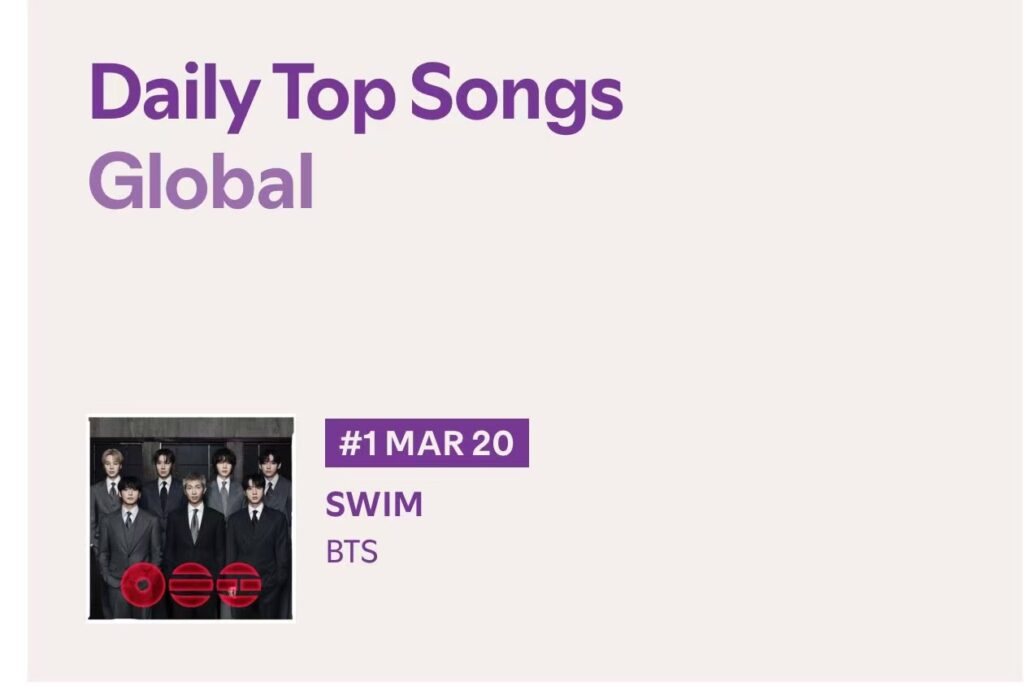
As the most popular male band in South Korea, after returning with the album Arirang on March 20, BTS not only dominated the list, but also took the lead in various data indicators. The album recorded over 110 million Spotify streams in its first 24 hours.The number that reflects not just popularity, but highly coordinated fan activity. In addition, the album has broken many playback records on platforms such as Spotify and Netflix.
On the surface, this is undoubtedly a huge success. But if you look further, you will find another completely different picture emerges.
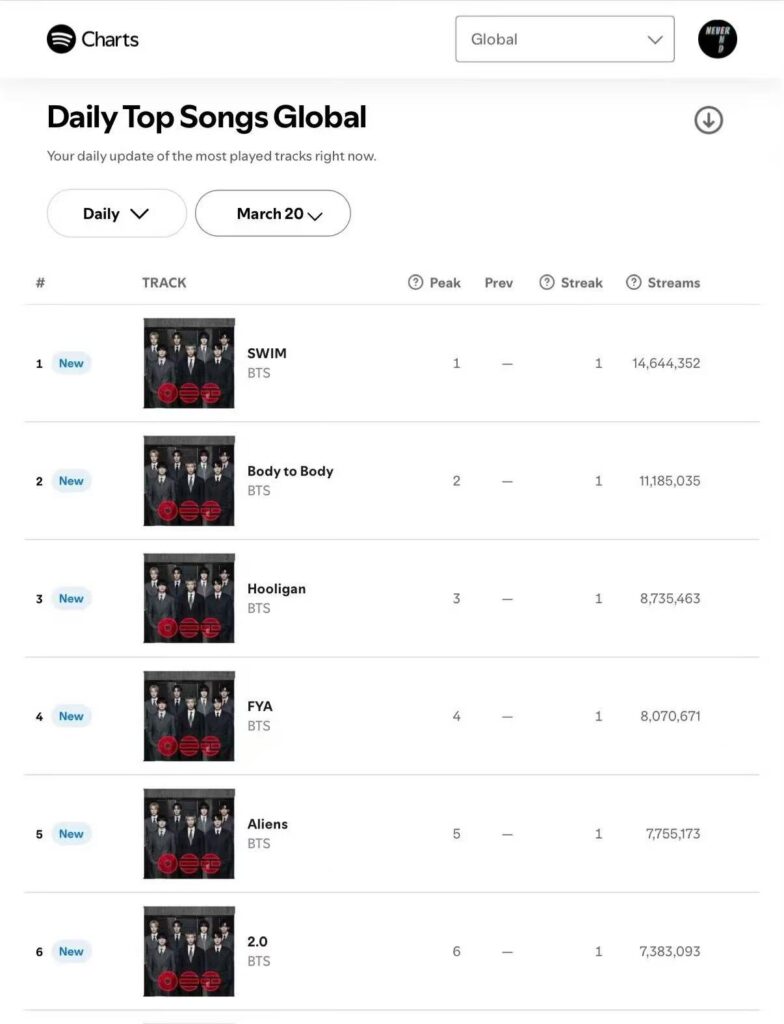
Before the official release of the return, major fan stations have begun to share detailed “list-brushing guidelines”: when to play, how to cycle, when to pause, and even how many accounts need to be used. Fans raise funds to buy Spotify accounts and play songs day and night. This comeback is not just a music release, but more like a highly organised action.
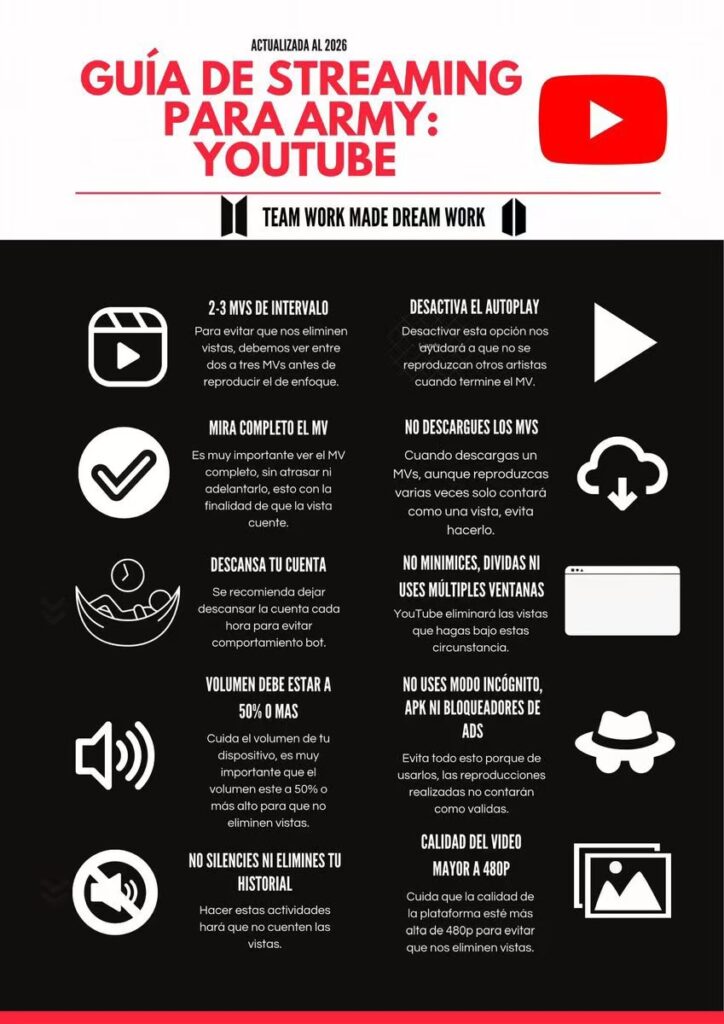
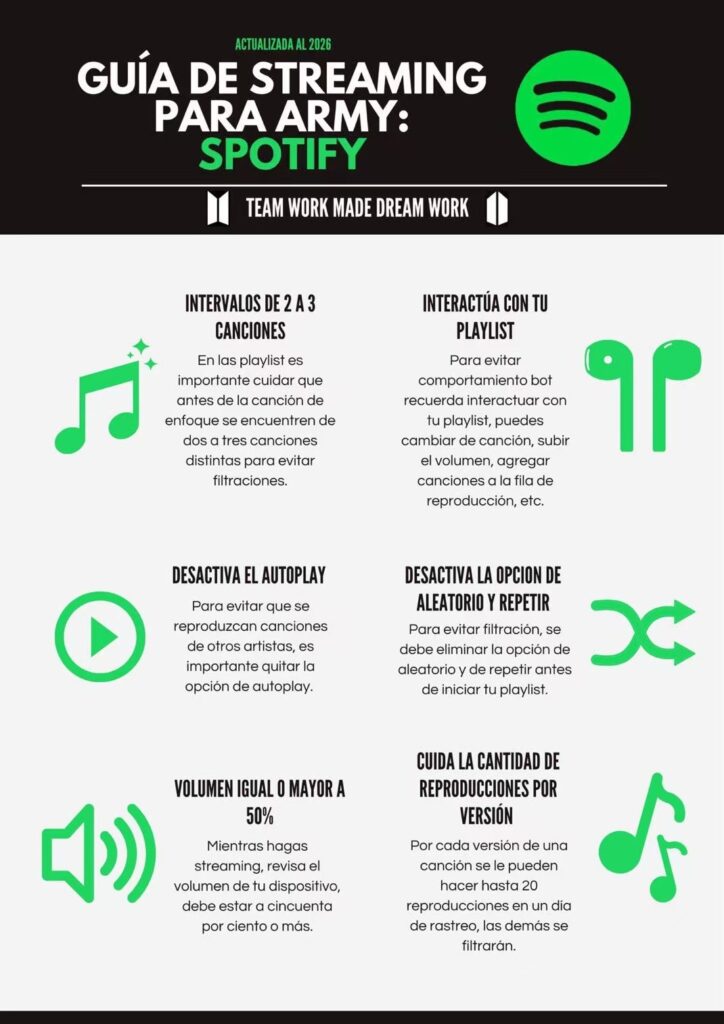
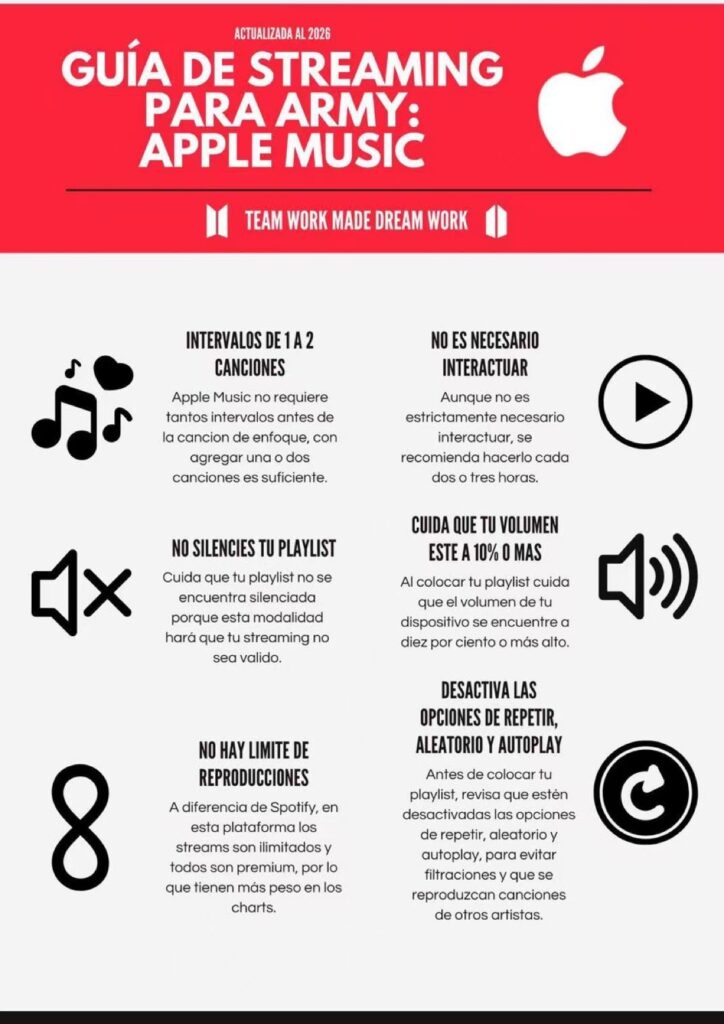
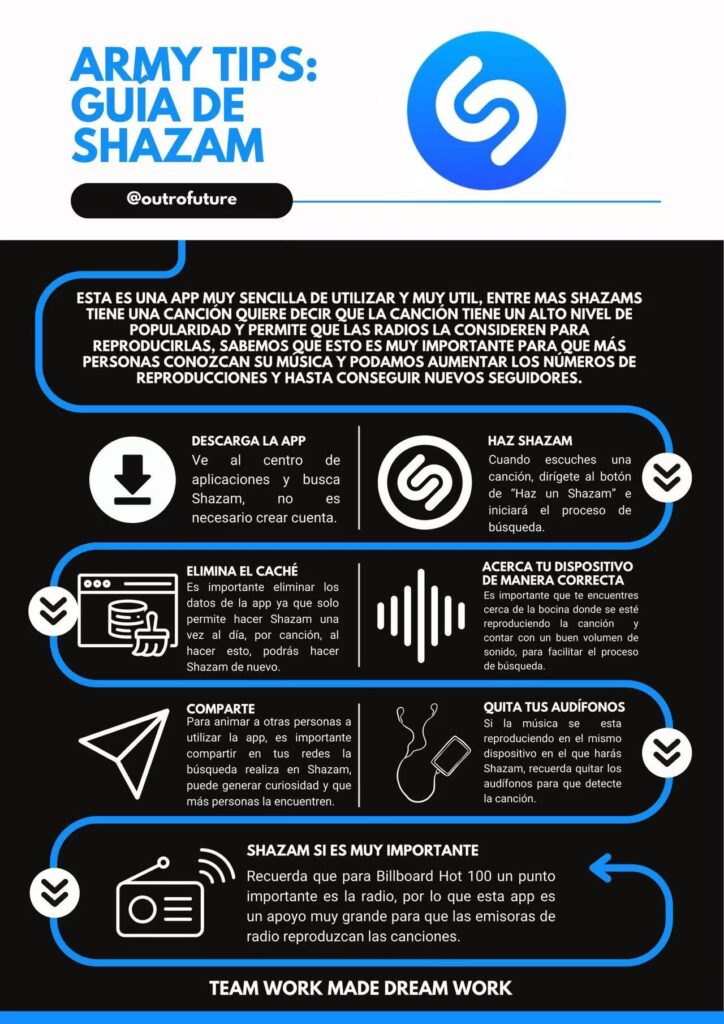
ARMY’s streaming guide. Image: BTS Charts News
The problem also starts from here.
Streaming platforms like Spotify and YouTube were originally designed to make music easier to access and enjoy. But in the K-pop context, they have gradually become a competitive system, and success is almost entirely measured by data. The value of a song no longer depends on how it sounds, but on how it “performances”.
So, what exactly does this 110 million streaming media data represent?Or does it just represent the fans’ love for idols and their willingness to make a lot of efforts for their achievements?
When fans play songs in a loop like work, it may be difficult to savour the emotions and connotations conveyed by the song from the heart. What the ranking of the list can show is not whether the song is excellent, but the number of fans and the presentation of the degree of effort.
This is exactly what scholars call digital labour, that is, the activities carried out by users without compensation, which ultimately creates value for the platform and industry. K-pop fans have become a part of this system unconsciously. They brought traffic, increased exposure, and increased platform activity, but they didn’t get any return.
It should be noted that the return of BTS is still of great significance at the cultural level. Its scale, emotional influence and global communication power are all real. But the measurement around these successes reveals the deeper problems of the industry.
K-pop is no longer just about music.
Streaming media is not the same as listening.
It is a kind of labour.
 Joleen Jublee
  Jamez
Jamez  Scarlett Johnstone