
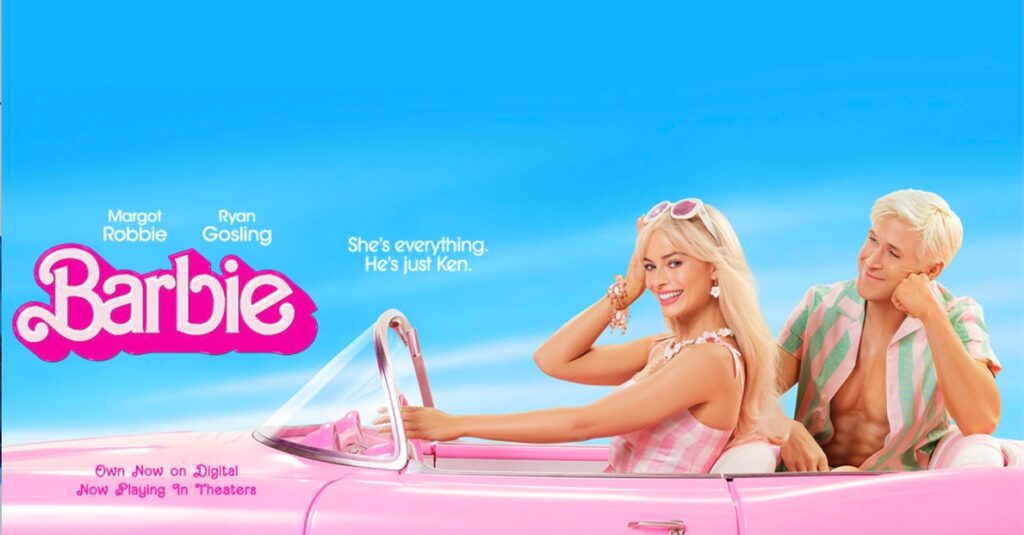
If fashion is a statement, then Barbie made hers in neon pink — but forgot the message underneath.
After the 2023 Barbie movie theaters, it became the top-grossing film of the year, earning over US$1.44 billion worldwide, and instantly transformed from a movie into a movement. Greta Gerwig’s feminist blockbuster promised to critique patriarchy — but ended up selling it back to us, wrapped in glitter and self-awareness.
This contradiction between ideology and industry is most evident in the marketing mechanism of the film.
Walking into Barbie felt like walking into a corporate dream disguised as empowerment. It asks us to think about gender and identity, yet it did so under the bright lights of a brand under the Mattel company.
“She’s everything. He’s just Ken.”
— The marketing tagline that became a meme and a movement.
But that slogan did more than promote equality — it became a meme, a T-shirt, and a marketing empire. Barbiecore, a trend of hyper-feminine pink aesthetics, exploded across TikTok with over 500 million views and a +2000 % rise in Pinterest searches.

Meanwhile, Mattel partnered with more than 165 brands — from fast-fashion chains to Airbnb’s “Barbie Dreamhouse”.
It sold the illusion of empowerment by making femininity a purchasable aesthetic. As cultural theorist Rosalind Gill suggests, modern “empowerment” often appears through consumption rather than true resistance.
Greta Gerwig presents Barbie as a carefully designed work of art, transforming a plastic doll into a mirror reflecting society. The film combines humour with truth, but it’s almost over at the beginning – in a pink world where women’s freedom still must pay a price. The BBC’s commentary described Barbie as “a self-deprecating and narcissistic satire”. The film tried to get out of the toy house, but it never really escaped the control of Mattel.
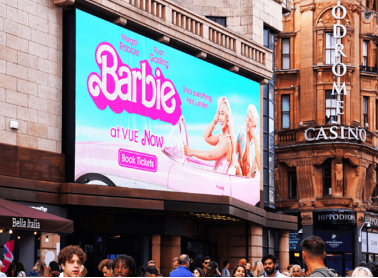
Does Barbie really empower women, or just sell them a new fantasy? When Barbie played by Margot Robbie gave up her perfect image to pursue “truth”, the film described it as an awakening – but when she entered the real world, she returned to the designer’s pink clothes and prepared for the next shooting. The film wraps feminism in pink plastic and sells it as self-love. What seems to be empowerment is smart marketing.
Finally, it shows that even rebellion can be commercialised – this is just another way for capitalism to promote the concept of empowerment – which is a performance revolution. What I think is that even rebellion can be commercialised — this is simply another way for capitalism to sell the idea of empowerment as a performance rather than a real revolution.
 Debbie Choo
  Bethany Miguel
  Tarkyn Sharples